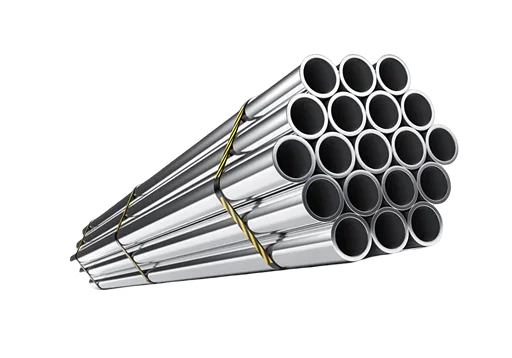
SS 316 pipe fittings are ordered every day, yet the grade on the certificate is often not the grade the line needs. ASTM A403 lists four molybdenum bearing variants under the 316 name: WP316, WP316L, WP316H and WP316Ti. Each solves a different problem. 316L protects weld zones in corrosive duty, 316H holds its strength at high temperature, and 316Ti keeps its corrosion resistance after long service in the sensitising range. Metinox Overseas supplies 316 stainless steel pipe fittings, including SS 316 buttweld fittings to ASTM A403 and 316 forged fittings to ASTM A182, in every variant within its wider range of pipe fittings, for buyers in India, the GCC and other export markets.
Request a QuotationTable of Contents
- Which 316 Stainless Steel Fittings Grade Does Your Line Need?
- Stainless Steel 316/316L Pipe Fittings Specifications
- Chemical Composition of WP316, WP316L, WP316H and WP316Ti Fittings
- Mechanical Properties of WP316, WP316L, WP316H and WP316Ti Fittings
- Physical Properties of Stainless Steel 316 Pipe Fittings
- Equivalent Grades for Stainless Steel 316 / 316L/316H/316Ti Pipe Fittings
- Pressure Rating of Stainless Steel 316 Pipe Fittings
- ASME B16.9 Dimensions for WP316 / WP316L Buttweld Fittings
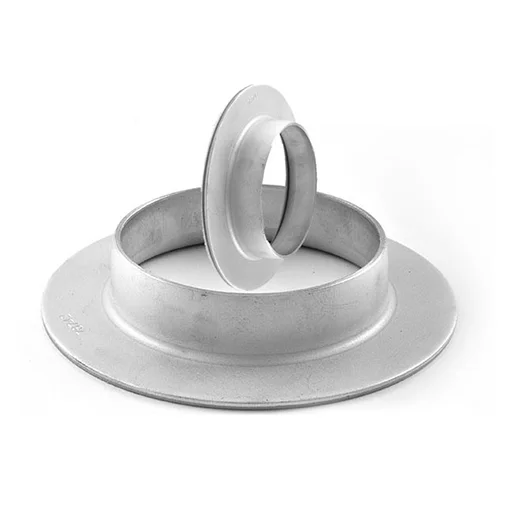
- Stub end dimensions, SS 316L lap joint stub ends (mm)
- Wall thickness by schedule, ASME B36.19M and B36.10M, mm (in)
- Where SS 316 Industrial Pipe Fittings Are Used
- SS 316 Pipe Fittings Price List: What Sets the Rate
- Types of Stainless Steel 316 & 316L Pipe Fittings
- Get a Quote for 316 Stainless Steel Pipe Fittings
- Complete the Line: Pipes, Fittings and Flanges in Grade 316
- Buyer Questions on SS 316 Pipe Fittings
Which 316 Stainless Steel Fittings Grade Does Your Line Need?
All four grades share the same base: roughly 17% chromium, 12% nickel and 2 to 3% molybdenum. The molybdenum is what separates 316 stainless steel fittings from SS 304 vs SS 316. It raises resistance to pitting and crevice attack in chloride service. The differences between the four sit in carbon and titanium.
| Grade | UNS | What changes | Choose it when |
|---|---|---|---|
| 316 | S31600 | Carbon up to 0.08% | General corrosive service where welds will be solution annealed or service stays below the sensitising range |
| 316L | S31603 | Carbon held to 0.030% max | Field welded process lines in chloride or acid service. The default choice for most project piping |
| 316H | S31609 | Carbon held between 0.04% and 0.10% | Sustained high temperature service where the design code needs the higher allowable stress of an H grade |
| 316Ti | S31635 | Titanium added to tie up carbon | Long service in the 425 to 815°C band where sensitisation must be avoided without relying on low carbon |
Many mills certify fittings as dual grade WP316/316L, meeting the 316L carbon limit and the 316 strength minimums at once. If your specification accepts dual certification, say so in the enquiry, because it widens the available supply.
Stainless Steel 316/316L Pipe Fittings Specifications
| Parameter | Detail |
|---|---|
| Buttweld standard | ASTM A403 / ASME SA403, grades WP316, WP316L, WP316H, WP316Ti |
| Forged standard | ASTM A182 / ASME SA182, grades F316, F316L, F316H, F316Ti |
| Dimensional standards | AASME/ANSI B16.9, ASME B16.28, MSS-SP-43, MSS SP-75 |
| Class | WP-S (seamless), WP-W (welded), WP-WX (welded, 100% radiographed), WP-WU (welded, 100% ultrasonic). |
| Forged fitting size | ¼" to 4" |
| Buttweld fitting size | ½" to 48" NB |
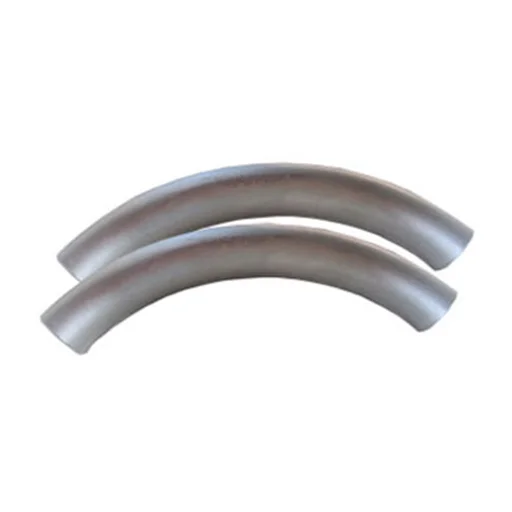
| Bending Radius | 1D, 2D, 3D, 5D, 6D, 8D, 10D or Custom |
| Wall thickness | Sch 5S, 10S, 40S, 80S, Sch 160, XXS |
| Forged pressure class | Socket weld Class 3000, 6000, 9000. Threaded Class 2000, 3000, 6000 |
| End preparation | Bevelled to ASME B16.25, plain end, socket weld, NPT threaded |
| Heat treatment | Solution annealed, as required by ASTM A403 (buttweld) and ASTM A182 (forged) |
| Marking | Per ASTM A403 and MSS SP-25: grade, class, heat number, size, schedule, manufacturer's mark |
Choosing between WP-S and welded classes? Our guide on seamless vs welded stainless steel pipe sets out the trade offs, and the same logic applies to fittings made from that pipe.
Chemical Composition of WP316, WP316L, WP316H and WP316Ti Fittings
Values in weight percent, maximum unless a range is shown.
| Element | 316 (S31600) | 316L (S31603) | 316H (S31609) | 316Ti (S31635) |
|---|---|---|---|---|
| C | 0.08 | 0.030 | 0.04 to 0.10 | 0.08 |
| Mn | 2.00 | 2.00 | 2.00 | 2.00 |
| P | 0.045 | 0.045 | 0.045 | 0.045 |
| S | 0.030 | 0.030 | 0.030 | 0.030 |
| Si | 1.00 | 1.00 | 1.00 | 0.75 |
| Cr | 16.0 to 18.0 | 16.0 to 18.0 | 16.0 to 18.0 | 16.0 to 18.0 |
| Ni | 10.0 to 14.0 | 10.0 to 14.0 | 10.0 to 14.0 | 10.0 to 14.0 |
| Mo | 2.00 to 3.00 | 2.00 to 3.00 | 2.00 to 3.00 | 2.00 to 3.00 |
| N | 0.10% max | 0.10% max | - | 0.10 |
| Ti | - | - | - | 5 × (C + N) min, 0.70 max |
Why it matters: a 316L certificate showing 0.035% carbon is a 316 fitting, not a 316L fitting. Check the carbon line on every heat before acceptance.
Mechanical Properties of WP316, WP316L, WP316H and WP316Ti Fittings
Minimum values at room temperature per ASTM A403.
| Grade | Tensile strength, min | Yield strength (0.2% offset), min | Elongation in 50 mm, min (longitudinal / transverse) |
|---|---|---|---|
| WP316 | 515 MPa (75 ksi) | 205 MPa (30 ksi) | 28% / 20% |
| WP316L | 485 MPa (70 ksi) | 170 MPa (25 ksi) | 28% / 20% |
| WP316H | 515 MPa (75 ksi) | 205 MPa (30 ksi) | 28% / 20% |
| WP316Ti | 515 MPa (75 ksi) | 205 MPa (30 ksi) | 28% / 20% |
Physical Properties of Stainless Steel 316 Pipe Fittings
| Property | Metric | Imperial |
|---|---|---|
| Density | 8.00 g/cm³ | 0.289 lb/in³ |
| Melting range | 1375 to 1400°C | 2507 to 2552°F |
| Modulus of elasticity | 193 GPa | 28.0 × 10⁶ psi |
| Mean thermal expansion, 0 to 100°C | 15.9 µm/m·°C | 8.8 µin/in·°F |
| Thermal conductivity at 100°C | 16.3 W/m·K | 9.4 BTU/h·ft·°F |
| Specific heat, 0 to 100°C | 500 J/kg·K | 0.12 BTU/lb·°F |
| Electrical resistivity | 0.74 µΩ·m | 29.1 µΩ·in |
Equivalent Grades for Stainless Steel 316 / 316L/316H/316Ti Pipe Fittings
| Grade | UNS | Werkstoff Nr. | EN designation | JIS | BS (legacy) |
|---|---|---|---|---|---|
| 316 | S31600 | 1.4401 / 1.4436 | X5CrNiMo17-12-2 / X3CrNiMo17-13-3 | SUS316 | 316S31 / 316S33 |
| 316L | S31603 | 1.4404 / 1.4435 | X2CrNiMo17-12-2 / X2CrNiMo18-14-3 | SUS316L | 316S11 / 316S13 |
| 316H | S31609 | 1.4919 | X6CrNiMo17-13 | SUS316H | 316S51 |
| 316Ti | S31635 | 1.4571 | X6CrNiMoTi17-12-2 | SUS316Ti | 320S31 |
Pressure Rating of Stainless Steel 316 Pipe Fittings
Buttweld fittings do not carry a pressure class of their own. ASME B16.9 rates a buttweld fitting at the same allowable pressure as straight seamless pipe of the same material, size and wall thickness. In practice, a WP316L elbow in Sch 40S is good for whatever Sch 40S 316L pipe is good for under your design code, usually ASME B31.3.
Forged fittings to ASME B16.11 are different. Their class number is linked to a matching pipe schedule:
| Pressure Class | Size Range | -20 to 150°F | 200°F (93°C) | 250°F (121°C) | 300°F (149°C) | 350°F (177°C) | 400°F (204°C) | 500°F (260°C) | 550°F (288°C) |
|---|---|---|---|---|---|---|---|---|---|
| Class 150# | All | 300 | 265 | 225 | 185 | 150 | - | - | - |
| Class 300# | ¼" to 1" | 2000 | 1785 | 1575 | 1360 | 1150 | 935 | 510 | 300 |
| Class 300# | 1¼" to 2" | 1500 | 1350 | 1200 | 1050 | 900 | 750 | 450 | 300 |
| Class 300# | 2½" to 3" | 1000 | 910 | 825 | 735 | 650 | 560 | 385 | 300 |
ASME B16.9 Dimensions for WP316 / WP316L Buttweld Fittings
Metric first. Centre to end and overall lengths are in millimetres; inch values for OD are given in brackets.
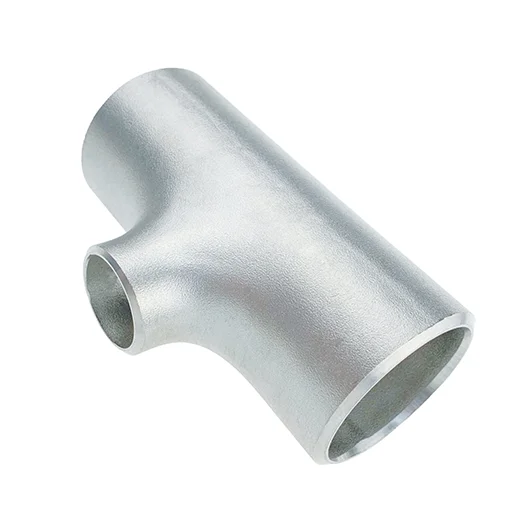
| NPS | DN | OD at bevel, mm (in) | 90° LR elbow A | 90° SR elbow | 45° LR elbow B | Tee C | Reducer H | Cap E |
|---|---|---|---|---|---|---|---|---|
| ½ | 15 | 21.3 (0.840) | 38 | n/a | 16 | 25 | n/a | 25 |
| ¾ | 20 | 26.7 (1.050) | 38 | n/a | 19 | 29 | 38 | 25 |
| 1 | 25 | 33.4 (1.315) | 38 | 25 | 22 | 38 | 51 | 38 |
| 1¼ | 32 | 42.2 (1.660) | 48 | 32 | 25 | 48 | 51 | 38 |
| 1½ | 40 | 48.3 (1.900) | 57 | 38 | 29 | 57 | 64 | 38 |
| 2 | 50 | 60.3 (2.375) | 76 | 51 | 35 | 64 | 76 | 38 |
| 2½ | 65 | 73.0 (2.875) | 95 | 64 | 44 | 76 | 89 | 38 |
| 3 | 80 | 88.9 (3.500) | 114 | 76 | 51 | 86 | 89 | 51 |
| 4 | 100 | 114.3 (4.500) | 152 | 102 | 64 | 105 | 102 | 64 |
| 6 | 150 | 168.3 (6.625) | 229 | 152 | 95 | 143 | 140 | 89 |
| 8 | 200 | 219.1 (8.625) | 305 | 203 | 127 | 178 | 152 | 102 |
| 10 | 250 | 273.0 (10.750) | 381 | 254 | 159 | 216 | 178 | 127 |
| 12 | 300 | 323.8 (12.750) | 457 | 305 | 190 | 254 | 203 | 152 |
| 14 | 350 | 355.6 (14.000) | 533 | 356 | 222 | 279 | 330 | 165 |
| 16 | 400 | 406.4 (16.000) | 610 | 406 | 254 | 305 | 356 | 178 |
| 18 | 450 | 457.0 (18.000) | 686 | 457 | 286 | 343 | 381 | 203 |
| 20 | 500 | 508.0 (20.000) | 762 | 508 | 318 | 381 | 508 | 229 |
| 24 | 600 | 610.0 (24.000) | 914 | 610 | 381 | 432 | 508 | 267 |
Cap length E applies to standard wall; heavier walls use a longer E. Sizes NPS 26 to 48 are quoted to the dimensional standard on request.
Stub end dimensions, SS 316L lap joint stub ends (mm)
| NPS | Lap diameter G | Long pattern F (ASME B16.9) | Short pattern F (MSS SP-43) |
|---|---|---|---|
| ½ | 35 | 76 | 51 |
| ¾ | 43 | 76 | 51 |
| 1 | 51 | 102 | 51 |
| 1½ | 73 | 102 | 51 |
| 2 | 92 | 152 | 64 |
| 3 | 127 | 152 | 64 |
| 4 | 157 | 152 | 76 |
| 6 | 216 | 203 | 89 |
| 8 | 270 | 203 | 102 |
| 10 | 324 | 254 | 127 |
| 12 | 381 | 254 | 152 |
Wall thickness by schedule, ASME B36.19M and B36.10M, mm (in)
| NPS / DN | Sch 10S | Sch 40S | Sch 80S | Sch 160 | XXS |
|---|---|---|---|---|---|
| ½ / 15 | 2.11 (0.083) | 2.77 (0.109) | 3.73 (0.147) | 4.78 (0.188) | 7.47 (0.294) |
| 1 / 25 | 2.77 (0.109) | 3.38 (0.133) | 4.55 (0.179) | 6.35 (0.250) | 9.09 (0.358) |
| 2 / 50 | 2.77 (0.109) | 3.91 (0.154) | 5.54 (0.218) | 8.74 (0.344) | 11.07 (0.436) |
| 3 / 80 | 3.05 (0.120) | 5.49 (0.216) | 7.62 (0.300) | 11.13 (0.438) | 15.24 (0.600) |
| 4 / 100 | 3.05 (0.120) | 6.02 (0.237) | 8.56 (0.337) | 13.49 (0.531) | 17.12 (0.674) |
| 6 / 150 | 3.40 (0.134) | 7.11 (0.280) | 10.97 (0.432) | 18.26 (0.719) | 21.95 (0.864) |
| 8 / 200 | 3.76 (0.148) | 8.18 (0.322) | 12.70 (0.500) | 23.01 (0.906) | 22.23 (0.875) |
| 10 / 250 | 4.19 (0.165) | 9.27 (0.365) | 12.70 (0.500) | 28.58 (1.125) | 25.40 (1.000) |
| 12 / 300 | 4.57 (0.180) | 9.53 (0.375) | 12.70 (0.500) | 33.32 (1.312) | 25.40 (1.000) |
Note: from NPS 8 upward, XXS is thinner than Sch 160. Order by schedule, not by "heavier sounding" designation.
Where SS 316 Industrial Pipe Fittings Are Used
| Sector | Typical 316 / 316L / 316H / 316Ti service |
|---|---|
| Upstream oil and gas | Chemical injection lines, instrument and utility piping, produced water within sour service limits |
| Gas processing and LNG | Utility, nitrogen and low temperature lines; 316L is common in cryogenic service |
| Refining and petrochemicals | Process streams with chlorides or organic acids; 316H and 316Ti in hot service |
| Power and water | Demineralised water, condensate, chemical dosing, cooling water |
| Desalination | Low temperature product water and chemical dosing; higher alloys for hot brine |
| Fertilizer | Selected urea and ammonia related services, where the licensor's material selection allows |
| Offshore | Topside utility, instrument and chemical injection piping |
| Pharmaceutical and food | 316L process piping; sanitary finish only where the order specifies it, for example to ASME BPE |
SS 316 Pipe Fittings Price List: What Sets the Rate
Prices for stainless steel 316 buttweld fittings follow the nickel and molybdenum markets, so they move from week to week. A fixed SS 316 pipe fittings price list goes out of date quickly, which is why each enquiry is quoted at current rates. These are the factors that move the figure:
| Factor | Effect on price |
|---|---|
| Grade and heat | 316L, 316H and 316Ti generally cost more than 316; dual certified heats vary with availability |
| Size and wall | Heavier schedules and larger NPS add metal per piece |
| Seamless or welded | WP-S costs more than WP-W, especially in larger sizes; WP-WX adds radiography cost |
| Quantity | Larger quantities per size and grade lower the unit price |
| Stock or mill order | Mill orders for uncommon sizes carry setup cost and longer lead time |
| Certification level | EN 10204 3.2 requires a third party witness and adds cost over 3.1 |
| Third party inspection | Charged per visit or per lot |
| Sour service testing | Hardness, SSC or IGC tests are charged per heat or lot |
| Incoterm and destination port | Freight and insurance terms change the landed cost |
For a fast quotation, send: grade (WP316, WP316L, WP316H or WP316Ti), standard and class (for example ASTM A403 WP316L-S), fitting type, dimensional standard, NPS or DN, wall schedule, quantity, end finish, certification level (3.1 or 3.2), inspection requirement, destination port and required date.
Types of Stainless Steel 316 & 316L Pipe Fittings
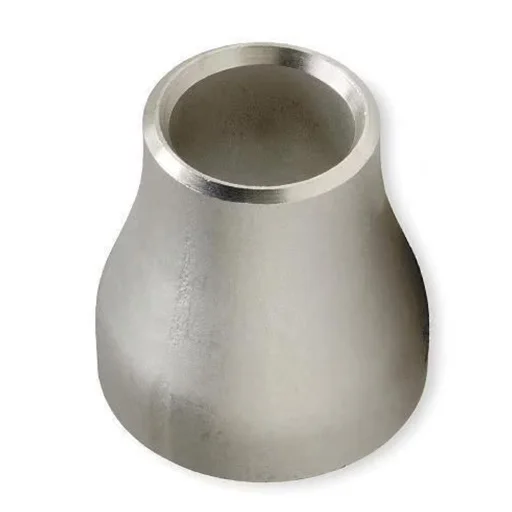
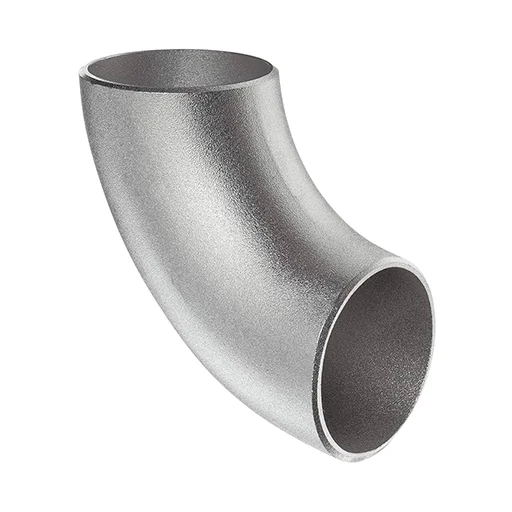
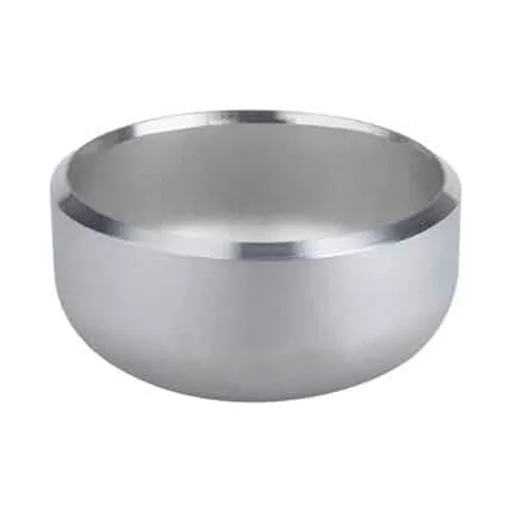
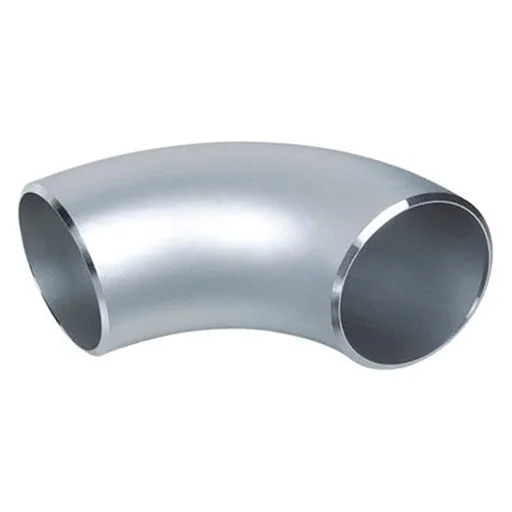
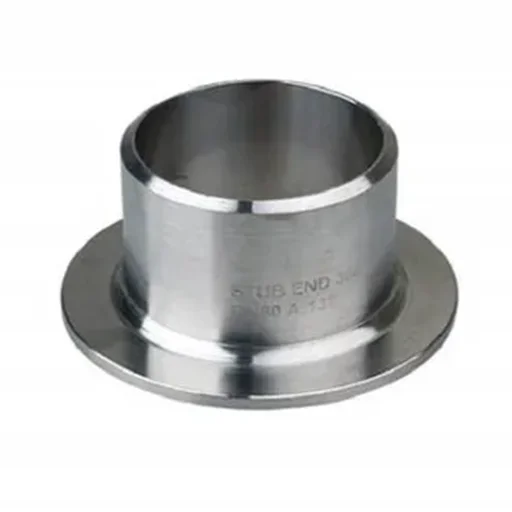
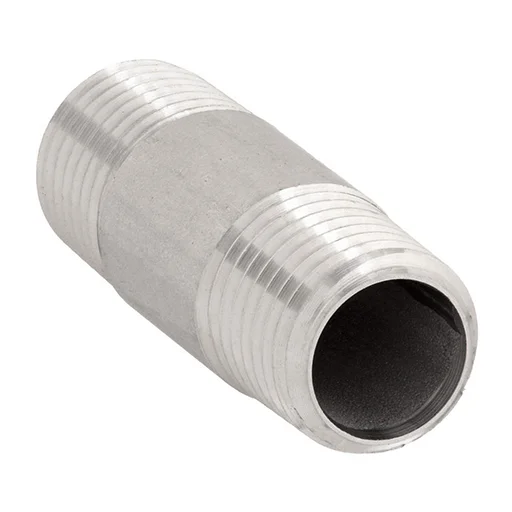
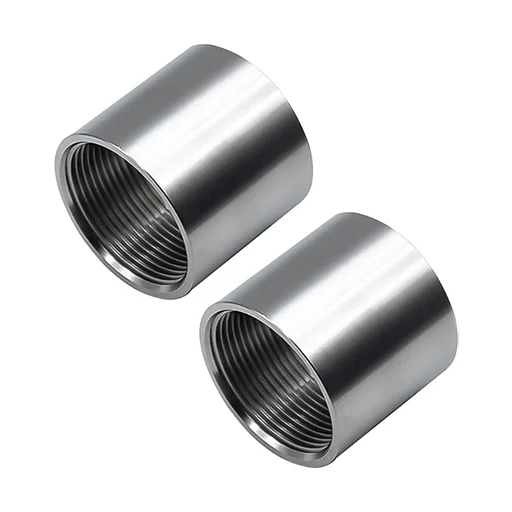
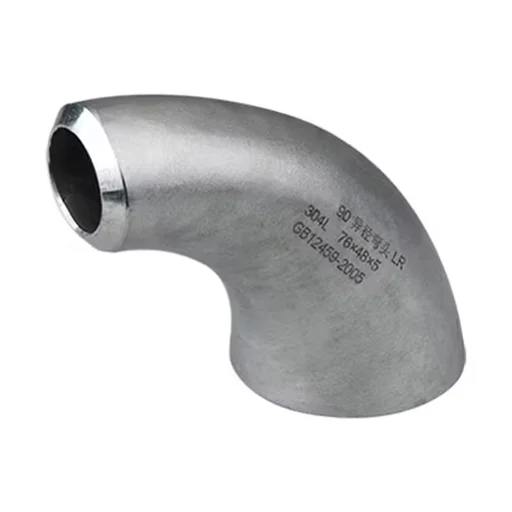
Not sure which fitting fits your application? Share your size, pressure class and quantity, and our team will recommend the right type with a quick quote. Get a Free Quote
Get a Quote for 316 Stainless Steel Pipe Fittings
Send your line list or material take off with grade, size, schedule, quantity, certification level and destination port. Attach your project material specification if it adds requirements, such as sour service hardness limits or extra testing. A complete enquiry gets a complete quotation on the first reply.
Request a QuotationComplete the Line: Pipes, Fittings and Flanges in Grade 316
Build the system in one grade, from pipe to fitting to flange:
- Pipe: SS 316 / 316L pipes, SS 316 / 316L seamless pipes, SS 316 / 316L welded pipes, SS 316H pipes
- Flanges: SS 316 flanges, SS 316L flanges, SS 316H flanges
- Tubing: SS 316 / 316L tubes
- Related fitting grades: stainless steel pipe fittings, SS 304 pipe fittings, SS 321 pipe fittings, SS 904L pipe fittings
Buyer Questions on SS 316 Pipe Fittings
Yes, within limits. ISO 15156-3 accepts solution annealed austenitic stainless steels such as 316 and 316L at 22 HRC maximum, within set limits on temperature, H₂S partial pressure and chloride content. Outside those limits a higher alloy is needed.
They share the same chromium, nickel and molybdenum ranges. WP316L limits carbon to 0.030% to protect welds, WP316H keeps carbon between 0.04% and 0.10% for high temperature strength, and WP316Ti adds titanium to stabilise the carbon.
Usually yes. A dual certified fitting meets the 316L carbon limit and the higher 316 strength minimums. Check that your project specification does not prohibit dual certification.
Certification level and inspection agency are confirmed at quotation. State 3.1 or 3.2 and the agency you require in your enquiry.
Currencies and Incoterms are confirmed at quotation. State your preferred currency, Incoterm and destination port in the enquiry.
Grade, standard and class, fitting type, dimensional standard, size, schedule, quantity, end finish, certification level, inspection requirement, destination port and required date.
Enquire Now
Get pricing within 24 hours!