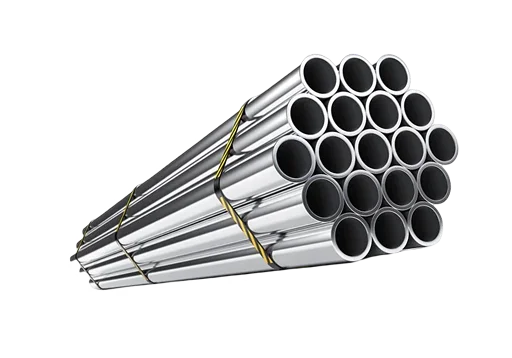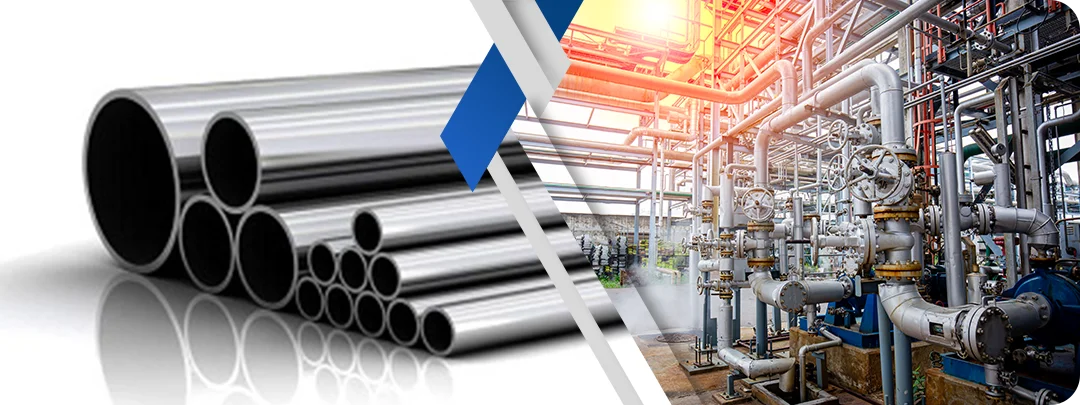
Metinox Overseas is manufacturer & supplier of seamless, welded and EFW 316 stainless steel pipe and 316L pipe for projects in USA, Middle East and Africa, to ASTM A312 TP316 and TP316L pipe. Used in all sizes, 316 is the grade chosen where ordinary stainless would be corroded by chloride, marine air or chemical service, and is certified to us on every length with a mill certificate. This page takes you to a destination where you'll find the pipe form that's suitable for your line, and is part of our comprehensive line of stainless steel pipes.
The corrosion resistance is what distinguishes 316 from 304 and is provided by the molybdenum.Molybdenum is the corrosion resistance that makes 316 different from 304 and necessary for coastal, marine and chemical work. The 316L low-carbon (LC) variant is recommended for welded fabrication, while the dual-certified 316/316L grade has both. Our sizes range from 1/2" to 48" and larger, featuring our 316/316L welded pipes for larger sizes. Submit the form, size and quantity and the quote will be returned with the certification and regional approvals your project needs.

Table of Contents
- 316 Stainless Steel Pipe Specification
- What is the Difference Between 316 and 316L Stainless Steel Pipe?
- 316L Stainless Steel Pipe Specifications
- Stainless Steel UNS S31600 and S31603 Equivalent Grades
- SS 316 and 316L Pipes Chemical Composition
- ASME SA312 SS TP316 / TP316L Mechanical Properties
- 316 316l Stainless Steel Pipe Price List
- Pipe Forms: Seamless, Welded & EFW
- Why 316: Molybdenum & Chloride Resistance
- 316 vs 316L
- When to Step Up from 316
- Quality, Testing & Certification
- Other Types of Stainless Steel 316 and 316L Pipes
- 316 / 316L Stainless Steel Pipe: Applications & Key Uses
- Frequently Asked Questions (FAQ)
316 Stainless Steel Pipe Specification
| Property | Value |
|---|---|
| Grades | TP316, TP316L (dual-certified 316/316L common), 316Ti to order |
| UNS | S31600 (316), S31603 (316L) |
| Specifications | ASTM A312 / ASME SA312, A358 for larger fusion-welded |
| Forms | Seamless, welded (ERW) and EFW |
| Size range | NPS ½ inch to 48 inch and above |
| Wall / schedule | SCH 5S, 10S, 40S, 80S and heavier; thin-wall available |
| Ends | Plain, bevelled or threaded; single or double random lengths |
| Certification | EN 10204 3.1 mill test certificate, PMI, NACE MR0175 on request |
Pipe Forms: Seamless, Welded & EFW
316 pipe comes in three forms, chosen by pressure and diameter. Stainless steel seamless pipes have no weld seam and suit the highest-pressure and most critical lines. 316/316L welded pipes are the economical route for larger diameters and thinner walls, part of our wider stainless steel welded pipes range, and EFW pipes, electric fusion welded, cover the large-diameter and heavy-wall end. Match the form to the pressure and size of the line, and each form page carries its own size and testing detail.
Why 316: Molybdenum & Chloride Resistance
The difference between 316 and 304 is molybdenum. 316 carries 2 to 3 percent of it, which gives the pitting and crevice resistance that chlorides, salt water, marine air and many chemicals demand, exactly the conditions where 304 fails. That is why 316 is the standard for coastal, marine, food, pharmaceutical and chemical service. In dry, inland and non-chloride work, SS 304/304L pipe is the more economical grade and does the job, so the choice between them comes down to whether chlorides are present. If they are, 316 is worth its premium.
316 vs 316L
The difference is carbon. Standard 316 can sensitise in the heat-affected zone of a weld, where chromium carbides form and reduce local corrosion resistance. 316L holds carbon low enough to avoid this, so it is specified for welded fabrication and any pipe welded into a system. The dual-certified 316/316L grade meets both requirements and is the common stock choice. Where elevated-temperature welded strength is needed, 316Ti, the titanium-stabilised variant, is an option.
When to Step Up from 316
316 covers a very broad band of corrosion service, but there is a point where chlorides or temperature exceed it, warm seawater, brackish and chlorinated cooling, and aggressive acids. There the step up is to duplex and super duplex, which add both strength and chloride resistance. Our duplex steel pipes range and the super duplex S32750 pipes grade take over where 316 becomes marginal, most commonly on seawater and desalination duty. If you tell us the chloride level and temperature we will confirm whether 316 is enough or a duplex grade is the safer call.
Quality, Testing & Certification
Every 316/316L pipe carries an EN 10204 3.1 mill test certificate, heat-number traceable, with positive material identification confirming the grade and, on welded and EFW pipe, the weld tested by radiography, ultrasonic or hydrostatic test to the code. NACE MR0175 documentation for sour service and third-party witness through BV, SGS or TUV are arranged at order stage, in line with our quality policy. Pipe is marked, bundled and protected for export sea freight per our packing & dispatch standard. Send the form, size and quantity and the quote comes back with the certification built in.
Send Your Form, Size and Quantity →
Other Types of Stainless Steel 316 and 316L Pipes
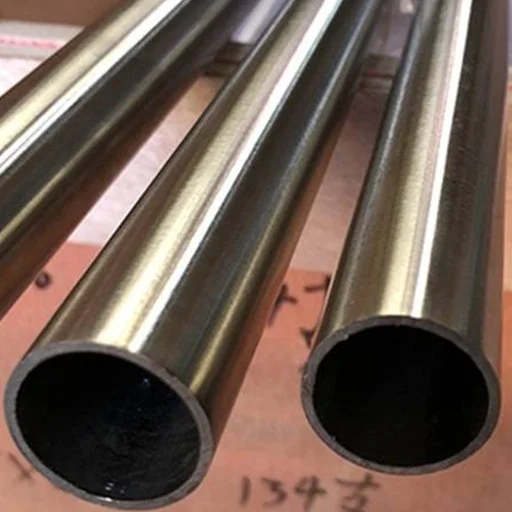
Metinox Overseas offers a comprehensive range of SS 316/316L pipe types to meet diverse industrial requirements.
- Stainless Steel 316 Seamless Pipe
- Stainless Steel 316L Seamless Pipes
- ASTM A312 SS TP316/316L Seamless Pipe
- ASME SA312 SS 316/316L Seamless Pipes
- UNS S31600 Seamless Pipe
- UNS S31603 Seamless Pipes
- DIN 1.4401 / 1.4436 Seamless Pipe
- WERKSTOFF NR.1.4404-1.4435 Seamless Pipes
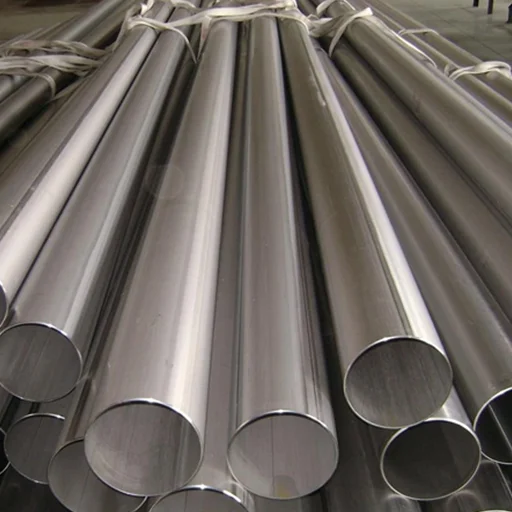
- Stainless Steel 316 Welded Pipes
- Stainless Steel 316L Welding Pipe
- ASTM A312 SS TP316/316L Welded Piping
- ASME SA312 SS 316/316L Welded Pipe
- UNS S31600 Welded Pipes
- UNS S31603 Welded Pipe
- DIN 1.4401 / 1.4436 Welded Piping
- WERKSTOFF NR.1.4404-1.4435 Welded Pipes
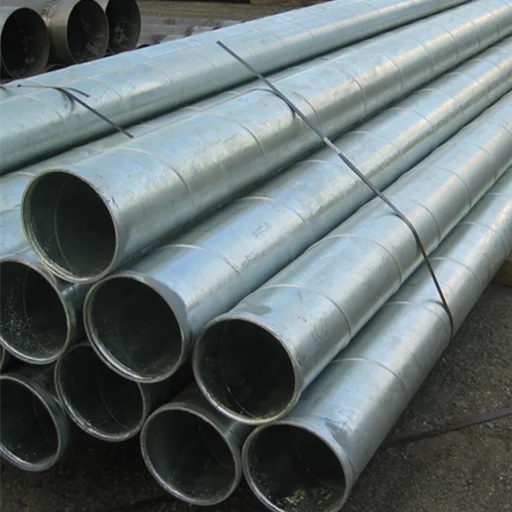
- Stainless Steel 316 EFW Pipes
- Stainless Steel 316L EFW Pipe
- ASTM A358 SS 316/316L EFW Pipes
- ASME SA358 SS 316/316L EFW Pipe
- UNS S31600 Electric Fusion Welded Pipes
- UNS S31603 EFW Pipes
- DIN 1.4401 / 1.4436 Electric Fusion Welded Pipes
- WERKSTOFF NR.1.4404-1.4435 EFW Piping
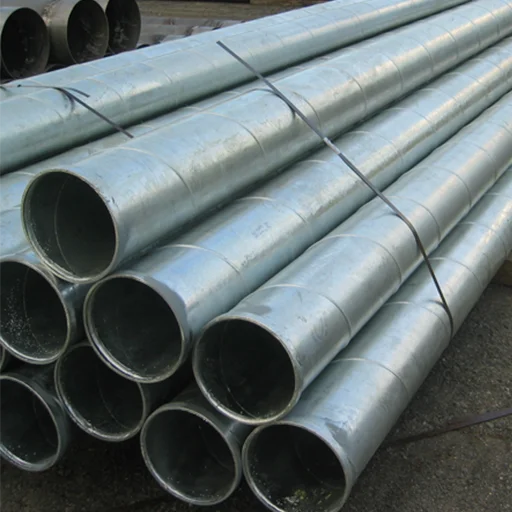
- Stainless Steel 316 ERW Pipes
- Stainless Steel 316L Electric Resistance Welded Pipes
- ASTM A312 SS TP316/316L ERW Pipes
- ASME SA312 SS 316/316L ERW Pipes
- UNS S31600 Electric Resistance Welded Pipes
- UNS S31603 ERW Pipes
- DIN 1.4401 / 1.4436 Electric Resistance Welded Pipes
- WERKSTOFF NR.1.4404-1.4435 ERW Pipes
316 / 316L Stainless Steel Pipe: Applications & Key Uses
316 stainless steel pipe is widely used in marine, chemical, and oil & gas industries. Its excellent corrosion resistance makes SS 316 pipe ideal for harsh and high-temperature environments.
Marine & Offshore
Ideal for boat fittings, seawater cooling systems, and offshore oil platforms where salt-spray resistance is non-negotiable.
Chemical & Petrochemical
Consistent transportation of highly corrosive fluids, acids and gases.
Pharmaceutical & Biotech
Sanitary and high-purity piping systems that are used in the manufacturing of sterile products.
Food & Beverage
Clean process lines which are of excellent food hygiene standard and which withstand stringent cleaning cycles.
Oil & Gas Exploration
Pipelines manufactured with heavy-duty that are used to transport fuel, natural gas and hydrocarbon safely.
Heat Exchangers
These are optimized to be used in high temperature fluid transfer and thermal efficiency.
Power Generation
Condenser piping system and high performance boiler tubes.
Construction
Construction elements and structural piping where the aesthetics and prolonged durability are required.
Looking for High-Quality SS 316/316L Pipes?
Choose Metinox Overseas - Your Reliable Stainless Steel Pipe Manufacturer & Exporter.
Let us support your projects with quality, precision, and performance.
SS 316/316L Pipes: Frequently Asked Questions
ASTM A312 TP316 and TP316L pipe in seamless, welded and EFW forms, from half an inch to 48 inch and above, in schedules from 5S and 10S through 40S and 80S and heavier, with thin-wall and 316Ti available. Larger fusion-welded pipe is supplied to A358. If a form, size or schedule is not listed, ask, because we make to requirement.
Molybdenum. 316 carries 2 to 3 percent molybdenum that 304 does not, giving far better resistance to chlorides, marine air and chemical service. Use 316 wherever salt water, coastal air or chloride chemicals are present, and 304 for dry, inland and general service where it is the more economical choice. The presence of chlorides is the deciding factor.
Carbon content. Standard 316 can sensitise in the weld heat-affected zone, where chromium carbides reduce local corrosion resistance. 316L holds carbon low enough to avoid this, so it is used for welded fabrication and pipe welded into a system. The dual-certified 316/316L grade meets both specifications and is the common stock choice.
When chlorides or temperature exceed what 316 handles, warm seawater, brackish and chlorinated cooling, and aggressive acids. Duplex and super duplex add both strength and chloride resistance and take over where 316 becomes marginal, most commonly on seawater and desalination service. If the chloride level and temperature are high, a duplex grade is the safer choice.
Yes. We manufacture and export 316/316L pipe to projects across the USA, the Middle East and Africa, with EN 10204 3.1 mill certificates, NDE reports on welded pipe, positive material identification, NACE documentation where required, and export packing for sea freight. The molybdenum-bearing grade suits the coastal, desalination and chemical service common to these regions.
Enquire Now
Get pricing within 24 hours!