Most titanium enquiries die at the per-kilo price, and most of those deaths are arithmetic errors. Metinox Overseas is a titanium pipes and tubes manufacturer and supplier in Mumbai, covering ASTM B338 condenser and heat exchanger tube alongside B861 seamless and B862 welded pipe in Grade 2 and the specialist grades, shipping to desalination, chemical and marine projects across India, the USA, the Middle East and Africa with 3.1 certification on every heat. Titanium is the only common piping metal that simply does not corrode in seawater, at any velocity, for the life of the plant. The full catalogue sits under Pipes & Tubes; this is the shelf above every other corrosion answer on it.
Two families sit directly below titanium in seawater duty and both are honest alternatives worth pricing. Super Duplex Steel Tubes cost less and handle most seawater service well; Copper Pipes & Tubes bring antifouling behaviour titanium cannot match, at the cost of a velocity ceiling. We stock all three, so the comparison below is a comparison, not a sales pitch.
Request a Quote on Titanium Pipes & Tubes →
Table of content
- Why Price Per Kilo Is the Wrong Number for Titanium
- ASTM B338, B861 & B862: Tube, Seamless Pipe, Welded Pipe
- Titanium Grades by Environment
- Titanium Grade 2 Properties
- The Crevice Temperature Truth by Grade
- Where Titanium Must Not Go
- Welding Titanium Pipe & the Weld Colour Code
- Types of Titanium Pipes & Tubes
- Titanium Pipe & Tube Applications
- Titanium Testing, Certification & Export to USA, Middle East & Africa
- Explore Related Ranges
- Titanium Pipes & Tubes: Frequently Asked Questions
Why Price Per Kilo Is the Wrong Number for Titanium
Buy titanium by the kilo and it looks unaffordable. Buy it by the square metre of heat transfer surface, which is what a condenser actually needs, and the gap narrows sharply. Three reasons, all of them arithmetic.
- Density 4.51 against about 8.0 for steel: the same tube geometry weighs roughly half. A price per kilo comparison against a steel grade is already off by a factor of two before anything else is counted.
- Corrosion allowance is zero: titanium does not thin in seawater, so the wall exists only to hold pressure. Condenser tube walls go down to around 0.5 mm where steel and copper alloys carry material purely to be sacrificed over the service life.
- No velocity ceiling to design around: copper alloys cap out between roughly 1.8 and 4.5 metres per second, so designs slow the water down and add surface area to compensate. Titanium takes the flow, which means fewer tubes for the same duty and no erosion allowance in the design.
Put those together and a titanium bundle often lands closer to a super duplex or copper alloy bundle than the raw metal price suggests, before a single retube cycle is counted. Send the surface area and duty rather than the tonnage and we will quote all three on the same basis; sometimes titanium wins outright and sometimes it plainly does not.
ASTM B338, B861 & B862: Tube, Seamless Pipe, Welded Pipe
Three standards, and the one on the purchase order changes both the product and the way you must quote it.
| Standard | Product | Sized by | Written for |
|---|---|---|---|
| ASTM B338 / SB338 | Seamless and welded tube | Actual OD and wall thickness | Condensers, evaporators and heat exchangers; thin-wall ductility is the priority |
| ASTM B861 / SB861 | Seamless pipe | NPS and schedule | Corrosion-resisting and elevated-temperature fluid transport under pressure |
| ASTM B862 / SB862 | Welded pipe | NPS and schedule | The same duty at larger diameters where welded construction cuts cost |
A desalination plant usually needs both halves: B338 Grade 2 tube inside the evaporators and brine heaters where heat transfer is the job, and B861 or B862 pipe for the seawater network feeding them. Quote the standard, the grade, the sizing system and, for B338, whether you want seamless or welded, and the enquiry comes back right the first time.
The Crevice Temperature Truth by Grade
Titanium is described as immune to seawater, and for most service that is fair. The exception is crevice corrosion in hot chloride, under gaskets and at tube-to-tubesheet joints, and it is grade dependent. As published guidance, commercially pure Grade 2 is reliable in seawater to roughly 80°C, Grade 12 extends that into the region of 260°C, and the palladium grades resist crevice attack to higher temperatures and lower pH than either, generally not suffering crevice corrosion below about 250°C at pH above 1. Below pH 3 the palladium grades pull clearly ahead of Grade 12. If your brine runs hot, that single paragraph is the difference between a bundle that lasts thirty years and one that does not.
Where Titanium Must Not Go
- Dry chlorine gas, never: titanium reacts violently and can ignite in dry chlorine. In wet chlorine, above roughly one percent water, it is one of the very few materials that is effectively immune. The moisture content is the whole safety case, and it belongs in the design basis, not in a commissioning surprise.
- Hydrofluoric acid and free fluorides: titanium is attacked rapidly, and even trace fluoride in an acid stream can generate enough HF to do it. This is not a marginal call; it is a different material's job.
- Dry halogen gases generally: bromine and iodine behave like chlorine, attacking dry and passivating in the presence of moisture.
- Hydrogen pickup: titanium absorbs hydrogen under some cathodic and high-temperature conditions and embrittles as it does. Where a system is cathodically protected, the protection scheme needs designing around the titanium rather than over it.
- Galvanic company, in its favour this time: titanium is strongly cathodic in seawater, so coupling it to copper alloys accelerates the copper, not the titanium. If a retube puts titanium tubes into a cupronickel or brass system, the tube sheet and the rest of the circuit need reviewing before the order, not after.
For hydrofluoric service the answer is usually Monel on our Special Alloys Pipes & Tubes page, and the copper side of that galvanic question is covered on Copper Pipes & Tubes.
Welding Titanium Pipe & the Weld Colour Code
Titanium welds beautifully and contaminates just as easily, because hot titanium will take oxygen and nitrogen straight out of the air. Shielding is argon or helium at the arc, behind the joint, and along the cooling trail, not merely at the torch. The useful part is that the weld tells you whether the shield held, by colour: bright silver is a properly shielded weld, light straw is acceptable, and darker straw shading into blue means contamination has begun, while grey or white powdery deposits mean the joint is scrap and should be cut out rather than argued about. Anyone fabricating titanium already knows this; anyone buying it should know it too, because it is the fastest field QC check in the trade.
Types of Titanium Pipes & Tubes
ERW Titanium Pipes & Tubes
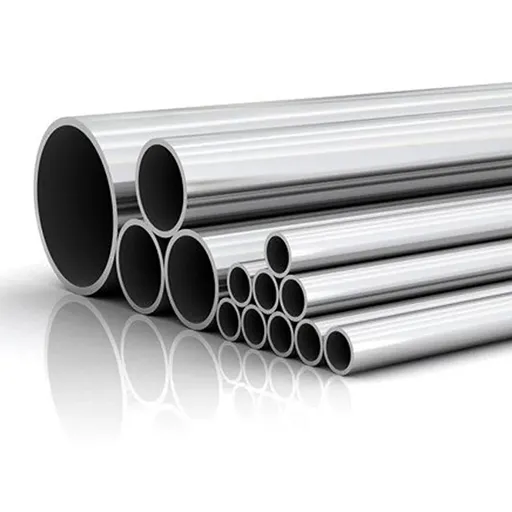
Fabricated Titanium Pipes & Tubes
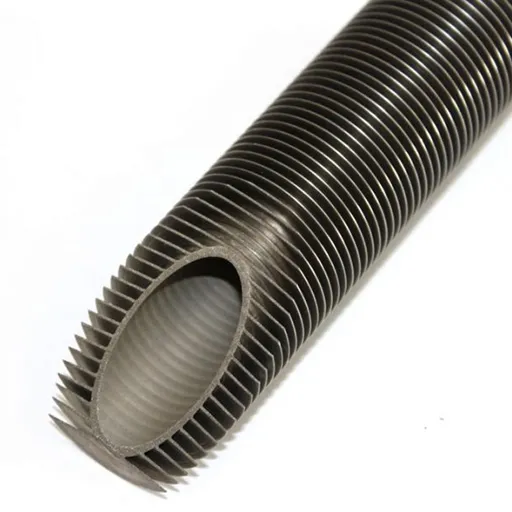
Finned Titanium Tubes
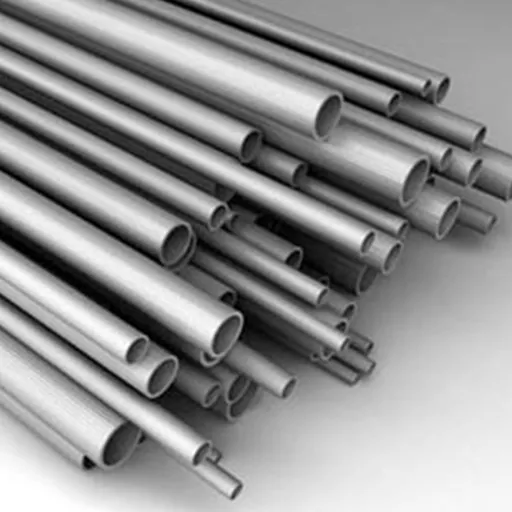
Seamless Titanium Pipes & Tubes
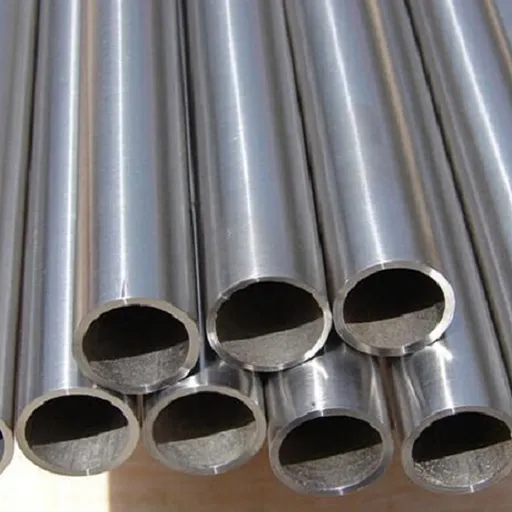
Welded Titanium Pipes & Tubes
Titanium Pipe & Tube Applications
- Desalination: B338 Grade 2 evaporator and brine heater bundles with B861 or B862 seawater piping, the Middle East's flagship titanium duty and this page's busiest lane.
- Power Plant Condensers: coastal and once-through seawater cooling where retube intervals decide the economics, including African coastal generation.
- Chemical Processing: nitric and organic acids, chlorine dioxide and wet chlorine service, with Grade 7 or 12 where the acid turns reducing.
- Flue Gas Desulphurisation: FGD circuits in the USA and India where acid chlorides defeat stainless families.
- Offshore & Marine: seawater cooling, firewater and ballast systems on platforms and vessels.
- Hydrometallurgy: autoclave and leach circuits, a growing African lane as processing moves closer to the mines.
Titanium Testing, Certification & Export to USA, Middle East & Africa
Tube and pipe are supplied to the chemistry, mechanical and dimensional requirements of B338, B861 or B862 as ordered, with hydrostatic or eddy current examination, flattening and flare tests per the specification, and ultrasonic examination on request. Every order ships with an EN 10204 3.1 mill test certificate, heat-number traceable, with 3.2 witnessing through BV, SGS or TUV at order stage. Metinox Overseas is an ISO 9001 and PED certified company; the program is on our Quality Policy page. Titanium is supplied made to order against mill material rather than held speculatively, so typical delivery runs 4 to 8 weeks by grade, size and quantity, and thin-wall condenser tube ships sleeved, foam-packed and crated per bundle as described on Packing and Dispatch, because a 0.5 mm wall does not forgive rough handling. Consolidations run from Mumbai to the USA, the Middle East and Africa.
Explore Related Ranges
- Super Duplex Steel Tubes – the steel alternative in seawater, usually cheaper and often sufficient
- Copper Pipes & Tubes – cupronickel condenser tube, antifouling behaviour with a velocity ceiling
- Special Alloys Pipes & Tubes – Monel, Hastelloy and the nickel families for the chemistry titanium cannot take
- Stainless Steel Tubes – the austenitic families, with the chloride ladder
- Pipes & Tubes – the full catalogue, one level up
Titanium Pipes & Tubes: Frequently Asked Questions
Product form and sizing. B338 covers titanium tube for condensers and heat exchangers, ordered by actual outside diameter and wall thickness, with thin-wall ductility as the priority. B861 covers seamless pipe for pressurised fluid transport, ordered by nominal pipe size and schedule, with B862 as its welded counterpart. A desalination plant typically buys both: B338 tube inside the evaporators, B861 or B862 pipe for the seawater network.
Grade 2 for essentially all ambient and moderate-temperature seawater duty; it is the industry default and it does not corrode in that service. If the brine runs hot, review Grade 12, which holds crevice resistance to far higher temperatures, or the palladium grades such as Grade 7 where the medium is also acidic. Grade 5 is a strength alloy and is usually the wrong answer for exchanger and piping work.
Compared per kilo, no. Compared per square metre of heat transfer surface, often far closer than expected: the density is roughly half that of steel, no corrosion allowance is needed so walls go down to around half a millimetre, and there is no velocity ceiling forcing extra surface area into the design. Send the duty and surface area rather than a tonnage and the comparison against super duplex or cupronickel becomes an honest one.
In wet chlorine, yes, and it is one of the very few materials that is effectively immune. In dry chlorine gas, absolutely not: titanium reacts violently and can ignite. The moisture content of the stream is the entire safety case, so it belongs in the design basis. The same caution applies to dry bromine and iodine, and titanium should never see hydrofluoric acid or free fluorides in any form.
Yes. Middle East desalination is this page's busiest lane, with FGD and chemical work in the USA and coastal power and hydrometallurgy in Africa close behind. Material is made to order against mill heats, and thin-wall condenser tube ships sleeved, foam-packed and crated per bundle with the 3.1 documentation travelling with the cargo.
Enquire Now
Get pricing within 24 hours!