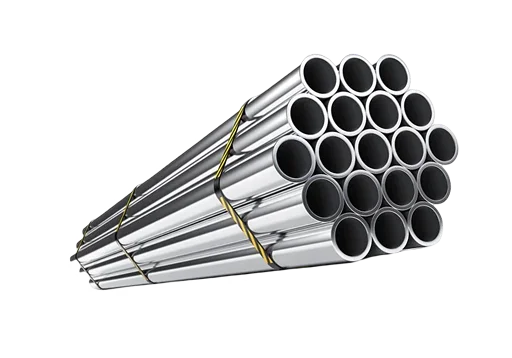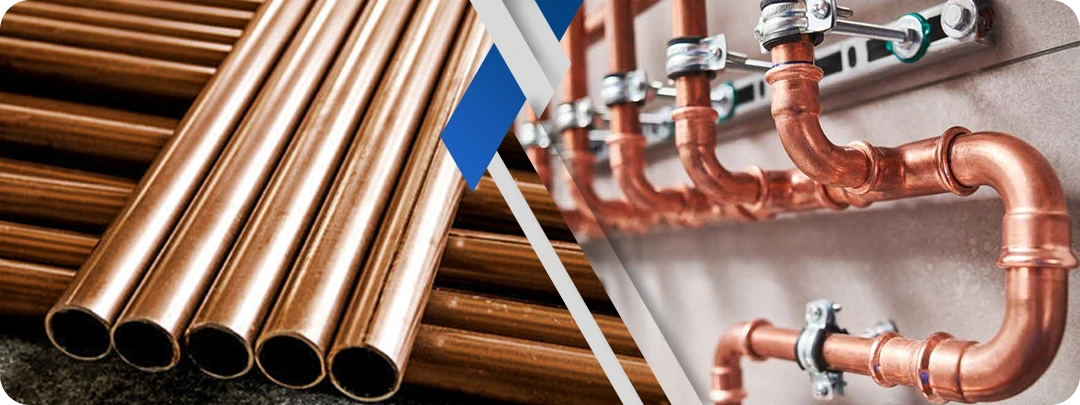
Copper is the oldest metal in the plumbing trade and still the default in half the world's condensers, which tells you something about how well it does two very different jobs. Metinox Overseas is a copper pipes and tubes manufacturer and supplier in Mumbai, covering pure copper to ASTM B88 and B280 for water, medical gas and HVAC alongside copper alloy condenser tubes to B111 and cupronickel pipe to B466, shipped to buyers across India, the USA, the Middle East and Africa with 3.1 certification on every lot. Nothing else conducts heat this well at this price. The full catalogue sits under Pipes & Tubes; this page is the copper corner of it.
One orientation note for exchanger buyers. Copper alloy tube competes directly with steel families for condenser duty, and the honest comparison runs through Stainless Steel Tubes and, in seawater, Super Duplex Steel Tubes. Copper wins on thermal conductivity and antifouling; steel wins on velocity tolerance and strength. Which matters more is a design question, and we stock both sides of it.

Table of content
- Two Copper Families, One Page
- The Copper Pipe & Tube Standards Map
- ASTM B88 Copper Water Tube: Types K, L and M
- ACR Copper Tube for HVAC & Refrigeration (ASTM B280)
- Condenser Tube Alloys: Picking Copper by the Water
- Velocity Limits in Copper Alloy Tubes
- Where Copper Stops Working
- Types of Copper Pipes & Tubes
- Copper Pipe & Tube Applications
- Copper Testing, Certification & Export to USA, Middle East & Africa
- Explore Related Ranges
- Copper Pipes & Tubes: Frequently Asked Questions
Two Copper Families, One Page
Copper enquiries arrive from two unrelated worlds, and mixing them is how the wrong tube gets quoted. Find your half here first.
| Pure Copper | Copper Alloys | |
|---|---|---|
| Materials | C12200 (DHP), C10200 (OF) | C44300 admiralty brass, C68700 aluminium brass, C70600 and C71500 cupronickel |
| Bought for | Conductivity: water, gas, refrigerant, heat | Corrosion: exchanger and condenser tube in aggressive water |
| Sized by | B88 Type K/L/M nominal, or ACR actual OD | Actual OD and wall, like any exchanger tube |
| Typical buyer | Plumbing contractor, HVAC installer, hospital gas line | Power plant, desalination, refinery, shipyard |
| Governing standards | B88, B280, B75, B42, EN 1057 | B111 (tube), B466 / B467 (pipe) |
The Copper Pipe & Tube Standards Map
- ASTM B88: seamless copper water tube, the plumbing standard, sold as Types K, L and M.
- ASTM B280: seamless copper tube for air conditioning and refrigeration field service, the ACR standard, sized by actual OD.
- ASTM B75 / B42: general seamless copper tube and standard-size copper pipe for engineering and industrial use.
- ASTM B111: seamless copper and copper alloy condenser tube and ferrule stock, the exchanger standard covering everything from pure copper to 70/30 cupronickel.
- ASTM B466 / B467: seamless and welded copper-nickel pipe, written for seawater piping systems rather than exchanger bundles.
- EN 1057: the European plumbing tube standard, supplied against order for specifications written to European practice.
The pairing worth memorizing: B111 for the tube inside the exchanger, B466 for the pipe carrying seawater to it. Same alloys, different products, and the standard on the purchase order decides which arrives.
ACR Copper Tube for HVAC & Refrigeration (ASTM B280)
ACR tube is a different animal from plumbing tube even though both are copper. It is designated by actual outside diameter rather than nominal size, which is why a ⅜" ACR tube and a ⅜" plumbing tube are not the same thing, and it is supplied cleaned, dehydrated and capped or plugged at both ends so the bore stays dry and oil-free until the installer cuts it. Soft coils come bright annealed after coiling for field bending on split systems; hard straight lengths serve fixed plant. We supply 6 to 35 mm OD, roughly ⅛" to 1⅜", in both tempers, and the caps stay on until the tube reaches the job.
Velocity Limits in Copper Alloy Tubes
Here is the number that quietly destroys more copper alloy bundles than corrosion ever does. Every alloy on that ladder has a maximum design water velocity, above which the protective film is stripped faster than it re-forms and impingement attack begins. As typical design guidance, admiralty brass sits lowest at roughly 1.5 to 1.8 metres per second, aluminium brass takes about 2.4, 90/10 cupronickel about 3.0, and 70/30 cupronickel the highest at roughly 3.5 to 4.5. Partial tube blockage raises local velocity in the tubes still flowing, which is how a fouled condenser starts eating itself at design flow. If your exchanger duty runs fast, either climb the ladder or move to a steel family that does not care about velocity. Send the design flow rate with the enquiry and we will say plainly which alloy survives it.
Where Copper Stops Working
- Ammonia and amines: the brasses on this page crack under stress in ammonia-bearing atmospheres, which rules them out of several refinery and fertilizer positions. Cupronickel handles ammonia far better; pure copper better still.
- Sulphide-polluted seawater: stagnant, sulphide-bearing harbour water attacks cupronickel's protective film, and commissioning layup in dirty water has ruined bundles before the plant ever ran. Flush and lay up clean.
- Galvanic company: couple cupronickel to titanium in seawater and the copper alloy becomes the anode and corrodes to protect the titanium. Compatible tube sheets, dielectric gaskets or sleeves are the fix, and the decision belongs at design stage, not commissioning.
- Velocity, again: the limits above are design constraints, not suggestions.
Where the water or the flow defeats the copper ladder entirely, the answers are super duplex tube for high-velocity seawater or the nickel families on Special Alloys Pipes & Tubes where Monel handles what nothing else will. We stock all of them, so the recommendation follows the water rather than the shelf.
Types of Copper Pipes & Tubes
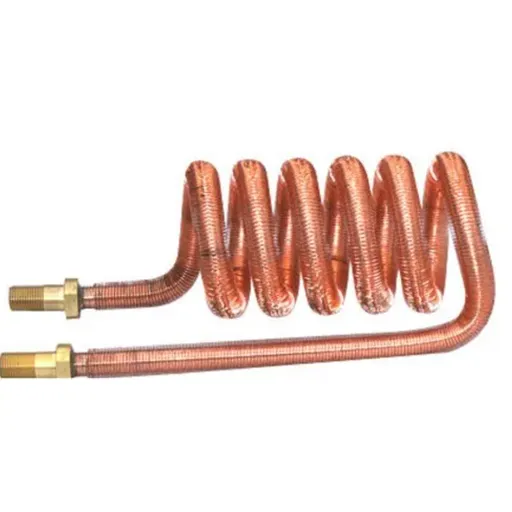
Copper Fin Tube
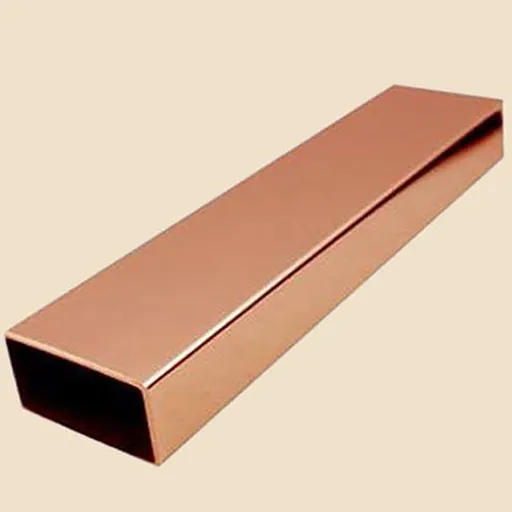
Copper Rectangular Tube
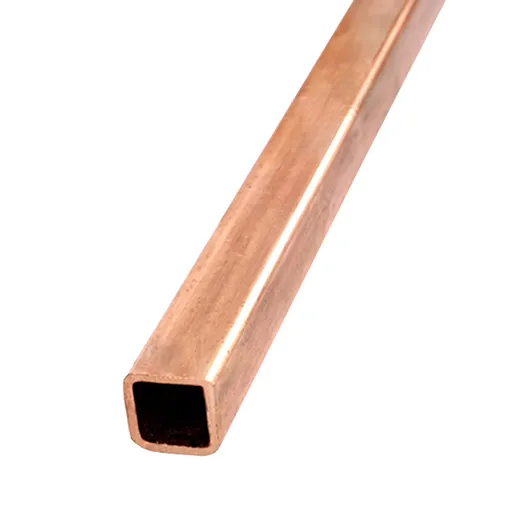
Copper Square Tube
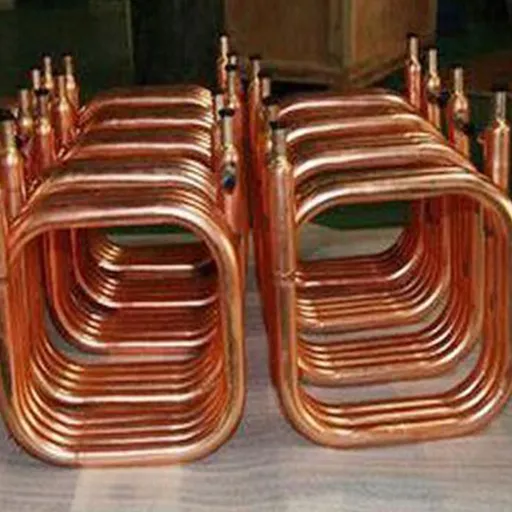
Copper Tube Heat Exchanger
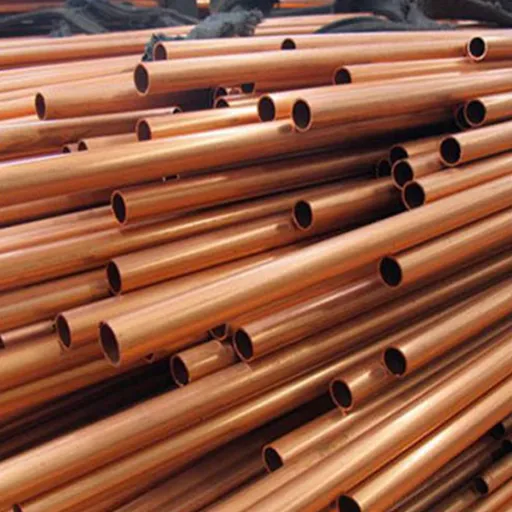
Eco Friendly Copper Tube
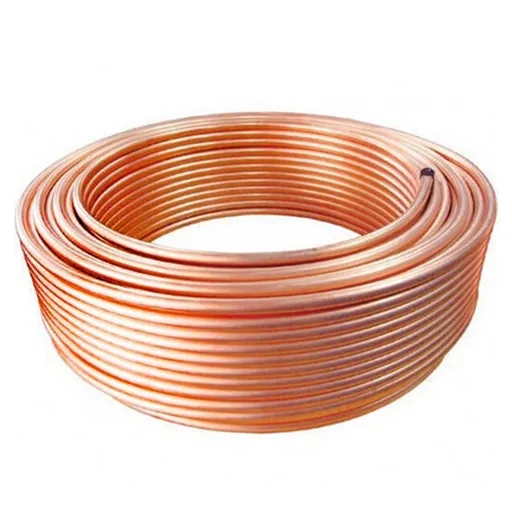
LWC Copper Tube
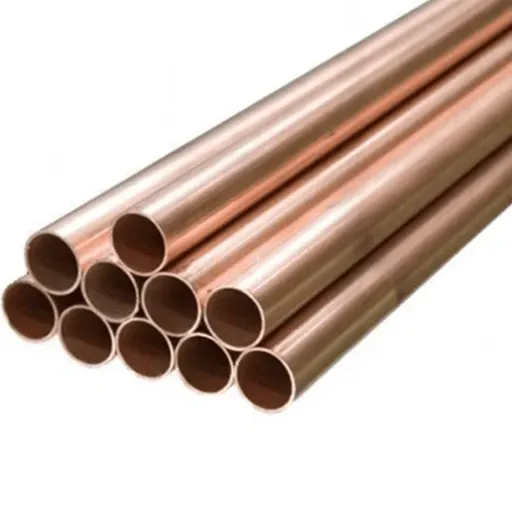
Medical Grade Copper Pipe
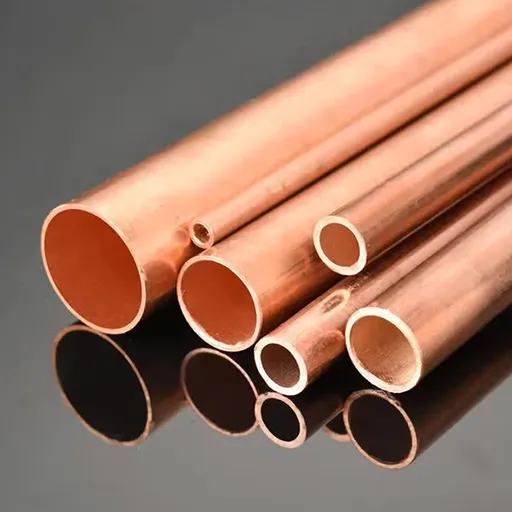
Polished Copper Pipe
Copper Pipe & Tube Applications
- Plumbing & Building Services: B88 Type L and K risers, mains and underground runs, a steady lane for African and Gulf construction projects.
- Medical Gas: cleaned and capped copper tube for hospital oxygen and vacuum systems, where the bore condition is the specification.
- HVAC & Refrigeration: B280 ACR coils and straight lengths for split systems, chillers and cold rooms.
- Power & Desalination: B111 condenser bundles from admiralty brass to 90/10 cupronickel, the Middle East's busiest copper lane.
- Marine & Offshore: B466 cupronickel seawater piping, firefighting mains and cooling systems where biofouling resistance pays every year.
- Industrial Heat Exchange: process coolers and evaporators where copper's conductivity shrinks the surface area needed.
Copper Testing, Certification & Export to USA, Middle East & Africa
Tubes are supplied to the chemistry, temper and dimensional requirements of their governing standard, with eddy current or hydrostatic testing, expansion and flattening tests per the specification, and eddy current examination standard practice on condenser bundles. Every order ships with an EN 10204 3.1 mill test certificate, lot traceable, with 3.2 witnessing through BV, SGS or TUV at order stage. Metinox Overseas is an ISO 9001 and PED certified company; the program is on our Quality Policy page. One commercial honesty that separates copper from steel: copper is LME-linked, so our quotations carry a stated validity window rather than an open price, and confirming quickly genuinely costs less than confirming slowly. Export consolidations run from Mumbai to the USA, the Middle East and Africa, with coils boxed, condenser tube crated per bundle and ends capped throughout, as described on Packing and Dispatch. Ex-stock dispatches in 7 to 14 working days; made-to-order alloys and sizes take 4 to 6 weeks.
Explore Related Ranges
- Stainless Steel Tubes – the steel comparison for exchanger duty, with the chloride ladder and PREN
- Super Duplex Steel Tubes – high-velocity seawater where the copper ladder runs out
- Special Alloys Pipes & Tubes – Monel and the nickel families for the hardest water and chemistry
- Pipes & Tubes – the full catalogue, one level up
Copper Pipes & Tubes: Frequently Asked Questions
Wall thickness, not material. All three are the same C12200 copper and share a common outside diameter, so fittings interchange. Type K is heaviest and goes underground and into medical gas service, Type L is the interior water standard and the safe default when a drawing just says copper, and Type M is the lightest wall used where local code permits, typically low-pressure interior water.
No, and the sizing alone will catch you out: ACR tube under ASTM B280 is designated by actual outside diameter while plumbing tube is nominal, so the same fraction means two different tubes. ACR is also supplied cleaned, dehydrated and capped so the bore stays dry and oil-free, which matters enormously to a refrigerant circuit and not at all to a water line.
90/10 cupronickel, C70600, is the seawater standard and handles most marine and desalination duty with strong biofouling resistance. Step to 70/30, C71500, where velocity or temperature runs higher. Admiralty brass and aluminium brass belong to fresher and brackish water, not open seawater. Send the water analysis and the design flow rate and the alloy picks itself.
It depends on the alloy, and exceeding it strips the protective film faster than it re-forms. As typical design guidance, admiralty brass sits around 1.5 to 1.8 metres per second, aluminium brass about 2.4, 90/10 cupronickel about 3.0 and 70/30 cupronickel roughly 3.5 to 4.5. Remember that a partially blocked bundle raises velocity in the tubes still flowing, which is how fouling turns into erosion damage.
Yes, on regular consolidations from Mumbai, with coils boxed, condenser tube crated per bundle and every end capped so the bore arrives as clean as it left. Middle East desalination and power condenser work is this page's busiest lane. One commercial note: copper is LME-linked, so quotations carry a validity window rather than an open price.
Enquire Now
Get pricing within 24 hours!