Instrumentation Tubes Manufacturer & Supplier in India
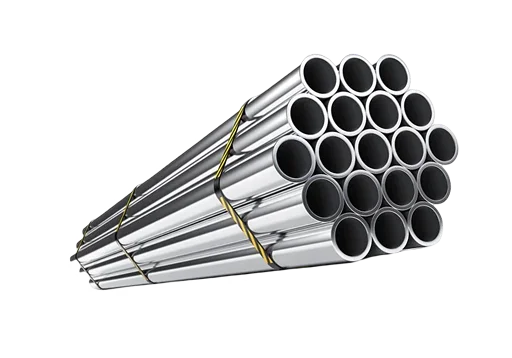
Metinox Overseas is a trusted instrumentation tube manufacturer and supplier in India, producing high-precision instrumentation tubing in stainless steel and exotic alloys for critical fluid and gas control systems. Our seamless and welded instrumentation tubes are manufactured to ASTM A269 and ASTM A213, supplied with mill test certificates to EN 10204 3.1, and available in custom sizes for impulse lines, hydraulic lines and analyzer connections across the oil & gas, petrochemical, pharmaceutical and power industries.
Explore our wider stainless steel tubes range and complete pipes and tubes catalogue, or contact our team for a same-day quotation.
Request a Quote
Table of content

What is Instrument Tubing?
An instrumentation tube is a small-diameter, tight-tolerance tube used to carry pressure signals, fluids or gases between field instruments and the main process line. Unlike general piping, instrumentation tubing is bendable, leak-tight under high pressure, and made to precise outside-diameter (OD) and wall-thickness tolerances so it can be joined with compression tube fittings. These tubes connect transmitters, gauges, control valves and analyzers, making them essential to safe, accurate process control.
Instrumentation Tube vs. Pipe — The Key Difference
The core difference is how each is measured. Tubes are specified by their actual outside diameter (OD) and wall thickness, giving the precision needed for instrumentation connections. Pipes are specified by Nominal Bore (NB) and schedule, which describe an approximate inside diameter. This is why instrumentation lines use tubes: they bend cleanly, seal reliably with ferrule fittings, and hold exact dimensions. Learn more in our guide to seamless vs welded tubing.
Types of Instrumentation Tubes We Manufacture
Seamless Instrumentation Tubes
Seamless instrumentation tubes are cold-drawn from a solid billet with no weld seam, giving uniform wall thickness and the highest pressure integrity. They are the preferred choice for high-pressure hydraulic and impulse lines to ASTM A269 / A213.
Welded Instrumentation Tubes
Welded instrumentation tubes are formed from strip and precision-welded, offering an economical solution for lower-pressure instrument and analyzer lines while maintaining tight OD tolerances and excellent surface finish.
Bright Annealed (BA) Instrumentation Tubing
For clean, corrosion-resistant surfaces we supply bright annealed instrumentation tubing to ASTM A269 BA finish, including 304 BA tubes and 316L BA tubing. See our BA instrumentation tubing selection guide and surface roughness (Ra) explainer for finish selection.
Instrumentation Tube Grades & Materials
We stock and manufacture instrumentation tubing across a full range of stainless steel grades and high-performance alloys. Click a grade for full specifications:
Stainless Steel Instrumentation Tubes
- SS 304 / 304L instrumentation tubes — the versatile, cost-effective standard for general service.
- SS 304L low-carbon tubes — improved weldability and intergranular corrosion resistance.
- SS 316 / 316L instrumentation tubes — molybdenum-added for chloride and offshore environments.
- SS 321 / 321H tubes — titanium-stabilised for high-temperature service.
- SS 310S tubes — high-temperature oxidation resistance.
- SS 317 / 317L tubes — enhanced pitting resistance.
- SS 347 / 347H tubes — stabilised grade for elevated temperatures.
- SS 904L tubes — super-austenitic for aggressive acids.
Alloy & Exotic Instrumentation Tubes
- Monel 400 tubes — for seawater and reducing acids.
- Inconel 625 tubes and Inconel 600 — high-temperature, high-corrosion service.
- Incoloy 825 tubes — acid and chloride resistance.
- Hastelloy tubes — for the most severe corrosive media.
- Duplex 2205 tubes and super duplex tubes — high strength, chloride resistance.
- Copper instrumentation tubes and cupro-nickel 90/10 tubes — for pneumatic and marine lines.
Instrumentation Tube Specifications
| Attribute | Detail |
|---|---|
| Standards | ASTM A269, ASTM A213, ASTM A249, ASME SA269 / SA213 |
| Type | Seamless & Welded |
| Size (OD) | 1/16" to 2" OD (1.5 mm to 50.8 mm) |
| Wall thickness | 0.028" to 0.109" (0.7 mm to 3.0 mm) / 22 SWG to 12 SWG |
| Length | Random 4–7 m straight lengths; coils for smaller OD |
| Finish | Bright Annealed (BA), Pickled, Polished, EP |
| Hardness | Fully annealed, ≤ 90 HRB (soft temper for bending) |
| Tolerances | Close OD & wall tolerance per ASTM A269 |
| Test certificate | EN 10204 3.1 Mill Test Certificate |
| Packing | PVC end caps, sleeved, wooden boxes / crates |
Reference our pipe schedule chart, SS pipe weight chart and technical datasheets for full dimensional data.
Applications of Instrumentation Tubing
Our instrumentation tubes serve impulse lines, hydraulic and pneumatic lines, sample and analyzer connections, and control-system tubing across:
- Oil & Gas — onshore, offshore and subsea instrument lines.
- Petrochemical — process control and pressure sensing.
- Chemical processing — corrosive media handling.
- Refineries — high-temperature, high-pressure service.
- Marine & offshore — chloride-resistant tubing.
- Power generation, pharmaceuticals, fertilizers, hydraulics and steel plants.
Standards, Testing & Approvals
Every batch of instrumentation tubing is manufactured to international standards and tested for pressure, dimensions and material composition. We supply ADNOC / SABIC / KNPC / KOC approved tubes and back each order with full documentation. Review our quality policy and certificates.
- Hydrostatic & pneumatic pressure testing
- Eddy current and non-destructive testing (NDT)
- PMI, chemical & mechanical verification
- EN 10204 3.1 mill test certificates with every consignment
FAQs about Instrumentation Tube
Instrumentation tubes carry pressure signals, fluids and gases between field instruments (transmitters, gauges, valves) and the main process line. They are used for impulse lines, hydraulic and pneumatic lines, and analyzer connections.
A tube is measured by its actual outside diameter (OD) and wall thickness, giving the precision needed for instrumentation. A pipe is measured by Nominal Bore (NB) and schedule. Instrumentation lines use tubes because they bend cleanly and seal reliably with compression fittings.
The most common are ASTM A269 and ASTM A213 (and their ASME SA equivalents) for seamless and welded stainless steel instrumentation tubes.
SS 304 suits general service and is cost-effective. SS 316/316L adds molybdenum for superior resistance to chlorides, seawater and offshore environments. See our SS 304 vs SS 316 comparison for detail. Read: SS 304 vs SS 316.
Yes. We manufacture both seamless (for high-pressure lines) and welded (economical, lower-pressure) instrumentation tubes, in bright annealed, pickled and electropolished finishes.
Enquire Now
Get pricing within 24 hours!