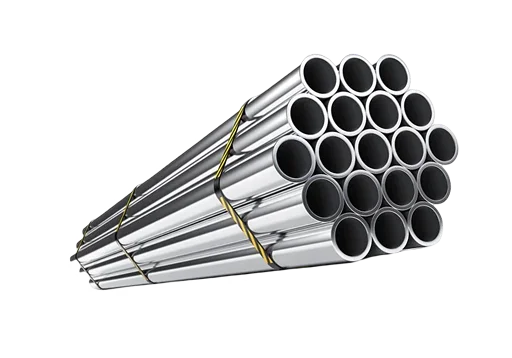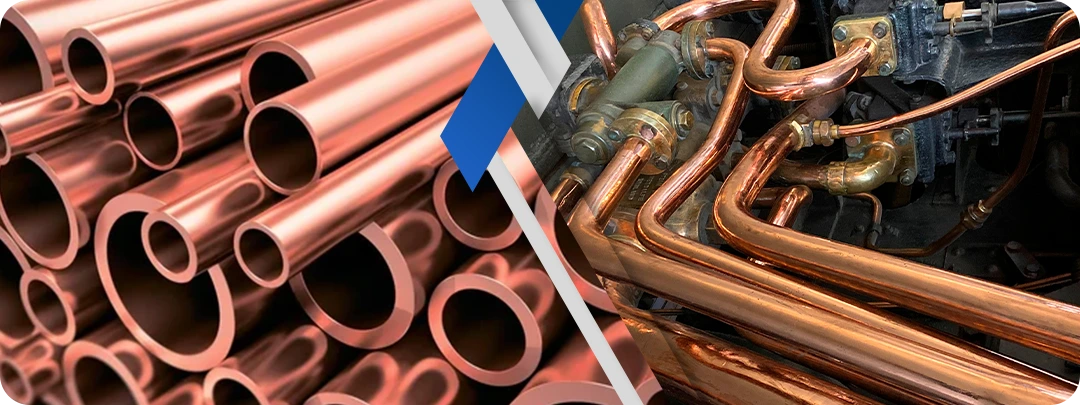
If a material could be designed specifically for seawater, it would look a lot like cupro nickel 90/10. Metinox Overseas supplies cupro nickel 90/10 pipes and tubes to ASTM B466 and B111, UNS C70600, with 3.1 certification and export lanes to the USA, the Middle East and Africa. Ninety percent copper and ten percent nickel, with a little iron and manganese, gives an alloy that resists seawater corrosion, shrugs off the erosion that troubles plain copper, and does one thing no rival seawater material can match: it discourages marine life from growing on it. It is the standard tube for ship hulls, desalination plant and coastal power condensers. It belongs to the copper family at Copper Pipes & Tubes, which carries the full condenser-alloy selection.
Against its seawater rivals it trades differently. Titanium Pipes & Tubes beat it on raw corrosion and velocity but cannot match its antifouling behaviour, and Super Duplex Steel Tubes take higher flow speeds where 90/10 reaches its limit. Choosing between them is a question of fouling, velocity and cost, and this page covers where 90/10 wins.
Request a Quote on Cupro Nickel 90/10 Pipes & Tubes →
Table of content
- The Biofouling Advantage: 90/10's Unique Claim
- C70600 vs C71500: 90/10 or 70/30?
- Cupro Nickel 90/10 Chemistry & Properties
- B466 Pipe & B111 Tube: The Standards Split
- Velocity, Iron Dosing & Commissioning
- Types of Cupro Nickel 90/10 Pipes & Tubes
- Cupro Nickel 90/10 Applications & Export to USA, Middle East & Africa
- Explore Related Ranges
- Cupro Nickel 90/10 Pipes & Tubes: Frequently Asked Questions
The Biofouling Advantage: 90/10's Unique Claim
This is the property that sells the alloy. In seawater, the surface of copper-nickel slowly releases a trace level of copper ions, and that low-level release makes the surface inhospitable to the barnacles, mussels and algae that colonise almost every other material. The practical result is a condenser or seawater line that stays clean without antifouling paint, without continuous chlorination, and without the efficiency loss that fouling brings to a heat exchanger. Titanium and super duplex resist corrosion beautifully but foul like anything else and need mechanical or chemical cleaning to stay clear; 90/10 handles that problem in the metallurgy. On a ship hull or a seawater intake, that is the difference between a designed-in solution and an ongoing maintenance cost. It is the one argument for cupro nickel that titanium cannot answer.
C70600 vs C71500: 90/10 or 70/30?
Cupro nickel comes in two main tube grades and the choice is velocity and severity against cost.
| 90/10 (C70600) | 70/30 (C71500) | |
|---|---|---|
| Nickel | About 10% | About 30% |
| Seawater corrosion | Excellent for most service | Better still, for the harshest duty |
| Velocity tolerance | Good (see the copper page ladder) | Higher, for fast or turbulent flow |
| Strength | Moderate | Higher |
| Cost | Lower, the default choice | Higher, specified when 90/10 is not enough |
For the large majority of seawater piping and condenser duty, 90/10 is the right and economical answer. 70/30 steps in for higher velocities, hotter or more polluted seawater, and where extra strength is needed. The velocity numbers that decide between them, and against the other copper alloys, are set out on the copper page so they live in one place.
B466 Pipe & B111 Tube: The Standards Split
- ASTM B466 / SB466: seamless copper-nickel pipe, sized by NB and schedule, for seawater piping systems, risers and mains.
- ASTM B111 / SB111: copper and copper-alloy condenser and heat exchanger tube, sized by OD and wall, for bundles and coils.
- ASTM B467: welded copper-nickel pipe, for larger diameters where welded construction suits the duty.
The rule is the usual one: B466 pipe for the seawater distribution system, B111 tube for the heat transfer surface inside the exchanger. State which you need and, for tube, the OD and wall or BWG, and the enquiry prices cleanly.
Velocity, Iron Dosing & Commissioning
Copper-nickel has a design velocity ceiling, because above a certain flow speed the protective film is stripped and impingement attack begins, and that ceiling is the single most important number in a 90/10 design. Rather than repeat it here, we keep the full velocity ladder, comparing 90/10, 70/30 and the brasses side by side, on the Copper Pipes & Tubes page, so a designer sees all the alloys in one table. Two 90/10-specific points belong here, though. First, the protective film needs a clean, aerated start to form properly, so a new system should be commissioned on clean seawater rather than left stagnant or exposed to sulphide-polluted water during construction. Second, ferrous sulphate dosing is sometimes used at commissioning and early service to help build and maintain that protective film, particularly on the tougher intakes. Both are about protecting the film the iron content is there to create.
Types of Cupro Nickel 90/10 Pipes & Tubes
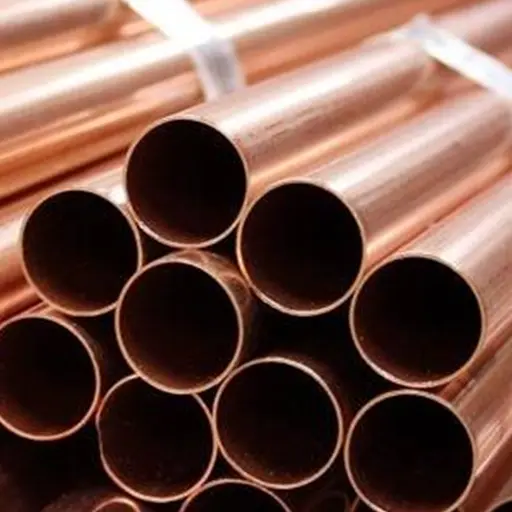
90_10 Copper Nickel Seamless Tube
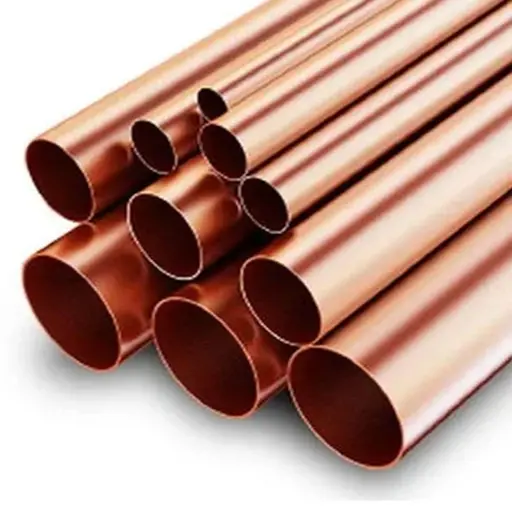
90_10 Cuni Welded Pipe
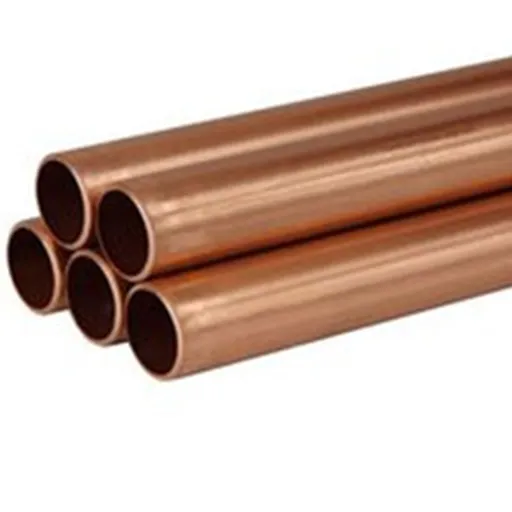
ASTM B466 C70600 Seamless Pipe
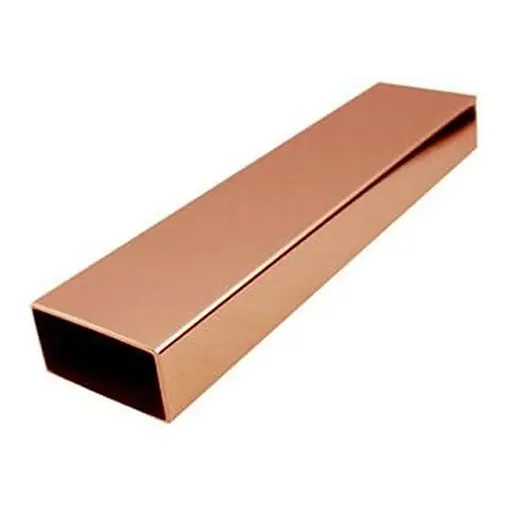
CDA 706 Rectangular Tube
Cupro Nickel 90_10 Hydraulic Tube
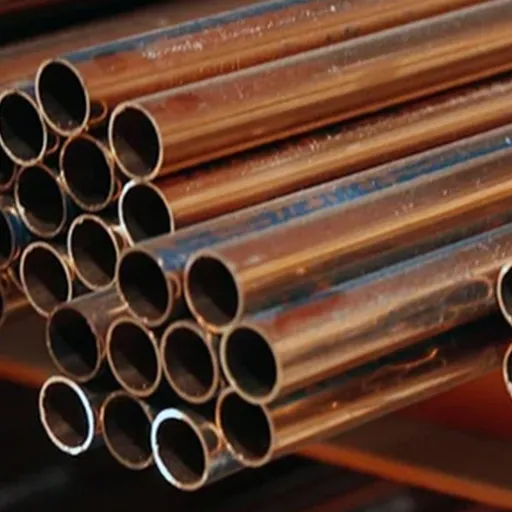
EEMUA 144 Round Tube
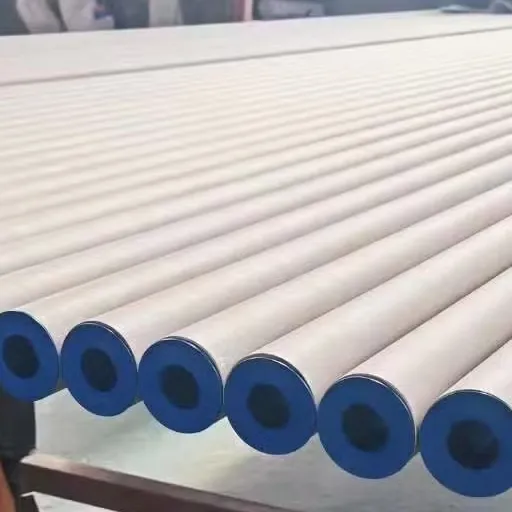
EEMUA 234 Welded Tube
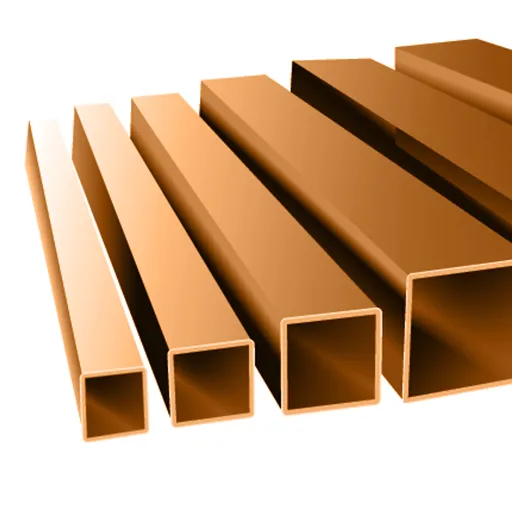
WNR 2.0872 Square Tube
Cupro Nickel 90/10 Applications & Export to USA, Middle East & Africa
- Desalination: MSF and MED evaporator tubing and seawater piping, a flagship Middle East lane where the antifouling behaviour cuts cleaning downtime.
- Shipbuilding & Marine: seawater cooling, firewater, bilge and ballast piping, and hull sheathing.
- Coastal Power Condensers: once-through seawater cooling, including African coastal generation.
- Offshore Platforms: seawater service and firewater ring mains.
- Brine & Chemical: selected neutral salt and brackish-water duty.
Every order ships with an EN 10204 3.1 certificate; see Quality Policy. Consolidations run from Mumbai to the USA, the Middle East and Africa, tube crated per bundle and pipe end-capped per Packing and Dispatch. Ex-stock tube dispatches in 7 to 14 working days; pipe and made-to-order sizes take 4 to 6 weeks.
Explore Related Ranges
- Copper Pipes & Tubes – the parent, with the condenser-alloy ladder and velocity limits
- Titanium Pipes & Tubes – higher corrosion and velocity, but no antifouling claim
- Super Duplex Steel Tubes – the high-velocity seawater alternative
- Monel 400 Pipes & Tubes – the nickel-copper cousin for HF acid and flowing seawater
Cupro Nickel 90/10 Pipes & Tubes: Frequently Asked Questions
Because it combines three things few materials do at once: strong seawater corrosion resistance, erosion resistance from its deliberate iron content, and natural resistance to biofouling. The last is unique among the common seawater materials. That is why 90/10 is the standard tube for ship hulls, desalination plant and coastal condensers.
The copper. In seawater the surface releases a trace level of copper ions, which makes it inhospitable to barnacles, mussels and algae, so the tube stays clean without antifouling paint or continuous chlorination. Titanium and super duplex resist corrosion but foul normally and need cleaning; 90/10 handles fouling in the metallurgy itself.
Nickel content and duty. 90/10 (C70600) has about 10 percent nickel and is the economical default for most seawater service. 70/30 (C71500) has about 30 percent, tolerating higher velocities, hotter or more polluted seawater and carrying more strength, at a higher cost. Choose 90/10 unless the service is severe enough to need 70/30.
Copper-nickel has a design velocity ceiling above which the protective film is stripped and impingement begins, and it is the key number in a 90/10 design. We keep the full velocity ladder, comparing 90/10 with 70/30 and the brasses, on our copper page so all the alloys sit in one table. A clean commissioning and, on tougher intakes, ferrous sulphate dosing help the protective film form and last.
Yes, tube crated per bundle and pipe end-capped from Mumbai with the 3.1 documentation. Middle East desalination is the busiest lane, with shipbuilding and coastal power across all three regions, where the antifouling behaviour reduces cleaning downtime over the plant life.
Enquire Now
Get pricing within 24 hours!