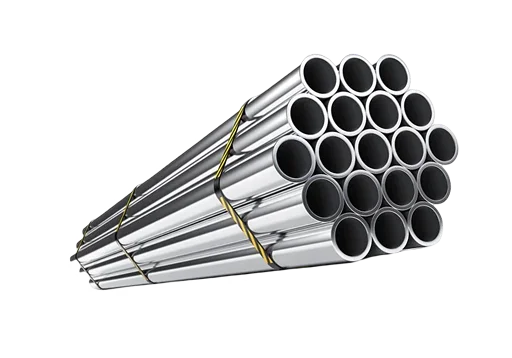
The bright annealed 316L instrumentation tubing is the standard for clean, accurate analytical and process lines and for good reason. It is special because, during manufacture, the tubes are subjected to a heat treatment in a controlled atmosphere, typically either hydrogen or a cracked ammonia gas. This removes the oxide film, which will form on the interior of the tube upon heating, a thin rough coating. What you're left with is an extremely clean, smooth inner surface.
This is important if you are transferring analytical samples, ultra pure gases or pharmaceutical grade fluids through the tube. Contamination on the wall of the tube can destroy your sample or not meet a quality standard.
Tubes processed without bright annealing retain an oxide layer on the ID. Moisture and chloride ions adsorb into that rough oxide surface. In gas chromatography systems or pharmaceutical water circuits, those contaminants leach back into your process stream and corrupt results.
This guide is written for engineers that are considering tubing options for instrumentation or high purity applications. The idea is to provide you with a clear understanding of the standards, grades, and compromises before you call a supplier.
What Makes Tubing Suitable for Instrumentation and High-Purity Use?
Not all tubing is created equal. Most people zero in on pressure ratings and material grade, but for instrumentation and high purity tubing, there are four pillars that actually drive selection:
- Clean ID / low surface roughness (Ra): A smooth inner surface cuts down on particles getting trapped and eliminates dead zones where fluid can pool. For high-purity gas service, engineers commonly require a roughness (Ra) of 0.25 micrometers or less. Semiconductor fab lines push it even further, down to 0.125 micrometers, achieved through a process called electropolishing. The BA finish typically delivers Ra values well under 0.5 micrometers right off the production line.
- Tight OD tolerance: Compression fittings, brands like Swagelok and Parker, rely on a precise outer diameter (OD) to grip the tube correctly with their ferrule (the small ring that bites into the tube). If a tube is even a few hundredths of a millimeter out of round, you've got a leak waiting to happen in a critical sampling line.
- Corrosion resistance: Whether it's trace chlorides in a coastal plant environment or aggressive solvents in a GC carrier-gas line, the metal needs to hold up without producing corrosion byproducts that get into your sample stream.
- Formability (bending and flaring): Instrument lines rarely run in straight paths. The tubing has to bend cleanly without going oval or thinning out at the bend. Either of those weakens the tube or changes its inner diameter. For tight-radius bends (typically 3x to 5x the outer diameter), thin-wall BA tubing keeps its shape better than thick-wall options. Before you finalize wall thickness on a routed run, check the bend radius limits with your fitting supplier.
When all four of those requirements come together, 316L BA tubing is the standard answer. Metinox Overseas stocks bright annealed 316L instrumentation tubing in OD sizes from 1/8" to 1" with wall options matched to Swagelok and Parker compression-fitting specs, including thin-wall BA options sized specifically for instrumentation and analytical applications.
ASTM A269 vs ASTM A213 (and A270) Comparison
Three standards dominate in this space. Knowing which one applies to your application is the first thing to nail down. The ASTM A269 tube specification is the workhorse for general instrumentation service, while ASTM A213 is the right call when you need seamless construction and higher temperature/pressure credentials. ASTM A270 comes into play when you're working in pharmaceutical or food and beverage territory.
| Standard | Scope | Seamless / Welded | Typical Use |
|---|---|---|---|
| ASTM A249 | General service austenitic SS tubing | Seamless and Welded | Instrument impulse lines, analytical sample lines, process tubing, gas delivery circuits |
| ASTM A213 | Boiler, superheater and heat exchanger tubes | Seamless only | High-temperature/high-pressure steam and process service |
| ASTM A270 | Sanitary food/pharma SS tubing | Seamless and Welded | Pharmaceutical WFI, food and beverage processing |
For the vast majority of instrument impulse lines, sample lines, and gas delivery circuits, 316L BA / ASTM A269 BA tubing is the correct call. You get a certified, mill-tested product with defined dimensional tolerances and a documented surface condition, exactly what you need to write into a purchase order.
304/304L vs 316/316L vs 316Ti Grade Selection
Once you've settled on the standard, the next question is which alloy to use. The decision is actually pretty straightforward:
| Grade | Key Advantage | Use When... |
|---|---|---|
| 304 / 304L | General-purpose, dry/low-chloride environments | Lab gas lines, low-corrosion instrument loops |
| 316 / 316L | Mo addition (2.00-3.00% per ASTM A269) for pitting and crevice resistance | Offshore, coastal, chloride-bearing process streams |
| 316Ti | Ti-stabilised 316 for sustained high temps | Continuous service above ~400 deg C where sensitisation in standard 316/316L is a documented risk |
In practice, 316L is the default for anything outside a very dry, controlled lab environment. Its 2.00 to 3.00% molybdenum content (per ASTM A269 Gr 316L) gives it meaningful resistance to pitting in chloride-bearing streams, the kind of resistance 304 simply can't match. For low-temperature instrumentation in general service, SS 304 tube is a cost-effective option. But the moment you're working offshore, near the coast, or handling process fluids that even have trace chlorides, SS 316/316L tube is the right call.
For circuits that run continuously above around 400°C, like impulse lines on fired heaters, the titanium added to SS 316Ti tubeprevents a problem called sensitisation. That's when chromium carbides form at the metal's grain boundaries over time, which weakens the tube's corrosion resistance in standard SS 316/316L tube.
Pitting Resistance Equivalent Number (PREN) Comparison
| Grade | Typical PREN |
|---|---|
| 304 / 304L | 18–20 |
| 316 / 316L | 24–26 |
| 316Ti | 24–26 |
PREN Formula:
PREN = %Cr + (3.3 × %Mo) + (16 × %N)
Typical Mechanical Properties of SS 316L Bright Annealed Tubing
The mechanical properties of Stainless Steel 316L Bright Annealed (BA) tubing are specified by ASTM A269 and are critical for pressure system design, material selection, and compliance documentation. The values below represent the minimum requirements for UNS S31603 tubing supplied in the annealed condition.
| Property | Value |
|---|---|
| Tensile Strength (Min.) | 485 MPa (70,000 psi) |
| Yield Strength, 0.2% Offset (Min.) | 170 MPa (25,000 psi) |
| Elongation in 2 in. (Min.) | 35% |
| Hardness (Max.) | HRB 95 / HB 217 |
Note: Values shown are based on ASTM A269 Table 3 requirements for UNS S31603 (316L Stainless Steel). Actual test results may vary by production lot. Mill Test Certificates (EN 10204 3.1) supplied by Metinox Overseas include lot-specific tensile, yield, elongation, and hardness test data for full material traceability.
Seamless vs Welded for Instrumentation Tubing
The seamless vs welded stainless steel pipe debate matters in instrumentation, but the answer is more nuanced than "seamless is always better."
Seamless is genuinely mandated in these situations:
- High-pressure service where the applicable pressure code (e.g., ASME B31.3, EN 13480) or your client's project spec requires seamless construction, typically hydraulic and pneumatic circuits above 300 to 500 bar, depending on OD, wall thickness, and service temperature
- Ultra-high-purity semiconductor gas delivery where no weld seam is acceptable per the fab's spec sheet
- When your project specification or client SOR explicitly calls for seamless (common on offshore topsides)
Welded BA tubing is entirely acceptable and widely used for:
- Standard instrument impulse lines at normal operating pressures
- Analytical sample lines (GC, process analyzers)
- Pharmaceutical WFI and clean steam distribution, where the weld bead on the inside is fully bright-annealed to the same Ra as the rest of the tube
Key Applications of Instrumentation Tubing
Gas Chromatography (GC) Tubing: BA 316L in 1/8" to 1/4" OD is the industry standard. Carrier gases like helium, nitrogen, and hydrogen have to reach the column completely free of outgassing, particles, or adsorbed moisture. A rough inner surface makes that impossible. Electropolished versions are specified for the most sensitive instruments.
High-Purity Gas Delivery: Semiconductor fabs, gas manifolds, and laser-cutting skids all need a tube interior that adds zero particles, moisture, or hydrocarbons to the gas. BA finish with low Ra is the baseline. Most specs also require orbital welding with an inert gas purge to protect the interior during joining.
Pharmaceutical / WFI Systems: Water for Injection (WFI) and clean steam lines are governed by ASME BPE and EHEDG standards, which set specific requirements for surface roughness and slope-to-drain so the system can fully drain and be cleaned. BA 316L with a documented surface finish is the minimum. Electropolished interior (EP) is specified for the most critical loops.
Semiconductor and Electronics: Specialty gases like silane, germane, and arsine can be ruined by contamination at parts-per-billion levels, meaning a single bad batch. Seamless BA 316L with an EP inner surface and orbital-welded face-seal fittings (VCR/VCO) is standard. Argon purge through the weld is required to protect the BA finish at joints.
Hydraulic and Pneumatic Instrument Lines: Seamless BA 316L in heavier walls (for example, 1/2" x 0.083") covers most pressure transmitter and actuator service. Verify your maximum allowable working pressure (MAWP) against ASME B31.3 or your project code. Specify ASTM A213 when higher pressure-test credentials are required.
Sampling Lines (PASS): The sample has to travel from the tap to the analyzer with zero change in composition. BA finish, minimal dead volume, and the right alloy all apply at the same time. Hot-wet streams need heat-tracing or insulation to prevent condensation and phase change in the line.
Subsea Umbilical Instrument Lines: BA 316L in small-bore seamless construction is specified for hydraulic and signal tubing within subsea umbilicals, where weld-seam integrity and resistance to seawater corrosion are non-negotiable. 316Ti is applied where sustained elevated temperatures are anticipated near wellhead equipment.
Instrumentation Tubing Specifying and Ordering Checklist
Before you place an order for SS 316L tubes or any instrumentation-grade tubing, work through this list:
- OD tolerance: Confirm +/- 0.05 mm or better for compression-fitting compatibility. Swagelok and Parker spec sheets will state their required OD tolerance.
- Ra max: State the maximum allowable inner surface roughness. Common values: 0.5 µm (standard BA), 0.25 µm (high-purity BA), 0.125 µm (electropolished).
- Grade: 316L for most service; 304/304L for dry/low-corrosion environments; 316Ti for sustained high temperature above ~400°C.
- Seamless or welded: Specify based on your process requirements and/or project spec. If welded, confirm that the ID weld bead is fully annealed and meets the Ra spec.
- Length / coil: Straight lengths (typically 6 m) or coil for long instrument runs with fewer joints. Coil supply (typically 30 to 50 m per coil) reduces joint count on long routed instrument runs, preferred for offshore topsides where weld certification costs are high. Coiled BA tube is widely available in small OD sizes.
- Fitting compatibility: Confirm OD and wall thickness match the fitting manufacturer's recommended tube spec. This is especially important for 6 mm vs. 1/4" OD, as those two are not interchangeable.
- Test pack (documentation): At minimum, request a 3.1 Mill Test Certificate (MTC). For critical service, add: hydrostatic test, eddy current test (for weld seam integrity or wall thickness), PMI (positive material identification), and a surface Ra measurement certificate.
- Heat number traceability: For critical service, confirm the MTC includes heat/cast number traceability all the way through to the finished tube. This is required for ASME pressure code compliance and most tier-1 EPC project specifications.
Working through a tubing specification?
Metinox Overseas can confirm OD tolerance, Ra certification, and test pack requirements against your fitting supplier's spec sheet. Send us your process conditions and we will recommend the correct grade, construction, and documentation package.
Choosing the Right Instrumentation Tubing
For most instrumentation and high-purity applications, the answer comes together pretty quickly: 316L, BA finish, ASTM A269, with seamless construction reserved for high-pressure or ultra-high-purity service. Where projects run into trouble is in the details, including OD tolerance, Ra value, test documentation, and fitting compatibility. That's where a supplier who actually knows the applications makes a real difference.
Metinox Overseas supplies bright annealed instrumentation tubing in 316L, 304L, and 316Ti to ASTM A269 and A213, in seamless and welded construction, across OD sizes from 1/8" to 1", with full 3.1 MTC and optional eddy current, hydrostatic, and PMI documentation. Metinox Overseas supplies instrumentation tubing to engineering contractors across the Middle East, Southeast Asia, and Europe.
If you're working through a tubing selection for an upcoming project, contact us with your process conditions and we'll help you land on the right product, grade, and test pack.
Frequently Asked Questions
Not code-mandated, but universally specified. BA delivers a clean, smooth ID that minimises contamination and moisture adsorption. For analytical, gas, and pharma service, it is non-negotiable.
316L. Its 2-3% molybdenum content raises pitting resistance (PREN) significantly over 304L. For most instrumentation chloride environments, 316L is the correct and cost-effective choice.
Yes, for most applications. The weld bead must be fully annealed to the same Ra as the parent tube and properly tested. Seamless is only mandated for high-pressure or UHP semiconductor service.
Industrial gas: Ra 0.5 um (BA). Semiconductor UHP panels: Ra 0.25 um. Most demanding fab specs: Ra 0.125 um electropolished. Check your SEMI/EIGA guideline for the exact requirement.
BA tubing is annealed in a controlled atmosphere, providing a smooth ID finish. EP tubing undergoes additional electropolishing, creating an ultra-smooth, passivated surface preferred for semiconductor, pharma, and ultra-high-purity gas systems.
A 3.1 Mill Test Certificate (EN 10204) is required, showing chemical composition, mechanical properties, test results, and heat traceability. It should also confirm compliance with ASTM A269/A213 and applicable ASME B31.3 requirements.
Yes. Proper tube cutting and cold bending with suitable tools preserve the BA internal finish. However, welding, grinding, or hot work can damage the surface and create oxide scale unless protected with inert gas purging.