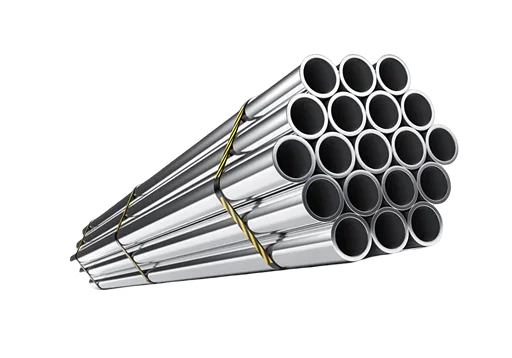
Stainless steel 347/347H flanges are specified where a joint must run hot for years without its welds turning into the weak point. Niobium makes the difference. Added to the melt, it combines with carbon before chromium carbides can form at the grain boundaries, so the zone beside each weld keeps its resistance to intergranular attack after long exposure to heat. Metinox Overseas supplies 347 and 347H flanges to ASTM A182 F347 and F347H for refinery, petrochemical and power buyers in India, the GCC and other export markets, alongside the wider range on our flanges page. The H grade carries a controlled carbon range for better creep strength.

Table of Contents
- Stainless Steel 347/347H Flange: Specification at a Glance
- Stainless Steel 347 Flanges vs 347H Flanges
- SS 347/347H Equivalent Grades
- Chemical Composition of the ASTM A182 F347H Stainless Steel Blind Flange
- Mechanical Properties of Stainless Steel 347 Pipe Flanges
- Physical Properties of Steel 347 Flanges
- Types in Stainless Steel 347/347H
- SS 347H Flanges Dimensions: ASME B16.5 Class 150 Weld Neck
- SS 347 / 347H Flanges Pressure Rating Chart
- Applications of SS 347/347H Flanges
- SS 347H Flange Price and SS 347 Pipe Flanges Price
- Certification, PMI and Inspection
- Matching Pipe, Fittings and Flanges in 347/347H
- Request a Quotation for Stainless Steel 347/347H Flanges
- Frequently Asked Questions
Stainless Steel 347/347H Flange: Specification at a Glance
| Parameter | Detail |
|---|---|
| Material specification | ASTM A182 / ASME SA182, grades F347 (UNS S34700) and F347H (UNS S34709). Plate flanges may be cut from ASTM A240 / ASME SA240 |
| Dimensional standards | ASME B16.5 (NPS 1/2 to 24), ASME B16.47 Series A and B (NPS 26 to 60), EN 1092-1, BS 10, MSS SP-44, to purchaser drawing |
| Pressure classes | Class 150, 300, 400, 600, 900, 1500, 2500 (ASME B16.5); Class 75 to 900 (ASME B16.47) |
| Facings | Raised face (RF), flat face (FF), ring type joint (RTJ), tongue and groove, male and female |
| Facing finish | To ASME B16.5 or as specified (for example, 125 to 250 µin Ra serrated RF) |
| Sizes | Sizes to specification: send your NPS or DN, class, facing, bore or schedule and quantity |
| Certification | EN 10204 type |
Stainless Steel 347 Flanges vs 347H Flanges
The only real difference is carbon.
347 allows up to 0.08 % carbon and is chosen when the main worry is corrosion after welding.
347H must have between 0.04 % and 0.10 % carbon, plus a coarser grain. This gives it more strength at high temperature, and design codes usually call for it above about 540 °C.
Many mills certify one heat to both grades. If your design needs 347H properties, ask for dual certified 347/347H on the mill test certificate.
SS 347/347H Equivalent Grades
| Grade | UNS | EN / Werkstoff Nr. | EN name | JIS | Titanium stabilised counterpart |
|---|---|---|---|---|---|
| 347 | S34700 | 1.4550 | X6CrNiNb18-10 | SUS 347 | 321 (S32100, 1.4541) |
| 347H | S34709 | 1.4961 (nearest, not identical) | X8CrNiNb16-13 | SUS 347H | 321H (S32109, 1.4878) |
Chemical Composition of the ASTM A182 F347H Stainless Steel Blind Flange
| Grade | C | Mn | P | S | Si | Cr | Ni | Nb (Cb) |
|---|---|---|---|---|---|---|---|---|
| 347 (S34700) | 0.08 | 2.00 | 0.045 | 0.030 | 1.00 | 17.0 to 20.0 | 9.0 to 13.0 | 10 × C min, 1.10 max |
| 347H (S34709) | 0.04 to 0.10 | 2.00 | 0.045 | 0.030 | 1.00 | 17.0 to 20.0 | 9.0 to 13.0 | 8 × C min, 1.10 max |
Mechanical Properties of Stainless Steel 347 Pipe Flanges
| Property | F347 |
|---|---|
| Tensile strength, min | 515 MPa (75 ksi) |
| Yield strength (0.2 % offset), min | 205 MPa (30 ksi) |
| Elongation in 50 mm (2 in), min | 30 % |
| Reduction of area, min | 50 % |
Physical Properties of Steel 347 Flanges
| Property | Metric | Imperial |
|---|---|---|
| Density | 8.0 g/cm³ | 0.289 lb/in³ |
| Modulus of elasticity | 193 GPa | 28.0 × 10⁶ psi |
| Mean thermal expansion, 0 to 100 °C (32 to 212 °F) | 16.6 µm/m·°C | 9.2 µin/in·°F |
| Thermal conductivity at 100 °C (212 °F) | 16.2 W/m·K | 9.4 Btu/h·ft·°F |
| Melting range | 1400 to 1425 °C | 2550 to 2600 °F |
SS 347H Flanges Dimensions: ASME B16.5 Class 150 Weld Neck
| NPS | DN | Pipe OD mm (in) | Flange OD mm (in) | Bolt circle mm (in) | Bolts (no. × dia, in) |
|---|---|---|---|---|---|
| 1/2 | 15 | 21.3 (0.84) | 90 (3.50) | 60.3 (2.38) | 4 × 1/2 |
| 3/4 | 20 | 26.7 (1.05) | 100 (3.88) | 69.9 (2.75) | 4 × 1/2 |
| 1 | 25 | 33.4 (1.32) | 110 (4.25) | 79.4 (3.12) | 4 × 1/2 |
| 1 1/2 | 40 | 48.3 (1.90) | 125 (5.00) | 98.4 (3.88) | 4 × 1/2 |
| 2 | 50 | 60.3 (2.38) | 150 (6.00) | 120.7 (4.75) | 4 × 5/8 |
| 3 | 80 | 88.9 (3.50) | 190 (7.50) | 152.4 (6.00) | 4 × 5/8 |
| 4 | 100 | 114.3 (4.50) | 230 (9.00) | 190.5 (7.50) | 8 × 5/8 |
| 6 | 150 | 168.3 (6.63) | 280 (11.00) | 241.3 (9.50) | 8 × 3/4 |
| 8 | 200 | 219.1 (8.63) | 345 (13.50) | 298.5 (11.75) | 8 × 3/4 |
| 10 | 250 | 273.0 (10.75) | 405 (16.00) | 362.0 (14.25) | 12 × 7/8 |
| 12 | 300 | 323.8 (12.75) | 485 (19.00) | 431.8 (17.00) | 12 × 7/8 |
| 14 | 350 | 355.6 (14.00) | 535 (21.00) | 476.3 (18.75) | 12 × 1 |
| 16 | 400 | 406.4 (16.00) | 595 (23.50) | 539.8 (21.25) | 16 × 1 |
| 18 | 450 | 457.0 (18.00) | 635 (25.00) | 577.9 (22.75) | 16 × 1 1/8 |
| 20 | 500 | 508.0 (20.00) | 700 (27.50) | 635.0 (25.00) | 20 × 1 1/8 |
| 24 | 600 | 610.0 (24.00) | 815 (32.00) | 749.3 (29.50) | 20 × 1 1/4 |
SS 347 / 347H Flanges Pressure Rating Chart
| Temp (°C) | Temp (°F) | 150# | 300# | 400# | 600# | 900# | 1500# | 2500# |
|---|---|---|---|---|---|---|---|---|
| −29 to 38 | −20 to 100 | 275 | 720 | 960 | 1440 | 2160 | 3600 | 6000 |
| 93 | 200 | 230 | 600 | 800 | 1200 | 1800 | 3000 | 5000 |
| 149 | 300 | 205 | 540 | 720 | 1080 | 1620 | 2700 | 4500 |
| 204 | 400 | 190 | 495 | 660 | 995 | 1490 | 2485 | 4140 |
| 260 | 500 | 170 | 465 | 620 | 930 | 1395 | 2330 | 3880 |
| 316 | 600 | 140 | 435 | 580 | 875 | 1310 | 2185 | 3640 |
| 343 | 650 | 125 | 430 | 575 | 860 | 1290 | 2150 | 3580 |
| 371 | 700 | 110 | 425 | 565 | 850 | 1275 | 2125 | 3540 |
| 399 | 750 | 95 | 415 | 555 | 830 | 1245 | 2075 | 3460 |
| 427 | 800 | 80 | 405 | 540 | 805 | 1210 | 2015 | 3360 |
| 454 | 850 | 65 | 395 | 530 | 790 | 1190 | 1980 | 3300 |
| 482 | 900 | 50 | 390 | 520 | 780 | 1165 | 1945 | 3240 |
| 510 | 950 | 35 | 380 | 510 | 765 | 1145 | 1910 | 3180 |
| 538 | 1000 | 20 | 320 | 430 | 640 | 965 | 1605 | 2675 |
| 566 | 1050 | 20 | 310 | 410 | 615 | 925 | 1545 | 2570 |
| 593 | 1100 | 20 | 255 | 345 | 515 | 770 | 1285 | 2145 |
| 621 | 1150 | 20 | 200 | 265 | 400 | 595 | 995 | 1655 |
| 649 | 1200 | 20 | 155 | 205 | 310 | 465 | 770 | 1285 |
| 677 | 1250 | 20 | 115 | 150 | 225 | 340 | 565 | 945 |
| 704 | 1300 | 20 | 85 | 115 | 170 | 255 | 430 | 715 |
| 732 | 1350 | 20 | 60 | 80 | 125 | 185 | 310 | 515 |
| 760 | 1400 | 20 | 50 | 65 | 95 | 145 | 240 | 400 |
| 788 | 1450 | 15 | 35 | 45 | 70 | 105 | 170 | 285 |
| 816 | 1500 | 10 | 25 | 35 | 55 | 80 | 135 | 230 |
Types in Stainless Steel 347/347H
SS 347 Weld Neck Flanges
Butt welded to the pipe, with a tapered hub that moves stress away from the weld. The first choice for hot, cyclic 347H lines; NPS 26 and above follow ASME B16.47.
SS 347H Long Weld Neck Flanges
An extended hub lets the flange act as a nozzle on reactors, heaters and columns. Hub length and bore are usually made to the purchaser’s drawing.
SS 347H Blind Flanges
Closes the end of a line, nozzle or valve opening at full line pressure. A high hub blind can later be bored and welded in if the line is extended.
SS 347 Slip On Flanges
Slides over the pipe and is fillet welded inside and out. Easier to fit than a weld neck, but better suited to steady, lower pressure lines.
SS 347 Socket Weld Flanges
For small bore lines, typically NPS 2 and below, such as drains, vents and instrument tappings. Leave the expansion gap at the bottom of the socket during fit up.
SS 347 RTJ Flanges
A machined groove takes a metal ring gasket for a tight seal at high pressure and temperature. Common at Class 900 and above in 347H hydroprocessing circuits.
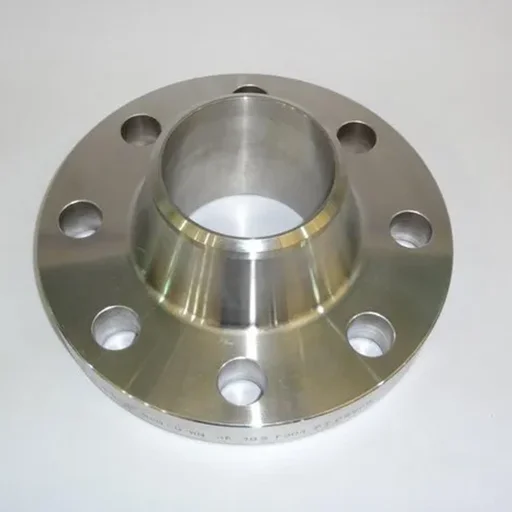
Weld Neck Flanges (WNRF):
These flanges are reinforced by the neck and are welded directly to the pipe, which guarantees a high mechanical strength and is most suitable in the high-load and high-heat process lines.
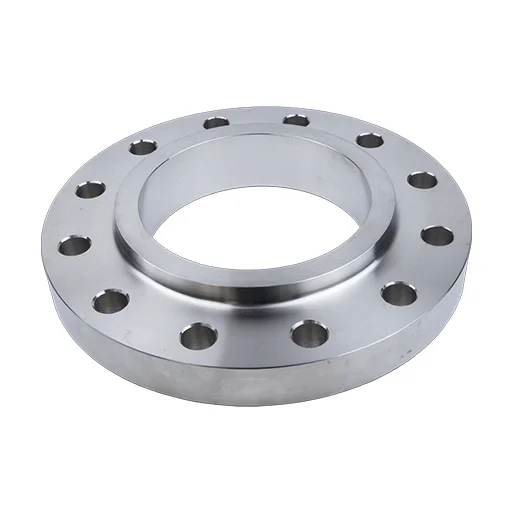
Slip-On Flanges (SORF):
The slides work well on the pipe and can be welded into place, so they are an easy option when fast installation and cost-effectiveness are required by the piping system that should be used.
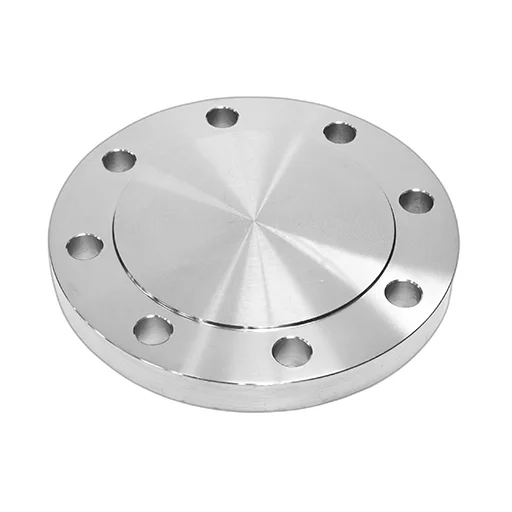
Blind Flanges (BLRF):
These flanges are used to seal pipe ends and openings of vessels, and they are best used in isolating a system, checking pressure, and closing it in the event of danger.
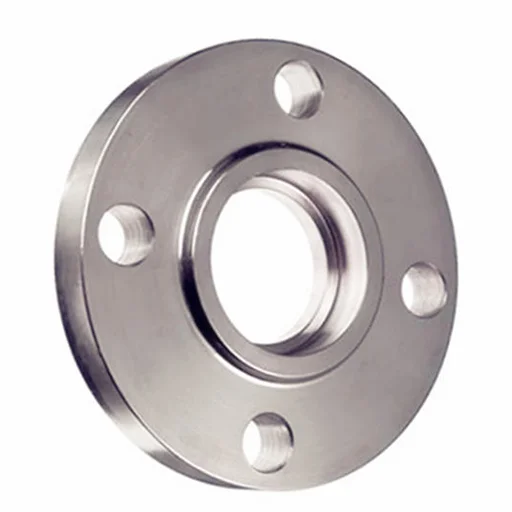
Socket Weld Flanges (SWRF):
They are designed to use compact piping layouts with high-pressure piping systems that are small-diameter joints that are powerful and leak-free.
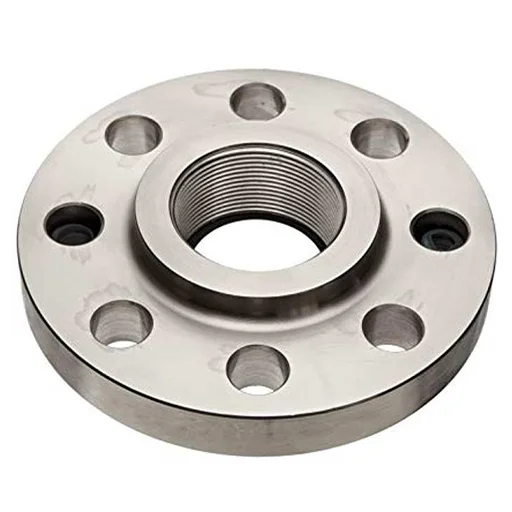
Threaded Flanges:
They are installed without welding with internal threads and are used in low-risk, removable and serviceable piping designs.
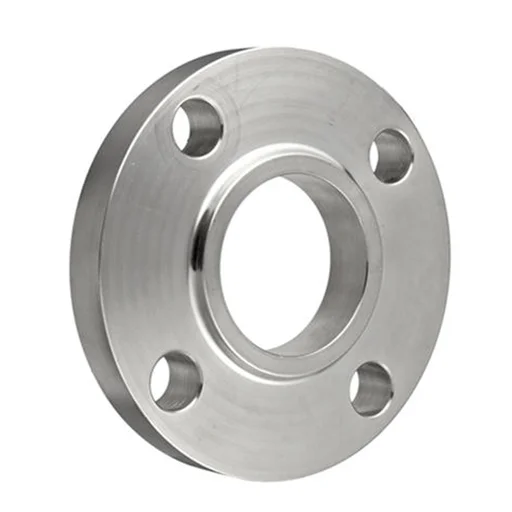
Lap Joint Flanges:
These flanges, coupled with stub ends to provide flexibility, are ideal in cases where the system needs to be dismantled frequently with an adjustment in alignment and cleaning.
Not sure which flange fits your application? Share your size, pressure class and quantity, and our team will recommend the right type with a quick quote. Get a Free Quote
Applications of SS 347/347H Flanges
- Refineries: hydrocracker and hydrotreater lines, furnace outlets and heater transfer lines
- Petrochemical plants: high temperature process and cracking units
- Power plants: steam lines, heat recovery steam generators and boiler headers
- Fertilizer plants: hot reformer and converter piping
- Gas processing: hot sections of the process plant
SS 347H Flange Price and SS 347 Pipe Flanges Price
We don’t publish a fixed price list. Flange prices follow nickel and other raw material costs, so a figure printed online goes out of date quickly.
- Grade and heat: 347, 347H or dual certified
- Flange type, size, class, facing and bore
- Quantity per size
- Stock material versus a new forging
- Certification level: EN 10204 3.1 or 3.2
- Third party inspection and any extra testing (PMI, hardness, IGC, sour service)
- Incoterm and destination port
Quotations are issued in INR, USD or AED on FOB Nhava Sheva, CIF or CFR terms.
For a fast quotation, send: grade, standard, flange type, NPS or DN, class, facing, bore or pipe schedule, quantity, certification, inspection requirements, destination port and required date.
Certification, PMI and Inspection
- Every flange ships with an EN 10204 3.1 mill test certificate traceable to heat number; EN 10204 3.2 is available with TPI.
- Third party inspection by agencies such as TÜV, BV, SGS, Lloyd's Register or the buyer's nominated inspector.
- PMI. Positive material identification is worth specifying for 347. A 304 or 321 flange looks identical, and only the niobium reading tells them apart. Ask for PMI by XRF on every piece.
- IGC testing. Intergranular corrosion testing to ASTM A262 Practice E is commonly requested for stabilised grades.
Matching Pipe, Fittings and Flanges in 347/347H
To complete a system from pipe to fitting to flange in the same grade:
- 347/347H pipe: [URL NOT CONFIRMED]
- 347/347H buttweld and forged fittings: [URL NOT CONFIRMED]
- SS 321 flanges, the titanium stabilised alternative
- Stainless steel flanges by grade
- All flanges
Request a Quotation for Stainless Steel 347/347H Flanges
Send your material list or drawing with grade, size, class, facing, quantity and destination port. Our team will reply with a quotation and confirm lead time and certification for your order.
Request a QuotationFrequently Asked Questions
347H has a carbon range of 0.04 to 0.10 % and grain size controls, which give better creep strength for service above about 540 °C. 347 caps carbon at 0.08 % with no minimum. Material can be dual certified where a heat meets both.
No. DIN 1.4541 is the titanium stabilised grade equivalent to 321. The EN equivalent of 347 is 1.4550, and the nearest equivalent of 347H is 1.4961.
Both are austenitic chromium-nickel grades, but 347 adds niobium, which ties up carbon so the heat-affected zone resists intergranular corrosion after welding or long service at 425 to 815 °C. 304 has no stabiliser and sensitises in that range, so 347 is chosen for hot, welded process lines.
Hot, welded process piping: hydrocracker and hydrotreater effluent lines, heater transfer lines, HRSG and steam lines, and reformer piping, where service runs above about 425 °C.
Only within the environmental limits for austenitic stainless steels in ISO 15156 Part 3, in the solution annealed condition with hardness at or below 22 HRC. Send your H₂S partial pressure, chloride level and temperature so suitability can be checked.
ASME Class 150, 300, 600, 900, 1500 and 2500 to ASME B16.5 and B16.47, and PN classes to EN 1092-1. Pressure ratings depend on the B16.5 material group and the design temperature.
Grade, standard, flange type, NPS or DN, class, facing, bore or pipe schedule, quantity, certification, inspection requirements, destination port and required date.
Enquire Now
Get pricing within 24 hours!