Carbon Steel Pipes & Tubes Manufacturer & Supplier | A106, A53, API 5L
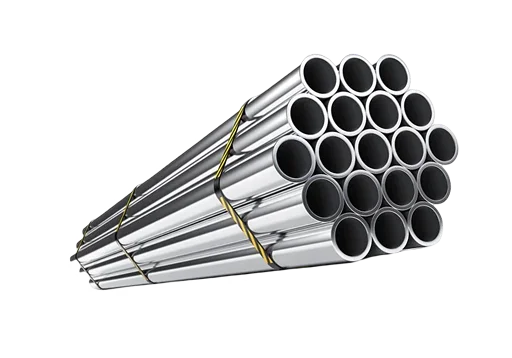
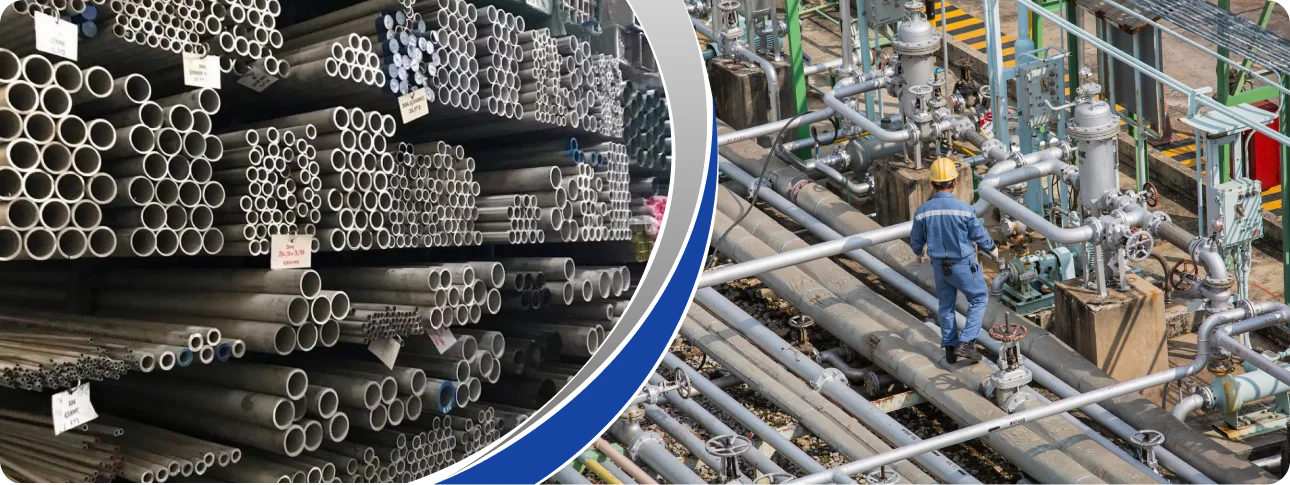
Carbon steel wins on one argument, and it is a good one: price per meter. Metinox Overseas is a carbon steel pipes and tubes manufacturer and supplier in Mumbai, stocking A106 Grade B, A53 and API 5L pipe alongside A179, A192 and A210 boiler and exchanger tubes, and shipping to buyers across India, the USA, the Middle East and Africa with 3.1 certification on every heat. Where the fluid is clean and the temperature behaves, nothing else comes close on cost. Most of the world's utility piping proves it daily. The full catalogue sits under Pipes & Tubes; this page is the carbon steel corner of it.
Two honest escalations before we start. When the line runs hot, past roughly 425°C, carbon steel begins giving its strength back and the job moves to Alloy Steel Pipes. When corrosion is the enemy rather than heat, the job moves to Stainless Steel Pipes. Everything in between belongs here, at the best price in the building.
Request a Quote on Carbon Steel Pipes & Tubes →
Table of content
- Which Carbon Steel Pipe Standard Fits the Job?
- Carbon Steel Boiler & Heat Exchanger Tubes
- CS Pipe Chemical Composition & Mechanical Properties
- Carbon Steel Pipe Sizes & Schedules
- Where Carbon Steel Stops Working
- Carbon Steel Pipes and Tubes Applications
- CS Testing, Certification, IBR & Export to USA, Middle East & Africa
- Explore Related Ranges
- Carbon Steel Pipes & Tubes: Frequently Asked Questions
Which Carbon Steel Pipe Standard Fits the Job?
Four standards cover nearly every carbon steel pipe order. Pick by service, not by habit.
| Standard | Grade(s) | Built for | Order it when |
|---|---|---|---|
| ASTM A106 | Gr B (Gr C on order) | Seamless pipe for high-temperature service | Process and steam lines, refinery and power duty; the default for pressure piping |
| ASTM A53 | Gr B, Type E (ERW) / S | General service, black or hot-dip galvanized | Utility, water, air and structural runs; the galvanizing option lives here |
| API 5L | Gr B, X grades on order | Line pipe for oil and gas transmission | Pipeline and gathering service where API monogram rules apply |
| ASTM A333 | Gr 6 | Low-temperature seamless and welded pipe | Service below -29°C, impact tested down to -45°C |
Dual and triple certified material, one pipe meeting A106 B, A53 B and API 5L B together, simplifies stock for contractors running mixed jobs; ask for it by name.
Carbon Steel Pipe Sizes & Schedules
We stock ½" to 24" NB: seamless to 16", ERW to 24", in SCH 40 and 80 ex-Mumbai with 160 and XXS against order, dimensions per ASME B36.10M. Single and double random lengths, cut to length on request, plain or beveled ends per ASME B16.25, black finish as standard and hot-dip galvanized through the A53 route. Weight runs about 10.2 kg/m for 4" SCH 40 as a mental anchor; full weight tables come with the quote.
Where Carbon Steel Stops Working
- Corrosion: bare carbon steel rusts, and galvanizing only defends it so far. Wet, chemically active or hygienic service belongs to Stainless Steel Pipes.
- Heat: past roughly 425°C sustained, carbon steel loses strength and risks graphitization over time. That service belongs to chrome moly, on Alloy Steel Pipes.
- Cold: below -29°C, standard grades go brittle; specify impact-tested A333 Gr 6 pipe and A334 Gr 6 tube instead of hoping.
None of these limits is a defect. They are the reason carbon steel costs what it costs, and knowing them is how you spend the savings safely.
Carbon Steel Pipes and Tubes Applications
- Oil & Gas: flowlines, gathering and utility systems across Gulf and African upstream projects.
- Power & Boiler Plant: feedwater and steam piping, waterwall and bank tubes within carbon-grade temperatures.
- Water Infrastructure: municipal transmission and plant piping, galvanized where the spec calls for it.
- Structural & Fabrication: columns, racks and general engineering, where A53 earns its keep.
- Sugar, Cement & General Industry: utility air, condensate and process runs where nothing exotic is asked of the metal.
CS Testing, Certification, IBR & Export to USA, Middle East & Africa
Pipes are hydrostatically tested or NDE examined per their governing standard, with bend and flattening tests on the tube side, and every order ships with an EN 10204 3.1 mill test certificate, heat-number traceable. For boiler duty in India, IBR Form III-A certified supply is arranged at order stage, and 3.2 witnessed certification through BV, SGS or TUV is available for project specs. Metinox Overseas is an ISO 9001 and PED certified company; the program sits on our Quality Policy page. Export consolidations run from Mumbai to the USA, the Middle East and Africa, bundled, end-protected and shipped as described on Packing and Dispatch. Ex-stock material dispatches in 7 to 14 working days; made-to-order items take 4 to 6 weeks.
Explore Related Ranges
- Alloy Steel Pipes – chrome moly A335 for the temperatures carbon steel cannot hold
- Alloy Steel Tubes – A213 T-grade boiler and superheater tubes
- Stainless Steel Pipes – the corrosion answer, seven grades with a temperature ladder
- Pipes & Tubes – the full catalogue, one level up
Carbon Steel Pipes & Tubes: Frequently Asked Questions
Service intent. A106 is seamless pipe written for high-temperature service, with silicon specified for strength at heat, and it is the default for process and steam lines. A53 covers general service in seamless and ERW, and it is the standard that carries the hot-dip galvanizing option. Dual-certified material satisfies both on one pipe.
Yes, on regular consolidations from Mumbai. Carbon steel travels well but rusts in salt air, so export bundles are oiled, strapped and end-protected for the voyage, and the 3.1 documentation set rides with the cargo for customs at all three destinations.
Yes, hot-dip galvanized through the A53 route, in the same NB range as black pipe. Galvanizing buys atmospheric and water-service life at low cost; it does not make carbon steel a stainless substitute for chemically active duty.
Plan around 425 degrees C for sustained service. Above that, strength drops and long exposure risks graphitization, which is why power and refinery lines step up to A335 chrome moly grades. Short excursions are a design question; sustained duty is a grade change.
Yes. For boiler and steam service under the Indian Boiler Regulations, material is supplied with IBR Form III-A certification arranged at order stage. Say IBR in the enquiry and the paperwork is built into the quote rather than chased afterward.
Enquire Now
Get pricing within 24 hours!