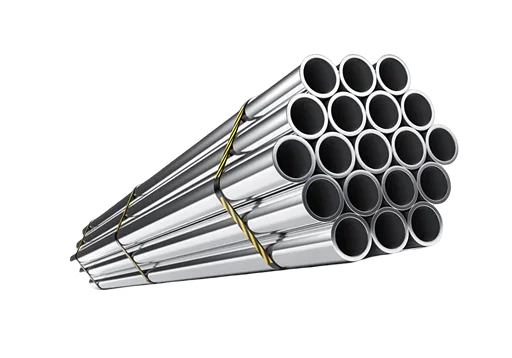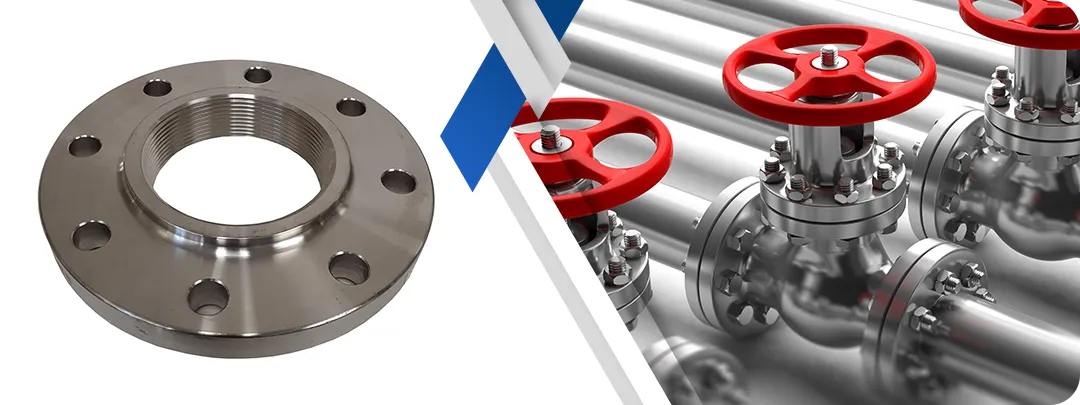
SS 317 Flanges are usually the next step when 316 flanges start pitting in service. The reason is simple: more molybdenum. 317 has 3 to 4 percent, while 316 has only 2 to 3 percent, and that difference shows clearly in sulphuric acid, phosphoric acid, chloride brine and FGD plant lines. If your joints are welded, go for SS 317L. Its carbon stays at 0.030 percent or lower, so the area around the weld keeps its corrosion resistance and you don’t need heat treatment after welding. Metinox Overseas SS 317L flanges and 317 grade flanges to ASTM A182 and ASME B16.5 / B16.47 in Class 150 to 2500, in weld neck, slip on, blind, socket weld, threaded and lap joint types. These sit within its wider flanges range for chemical, fertilizer, power and refinery plants in India, the GCC and other export markets. Just send your size, class and quantity, and we will get back with a quote.

Table of Contents
- 317 Stainless Steel Flanges vs 317L SS Flanges: Which Grade to Choose
- Stainless Steel 317 Flanges Specification
- What Pressure Can a Stainless Steel 317 Flange Handle? Class 150 to 2500
- Stainless Steel 317/ 317L Flanges Chemical Composition
- Mechanical Properties SS 317L Flanges
- SS 317L Flanges Dimensions: ASME B16.5 Class 150 Size Chart
- Types of SS 317 / 317L Flanges
- Applications of Stainless Steel 317 Pipe Flanges
- Stainless Steel 317 Flanges Price: Cost Factors
- Frequently Asked Questions on SS 317/317L Flange
317 Stainless Steel Flanges vs 317L SS Flanges: Which Grade to Choose
Both grades contain 3 to 4 percent molybdenum, which gives them better pitting resistance than 316. The difference is carbon. SS 317 (F317) allows up to 0.08 percent carbon and carries higher minimum tensile and yield strength in ASTM A182, so it is used for blind and threaded flanges that are not welded. SS 317L (F317L) limits carbon to 0.030 percent, which protects the weld zone from intergranular corrosion and makes it the standard choice for weld neck, slip on and socket weld flanges.
Dual certified F317/F317L flanges meet both grades in one heat. Neither grade is meant for continuous warm seawater; that service calls for 6Mo or super duplex.
Stainless Steel 317 Flanges Specification
| Specification | Details |
|---|---|
| Material standard | ASTM A182 / ASME SA182 grades F317 and F317L for forged flanges; ASTM A240 / ASME SA240 Type 317 and 317L for plate flanges |
| UNS designation | S31700 (317), S31703 (317L) |
| Equivalent grades | Werkstoff Nr. 1.4449 (317), 1.4438 (317L); JIS SUS 317, SUS 317L |
| Dimensional standards | ASME B16.5 (NPS 1/2 to 24), ASME B16.47 Series A and B (NPS 26 to 60), ASME B16.48 (line blanks and spectacle blinds), EN 1092-1, BS 4504, JIS B2220, MSS SP44 |
| Size range | NPS 1/2 to 48 (DN 15 to DN 1200) |
| ASME pressure classes | Class 150, 300, 400, 600, 900, 1500 and 2500 |
| EN / DIN pressure ratings | PN 6, PN 10, PN 16, PN 25, PN 40, PN 64 |
| JIS pressure ratings | 5K, 10K, 16K, 20K, 30K, 40K, 63K |
| Flange types | Weld Neck, Long Weld Neck, Slip On, Socket Weld, Threaded, Blind, Lap Joint, Reducing, Orifice, Spectacle Blind, Plate, Weldo / Nipo flange |
| Facing | Raised Face (RF), Flat Face (FF), Ring Type Joint (RTJ), Tongue and Groove, Male and Female, Lap Joint face |
| Face finish | Serrated stock finish 3.2 to 6.3 µm Ra (125 to 250 µin) for RF faces per ASME B16.5; smooth finish on request |
| Weld neck bore | Matched to the connecting pipe schedule per ASME B36.19M or B36.10M: Sch 10S, 40S, 80S, 160, XXS |
| Production route | Forged, solution annealed and precision machined |
| Heat treatment | Solution annealed at 1040 °C (1900 °F) minimum, followed by rapid cooling, per ASTM A182 |
| Test certificate | EN 10204 3.1; EN 10204 3.2 on request |
What Pressure Can a Stainless Steel 317 Flange Handle? Class 150 to 2500
Note: values are for -29 °C to 38 °C (-20 °F to 100 °F) per ASME B16.5 Table. Ratings fall as temperature rises the full derating chart is below.
| Pressure class | Max working pressure, SS 317 flanges, bar (psi) | Max working pressure, SS 317L flanges, bar (psi) |
|---|---|---|
| Class 150 | 19.0 (275) | 15.9 (230) |
| Class 300 | 49.6 (720) | 41.4 (600) |
| Class 600 | 99.3 (1440) | 82.7 (1200) |
| Class 900 | 148.9 (2160) | 124.1 (1800) |
| Class 1500 | 248.2 (3600) | 206.8 (3000) |
| Class 2500 | 413.7 (6000) | 344.7 (5000 |
Stainless Steel 317/ 317L Flanges Chemical Composition
| Element | 317 (S31700) | 317L (S31703) |
|---|---|---|
| Carbon (C) | 0.08 | 0.030 |
| Manganese (Mn) | 2.00 | 2.00 |
| Phosphorus (P) | 0.045 | 0.045 |
| Sulphur (S) | 0.030 | 0.030 |
| Silicon (Si) | 1.00 | 1.00 |
| Chromium (Cr) | 18.0 to 20.0 | 18.0 to 20.0 |
| Nickel (Ni) | 11.0 to 15.0 | 11.0 to 15.0 |
| Molybdenum (Mo) | 3.0 to 4.0 | 3.0 to 4.0 |
| Iron (Fe) | Balance | Balance |
Mechanical Properties SS 317L Flanges
| Density | Melting Point | Tensile Strength | Yield Strength (0.2% Offset) | Elongation |
|---|---|---|---|---|
| 8.0 g/cm³ | 1390 °C (2540 °F) | Psi 75000, MPa 515 | Psi 30000, MPa 205 | 35 % |
SS 317L Flanges Dimensions: ASME B16.5 Class 150 Size Chart
Metric first, inches alongside. Pipe OD is the matching ASME B36.19M size for weld neck and slip on bores.
| NPS | DN | Pipe OD, mm (in) | Flange OD, mm (in) | Bolt circle, mm (in) | Bolts, no. x size (in) | Bolt hole, mm (in) |
|---|---|---|---|---|---|---|
| 1/2 | 15 | 21.3 (0.840) | 90 (3.50) | 60.3 (2.38) | 4 x 1/2 | 16 (0.62) |
| 3/4 | 20 | 26.7 (1.050) | 100 (3.88) | 69.9 (2.75) | 4 x 1/2 | 16 (0.62) |
| 1 | 25 | 33.4 (1.315) | 110 (4.25) | 79.4 (3.12) | 4 x 1/2 | 16 (0.62) |
| 1 1/2 | 40 | 48.3 (1.900) | 125 (5.00) | 98.4 (3.88) | 4 x 1/2 | 16 (0.62) |
| 2 | 50 | 60.3 (2.375) | 150 (6.00) | 120.7 (4.75) | 4 x 5/8 | 19 (0.75) |
| 3 | 80 | 88.9 (3.500) | 190 (7.50) | 152.4 (6.00) | 4 x 5/8 | 19 (0.75) |
| 4 | 100 | 114.3 (4.500) | 230 (9.00) | 190.5 (7.50) | 8 x 5/8 | 19 (0.75) |
| 6 | 150 | 168.3 (6.625) | 280 (11.00) | 241.3 (9.50) | 8 x 3/4 | 22 (0.88) |
| 8 | 200 | 219.1 (8.625) | 345 (13.50) | 298.5 (11.75) | 8 x 3/4 | 22 (0.88) |
| 10 | 250 | 273.0 (10.750) | 405 (16.00) | 362.0 (14.25) | 12 x 7/8 | 25 (1.00) |
| 12 | 300 | 323.8 (12.750) | 485 (19.00) | 431.8 (17.00) | 12 x 7/8 | 25 (1.00) |
| 14 | 350 | 355.6 (14.000) | 535 (21.00) | 476.3 (18.75) | 12 x 1 | 29 (1.12) |
| 16 | 400 | 406.4 (16.000) | 595 (23.50) | 539.8 (21.25) | 16 x 1 | 29 (1.12) |
| 18 | 450 | 457.0 (18.000) | 635 (25.00) | 577.9 (22.75) | 16 x 1 1/8 | 32 (1.25) |
| 20 | 500 | 508.0 (20.000) | 700 (27.50) | 635.0 (25.00) | 20 x 1 1/8 | 32 (1.25) |
| 24 | 600 | 610.0 (24.000) | 815 (32.00) | 749.3 (29.50) | 20 x 1 1/4 | 35 (1.38) |
Types of SS 317 / 317L Flanges
The type you choose depends on how the flange joins the pipe, the pressure and temperature it must hold, and how often the joint will be opened.
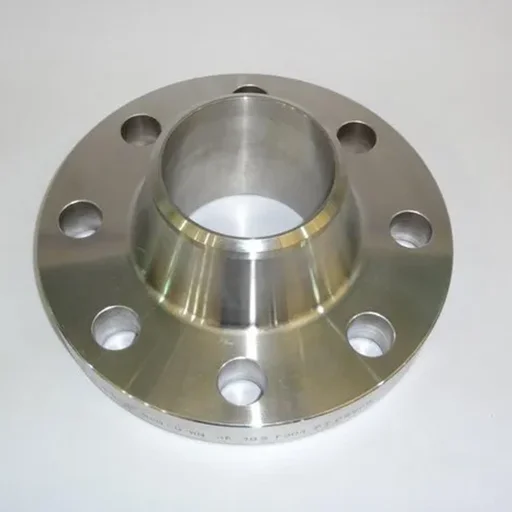
SS 317 Weld Neck Flange (WNRF)
The hub extends as a long barrel that replaces a nozzle neck on vessels and columns. 317L is specified so the barrel-to-shell weld needs no post-weld heat treatment.
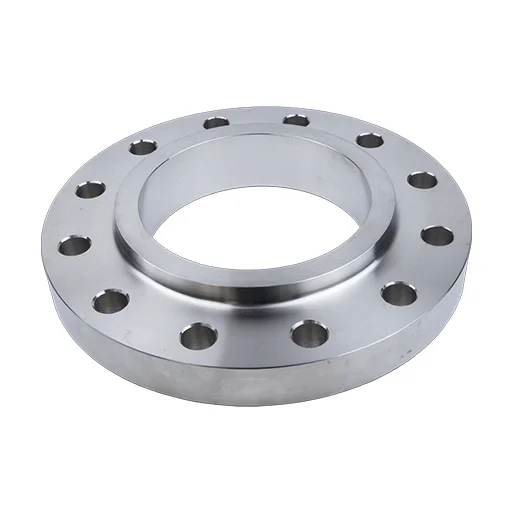
Stainless Steel 317 Slip On Flanges (SORF)
This flange slides over the pipe and is fillet welded inside and out. It is quick to fit up and costs less than a weld neck, which suits low pressure acid transfer and utility lines.

Stainless Steel 317 Spectacle Blind Flanges
A paddle and spacer joined by a web, made to ASME B16.48, used to positively isolate a line for maintenance and show at a glance whether it is open or closed.
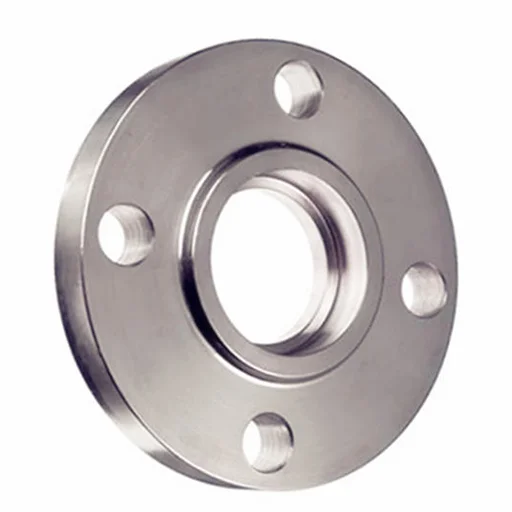
SS 317 Socket Weld Flanges
The pipe sits in a counterbored socket and is fillet welded on the outside. It gives a strong joint on small bore lines, typically NPS 2 and below, such as chemical injection and sampling points.
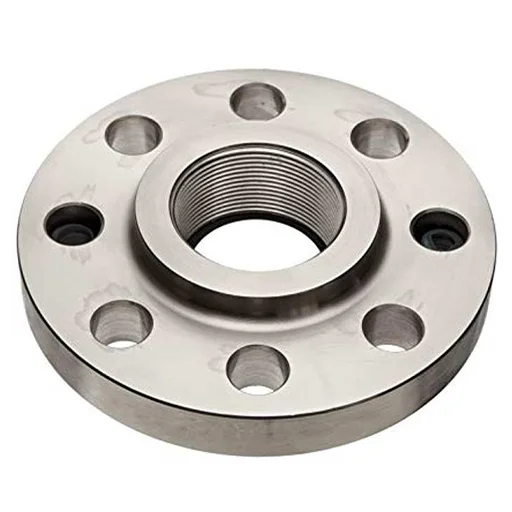
SS 317 Threaded Flanges
These screw onto a threaded pipe, so no welding is needed. They suit low pressure lines and areas where hot work is restricted because of fire or explosion risk.
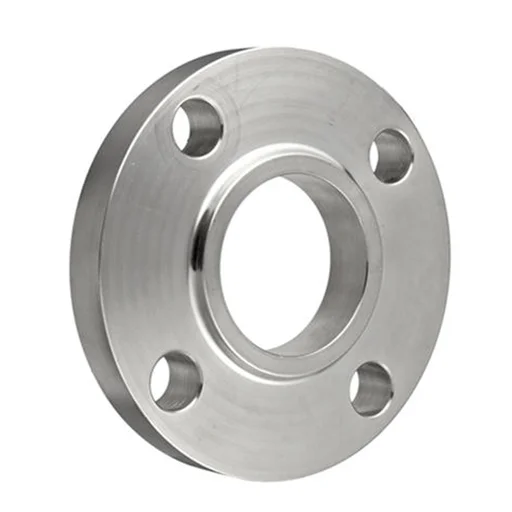
Stainless Steel 317 Ring Type Joint Flanges
A machined groove takes a metal ring gasket for Class 900 and above or for lines with temperature cycling, where a spiral wound gasket on a raised face could relax.
Not sure which flange fits your application? Share your size, pressure class and quantity, and our team will recommend the right type with a quick quote. Request a Quote for SS 317 / 317L Flanges
Applications of Stainless Steel 317 Pipe Flanges
Grade 317 and 317L flanges are selected where process media are too aggressive for 316L and the cost of super duplex or nickel alloys is hard to justify. Typical sectors include:
- Power and water: absorber inlets, recirculation lines and slurry piping in flue gas desulphurisation (FGD) systems at coal and oil fired plants. Also condensate, distillate and brine lines in thermal desalination plants.
- Fertilizer: piping for phosphoric acid, dilute sulphuric acid and process condensate in phosphate and ammonia complexes.
- Refining and petrochemicals: overhead condensate systems, chemical injection packages, and sour water service within the environmental limits of ISO 15156.
- Chemical processing: acetic, formic and other organic acids, bleaching agents and mixed acid streams where pitting rules out lower alloyed grades.
- Gas processing: utility, chemical dosing and instrument lines operating within NACE MR0175 limits. 317L is not a substitute for the corrosion resistant alloys specified for primary sour gas lines.
- Pulp and paper: bleach plant piping and digester liquor lines exposed to chlorides and oxidising chemicals.
Stainless Steel 317 Flanges Price: Cost Factors
Metinox Overseas does not publish a fixed price list for SS 317 or 317L flanges. Nickel and molybdenum make up much of the material cost and move with international metal markets, so every enquiry is priced against current raw material costs. The main factors are:
- Grade and heat: F317, F317L or dual certified F317/F317L, and whether material comes from an existing heat or a new forging.
- Size, class and type: finished weight is the main cost driver. A Class 600 weld neck flange weighs and costs considerably more than a Class 150 slip on flange of the same nominal size.
- Quantity: order volume per size and type affects machining setup and forging economics.
- Stock or mill order: standard sizes from available material are priced and delivered differently from flanges forged to order.
- Certification level: EN 10204 3.1 or 3.2 documentation.
- Inspection: third party inspection, witness points and hold points required by the project.
- Supplementary testing: hardness surveys, PMI, intergranular corrosion testing, sour service testing or additional non destructive examination.
- Commercial terms: Incoterm, destination port and packing specification.
Looking for an SS 317/317L flanges price list? Because nickel and molybdenum prices change weekly, we send a current price list against your line list within one working day instead of publishing one that goes out of date. Request a Quote for SS 317 / 317L Flanges
Frequently Asked Questions on SS 317/317L Flange
The main difference is carbon. F317 allows up to 0.08 percent carbon and F317L allows 0.030 percent. The lower carbon in 317L limits carbide formation during welding, so the weld zone keeps its corrosion resistance. F317 has higher minimum strength.
Only within limits. ISO 15156-3 accepts austenitic stainless steels of this type in the solution annealed condition with hardness at or below 22 HRC, and only inside set limits on temperature, H2S partial pressure and chlorides. Send your service conditions and we will advise whether 317L fits.
317L carries 3 to 4 percent molybdenum against 2 to 3 percent in 316L. That gives better resistance to pitting and crevice corrosion in chloride, sulphuric acid and flue gas scrubber service.
Certification levels and inspection agencies are confirmed at quotation. Tell us the certificate type and agency your project requires when you send the enquiry.
ASME B16.5 gives pressure–temperature ratings for 317 up to 538 °C (1000 °F) and beyond for some classes, but sensitisation and sigma phase risks mean most process plants keep 317 and 317L below about 425 °C (800 °F) in corrosive service. Send your design temperature and we will confirm the rating.
Yes. 317L flanges are often welded to 316L pipe using a 317L or higher-alloy filler so the weld is not the weak point for pitting. The flange rating follows the lower-rated material in the joint.
Send the grade, flange type and facing, size and pressure class, bore schedule for weld neck flanges, quantity, certification level, any project material specification, destination port and required date.
Enquire Now
Get pricing within 24 hours!