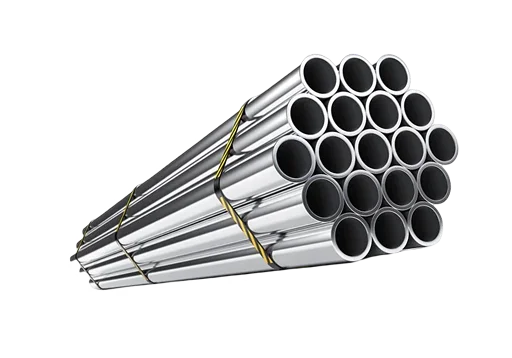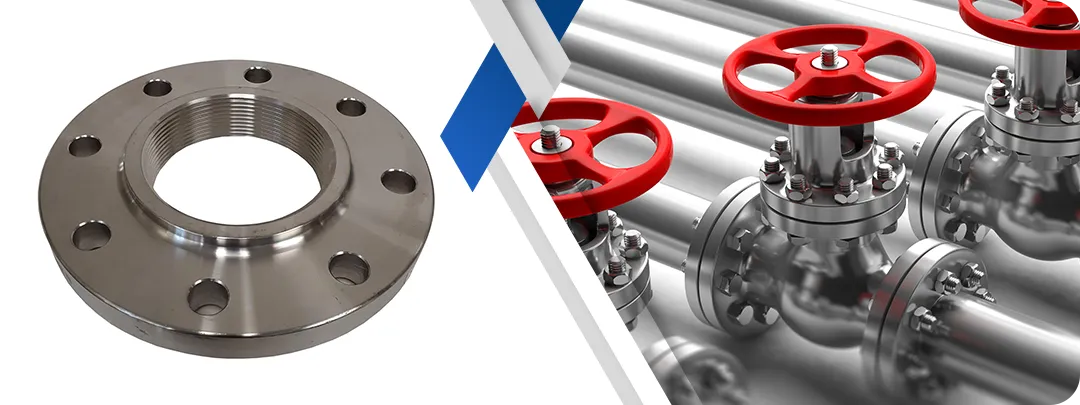
SS 304 Flanges - The Most Versatile Austenitic Stainless Steel Flanges for General Industrial Applications
In the piping industry, the grade of materials is the most significant to consider the integrity of the system and durability. SS 304 Flanges are the most popular in the industry because it is utilized in the case of general-purpose and offers the best combination of anti-corrosion, formability and cost-efficiency. As the most popular high-performing grade of austenitic stainless steel family, Type 304 (also known as 18-8 stainless because it contains 18% chromium and 8% nickel alloy) is used in atmospheric, chemical, and petrochemical processes.
The use of SS 304 flanges by engineers and procurement managers all over the world is attributed to its ability to form a long-lasting oxidation-resistant oxide layer that shields the underlying metal against rust and corrosion. These flanges can be used in low-pressure water systems, moderate chemical processing lines, and even architectural buildings with the help of which they provide a leak-free connection and stability of the structure. At Metinox Overseas, we produce flanges that are of strict ASTM A182 F304 so as to ensure consistency in mechanical properties and dimensional accuracy and hence they are the best to use in projects where extremely high corrosion resistance (such as that provided by 316 grade) is not absolutely necessary but the project must be economically viable.

Table of Contents

- What Are SS 304 Flanges?
- Chemical Composition of ASTM A182 F304 Flanges
- Mechanical Properties of SS 304 Flanges
- Types of SS 304 Flanges Available at Metinox Overseas
- Applications & Industries Using SS 304 Flanges
- SS 304 vs 304L vs 304H Flanges: Understanding the Difference
- Technical Specifications of SS 304 Flanges
- Advantages of Using SS 304 Flanges
- Limitations of SS 304 Flanges (When NOT to Use)
- Installation Best Practices for SS 304 Flanges
- Common Mistakes to Avoid with SS 304 Flanges
- Frequently Asked Questions (FAQ)
What Are SS 304 Flanges?
SS 304 Flanges are pipe connecting elements that are made of Grade 304 stainless steel, an austenitic alloy that is non-magnetic in the annealed state and very tough to -200 -C. These flanges are the critical fitting point between pipes, valves, pumps and other equipment and are easily assembled, disassembled, cleansed and inspected to ensure piping systems.
The forging specification is known as F304, and it is an ASTM A182 specification that regulates forged or rolled alloy and stainless steel pipe flanges, forged fittings, and high-temperature service valves and parts. Continuous service up to 870 -C (1598 -F) without scaling means that the metallurgical structure of SS 304 Flanges can be used at temperatures up to 870 -C at the expense of subsequent use at the 425-860 -C range since they will scale over time because of the precipitation of carbide.
ASTM A182 F304 Flanges are better resistant to oxidizing acids and atmospheric corrosion as compared to carbon steel. They can be welded and fabricated readily, thus they are very useful in complex piping designs in food processing, dairy and other general chemical industries where cleanliness and sanitation must be maintained.
Chemical Composition of ASTM A182 F304 Flanges
The corrosion resistance and mechanical strength of SS 304 Flanges are derived from their precise chemical composition. The high Chromium content provides oxidation resistance, while Nickel adds stability to the austenitic structure and enhances ductility.
| Element | Symbol | Composition % (Max unless range specified) |
| Carbon | C | 0.08 max |
| Manganese | Mn | 2.00 max |
| Phosphorus | P | 0.045 max |
| Sulfur | S | 0.030 max |
| Silicon | Si | 1.00 max |
| Chromium | Cr | 18.0 - 20.0 |
| Nickel | Ni | 8.0 - 11.0 |
| Nitrogen | N | 0.10 max |
Mechanical Properties of SS 304 Flanges
Stainless Steel 304 Flanges should be of high mechanical property standards to give them the ability to sustain system pressures and structural loads. The table below displays the conventional requirements in accordance with ASTM A182.
| Property | Metric Value | Imperial Value |
| Tensile Strength (min) | 515 MPa | 75,000 psi |
| Yield Strength (0.2% Offset) (min) | 205 MPa | 30,000 psi |
| Elongation in 2" or 50mm (min) | 30% | 30% |
| Reduction of Area (min) | 50% | 50% |
| Hardness (Brinell) Max | 201 HBW | - |
Types of SS 304 Flanges Available at Metinox Overseas
Metinox Overseas is a manufacturer and supplier of a full selection of SS 304 Flanges to meet different pressure ratings and connection needs. The choice of the appropriate type of flange is very important to the system's integrity.
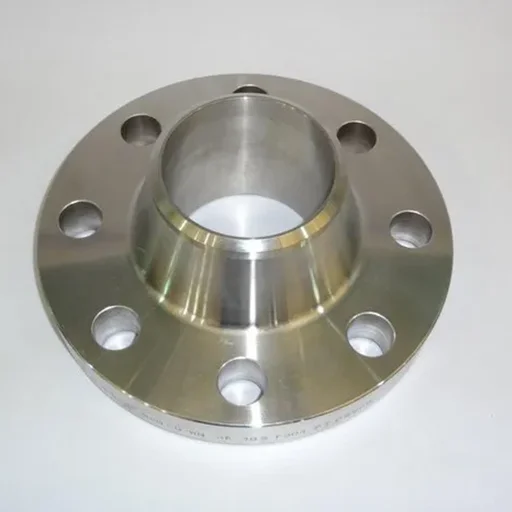
SS 304 Weld Neck Flanges (WNRF)
These are butt-welded to the pipe and have a long tapered hub, which strengthens the flange. They are best suited for high-pressure and high-temperature applications where the stress on the hub is loaded onto the pipe.
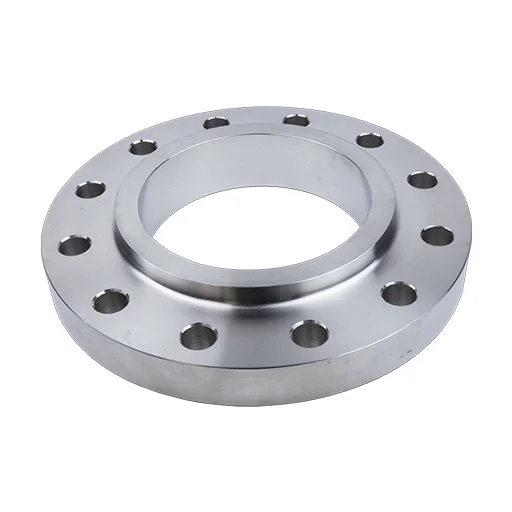
SS 304 Slip On Flanges (SORF)
These slide across the pipe and are fillet-welded both internally and externally. They are more easily aligned than weld necks and they are economical in lower-pressure applications where fatigue is not a major issue.
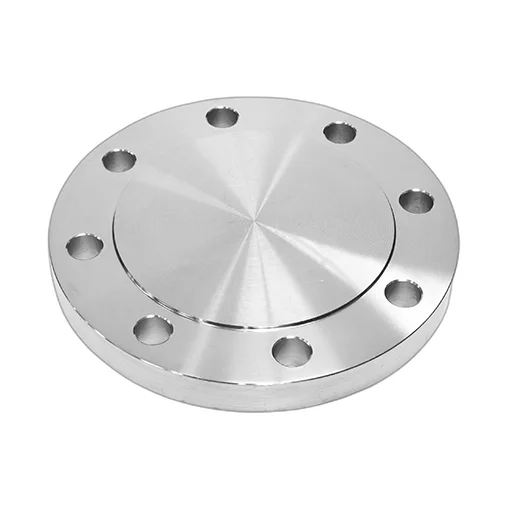
SS 304 Blind Flanges (BLRF)
Solid plates that are employed to seal the end of a piping system or valve. They must be in a position to support the maximum pressure of the system and the maximum bending loads and the strength of Grade 304 is vital in this scenario.
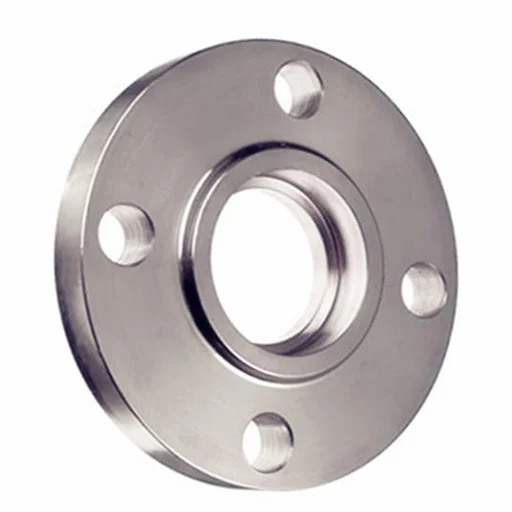
SS 304 Socket Weld Flanges (SWRF)
Intended to fit on smaller diameter pipes (usually not more than 2 inches). The pipe gets inserted in a socket and welded using fillets. Classified as high pressure systems, smooth flow is not as important.
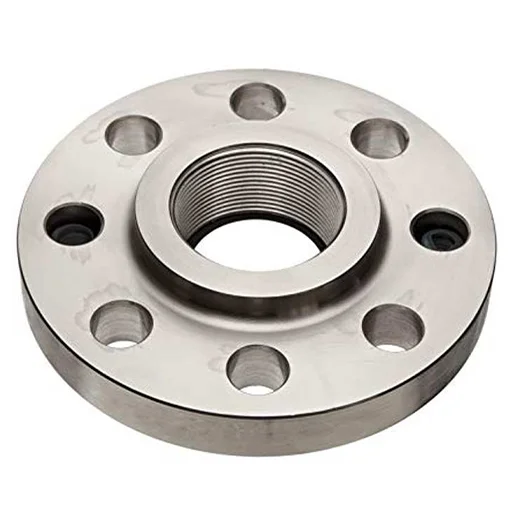
SS 304 Threaded Flanges
Joined together using internal thread without weld. They are also necessary in places where welding is dangerous or forbidden, but generally to low pressure services.
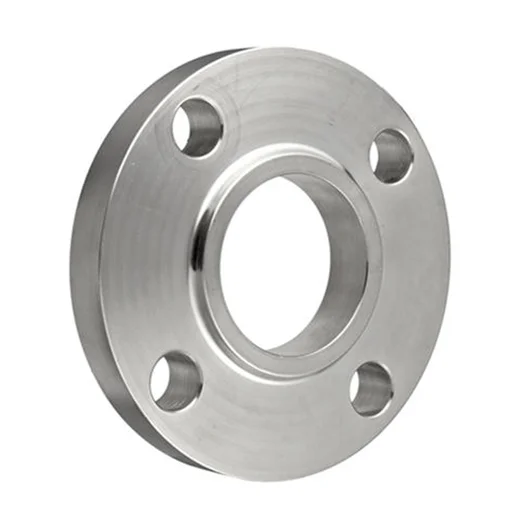
SS 304 Lap Joint Flanges
These flanges are used with stub end and are easy to rotate, hence cycling of the bolt holes. They are not in contact with the fluid, and frequently permits the use of carbon steel flanges where there are stainless stubs, though complete 304 assemblies are widely used where external corrosion resistance is required.
Applications & Industries Using SS 304 Flanges
Due to their versatility and economic viability, 304 grade flanges are ubiquitous across diverse sectors.
| Industry | Specific Application | Why SS 304 is Selected |
| Food & Beverage | Dairy lines, brewing tanks, food processing piping. | Excellent hygiene properties; resists corrosion from organic acids found in food; easy to clean (CIP). |
| Water Treatment | Potable water lines, municipal water filtration. | Resists oxidation in fresh water environments; cost-effective compared to 316. |
| Chemical Processing | Transport of mild chemicals, solvents, and fertilizers. | Resistant to nitric acid and other oxidizing agents at specified temperatures. |
| Cryogenics | Liquefied gas storage and transport. | Retains excellent toughness and does not become brittle at sub-zero temperatures. |
| Construction & Architecture | Handrails, structural supports, aesthetic fittings. | Aesthetic appeal; resists atmospheric corrosion in non-marine environments. |
Looking for High-Quality SS 304 Flanges?
Choose Metinox Overseas - Your Reliable SS 304 Flanges Manufacturer & Exporter.
Let us support your projects with quality, precision, and performance.
SS 304 vs 304L vs 304H Flanges: Understanding the Difference
While SS 304 Flanges are the standard, variations in carbon content create sub-grades tailored for specific welding or temperature conditions.
| Grade | Carbon Content | Key Characteristic | Best Use Case |
| SS 304 | 0.08% Max | Standard general purpose grade. | General piping, fittings, non-welded or thin-section welded parts. |
| SS 304L | 0.03% Max | Low carbon eliminates carbide precipitation. | Heavy gauge welded components; avoids post-weld annealing requirements. |
| SS 304H | 0.04% - 0.10% | High carbon ensures high tensile yield strength. | High-temperature service (above 800-F/425-C) such as steam lines. |
Technical Specifications of SS 304 Flanges
Metinox Overseas ASTM A182 F304 Flanges are produced to very fine international standards so that they are compatible.
| Specification Category | Details |
| Material Grade | ASTM A182 F304 / ASME SA182 F304 (Dual Certified 304/304L available) |
| Dimensional Standards | ANSI/ASME B16.5 (1/2" - 24"), ASME B16.47 Series A & B (26" - 60") |
| Pressure Ratings | Class 150, 300, 400, 600, 900, 1500, 2500 |
| European Standards | EN 1092-1, DIN (PN6, PN10, PN16, PN25, PN40) |
| Facing Types | Raised Face (RF), Flat Face (FF), Ring Type Joint (RTJ), Tongue & Groove |
| Coating | Oil Black Paint, Anti-Rust Paint, Zinc Plated, Yellow Transparent (or Bare) |
Manufacturing Standards & Certifications at Metinox Overseas
The Metinox Overseas manufacturing backbone is the quality assurance. Each SS 304 Flange is a high-quality billet that is forged to shape after heating. The forging process aligns the grain structure of the steel, and it has a great impact resistance and fatigue strength as compared to cast alternatives. After machining, the flanges are treated to a solution annealing heat treatment to regain corrosion resistance. The Metinox Overseas offers EN 10204 3.1 Material Test Certificates (MTC) along with each shipment that is certified by verifying the chemical composition, mechanical properties and heat treatment cycles. Third-party inspection (TPI) can be offered on request to check the adherence to the ASTM A182 standards.
Advantages of Using SS 304 Flanges
- Cost-Effectiveness: SS 304 is cheaper than SS 316 hence it is the cheapest option to use in an environment where chlorides resistance is not necessary.
- Excellent Formability & Weldability: It is capable of deep drawing and molding into intricate designs, it has good welding properties with or without filler metals.
- Corrosion Resistance: It is resistant to most oxidizing acids and stands normal rusting in normal atmospheric conditions.
- Sanitation: Its smooth surface is convenient to clean and bacterial growth does not take place, suited to food and medical use.
Limitations of SS 304 Flanges (When NOT to Use)
Although it is a universal product, SS 304 flanges are not that universal. They should be avoided in:
- Chloride Environments: SS 304 is prone to pitting and crevice corrosion in the coastal or marine environment or systems with salt water. In these applications, the compulsory upgrade is SS 316.
- Temperatures: Temperature in excess of 60 -C in Chlorides: When tensile stress is present, and the presence of chlorides, 304 stainless steel may suffer stress corrosion cracking at temperatures exceeding 60 -C.
- Reducing Acids: It cannot resist the diminishing acids, such as hydrochloric acid.
Installation Best Practices for SS 304 Flanges
When the flange and the seal are installed properly the flange and the seal become durable.
- Check Alignment: To Make sure that the faces of pipes and flanges are parallel. The excessive stress on bolts and the flange hub is due to misalignment.
- Gasket Selection: The gasket fabric that is compatible with the fluid and temperature. In SS 304, non-metallic or spiral-wound gaskets prevail.
- Bolt Lubrication: Galling is likely to occur in stainless steel bolts. Always place the thread of the bolts with a molybdenum-disulfide or nickel based anti-seize lubricant.
- Torque Pattern: Use a cross or star pattern of bolts to provide even pressure over the gasket face.
Common Mistakes to Avoid with SS 304 Flanges
- Carbon Steel Bolts without Insulation: Normal carbon steel screws can be used in conjunction with stainless steel flanges, but in the presence of water, galvanic corrosion can occur. It is better to use screws made of SUS 304 or 316.
- Over-Torquing: Too much torque can bow the face of a flange or squeeze a gasket too hard and cause leaks. Just follow the torques that you are to use.
- Confusing 304 with 304L: Do not use standard 304 in heavily welded parts that may experience intergranular corrosion. 304L is recommended.
Frequently Asked Questions (FAQ)
Generally, no. SS 304 is susceptible to crevice corrosion and pitting in warm chloride environments. SS 316 is the recommended grade for marine use.
In the annealed condition, SS 304 is virtually non-magnetic. However, cold working during manufacturing can induce slight magnetism.
They can be used up to 870-C (1598-F) for oxidation resistance, but continuous use between 425-860-C is not recommended if aqueous corrosion resistance is needed later, due to carbide precipitation.
Yes, but you must use a dissimilar filler metal, typically E309L, to prevent cracking and ensure a sound weld.
Yes, 18-8 is a generic term for stainless steel containing approximately 18% chromium and 8% nickel, of which 304 is the most common grade.
ASTM A182 F304 refers to forged products (flanges, fittings), whereas ASTM A240 304 refers to plate, sheet, and strip material.
Conclusion
SS 304 Flanges are the proven workhorse in general industrial piping with their unmatched strength, corrosion resistance, and economical cost. Although they cannot operate in aggressive marine conditions, their performance in the chemical, food, and water industries cannot be compared. By mentioning ASTM A182 F304 Flanges manufactured under Metinox Overseas, a reputable and trusted manufacturer, you are sure that it is integrated into the system and meets all requirements of safety worldwide. Slip-On, Weld Neck, or Blind flanges, Grade 304 is frequently the most intelligent engineering choice of a typical service situation with Metinox Overseas. Pricing and technical specifications. Contact us today.
Enquire Now
Get pricing within 24 hours!