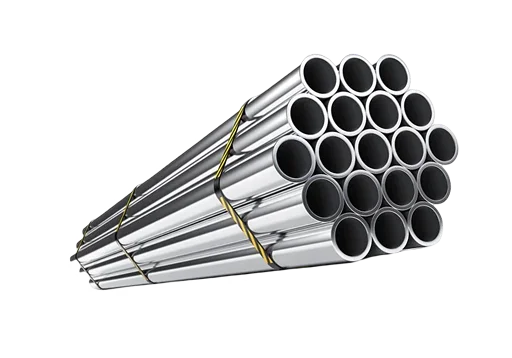
NICKEL-CHROMIUM-MOLYBDENUM ALLOY FLANGES MANUFACTURER & SUPPLIER.webp)
Hastelloy S (Alloy S) Nickel-Chromium-Molybdenum Alloy Flanges Manufacturer & Supplier
Metinox Overseas is among the biggest manufacturers and distributor of Hastelloy S (Alloy S) Nickel-Chromium-Molybdenum Alloy Flanges, which are specifically designed, but designed to operate in severely cyclical heating, and therefore have exceptional thermal stability, low thermal expansion coefficient, and high oxidation resistance to a high of 1095-C (2000-F) and beyond and yet retains its strength, ductility, and metallurgical integrity after a long-term exposure to high-temperature treatments and in thermal fatigue cycles. Our ASTM B564 UNS N06635 Forged Flanges contain their own proprietary composite based on nickel superalloy with nickel (balance, about 62%), chromium (14.5-17.0%), molybdenum (14.0-16.5%), tungsten (0.3-1.5%), lanthanum (0.005-0.050%), and controlled carbon (0.02% maximum), with a special combination of thermal stability, low thermal expansion, excellent oxidation resistance, and superior high-temperature strength retention after aging.
They are best suited to the most rigorous thermal cycle service up to 1095-C (2000-F), gas turbine engines (seal rings where low thermal expansion is essential), industrial furnace, thermal cycling, chemical processing equipment (temperature changes), petroleum industry (cyclic heating), power generation equipment (thermal fatigue), aerospace (thermal stability) and special purpose high temperature equipment (retention of mechanical properties and microstructural integrity under thousands of heating-cooling cycles), and offer better performance to other nickel alloys in harshly cycling thermal environments.

Table of Contents

- Hastelloy S Flanges Technical Specifications
- Hastelloy S Equivalent Grades
- Hastelloy S Chemical Composition
- Mechanical Properties of Hastelloy S Flanges
- Hastelloy S Flange Dimensions & Pressure Rating Chart
- Types of Hastelloy S Flanges Available
- Standard Flange Sizes & Weight Chart
- Is Hastelloy S Good Quality for Gas Turbine Seal Rings and Thermal Cycling Service?
- Heat Treatment & Testing Requirements
- Hastelloy S Nickel-Chromium-Molybdenum Alloy Flanges Price List 2026
- Applications of Hastelloy S Flanges in Industry
- Why Choose Hastelloy S Flanges from Metinox Overseas?
- Hastelloy S Flange Delivery Time & CIF Pricing by Country
- Other Types of Hastelloy S Flanges
- People Also Search For
- Frequently Asked Questions (FAQ)
Hastelloy S Flanges Technical Specifications
| Feature | Details |
| Specifications | ASTM B564 / ASME SB564 / AMS 5711 / AMS 5838 / AMS 5873 |
| Grade | UNS N06635 (Hastelloy S, Alloy S) |
| Material Designation | Nickel-Chromium-Molybdenum Alloy (Ni-Cr-Mo) |
| UNS Number | N06635 |
| Werkstoff Number | 2.4683 |
| Dimensional Standards | ANSI/ASME B16.5, B16.47 Series A & B, B16.48, MSS SP-44 |
| Size Range | 1/2" (15 NB) to 60" (1500 NB) |
| Pressure Class | 150#, 300#, 400#, 600#, 900#, 1500#, 2500# (B16.5); 75#, 150#, 300#, 400#, 600#, 900# (B16.47) |
| Flange Types | Weld Neck, Slip-On, Blind, Socket Weld, Lap Joint, Threaded, Orifice, Long Weld Neck, Reducing |
| Flange Face | Raised Face (RF), Flat Face (FF), Ring Type Joint (RTJ), Male & Female, Tongue & Groove |
| Manufacturing Type | Hot Forged |
| Microstructure | Austenitic (FCC) Solid Solution (Solution Annealed) |
| Heat Treatment | Solution Annealed at 1175-1230-C + Rapid Water Quench, Optional Aging at 760-C |
| Testing | Tensile, Hardness, Thermal Fatigue, PMI, Ultrasonic |
| Inspection | Third Party Inspection by TUV, SGS, Bureau Veritas, Lloyd's, DNV GL, BV, ABS |
| Certifications | EN 10204 3.1B MTC, AMS 5711 / 5838 / 5873, PED 2014/68/EU, CE Marked, ASME B31.3 |
Hastelloy S Equivalent Grades
| Standard | USA | Germany | Europe | Japan | UK | China |
| Hastelloy S | UNS N06635 | 2.4683 | 2.4683 | - | - | - |
| ASTM B564 N06635 | NiCr15Mo15 | NiCr15Mo15 | ||||
| Alloy S | W.Nr. 2.4683 | |||||
| AMS 5711 / 5838 / 5873 |
Hastelloy S Chemical Composition
The detailed composition of this material is given in the following table.
| Element | Composition (%) | Function |
| Nickel (Ni) | Balance (approx. 62%) | Base element, provides thermal stability and corrosion resistance |
| Chromium (Cr) | 14.5 - 17.0 | Oxidation resistance and corrosion resistance |
| Molybdenum (Mo) | 14.0 - 16.5 | High-temperature strength and corrosion resistance |
| Tungsten (W) | 0.3 - 1.5 | Enhances high-temperature strength |
| Lanthanum (La) | 0.005 - 0.050 | Critical for thermal stability and low thermal expansion |
| Iron (Fe) | 3.0 max | Controlled as residual element |
| Cobalt (Co) | 3.0 max | Controlled for thermal stability |
| Manganese (Mn) | 1.0 max | Improves hot workability |
| Silicon (Si) | 1.0 max | Deoxidizer |
| Carbon (C) | 0.02 max | Prevents carbide precipitation |
| Aluminum (Al) | 0.50 max | Residual element |
| Titanium (Ti) | 0.20 max | Residual element |
| Boron (B) | 0.015 max | Grain boundary strengthening |
| Phosphorus (P) | 0.040 max | Minimized |
| Sulfur (S) | 0.030 max | Minimized |
Mechanical Properties of Hastelloy S Flanges
The mechanical properties decide the shelflife of the material. The table below gives the information about the mechanical properties of Hastelloy S Flanges.
| Property | Requirement (Solution Annealed) | Testing Standard |
| Tensile Strength | 690 MPa (100 ksi) minimum | ASTM E8 |
| Yield Strength (0.2% offset) | 380 MPa (55 ksi) minimum | ASTM E8 |
| Elongation in 2" | 35% minimum | ASTM E8 |
| Hardness (Brinell) | 180-230 HB (typical) | ASTM E10 |
| Hardness (Rockwell B) | 85-92 HRB (typical) | ASTM E18 |
| Coefficient of Thermal Expansion | 13.5 -m/(m-K) at 20-100-C | - |
| Modulus of Elasticity | 210 GPa (30,500 ksi) | - |
| Density | 8.75 g/cm- (0.316 lb/in-) | - |
Hastelloy S Flange Dimensions & Pressure Rating Chart
Pressure-Temperature Ratings for Hastelloy S Flanges (ASTM B564 N06635)
| Temperature -F (-C) | Class 150 | Class 300 | Class 600 | Class 900 | Class 1500 | Class 2500 |
|---|---|---|---|---|---|---|
| -20 to 100 (-29 to 38) | 285 psi | 740 psi | 1480 psi | 2220 psi | 3705 psi | 6170 psi |
| 200 (93) | 260 psi | 675 psi | 1350 psi | 2025 psi | 3375 psi | 5625 psi |
| 400 (204) | 233 psi | 604 psi | 1208 psi | 1813 psi | 3021 psi | 5035 psi |
| 600 (316) | 205 psi | 532 psi | 1064 psi | 1596 psi | 2660 psi | 4434 psi |
| 800 (427) | 177 psi | 459 psi | 919 psi | 1378 psi | 2297 psi | 3828 psi |
| 1000 (538) | 150 psi | 389 psi | 778 psi | 1167 psi | 1945 psi | 3242 psi |
| 1200 (649) | 122 psi | 317 psi | 634 psi | 951 psi | 1585 psi | 2642 psi |
| 1400 (760) | 95 psi | 246 psi | 493 psi | 740 psi | 1233 psi | 2055 psi |
| 1600 (871) | 72 psi | 187 psi | 375 psi | 562 psi | 937 psi | 1562 psi |
| 1800 (982) | 55 psi | 143 psi | 286 psi | 429 psi | 715 psi | 1192 psi |
Types of Hastelloy S Flanges Available
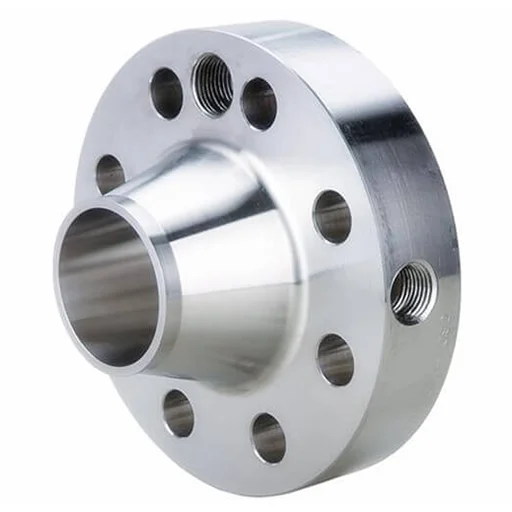
Hastelloy S Orifice Flange
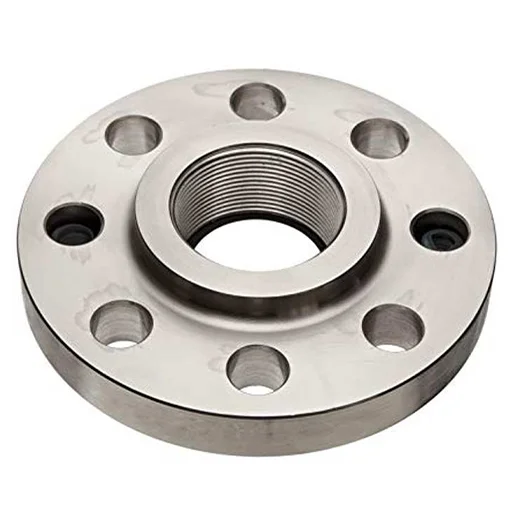
Hastelloy S Threaded Flange
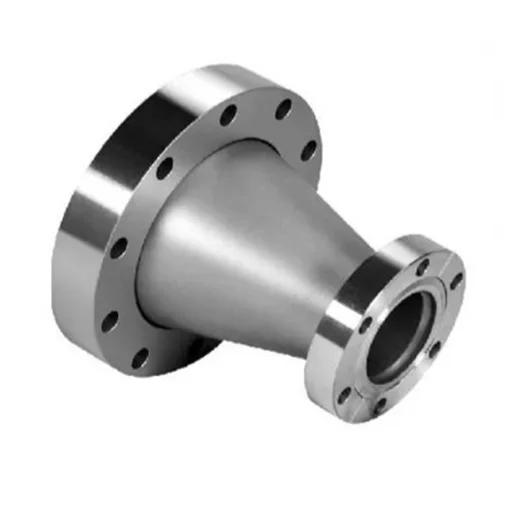
Hastelloy S Reducing Flange
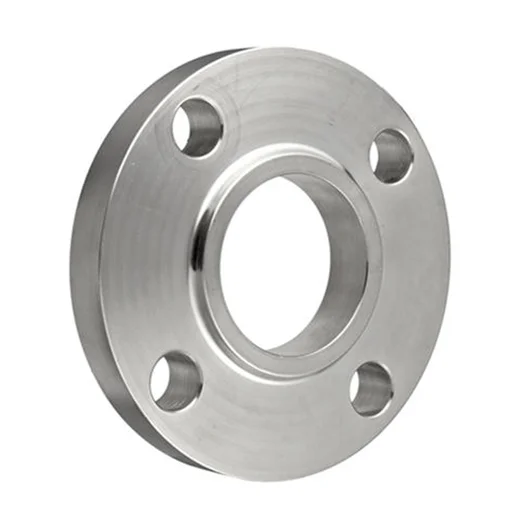
Hastelloy S Lap Joint Flange
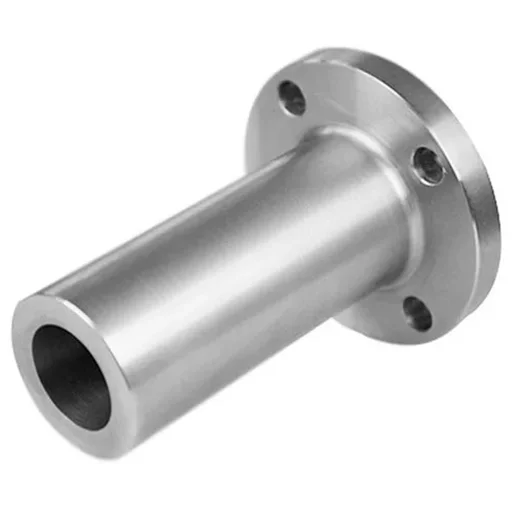
Hastelloy S Long Weld Neck Flange
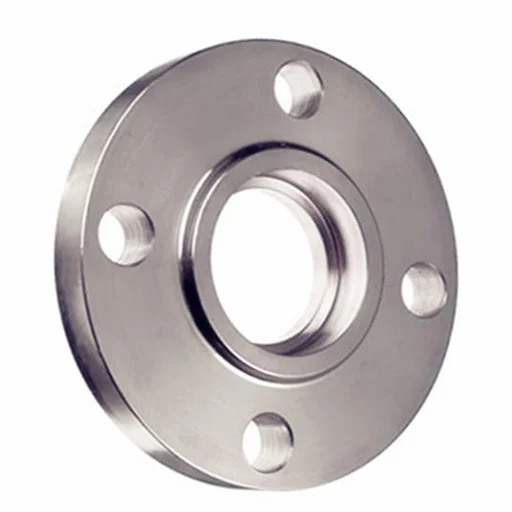
Hastelloy S Socket Weld Flange
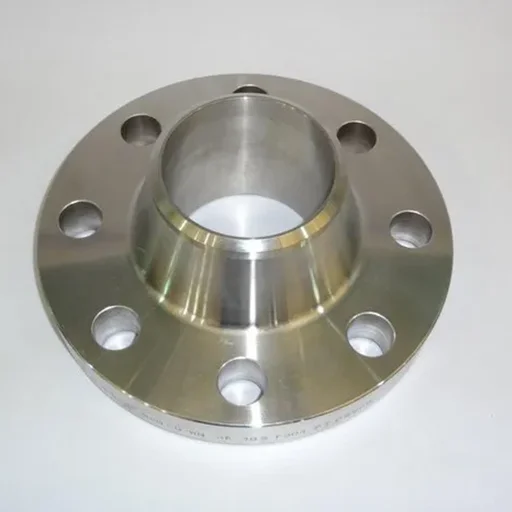
Hastelloy S Weld Neck Flange
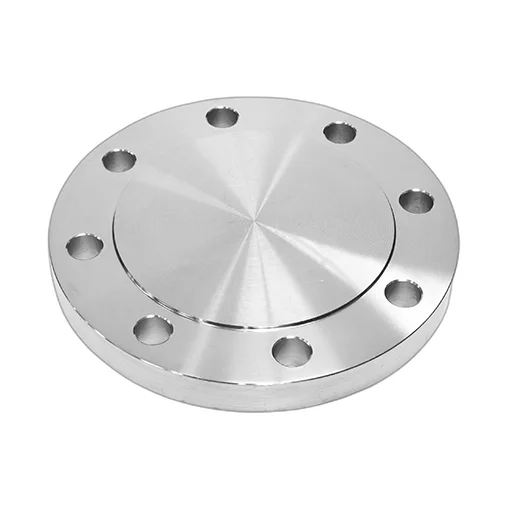
Hastelloy S Blind Flange
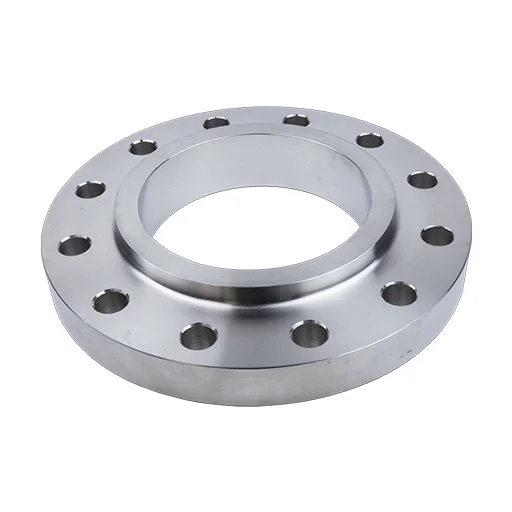
Hastelloy S Slip-On Flange
Standard Flange Sizes & Weight Chart
Hastelloy S Weld Neck Flange Dimensions (ANSI B16.5) - Class 600 (Sample)
| NPS | OD (mm) | Thickness (mm) | Bore (mm) | Hub Dia (mm) | Bolt Circle (mm) | Bolts | Bolt Dia | Approx Weight (kg) |
|---|---|---|---|---|---|---|---|---|
| 1/2" | 95 | 16 | 21 | 41 | 66 | 4 | M16 | 0.89 |
| 1" | 124 | 21 | 33 | 57 | 89 | 4 | M19 | 1.85 |
| 2" | 165 | 25 | 60 | 84 | 127 | 8 | M19 | 4.05 |
| 4" | 273 | 32 | 114 | 146 | 216 | 8 | M25 | 13.1 |
| 6" | 356 | 38 | 168 | 210 | 270 | 12 | M25 | 28.1 |
| 8" | 419 | 41 | 219 | 270 | 330 | 12 | M28 | 44.6 |
| 10" | 508 | 48 | 273 | 330 | 403 | 16 | M32 | 76.7 |
| 12" | 559 | 52 | 324 | 381 | 476 | 20 | M32 | 104.3 |
| 16" | 711 | 64 | 419 | 495 | 603 | 20 | M38 | 196.8 |
| 20" | 838 | 70 | 508 | 603 | 724 | 24 | M38 | 303.6 |
| 24" | 991 | 78 | 610 | 705 | 838 | 24 | M45 | 450.9 |
Is Hastelloy S Good Quality for Gas Turbine Seal Rings and Thermal Cycling Service?
Yes, Hastelloy S (Alloy S, UNS N06635) is specifically designed as the most preferable nickel-based alloy in applications where severely cyclical heating conditions are involved that offers a unique mix of excellent thermal stability, low coefficient of thermal expansion (important in gas turbine seal rings), excellent oxidation resistance up to 1095-C (2000-F) and excellent retention of strength, ductility and metallurgical integrity to thermal cycling between 425-870-C (800-1600-F). Haynes International designed Hastelloy S to be used in gas turbine seal rings, addressing the crucial concerns of the parts that should not be affected by the changing requirements of the mechanical characteristics and dimensions meeting thousands of rapid heating-cooling cycles.
Hastelloy S has a unique thermal stability due to the specialized composition that consists of balanced chromium (14.5-17%), molybdenum (14.5-16.5%), tungsten (0.3-1.5%) and the special addition of lanthanum (0.005-0.050%). The addition of the lanthanum element is especially important- It greatly improves the ability of the alloy to resist grain growth at high temperatures and is associated with a low thermal expansion coefficient which is characteristic of the alloy. This low thermal expansion (about 13.5 -m/(m-K) at 20-100-C) is critical for gas turbine seal rings that must maintain precise dimensional tolerances across wide temperature ranges.
Hastelloy S has proven itself to be the best in terms of thermal cycling service. The alloy maintains great strength, and ductility following longer periods of aging at temperatures of 425-870-C (800-1600-F). Hastelloy S is able to withstand its metallurgical integrity unlike many nickel alloys which tend to degrade their property or develop microstructural instability through thermal cycling. The thermal stability is such that it is possible to maintain the design properties of components despite many years of cyclic operation with rapid temperature variations.
Hastelloy S is characterized by excellent oxidation resistance of 1095-C (2000-F). Combustion products of No. 2 fuel oil (0.4% sulfur) containing sea salt exhibit superior resistance to hot corrosion, as well as hot oxidation, of the product under extreme thermal shock. The alloy forms a stable oxide scale which is resistant and adherent to thermal cycling instead of being attacked by an accelerated oxidation as is the case in less stable alloys. Oxidation resistance and thermal stability of Hastelloy S make it suitable as a component in gas turbines that work in conditions of combustion.
The reason why Hastelloy S has a critical advantage is that it has better thermal fatigue resistance. Gas turbines and industrial furnaces have components that undergo intense changes in both temperature during start up, operation and shut down. These thermal cycles give rise to thermal stress which may crack materials with low thermal fatigue or with high thermal expansion coefficient. The low thermal expansion coefficient of Hastelloy S reduces the amount of thermal stresses, and its high ductility and stability in the microstructure inhibits the onset and growth of cracks.
Hastelloy S finds a lot of application in the form of seal rings in the gas turbine applications where the low thermal expansion coefficient of the material is of paramount importance. Seal rings of gas turbines have to ensure a high level of accuracy of clearances between rotating components over a broad temperature range. Overspeedy thermal growth would lead to seal ring deformation, clearance loss control, as well as diminished turbine efficiency or physical harm of parts. The dimensional stability of Hastelloy S during thermal cycling provides maximum seal action during the service life of the component.
Hastelloy S is a high fabricable material. Forming can be easily carried out between 1145-C (2100-F) and 871-C (1600-F) on bulk, and finally the remainder of the reduction is done at about 1038-C (1900-F) to 816-C (1500-F). The alloy is well ductile to permit cold working to achieve final dimensional control. GTAW and GMAW methods can be used in welding. Alloy is provided in solution heat-treated state and optional aging treatment may be provided in special cases.
Hastelloy S is used in critical applications where its decisive benefits are needed, such as gas turbine engines (seal rings, components that need to do low thermal expansion and thermal cycling resistance), industrial furnaces with cyclic heating (heat treatment equipment, furnace components with high thermal changes, heat exchangers with thermal changes), petrochemical processing (pyrolysis operations, catalyst regeneration systems), power generation components (thermal cycling service in turbines and boilers), aerospace applications (components that have high thermal fatigue), and waste-to-energy plants (furnace components with severe thermal cycling).
AMS specifications 5711, 5838 and 5873 cover the alloy under different forms and heat treatment conditions of products. ASTM B564 includes forged fittings and forged flanges. The controlled composition and processing allows uniform thermal stability and reduced thermal expansion that is needed in seal ring and thermal cycling applications.
The main factor to consider with Hastelloy S is that, it is a specialty alloy developed to be used in thermal cycling and low thermal expansion and not a universal high-temperature alloy. Other alloys such as Hastelloy X could be more economical than these applications that do not need these particular properties. Nevertheless, in the case of gas turbine seal rings, materials in which dimensional stability is needed when subjected to thermal cycling, and extreme thermal fatigue, Hastelloy S has a combination of properties that is unmatched by typical general-purpose high-temperature alloys at relatively higher cost.
Heat Treatment & Testing Requirements
Heat Treatment Requirements (Mandatory):
| Process | Step / Parameter | Requirement | Remarks |
| Solution Annealing + Rapid Quenching | Solution Annealing Temperature | 1175-1230-C (2150-2250-F) | Optimal for thermal stability |
| Holding Time | Adequate soaking | Based on section thickness, typically 30+ min | |
| Cooling After Annealing | Rapid water quench or air cool | Maintains solid solution condition | |
| Optional Aging | Aging Temperature | 760-C (1400-F) | For applications requiring enhanced properties |
| Aging Time | 4-24 hours typical | Time varies based on desired properties | |
| Critical Requirement | Controlled forging | Final 20% reduction at 1038-816-C | Ensures optimal microstructure |
Testing & Inspection Requirements (Comprehensive):
| Test / Inspection | Standard / Requirement | Acceptance / Remarks |
| Tensile Testing | ASTM E8 | Yield = 55 ksi (380 MPa), Tensile = 100 ksi (690 MPa), Elongation = 35% |
| Hardness Testing | ASTM E10 / E18 | Typical 180-230 HB (85-92 HRB) |
| Thermal Fatigue Testing | Cyclic heating tests (optional) | Verification of thermal cycling resistance |
| Coefficient of Thermal Expansion | Dilatometry testing (optional) | Typical 13.5 -m/m-K |
| PMI Testing | Positive Material Identification | Ni (~62%), Cr (14.5-17%), Mo (14.5-16.5%), W (0.3-1.5%), La (0.005-0.050%) |
| Ultrasonic Testing | ASTM A388 | Mandatory for critical gas turbine applications |
Hastelloy S Nickel-Chromium-Molybdenum Alloy Flanges Price List 2026
| Flange Type | Size Range | Pressure Class | Indicative Price Range (USD / Piece) |
|---|---|---|---|
| Weld Neck (WN) | 1/2" - 2" | 150# | $185 - $445 |
| Weld Neck (WN) | 4" - 8" | 150# | $765 - $2,885 |
| Weld Neck (WN) | 10" - 24" | 150# | $4,580 - $16,450 |
| Weld Neck (WN) | 1/2" - 2" | 300# | $275 - $665 |
| Weld Neck (WN) | 4" - 8" | 300# | $1,155 - $4,165 |
| Weld Neck (WN) | 10" - 24" | 300# | $6,625 - $23,850 |
| Weld Neck (WN) | 1/2" - 2" | 600# | $405 - $975 |
| Weld Neck (WN) | 4" - 8" | 600# | $1,815 - $6,265 |
| Slip-On (SO) | 1/2" - 2" | 150# | $162 - $375 |
| Slip-On (SO) | 4" - 8" | 150# | $645 - $2,325 |
| Blind (BL) | 1/2" - 2" | 150# | $148 - $345 |
| Blind (BL) | 4" - 8" | 150# | $665 - $2,625 |
| Socket Weld (SW) | 1/2" - 2" | 150# - 600# | $198 - $845 |
Applications of Hastelloy S Flanges in Industry
The Hastelloy S Nickel-Chromium-Molybdenum Alloy Flanges are commonly used in many industrial applications, and some of the common industries are given below.
Gas Turbine Engines
Seal rings requiring low thermal expansion and thermal cycling resistance
Industrial Furnaces
Heat treatment equipment, furnace components with cyclic heating
Chemical Processing
Reactors and heat exchangers with thermal cycling, temperature variations
Petrochemical
Pyrolysis operations, catalyst regeneration systems with thermal shock
Power Generation
Turbine and boiler components experiencing thermal fatigue
Aerospace
Engine components requiring thermal stability and low thermal expansion
Waste-to-Energy
Furnace components exposed to severe thermal cycling and hot corrosion
High-Temperature Service
Applications requiring dimensional stability during thermal cycling
Why Choose Hastelloy S Flanges from Metinox Overseas?
Metinox Overseas offers certified solution annealed and optionally aged Hastelloy S (Alloy S) nickel-chromium-molybdenum alloy flanges at 1175-1230-C and low thermal expansion with and without optional aging of gas turbine seal rings and other severely cyclical heating applications. We are ISO 9001:2015 and AMS 5711/5838/5873 approved and PED certified manufacturing sites. All flanges will have EN 10204 3.1B Mill Test Certificates with complete chemical analysis including lanthanum verification (Ni ~62%, Cr 14.5-17%, Mo 14.5-16.5%, W 0.3-1.5%, La 0.005-0.050%) and complete tensile properties (Tensile =100 ksi, Yield =55 ksi, Elongation =35%) and verification of hardness and thermal expansion coefficient.
Our technical team offers specialist advice on the choice of Hastelloy S material to use as seal rings in gas turbines, as thermal cycling, low thermal expansion, welding, heat treatment optimization including aging cycles and AMS/ASME compliance to gas turbine manufacturers, aerospace companies, industrial furnace manufacturers, and specialized high-temperature applications across the globe.
Hastelloy S Flange Delivery Time & CIF Pricing by Country
| Destination Region | Major Ports / Cities | Estimated Delivery Time | Typical CIF Terms |
|---|---|---|---|
| Middle East (GCC) | Dubai, Dammam, Doha | 14-18 Days | CIF Dubai / CIF Dammam |
| Europe | Rotterdam, Hamburg | 28-35 Days | CIF Rotterdam / CIF Hamburg |
| USA & Canada | Houston, New York | 35-45 Days | CIF Houston / CIF New York |
| Southeast Asia | Singapore, Port Klang | 18-25 Days | CIF Singapore / CIF Port Klang |
| Africa | Lagos, Durban | 25-35 Days | CIF Lagos / CIF Durban |
Other Types of Hastelloy S Flanges
ASTM B564 N06635 Flanges, UNS N06635 Weld Neck Flanges, Hastelloy S Blind Flanges, Alloy S Gas Turbine Seal Ring Flanges, Hastelloy S Thermal Cycling Flanges, Alloy S Low Thermal Expansion Flanges.
People Also Search For
hastelloy s flanges manufacturer, alloy s flanges supplier, uns n06635 flanges, hastelloy s gas turbine seal ring flanges price, alloy s thermal cycling flanges, hastelloy s low thermal expansion flanges.
Looking for High-Quality Hastelloy S Flanges?
Let us support your projects with quality, precision, and performance.
Frequently Asked Questions (FAQ)
We are ISO 9001:2015, AMS 5711/5838/5873 certified and PED certified. EN 10204 3.1 Oil and gas turbine seal rings and thermal cycling EN 10204 3.1 Mill Test Certificate is supplied with Hastelloy S flanges.
Annealing at 1175-1230-C, rapid cooling, optional 760-C aging. The tests that we conduct are PMI checking of lanthanum content, tensile test (=100 ksi), where applicable, thermal expansion test, and hardness test.
The gas turbine seal rings (where thermal expansion is an issue of importance), the industrial furnace parts having thermal cycling, the chemical reactors with temperature variations, as well as the applications that demanded dimensional stability in thermal fatigue.
Hastelloy S is made of lanthanum (0.005-0.050%) that offers superior thermal stability, as well as low thermal expansion coefficient (~13.5 -m/m-K). It does not lose its properties during aging at 425-870-C, which is suitable in harsh thermal cycling.
Enquire Now
Get pricing within 24 hours!