NICKEL-CHROMIUM-MOLYBDENUM ALLOY FLANGES MANUFACTURER & SUPPLIER.webp)
Hastelloy C4 (Alloy C4) Nickel-Chromium-Molybdenum Alloy Flanges Manufacturer & Supplier
The Metinox Overseas is one of the company of the largest manufacturers and distributors of the Hastelloy C4 (Alloy C4) Nickel-Chromium-Molybdenum Alloys Flanges and are engineered to achieve high thermal stability, and superior resistance to the grain boundary precipitation of carbide which provides excellent corrosion resistance in hot contaminated mineral acids, chloride solutions, and oxidizing/reducing environment with superior fabricability and weldability than the previous C-series alloys. Our ASTM B564 UNS N06455 Forged Flanges have advanced nickel-based superalloy composition with nickel (balance, minimum 65%), chromium (14.0-18.0%), molybdenum (14.0-17.0%), titanium (maximum 0.70%), and very low carbon plus silicon (C+Si [?]0.08), which offers high resistance to weld sensitization and intergranular corrosion and has a very high level
They are best suited in severe chemical processing conditions that need thermal cycling, no post-welding heat treatment, and also in applications where C-276 has been found to be sensitized to weld, and C-22 is more expensive, which offers the ideal balance of thermal stability, weldability, and corrosion resistance.

Table of Contents
- Hastelloy C4 Flanges Technical Specifications
- Hastelloy C4 Equivalent Grades
- Hastelloy C4 Chemical Composition
- Mechanical Properties of Hastelloy C4 Flanges
- Hastelloy C4 Flange Dimensions & Pressure Rating Chart
- Types of Hastelloy C4 Flanges Available
- Standard Flange Sizes & Weight Chart
- Is Hastelloy C4 Good Quality for Superior Thermal Stability and Weldability?
- Heat Treatment & Testing Requirements
- Hastelloy C4 Nickel-Chromium-Molybdenum Alloy Flanges Price List 2026
- Applications of Hastelloy C4 Flanges in Industry
- Why Choose Hastelloy C4 Flanges from Metinox Overseas?
- Hastelloy C4 Flange Delivery Time & CIF Pricing by Country
- Other Types of Hastelloy C4 Flanges
- People Also Search For
- Frequently Asked Questions (FAQ)
Hastelloy C4 Flanges Technical Specifications
| Feature | Details |
| Specifications | ASTM B564 / ASME SB564 / DIN 17744 |
| Grade | UNS N06455 (Hastelloy C4, Alloy C4) |
| Material Designation | Nickel-Chromium-Molybdenum Alloy (Ni-Cr-Mo) |
| UNS Number | N06455 |
| Werkstoff Number | 2.4610 |
| Dimensional Standards | ANSI/ASME B16.5, B16.47 Series A & B, B16.48, MSS SP-44 |
| Size Range | 1/2" (15 NB) to 60" (1500 NB) |
| Pressure Class | 150#, 300#, 400#, 600#, 900#, 1500#, 2500# (B16.5); 75#, 150#, 300#, 400#, 600#, 900# (B16.47) |
| Flange Types | Weld Neck, Slip-On, Blind, Socket Weld, Lap Joint, Threaded, Orifice, Long Weld Neck, Reducing |
| Flange Face | Raised Face (RF), Flat Face (FF), Ring Type Joint (RTJ), Male & Female, Tongue & Groove |
| Manufacturing Type | Hot Forged |
| Microstructure | Austenitic (FCC) Solid Solution (Solution Annealed) |
| Heat Treatment | Solution Annealed at 1175-1230-C + Rapid Water Quench (Mandatory) |
| Testing | Tensile, Hardness, Impact, PMI, Ferrite Detection, Ultrasonic |
| Inspection | Third Party Inspection by TUV, SGS, Bureau Veritas, Lloyd's, DNV GL, BV, ABS |
| Certifications | EN 10204 3.1B MTC, PED 2014/68/EU, CE Marked, ASME B31.3 |
Hastelloy C4 Equivalent Grades
| STANDARD | USA | GERMANY | EUROPE | JAPAN | UK | CHINA |
| Hastelloy C4 | UNS N06455 | 2.4610 | 2.4610 | - | - | - |
| ASTM B564 N06455 | NiMo16Cr16Ti | NiMo16Cr16Ti | ||||
| Alloy C4 | W.Nr. 2.4610 | |||||
| Hastelloy C-4 |
Hastelloy C4 Chemical Composition
| Element | Composition (%) | Function |
| Nickel (Ni) | 65.0 minimum (balance) | Base element, provides corrosion resistance and structural stability |
| Molybdenum (Mo) | 14.0 - 17.0 | Outstanding pitting and crevice corrosion resistance, reducing acid resistance |
| Chromium (Cr) | 14.0 - 18.0 | Excellent oxidation resistance and resistance to oxidizing acids |
| Titanium (Ti) | 0.70 max | Controlled to prevent excessive precipitation |
| Iron (Fe) | 3.0 max | Minimized compared to C-276 for improved thermal stability |
| Manganese (Mn) | 1.0 max | Improves hot workability |
| Carbon (C) | 0.015 max | Extremely low to prevent carbide precipitation |
| Silicon (Si) | 0.08 max | Minimized to prevent precipitation |
| Carbon + Silicon | 0.08 max combined | Critical limit ensuring thermal stability |
| Cobalt (Co) | 2.0 max | Controlled as residual element |
| Tungsten (W) | - | Not present in C4 (unlike C-276/C22) |
| Phosphorus (P) | 0.04 max | Minimized for corrosion resistance |
| Sulfur (S) | 0.03 max | Minimized for corrosion resistance and hot workability |
Mechanical Properties of Hastelloy C4 Flanges
| Property | Requirement (Solution Annealed) | Testing Standard |
| Tensile Strength | 785 MPa (114 ksi) minimum | ASTM E8 |
| Yield Strength (0.2% offset) | 400 MPa (58 ksi) minimum | ASTM E8 |
| Elongation in 2" | 40% minimum | ASTM E8 |
| Hardness (Brinell) | 180-230 HB (typical) | ASTM E10 |
| Hardness (Rockwell B) | 85-92 HRB (typical) | ASTM E18 |
| Charpy V-Notch Impact | Excellent toughness | ASTM E23 |
| Density | 8.64 g/cm- (0.312 lb/in-) | - |
Hastelloy C4 Flange Dimensions & Pressure Rating Chart
Pressure-Temperature Ratings for Hastelloy C4 Flanges (ASTM B564 N06455)
| Temperature -F (-C) | Class 150 | Class 300 | Class 600 | Class 900 | Class 1500 | Class 2500 |
| -20 to 100 (-29 to 38) | 285 psi | 740 psi | 1480 psi | 2220 psi | 3705 psi | 6170 psi |
| 200 (93) | 260 psi | 675 psi | 1350 psi | 2025 psi | 3375 psi | 5625 psi |
| 400 (204) | 233 psi | 604 psi | 1208 psi | 1813 psi | 3021 psi | 5035 psi |
| 600 (316) | 205 psi | 532 psi | 1064 psi | 1596 psi | 2660 psi | 4434 psi |
| 800 (427) | 177 psi | 459 psi | 919 psi | 1378 psi | 2297 psi | 3828 psi |
| 1000 (538) | 150 psi | 389 psi | 778 psi | 1167 psi | 1945 psi | 3242 psi |
| 1200 (649) | 122 psi | 317 psi | 634 psi | 951 psi | 1585 psi | 2642 psi |
| 1400 (760) | 95 psi | 246 psi | 493 psi | 740 psi | 1233 psi | 2055 psi |
Types of Hastelloy C4 Flanges Available
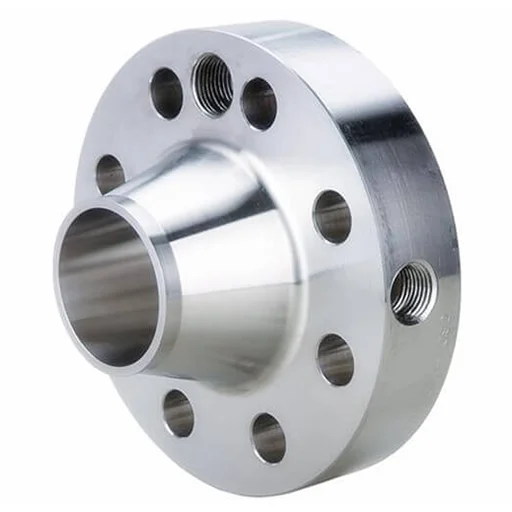
Hastelloy C4 Orifice Flange
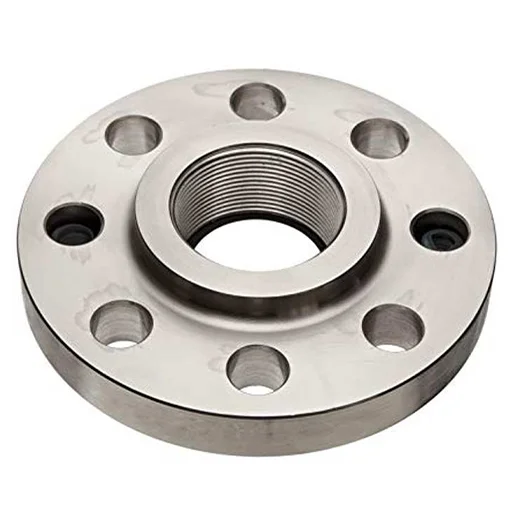
Hastelloy C4 Threaded Flange
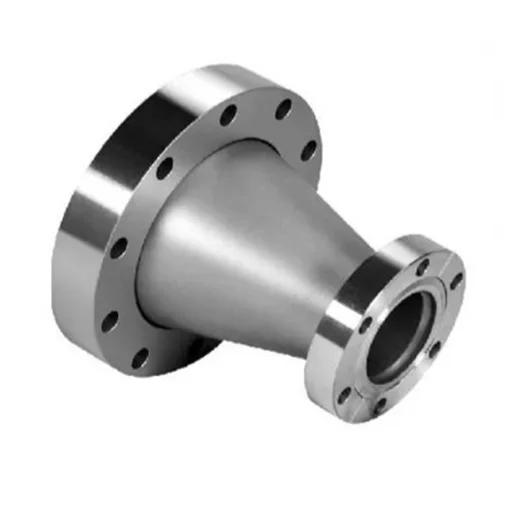
Hastelloy C4 Reducing Flange
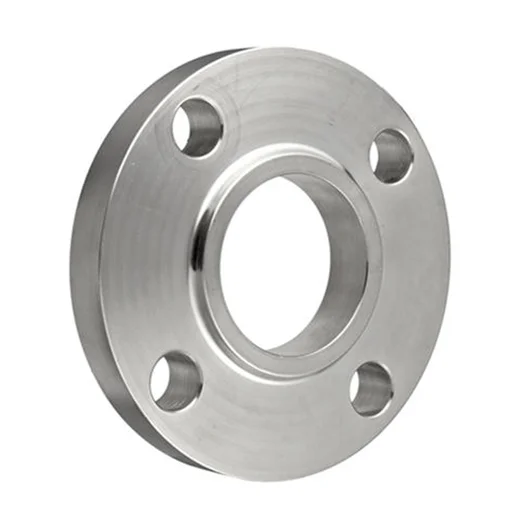
Hastelloy C4 Lap Joint Flange
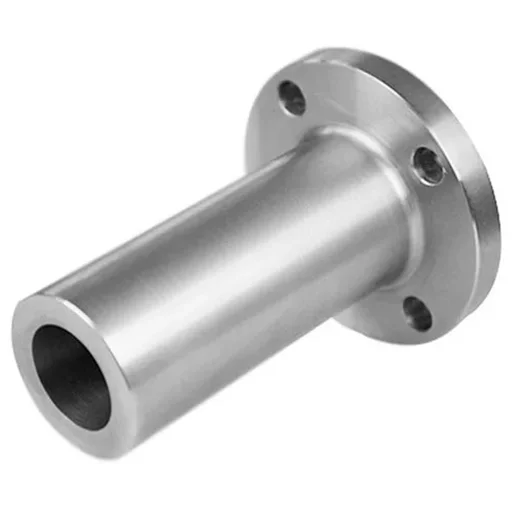
Hastelloy C4 Long Weld Neck Flange
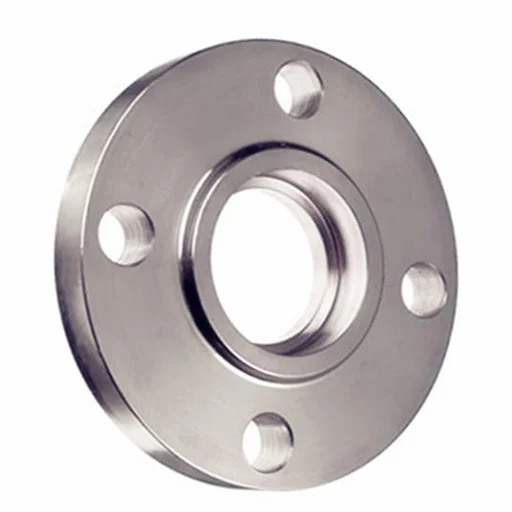
Hastelloy C4 Socket Weld Flange
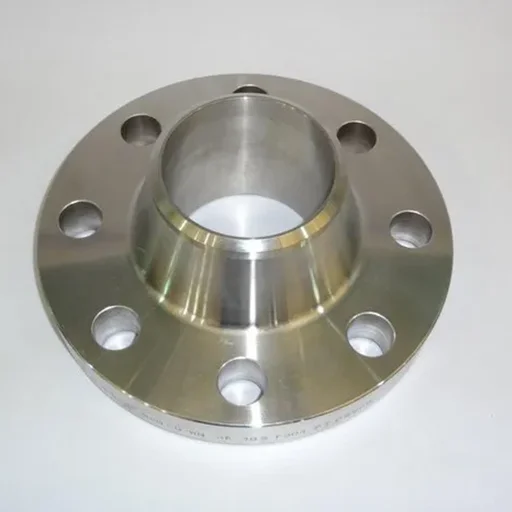
Hastelloy C4 Weld Neck Flange
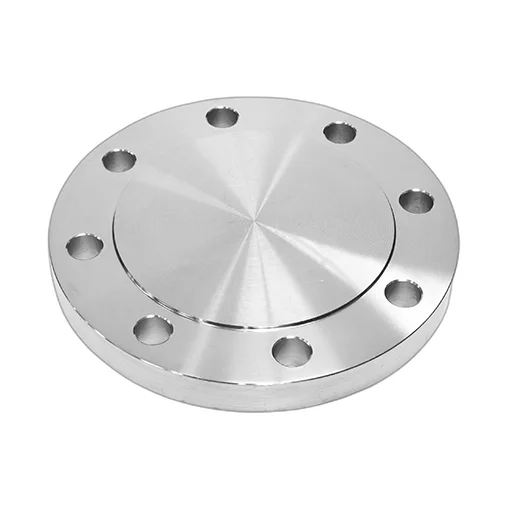
Hastelloy C4 Blind Flange
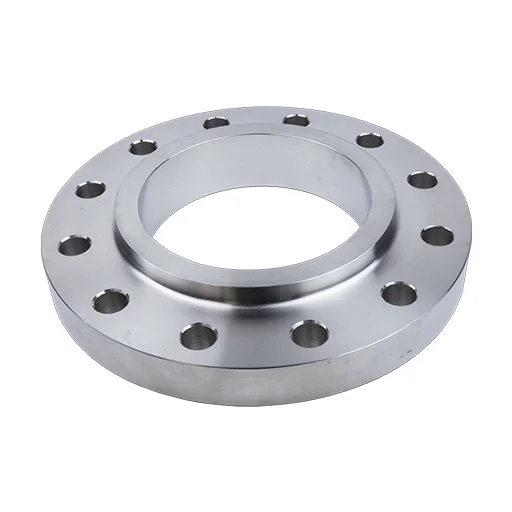
Hastelloy C4 Slip-On Flange
Standard Flange Sizes & Weight Chart
Hastelloy C4 Weld Neck Flange Dimensions (ANSI B16.5 - Class 600 Sample)
| NPS | OD (mm) | Thickness (mm) | Bore (mm) | Hub Dia (mm) | Bolt Circle (mm) | Bolts | Bolt Dia | Approx Weight (kg) |
| 1/2" | 95 | 16 | 21 | 41 | 66 | 4 | M16 | 0.88 |
| 1" | 124 | 21 | 33 | 57 | 89 | 4 | M19 | 1.83 |
| 2" | 165 | 25 | 60 | 84 | 127 | 8 | M19 | 4.00 |
| 4" | 273 | 32 | 114 | 146 | 216 | 8 | M25 | 12.9 |
| 6" | 356 | 38 | 168 | 210 | 270 | 12 | M25 | 27.8 |
| 8" | 419 | 41 | 219 | 270 | 330 | 12 | M28 | 44.0 |
| 10" | 508 | 48 | 273 | 330 | 403 | 16 | M32 | 75.7 |
| 12" | 559 | 52 | 324 | 381 | 476 | 20 | M32 | 102.8 |
| 16" | 711 | 64 | 419 | 495 | 603 | 20 | M38 | 194.1 |
| 20" | 838 | 70 | 508 | 603 | 724 | 24 | M38 | 299.4 |
| 24" | 991 | 78 | 610 | 705 | 838 | 24 | M45 | 444.5 |
Is Hastelloy C4 Good Quality for Superior Thermal Stability and Weldability?
Yes, Hastelloy C4 (Alloy C4, UNS N06455) is known to be the most thermally stable of the Hastelloy C-family of alloys, specifically designed to offer enhanced ability to counteract grain boundary carbide precipitation and intergranular corrosion over the widest possible temperature range, notably in the very critical 650-1040degC (1200-1900degF) range where C-276 can suffer weld sensitization and loss of corrosion resistance in An improved version of C-276 introduced in 1970s by Haynes International as a sophisticated development over C-276, Hastelloy C4 overcomes the thermal stability drawbacks of previous C-alloys without sacrificing its good all-round corrosion behavior in oxidizing and reducing environments.
The very low carbon plus silicon content (blended maximum 0.08% with carbon maximum 0.015% and controlled titanium maximum 0.70) and reduced iron content (maximum 3.0% compared with 4-7 percentage in C-276) and regulated titanium content (maximum 0.70% versus 4-7 percentage in C-276) gives Hastelloy C4 outstanding performance in the weld heat-affected zone sensitization. This composition gives C4 a safe operating temperature in as-welded state over a wider range of high-temperature service than C-276 and avoids the use of a post-weld heat treatment of the material even after prolonged exposures to high temperature in the sensitization temperature range.
The proportions of molybdenum (14-17%) and chromium (14-18) are balanced giving C4 a great corrosion resistance in most conditions similar to that of C-276. The alloy exhibits excellent resistance to hot contaminated mineral acids such as sulfuric acid, hydrochloric acid, phosphoric acid and mixed acid. C4 is good in oxidizing chloride environments, but C22 would likely offer superior resistance in the harshest oxidizing environments.
Hastelloy C4 has critical benefits, such as better thermal behavior at the time of welding, fabrication, as well as in high-temperature service. The alloy has a wider range of temperature in which it will resist grain boundary carbide precipitation than C-276, and is suited to making use of thermal cycling, variations in process temperatures, or prolonged exposure to temperatures between 650-1040degC. The resulting thermal stability gives weld heat-affected areas the same corrosion resistance as the base metal despite subsequent thermal cycles or long-term exposure to high temperatures.
When used in hot contaminated sulfuric acid service, C4 is shown to be superior to C-276, especially in application where the acid has oxidizing contaminants or has temperature variations. The alloy is highly resistant to intergranular corrosion in boiling sulfuric acid levels when the sensitized C-276 could suffer increased grain boundary assault. C4 has good service in hydrochloric acid but special alloys, such as B2/B3, are used in the most demanding HCl applications.
C4 is a good corrosion inhibitor in oxidizing chloride solutions such as hypochlorite, chlorine dioxide and ferric/cupric chlorides albeit with C22 being superior under the most oxidising conditions. The thermal stability benefit of C4 is especially useful to chloride settings that undergo temperature cycling or a limited number of temperature excursions. The alloy is totally resistant to chloride stress corrosion cracking.
Hastelloy C4 is capable of sustaining good mechanical characteristics and anti-corrosion at high temperatures. The alloy exhibits high-temperature strength, which is better than that of C-276 because it has a higher content of molybdenum and an optimized composition. C4 is also good at oxidation resistance in oxidizing high-temperature atmospheres thus C4 is used in chemical reactors, heat exchangers and process equipment that can operate to 1040degC.
The thermal stability of C4 has been found to be of decisive benefit in critical applications such as chemical processing equipment that needs thermal cycling (reactors, heat exchangers, distillation columns), hot contaminated sulfuric acid service, pharmaceutical manufacturing equipment with clean-in-place thermal cycling, acetic acid production in high temperatures, operations in which the bleaching of pulp is performed with variations in temperature, high-temperature chloride service, applications where post-weld heat treatment is not feasible or not possible, and multipurpose chemical equipment that needs guaranteed weld integrity
The main factor to be considered with Hastelloy C4 is the cost and availability. C4 is usually pricier than C-276 and is not as popular with many fabricators having broad C4 knowledge as compared to the ubiquitous C-276. In those applications where C4 is not needed due to its higher thermal stability, C-276 is good with fewer costs. But where the critical use is needed, such as thermal cycling, hot contaminated acids, prolonged high-temperature operation, or where the weld sensitization of C-276 is a concern, the higher thermal stability and ability of C4 to resist grain boundary attack makes the high price worthwhile. C4 specification is according to the ASME B31.3 Process Piping Code of critical high temperature applications in corrosion.
Heat Treatment & Testing Requirements
Heat Treatment Requirements (Mandatory):
| Process | Step / Parameter | Requirement | Remarks |
| Solution Annealing + Rapid Quenching | Solution Annealing Temperature | 1175-1230-C (2150-2250-F) | Higher than C-276 due to thermal stability focus |
| Holding Time | Adequate soaking | Based on section thickness, typically 30+ min | |
| Cooling After Annealing | Rapid water quench | Essential for single-phase austenitic structure | |
| Critical Cooling Rate | Fast cooling through critical range | Maintains superior thermal stability advantage | Critical Requirement |
| Ferrite-free structure | Must be fully austenitic | Verify with ferrite detector |
Testing & Inspection Requirements (Comprehensive):
| Test / Inspection | Standard / Requirement | Acceptance / Remarks |
| Tensile Testing | ASTM E8 | Yield = 58 ksi (400 MPa), Tensile = 114 ksi (785 MPa), Elongation = 40% |
| Hardness Testing | ASTM E10 / E18 | Typical 180-230 HB (85-92 HRB) |
| Charpy Impact Testing | ASTM E23 | Excellent toughness across temperature range |
| PMI Testing | Positive Material Identification | Ni (=65%), Mo (14-17%), Cr (14-18%), C (=0.015%), C+Si (=0.08%) |
| Ferrite Detection | Ferritescope / Magnetic test | Must be ferrite-free (0% ferrite) |
| Ultrasonic Testing | ASTM A388 | Mandatory for critical high-temperature applications |
| Intergranular Corrosion Testing | ASTM A262 Practice C (optional) | Verification of resistance to grain boundary attack |
Hastelloy C4 Nickel-Chromium-Molybdenum Alloy Flanges Price List 2026
| Flange Type | Size Range | Pressure Class | Indicative Price Range (USD/Piece) |
| Weld Neck (WN) | 1/2" - 2" | 150# | $165 - $405 |
| Weld Neck (WN) | 4" - 8" | 150# | $685 - $2,585 |
| Weld Neck (WN) | 10" - 24" | 150# | $4,110 - $14,750 |
| Weld Neck (WN) | 1/2" - 2" | 300# | $245 - $595 |
| Weld Neck (WN) | 4" - 8" | 300# | $1,035 - $3,735 |
| Weld Neck (WN) | 10" - 24" | 300# | $5,935 - $21,350 |
| Weld Neck (WN) | 1/2" - 2" | 600# | $365 - $875 |
| Weld Neck (WN) | 4" - 8" | 600# | $1,625 - $5,605 |
| Slip-On (SO) | 1/2" - 2" | 150# | $142 - $335 |
| Slip-On (SO) | 4" - 8" | 150# | $575 - $2,085 |
| Blind (BL) | 1/2" - 2" | 150# | $128 - $305 |
| Blind (BL) | 4" - 8" | 150# | $595 - $2,345 |
| Socket Weld (SW) | 1/2" - 2" | 150# - 600# | $178 - $755 |
Applications of Hastelloy C4 Flanges in Industry
The Hastelloy C4 Flanges are commonly used in many industrial applications, and some of the common industries are given below.
Chemical Processing
Hot contaminated sulfuric acid service, equipment with thermal cycling
High-Temperature Service
Reactors, heat exchangers, distillation columns operating 650-1040-C
Pharmaceutical
Manufacturing equipment with CIP thermal cycling, multipurpose reactors
Acetic Acid Production
Elevated temperature production and handling equipment
Pulp & Paper
Bleaching operations with temperature variations
Chloride Service
High-temperature chloride environments with thermal cycling
Welded Fabrications
Critical applications where post-weld heat treatment is impractical
Process Equipment
Applications requiring assured weld integrity across broad temperature ranges
Why Choose Hastelloy C4 Flanges from Metinox Overseas?
Metinox Overseas offers certified Hastelloy C4 (Alloy C4) nickel-chromium-molybdenum alloy flanges with selective solution annealing at 1175-1230degC, fast water quenching, and extensive testing with excellent service in raising thermal stability applications where resistance to grain boundary carbide precipitation and weld sensitization is needed. We have certified manufacturing plants of ISO 9001:2015 and PED. All flanges are manufactured with EN 10204 -3.1B Mill Test Certificates with full chemical analysis (tensile [?]114 ksi, yield [?]58 ksi, elongation [?]40%, C + Si 0.08%), full tensile properties (tensile [?]114 ksi, yield [?]58 ksi, elongation [?]40%), hardness confirmation, ferrite-free confirmation (0 percent ferrite) and PMI verification. Our technical department offers professional advice in C4 vs C-276 thermal stability comparison, hot contaminated acid services, thermal cycling, welding procedures (AWS A5.14 ERNiCrMo-13 filler metal) and compliance with ASME B31.3 to chemical processing plant needing thermal cycling, pharmaceutical manufacturers, thermal cycling, and high-temperature applications and critical welded fabrications globally.
Hastelloy C4 Flange Delivery Time & CIF Pricing by Country
| Destination Region | Major Ports / Cities | Estimated Delivery Time | Typical CIF Terms |
| Middle East (GCC) | Dubai, Dammam, Doha | 14-18 Days | CIF Dubai / CIF Dammam |
| Europe | Rotterdam, Hamburg | 28-35 Days | CIF Rotterdam / CIF Hamburg |
| USA & Canada | Houston, New York | 35-45 Days | CIF Houston / CIF New York |
| Southeast Asia | Singapore, Port Klang | 18-25 Days | CIF Singapore / CIF Port Klang |
| Africa | Lagos, Durban | 25-35 Days | CIF Lagos / CIF Durban |
Other Types of Hastelloy C4 Flanges
ASTM B564 N06455 Flanges, UNS N06455 Weld Neck Flanges, Hastelloy C4 Blind Flanges, Alloy C4 Thermal Stability Flanges, Hastelloy C4 Hot Acid Flanges, Alloy C4 As-Welded Condition Flanges.
People Also Search For
hastelloy c4 flanges manufacturer, alloy c4 flanges supplier, uns n06455 flanges, hastelloy c4 vs c276 thermal stability, alloy c4 hot sulfuric acid flanges price, hastelloy c4 weld sensitization resistance.
Looking for High-Quality Hastelloy C4 Flanges?
Let us support your projects with quality, precision, and performance.
Frequently Asked Questions (FAQ)
We are ISO 9001:2015 and PED certified. The Hastelloy C4 flanges are offered with EN 10204 3.1 Mill Test Certifies when used in high-temperature thermal cycling services under which very high thermal stability is needed.
Rapid water quench Solution annealing 1175-1230degC. We do PMI, tensile testing ([?]114 ksi), hardness testing, ferrite detection, and optional ASTM A262 intergranular corrosion testing.
Very low carbon plus silicon C+Si [?]0.08% and reduced iron content allow C4 to be much more resistant to weld sensitization and grain boundary precipitation over a wider temperature range than C-276.
Filler metal AWS A5.14 ERNiCrMo-13, no preheat. C4 is a good thermal cycling, hot contaminated acid and where the C-276 may be sensitized to weld at 650-1040degC when this is of concern.
Enquire Now
Get pricing within 24 hours!