Duplex 2507 Super Duplex Stainless Steel Flanges Manufacturer & Supplier
Metinox Overseas is a powerful company that produces and delivers Duplex 2507 Stainless Steel Flanges, which is a super duplex alloy of flanges that is specifically designed to be used in highly corrosive conditions that demand the utmost strength and high resistance to pitting, crevice corrosion and stress corrosion cracking. Made of high-quality super duplex stainless steel with controlled chemical composition including chromium (24.0-26.0%), nickel (6.0-8.0%), molybdenum (3.0-5.0%), and nitrogen (0.24-0.32%), our UNS S32750 Forged Flanges can be offered in the same tensile strength of 795 MPa with the yield strength of 550 MPa and high corrosion resistance with PREN greater than 40 These Super Duplex 2507 Flanges have a balanced ferritic-austenitic microstructure (40-60% ferrite) that is twice as strong as traditional austenitic grades and contains better resistance to chloride induced stress corrosion cracking that is required in offshore oil and gas, seawater, and chemical processing, desalination plants, pulp and paper and aggressive chloride environments where 316L or duplex 2205 fail.
This balance of two phase microstructure with high chromium (25%), molybdenum (4%) and nitrogen (0.25) give excellent resistance to pitting corrosion (CPT >50degC), crevice corrosion and general corrosion in chloride-containing environments up to 300degC. Our Duplex 2507 Weld Neck Flanges, Slip-On Flanges, Blind Flanges, Socket Weld Flanges are made with full compliance with ANSI/ASME B16.5 (1/2-24 NB) and ASME B16.47 Series A and B (26-60 NB) dimensional requirements with a pressure class of 150 to 600#. All flanges are subject to a required solution annealing of 1020-1100degC and then rapid water quenching with strict quality tests such as dimensional inspection, PMI test, ferrite content test, intergranular corrosion tests, critical pitting temperature tests, and ultrasonic inspection as per ASTM A961 requirements.

Table of Contents
- Duplex 2507 Flanges Technical Specifications
- Duplex 2507 Equivalent Grades
- Duplex 2507 Chemical Composition
- Mechanical Properties of Duplex 2507 Flanges
- Duplex 2507 Flange Dimensions & Pressure Rating Chart
- Types of Duplex 2507 Flanges Available
- Standard Flange Sizes & Weight Chart
- Is Duplex 2507 Good Quality for Offshore Applications?
- Heat Treatment & Testing Requirements
- Duplex 2507 Super Duplex Flanges Price List 2026
- Applications of Duplex 2507 Flanges in Industry
- Why Choose Duplex 2507 Flanges from Metinox Overseas?
- Duplex 2507 Flange Delivery Time & CIF Pricing by Country
- Other Types of Super Duplex 2507 Flanges
- Popular Locations Where We Supply Duplex 2507 Flanges
- Frequently Asked Questions (FAQ)
Duplex 2507 Flanges Technical Specifications
| Feature | Details |
| Specifications | ASTM A182 / ASME SA182 / ASTM A240 / ASME SA240 / MSS SP-44 |
| Grade | 2507 (Super Duplex Stainless Steel) |
| UNS Number | S32750 |
| EN Number | 1.4410 |
| Werkstoff Nr. | X2CrNiMoN25-7-4 |
| Dimensional Standards | ANSI/ASME B16.5, B16.47 Series A & B, B16.48, MSS SP-44 |
| Size Range | 1/2" (15 NB) to 60" (1500 NB) |
| Pressure Class | 150#, 300#, 600# (higher classes available on request) |
| Microstructure | Duplex (40-60% Ferrite, Balance Austenite) |
| Flange Types | Weld Neck, Slip-On, Blind, Socket Weld, Lap Joint, Threaded, Orifice, Long Weld Neck |
| Flange Face | Raised Face (RF), Flat Face (FF), Ring Type Joint (RTJ), Male & Female, Tongue & Groove |
| Manufacturing Type | Hot Forged, Solution Annealed & Quenched |
| Heat Treatment | Solution Annealing at 1020-1100-C, Rapid Water Quenching (Mandatory) |
| Testing | Tensile, Hardness, PMI, Ferrite Content, IGC, CPT, Ultrasonic |
| Inspection | Third Party Inspection by TUV, SGS, Bureau Veritas, Lloyd's, DNV GL, BV, ABS |
| Certifications | EN 10204 3.1B/3.2 MTC, NACE MR0175, PED 2014/68/EU, CE Marked, ASME B31.3 |
Duplex 2507 Equivalent Grades
| STANDARD | USA | GERMANY | EUROPE | SWEDEN | FRANCE | UK | CHINA |
| 2507 | UNS S32750 ASTM A182 ASME SA182 |
1.4410 X2CrNiMoN25-7-4 |
EN 1.4410 | - | Z3CrNiMoCuN26-7-4 | - | 00Cr25Ni7Mo4N |
Duplex 2507 Chemical Composition
The detailed composition of this material is given in the following table.
| Element | Composition (%) | Function |
| Carbon (C) | 0.030 max | Low carbon for corrosion resistance |
| Manganese (Mn) | 1.20 max | Austenite stabilizer |
| Phosphorus (P) | 0.035 max | Controlled for corrosion resistance |
| Sulfur (S) | 0.020 max | Minimized for corrosion resistance |
| Silicon (Si) | 0.80 max | Deoxidizer |
| Chromium (Cr) | 24.0 - 26.0 | Passivation, pitting resistance |
| Nickel (Ni) | 6.0 - 8.0 | Austenite stabilization, corrosion resistance |
| Molybdenum (Mo) | 3.0 - 5.0 | Pitting and crevice corrosion resistance |
| Nitrogen (N) | 0.24 - 0.32 | Strength, pitting resistance, austenite stabilization |
| Copper (Cu) | 0.50 max | Additional corrosion resistance |
| Tungsten (W) | - | Not typically present in 2507 |
| Iron (Fe) | Balance | Base metal |
Note: PREN (Pitting Resistance Equivalent Number) = %Cr + 3.3(%Mo) + 16(%N) - 40-43, significantly higher than duplex 2205 (PREN - 35) and 316L (PREN - 24).
Mechanical Properties of Duplex 2507 Flanges
The mechanical properties decide the shelflife of the material. The table below gives the information about the mechanical properties of Duplex 2507 Flanges.
| Property | Requirement | Testing Standard |
| Tensile Strength | 795 MPa (115 ksi) minimum | ASTM A370 |
| Yield Strength (0.2% offset) | 550 MPa (80 ksi) minimum | ASTM A370 |
| Elongation in 2" | 15% minimum | ASTM A370 |
| Hardness (Rockwell C) | 32 HRC max (=302 HB) | ASTM E18 |
| Hardness (Brinell) | =302 HB typical | ASTM E10 |
| Ferrite Content | 40 - 60% (balance austenite) | ASTM E562 / Feritscope |
| Impact Energy (Charpy V) | 60 J min at -40-C (typically specified) | ASTM A370 |
Note: 2507 provides approximately double the yield strength of 316L (550 MPa vs 220 MPa), enabling thinner wall designs.
Duplex 2507 Flange Dimensions & Pressure Rating Chart
Pressure-Temperature Ratings for Duplex 2507 Flanges
| Temperature -F (-C) | Class 150 | Class 300 | Class 600 |
|---|---|---|---|
| -20 to 100 (-29 to 38) | 285 psi | 740 psi | 1480 psi |
| 200 (93) | 260 psi | 675 psi | 1350 psi |
| 300 (149) | 240 psi | 625 psi | 1250 psi |
| 400 (204) | 220 psi | 575 psi | 1150 psi |
| 500 (260) | 205 psi | 535 psi | 1070 psi |
| 600 (316) | 190 psi | 495 psi | 990 psi |
Note: Maximum recommended service temperature 300-C (572-F) for long-term corrosion resistance. Higher temperatures risk sigma phase formation reducing toughness.
Types of Duplex 2507 Flanges Available
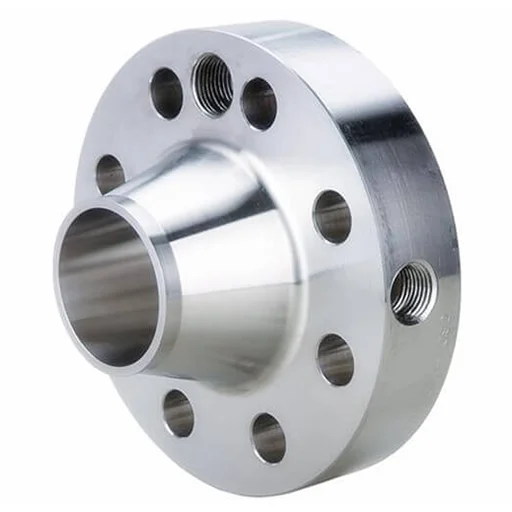
Duplex 2507 Orifice Flange
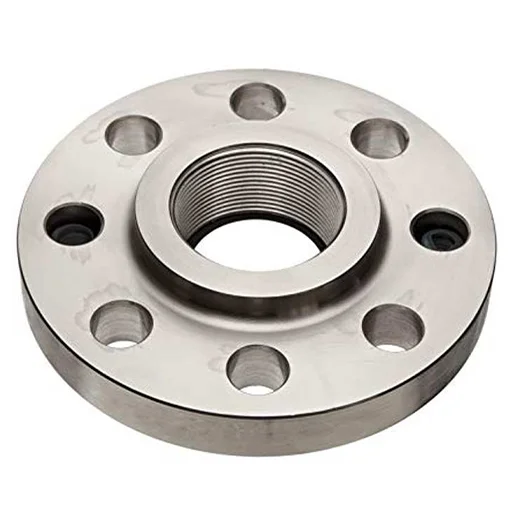
Duplex 2507 Threaded Flange
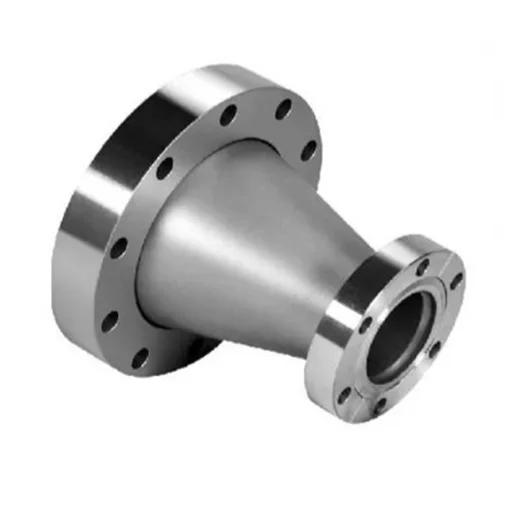
Duplex 2507 Reducing Flange
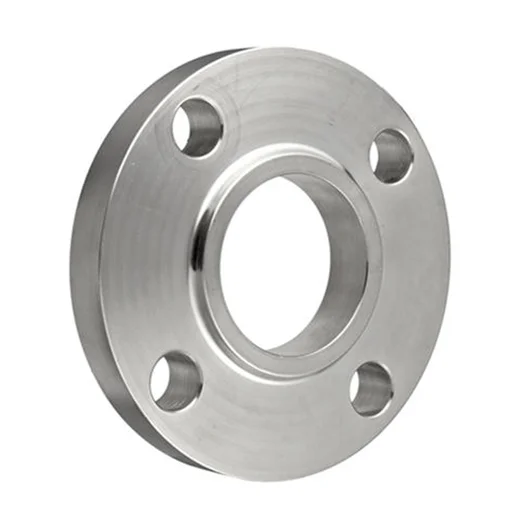
Duplex 2507 Lap Joint Flange
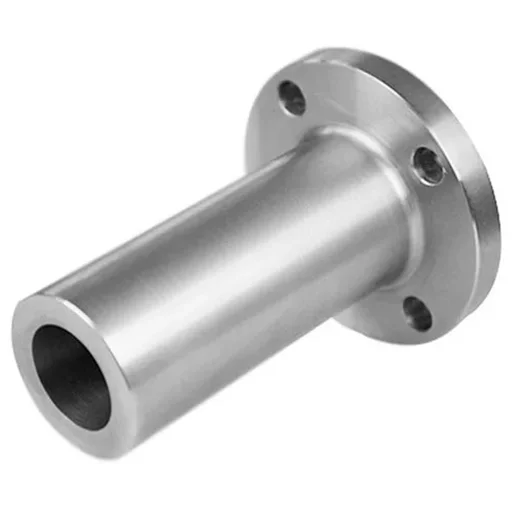
Duplex 2507 Long Weld Neck Flange
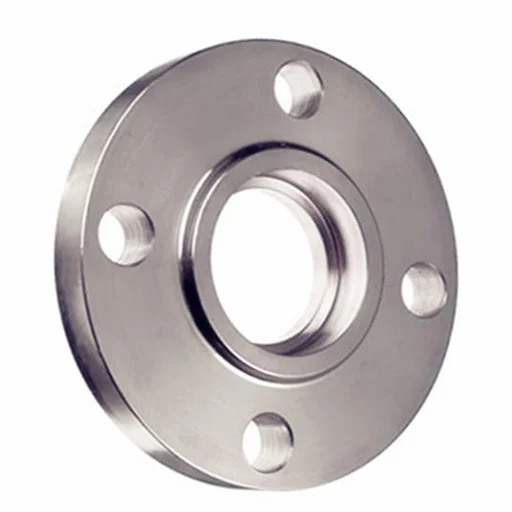
Duplex 2507 Socket Weld Flange
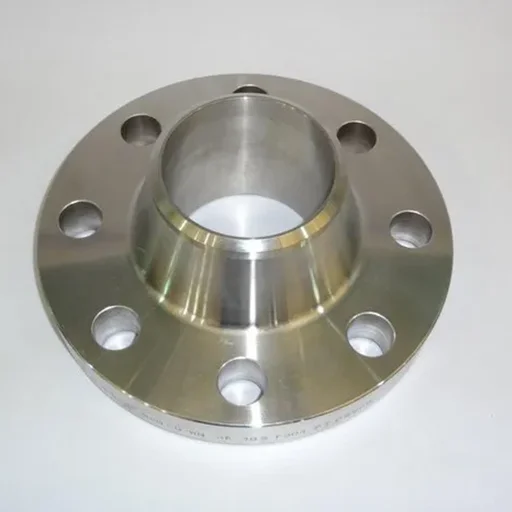
Duplex 2507 Weld Neck Flange
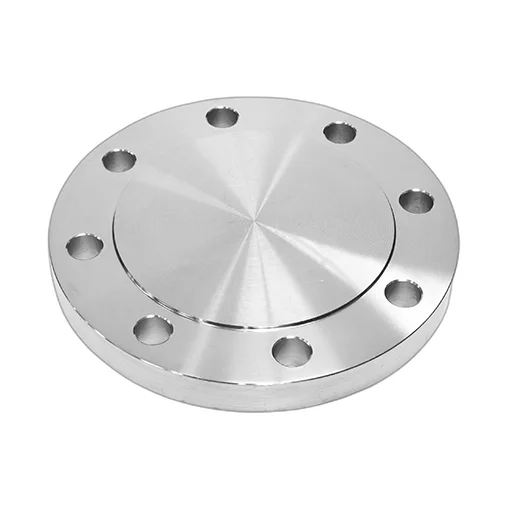
Duplex 2507 Blind Flange
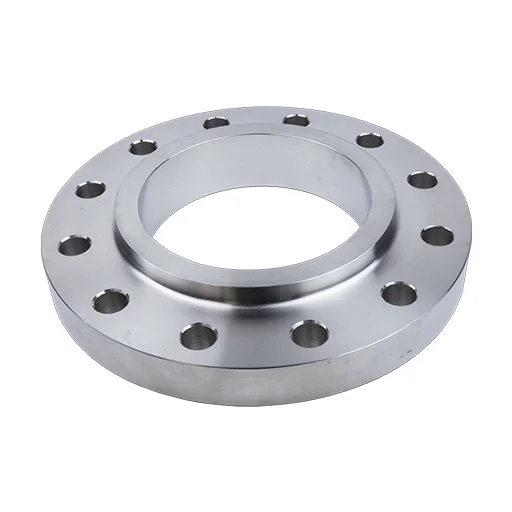
Duplex 2507 Slip-On Flange
Standard Flange Sizes & Weight Chart
Duplex 2507 Weld Neck Flange Dimensions (ANSI B16.5) - Class 150 Sample
| NPS | Outside Diameter (mm) | Thickness (mm) | Bore (mm) | Hub Dia (mm) | Bolt Circle (mm) | No. of Bolts | Bolt Dia | Approx Weight (kg) |
|---|---|---|---|---|---|---|---|---|
| 1/2" | 90 | 11 | 21 | 35 | 60 | 4 | M12 | 0.50 |
| 1" | 108 | 13 | 33 | 50 | 79 | 4 | M12 | 0.96 |
| 2" | 152 | 16 | 60 | 75 | 121 | 4 | M16 | 2.00 |
| 4" | 229 | 19 | 114 | 127 | 190 | 8 | M16 | 6.00 |
| 6" | 267 | 21 | 168 | 184 | 229 | 8 | M19 | 9.55 |
| 8" | 330 | 24 | 219 | 238 | 286 | 8 | M19 | 16.1 |
| 10" | 406 | 27 | 273 | 305 | 362 | 12 | M22 | 26.6 |
| 12" | 483 | 29 | 324 | 346 | 432 | 12 | M22 | 40.0 |
| 16" | 597 | 32 | 419 | 448 | 546 | 16 | M25 | 71.1 |
| 20" | 699 | 38 | 508 | 559 | 648 | 20 | M25 | 108.0 |
| 24" | 813 | 44 | 610 | 651 | 756 | 20 | M32 | 166.0 |
Is Duplex 2507 Good Quality for Offshore Applications?
Yes, Duplex 2507 is said to be the industry-standard super duplex stainless steel that is used to meet high demanding offshore oil and gas service with the exceptional strength, corrosion and reliability in highly corrosive seawater and chloride environment. The combination of high strength (at least 2 times more than 316L) and excellent corrosion resistance (PREN >40) of the material means that it is best used in the weight-sensitive offshore installations where the low wall thickness gives significant cost savings in the fabrication, installation, and supports systems.
Exceptional resistance to chloride-based stress corrosion cracking (SCC) - a serious failure mode in austenitic stainless steels such as 304L and 316L when exposed to chloride environments above 60C, is offered by the balanced duplex microstructure (40-60% ferrite in austenite matrix). It then makes 2507 critical to the seawater handling systems, sub-sea equipment and topside piping on offshore platforms where the austenitic grades would fail due to SCC.
Exceptional pitting and crevice corrosion resistance are accomplished by the high molybdenum (3-5%) and nitrogen (0.24-0.32) content and the Critical Pitting Temperature (CPT) surpasses 50o C in ASTM G48 testing, which is far greater than both duplex 2205 (CPT 35 o C) and 316L (CPT 15 o C). This excellent localized corrosion strength is essential in creviced geometries that usually occur in flanged connections, valve seats, and stagnant water systems.
The high strength (550 Mpa yield vs 220 Mpa of 316L) also enables reduction in the wall thickness of about 30-40 percent when compared to the same pressure rating, thus, considerable savings on weight and cost during the offshore projects where every kilogram counts towards topside weight budgets and the capacity of the installation vessels. The material has a very high low-temperature toughness with Charpy impact energy >60J at -40 o C which is applicable in deep-sea operations in Arctic offshore.
Critical offshore applications such as: seawater injection systems, produced water handling, subsea manifolds and flowlines, topside process piping in corrosive service, fire water systems, ballast water systems and heat exchanger tubes are specified at 2507. Major oil companies (Shell DEP, BP, ExxonMobil, Total) and classification societies (DNV, ABS, Lloyds) approve the material to be used in the offshore use.
Although 2507 (usually 20-30 per cent higher than duplex 2205) is more costly than duplex 2205, the 2507 is used when higher PREN is needed, at higher operating temperatures (above 60C) or when slimmer walls made possible by greater strength yield project cost savings. In even more hostile conditions, super duplex 32760 (Zeron 100) can be modified with copper and tungsten alloys, though 2507 is best in cost-performance in the mainstream off-shoring.
Heat Treatment & Testing Requirements
Heat Treatment Process (Mandatory):
Solution Annealing:
- Temperature: 1020-1100-C (1870-2010-F)
- Holding Time: Adequate soaking based on thickness
- Cooling: Rapid water quenching (critical to prevent sigma phase)
- Purpose: Dissolve chromium carbides, optimize ferrite-austenite balance
- Critical: Cooling rate through 1050-650-C range must be rapid (water quench) to prevent sigma phase precipitation which drastically reduces toughness.
Testing Requirements (Comprehensive):
- Tensile Testing: Yield =550 MPa, tensile =795 MPa, elongation =15%
- Hardness Testing: =32 HRC (=302 HB) to verify proper solution annealing
- Ferrite Content: 40-60% measured by Feritscope or metallography per ASTM E562
- PMI Testing: Verify Cr (24-26%), Ni (6-8%), Mo (3-5%), N (0.24-0.32%)
- IGC Testing: Intergranular Corrosion per ASTM A262 Practice A or Practice C
- CPT Testing: Critical Pitting Temperature per ASTM G48 Method A (typically >50-C required)
- Impact Testing: Charpy V-notch at -40-C, minimum 60J for offshore applications
- Ultrasonic Testing: Per ASTM A388 for critical applications
- Metallographic Examination: Verify 40-60% ferrite, no sigma phase, proper grain structure
Duplex 2507 Super Duplex Flanges Price List 2026
| Flange Type | Size Range | Pressure Class | Indicative Price Range (USD/Piece) |
|---|---|---|---|
| Weld Neck (WN) | 1/2" - 2" | 150# | $85 - $225 |
| Weld Neck (WN) | 4" - 8" | 150# | $350 - $1,420 |
| Weld Neck (WN) | 10" - 24" | 150# | $2,150 - $7,850 |
| Weld Neck (WN) | 1/2" - 2" | 300# | $125 - $335 |
| Weld Neck (WN) | 4" - 8" | 300# | $550 - $2,180 |
| Weld Neck (WN) | 10" - 24" | 300# | $3,150 - $11,500 |
| Weld Neck (WN) | 1/2" - 2" | 600# | $185 - $485 |
| Weld Neck (WN) | 4" - 8" | 600# | $820 - $3,180 |
| Slip-On (SO) | 1/2" - 2" | 150# | $72 - $185 |
| Slip-On (SO) | 4" - 8" | 150# | $295 - $1,185 |
| Slip-On (SO) | 10" - 24" | 150# | $1,780 - $6,550 |
| Blind (BL) | 1/2" - 2" | 150# | $65 - $175 |
| Blind (BL) | 4" - 8" | 150# | $320 - $1,280 |
| Socket Weld (SW) | 1/2" - 2" | 150# - 600# | $95 - $395 |
Note: Duplex 2507 flanges are typically 400-550% higher than 316L and 20-30% higher than duplex 2205 due to higher Ni, Mo, N content and superior properties.
Applications of Duplex 2507 Flanges in Industry
The Duplex 2507 Super Duplex Stainless Steel Flanges are commonly used in many industrial applications, and some of the common industries are given below.
Offshore Oil & Gas
Seawater injection, produced water, subsea manifolds, topside piping, fire water systems
Desalination
Seawater intake, brine discharge, heat exchangers, RO systems, MSF/MED evaporators
Chemical Processing
Organic acid production, chloride processing, acidic chloride environments, heat exchangers
Pulp & Paper
Bleach plant piping, chlorine dioxide systems, white liquor, black liquor oxidizers
Oil & Gas Production
Sour gas scrubbing, high-chloride produced water, gas processing, wellhead equipment
Marine Applications
Ballast water systems, seawater cooling, shipbuilding, naval vessels, offshore platforms
Petrochemical
High-chloride process streams, corrosive hydrocarbon service, heat exchanger tubes
FGD Systems
Flue gas desulfurization absorbers and piping in power plants
Mining
Hydrometallurgical chloride leaching, heap leach solutions, pregnant leach solutions
Seawater Systems
Seawater pumps, seawater piping, offshore aquaculture, marine cooling systems
Why Choose Duplex 2507 Flanges from Metinox Overseas?
Metinox Overseas provides certified Duplex 2507 super duplex stainless steel flanges with obligatory solution annealing, complete corrosion testing such as CPT and ensured ferrite balance where the service is critical in offshore and seawater service. Both of our ISO certified 9001: 2015, PED 2014/ 68/ EA and DNV facilities guarantee that all 2507 flanges are annealed in the solution with adequate heat treatment records at 1020-1100 0 C, and then water quenched.
Each flange is supplied with EN 10204 3.1B or 3.2 Mill Test Certificates of chemical analysis with verified Cr (24-26%), Ni (6-8%), Mo (3-5%), N (0.24-0.32%) content, tensile properties of yield 550 MPa and tensile 795 MPa and hardness 32 HRC and statement of compliance. We offer required CPT (Critical Pitting Temperature) testing according to the ASTM G48 Method A with the results more than 50o C, IGC testing according to ASTM A262, Charpy impact testing at -40o C with > 60J offshore applications, and metallographic analysis which ensures the right duplex structure with no sigma phase.
We have an NABL approved lab that offers all types of testing such as ferrite content by use of calibrated Feritscope, CPT by use of 6% FeCl 3 solution, intergranular corrosion test, microstructure inspection to confirm ferrite- austenite ratio and the absence of harmful phases, and low-temperature impact test in Arctic use.
Our technical team has significant experience in supplying 2507 flanges to major offshore projects (North Sea, Gulf of Mexico, Brazilian pre-salt, West Africa) as well as desalination plants and seawater systems across the globe; they have expert advice on the choice of materials (2507 vs 2205 vs 32760) based on PREN requirements and temperature, welding procedures using AWS A5.9 ER2594 filler (which is matching composition), control of heat input to maintain ferrite balance, compliance to
Providing high quality assurance and dependable delivery of marine equipment, particularly high-corrosivity service projects, to offshore operators, desalination EPC contractors, shipbuilders, and marine equipment manufacturers in more than 60 countries.
Duplex 2507 Flange Delivery Time & CIF Pricing by Country
| Destination Region | Major Ports / Cities | Estimated Delivery Time | Typical CIF Terms |
|---|---|---|---|
| Middle East (GCC) | Dubai, Dammam, Doha, Muscat | 14-18 Days | CIF Dubai / CIF Dammam |
| Europe | Rotterdam, Hamburg, Antwerp | 28-35 Days | CIF Rotterdam / CIF Hamburg |
| USA & Canada | Houston, New York, Los Angeles | 35-45 Days | CIF Houston / CIF New York |
| Southeast Asia | Singapore, Port Klang, Manila | 18-25 Days | CIF Singapore / CIF Port Klang |
| Africa | Lagos, Durban, Mombasa | 25-35 Days | CIF Lagos / CIF Durban |
Other Types of Super Duplex 2507 Flanges
Duplex 2507 Stainless Steel Flanges, UNS S32750 Flanges, Super Duplex 2507 Weld Neck Flanges, 2507 Slip-On Flanges, 2507 Blind Flanges, 2507 Socket Weld Flanges, 2507 Lap Joint Flanges, 2507 RTJ Flanges, 2507 Offshore Flanges, 2507 Seawater Flanges.
Popular Locations Where We Supply Duplex 2507 Flanges
duplex 2507 flanges supplier in singapore, 2507 super duplex flanges suppliers in qatar, uns s32750 flanges suppliers in uae, duplex 2507 flanges suppliers in chennai, 2507 weld neck flanges in mumbai, super duplex 2507 flanges exporter, 2507 offshore flanges, 2507 seawater flanges.
People Also Search For
duplex 2507 super duplex flanges manufacturer, uns s32750 flanges supplier, 2507 offshore flanges exporter, duplex 2507 weld neck flanges, super duplex 2507 vs 2205 difference, 2507 flanges price list 2026, 2507 seawater flanges, 2507 vs 32760 comparison.
Looking for High-Quality Duplex 2507 Flanges?
Let us support your projects with quality, precision, and performance.
Frequently Asked Questions (FAQ)
A: Localized corrosion resistance is predicted by PREN (Pitting Resistance Equivalent Number) = %Cr + 3.3(%Mo) + 16(%N). Increased PREN suggests increased pitting/crevice resistance. 2507 PREN =40, 2205 PREN =35, 316L PREN =24. Minimum PREN >40 usually needed to service with seawater >30-C.
A: Duplex steels are made of 40-60% ferrite (body-centered cubic) austenite (face-centered cubic) matrix. This is the best balance that offers optimum strength and resistance to corrosion. Excess (>60) ferrite decreases toughness and corrosion resistance, whereas it decreases strength and SCC resistance at very low levels (<40). Determined by Feritscope or by metallography.
A: It is not recommended to be used continuously at a temperature exceeding 300-C (572-F). Sigma phase and other intermetallic phases form between 300-1000-C and toughness and corrosion resistance are significantly lowered. Very short periods of up to 350-C are okay but longer ones necessitate heat treatment repair.
A: standard matching fillers are AWS A5.9 ER2594 (25Cr-9Ni-4Mo-N) and ER2595. GTAW and GMAW were the favourable root passes and fill respectively. Keep the heat input ranging 0.5-2.5 kJ/mm to attain 40-60% ferrite in the weld. No preheat required. No PWHT is necessary when there was adequate procedures in place.
A: NACE MR0175/ ISO 15156 compliant. State hardness =35 HRC (=327 HB/duplex grades), ferrite 40-60, product analysis and sour service qualification with HIC test per NACE TM0284. 2507 is an excellent H2S resistant material when properly processed.
A: 2507 is stronger (550 Mpa vs 300 Mpa yield), has greater SCC resistance, and is cheaper. 254 SMO (6Mo) is used when higher PREN (=43) is required, such as in very high temperature seawater (>80-C).
A: Sigma (s) refers to hard brittle intermetallic (Fe-Cr) which forms during the duplex steels at temperatures between 600-1000-C and which severely affects the toughness and ability to resist corrosion. Avoided by: quick extinguishment of solution when annealed, length of time not spent at 300-1000-C, welding heat input.
A: Yes, however the duplex steels are work-hardening metals which sharpen quickly and need sharp cutting tools, positive feed, sufficient coolant and stiff set-ups. Carbide or HSS tools are suggested. Machining will produce heat that is capable of influencing ferrite balance in any of the surface layers- light final passes are advised.
A: Common sizes (2"-12" NB, Class 150/300) are not in stock. Made to order: 10-14 weeks with special alloy (high Ni-Mo-N content), forging, solution annealed between 1020-1100-C, quick water quenching, thorough testing (ferrite content, CPT, IGC, impact), and a certificate. Rapid delivery of the project 7-9 weeks in urgent offshore projects.
Enquire Now
Get pricing within 24 hours!