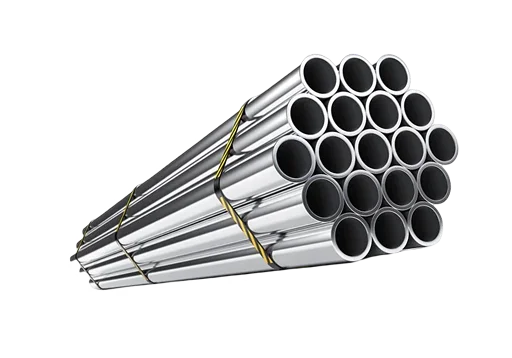
One of the most important and checked features when choosing stainless steel tubing for critical process applications is surface roughness Ra. The degree of cleanliness of the inside of a tube, ease of cleaning, and resistance to contaminating, corrosive, or microbial activity depends directly on the nature of the tube.This guide covers Ra measurement, how BA, AP and EP finishing processes produce different Ra values, industry benchmarks, and how to specify Ra correctly on a purchase order. We explain the meaning of surface roughness Ra, the difference between bright annealed (BA) tubing, Annealed & Pickled (AP) tubing, and Electropolished (EP) finishes, and how to order Ra appropriately.
What Is Surface Roughness (Ra)?
The arithmetic mean of the absolute values of the irregularities from the mean line of the surface profile within a specified sampling length is defined as surface roughness Ra. In simple terms, it describes the smoothness or roughness of the inside or outside of a tube. The lower the Ra number the smoother the surface. A high Ra value represents deeper texture and will allow contaminants, bacteria and process residues to build up and not be easily removed.
How the Finishing Process Changes Ra: BA vs AP vs EP
The surface finish of stainless steel tubing depends on the forming and welding process and subsequent treatment after the process. The three most popular industrial finishes (Bright Annealed (BA), Annealed & Pickled (AP), Electropolished (EP)) yield three entirely different Ra values as well as appearance and functional properties.
Bright Annealed (BA) Finish
Bright annealing is the name given to the process of passing the tube through a furnace at high temperature at which the atmosphere is carefully controlled and oxygen free (typically a hydrogen or a cracked ammonia atmosphere). This will eliminate the possibility of oxidation during annealing, leaving a bright, shiny, and reflecting surface free of any discoloration due to oxide. The BA process leaves the natural chrome oxide passivating film in place and strengthens it, thereby providing excellent corrosion protection and a smooth inside surface. The typical ID Ra specifications of BA tubing are 0.4-0.8µm, which makes it appropriate for instrumentation, analytical and sanitary applications with moderate cleanliness. BA tubing is used in process instrumentation, high-purity gas lines and sanitary process applications where a controlled, repeatable surface finish is needed and the cost premium of electropolishing is not justified.
Annealed & Pickled (AP) Finish
For the AP process the tube is annealed in the conventional atmosphere and a layer of oxides is formed on the tube surface. This oxide layer is subsequently removed by acid pickling (usually nitric and hydrofluoric acids) that etches the surface and restores the corrosion resistance. AP tube is chemically clean and fully passivated but has a somewhat rougher, matte surface than BA. AP tubing typical ID Ra ranges are from 1.0-2.5 µm. For applications that demand high cleanliness the use of AP tubing is not recommended, except for general industrial use where high surface smoothness is not the main consideration. AP tubing is the lower-cost option and is suited to utility lines, structural fabrication and general industrial process piping where a smooth cosmetic finish is not a requirement.
Electropolished (EP) Finish
Electropolishing is an electrochemical process in which the tube is placed in an electrolytic bath and is made the anode of an electrical circuit. Only the sharp tops of the surface are removed, thus smoothing out the surface and creating an extremely smooth, reflective surface. The iron, inclusions and micro-burrs are removed by the Electro Polishing process, and it greatly improves the passive chromium oxide layer. The typical ID Ra value for EP tubing is 0.2-0.4 microns or less, which is the smoothest and cleanest surface that can be found in commercially available stainless steel tubing. EP tubing is recommended for use in any application where the risk of contamination, biofilm and/or corrosion is unacceptable, such as Water for Injection (WFI) systems for pharmaceutical applications, and ultrahigh purity semiconductor process lines. Electropolished stainless steel tubing is the finish of choice for pharmaceutical and semiconductor applications where the highest surface quality and contamination control are required.
Typical Ra Values by Finish and Industry
Specific Ra requirements have been established in various industries, depending on the impact surface contamination, fluid retention, and cleanability can have. Knowing these standards enables engineers and procurement teams to ensure that their tubings meet regulatory and process standards.
Pharmaceutical Industry
High demands are set on surface roughness, especially in pharmaceutical manufacturing, where sterile drug production takes place. The Ra surface smoothness of the tube internal surfaces is required to be less than or equal to 0.5 micro meter when processing Water for Injection (WFI) and/or Clean in Place/Steam in Place (CIP/SIP) processes to prevent formation of bio film and to ensure effective sterilization. The ISPE Baseline Guide for Sterile Manufacturing Facilities (Volume 4: Water and Steam) and FDA process equipment guidance reference internal surface finish as a critical quality attribute for WFI and purified water systems.
Semiconductor Industry
The manufacturing of semiconductors and microelectronics needs super clean surfaces. Purity standards for ultra-high purity gas and chemical systems are incredibly strict, ranging from Ra ≤ 0.25 µm to less than Ra < 0.125 µm for the most precise tasks. Electropolished tubing with Ra ≤ 0.25 µm is the industry baseline for UHP gas delivery; advanced nodes may specify Ra < 0.125 µm. At these tolerances, even parts-per-trillion contamination levels can compromise yield.
Food & Beverage Industry
All food processing equipment needs to be cleanable and able to resist microbial retention. The maximum Ra ≤ 0.8 µm is recommended for surfaces in contact with food and beverages by standards like EHEDG guidelines and 3-A Sanitary Standards. This is usually achieved with only the standard treatment of BA tubing.
Instrumentation & General Process Industry
The requirements for standard process instrumentation (pressure transmitters, flow meters, and analytical sampling systems) are not as stringent as for the other categories. A maximum value of ≤ 1.6 µm is usually considered as acceptable, so both BA and, in some situations, AP tubing can be used depending on the fluid and operating conditions.
How to Specify and Verify Ra on an Order
It is crucial to know the required surface roughness (Ra) before ordering stainless steel tubing, to ensure that the tubing is available in the desired cleanliness and performance level. Particularly important for pharmaceutical, food processing and high purity applications.
Define the maximum value of Ra
State the maximum allowable Ra value on your purchase order. For instance, the interior surface finish of Ra ≤ 0.5 µm ID may be required for a hygienic application. It will help suppliers to supply your required tubing.
Always Check Surface Finish Reports
Request profilometer report and surface inspection record to ensure that the tubing is prepared within the required Ra tolerance range. They will be used as evidence of the quality of the surface finish.
Request Material Documentation
Ask for an EN 10204 3.1 Mill Test Certificate (MTC) and a heat number traceability. The documents reflect the chemical composition, mechanical properties and production history of the material.
Check Internal Surface Finish
The inside surface finish shall always be checked for sanitary and high purity applications. A more smooth internal surface will decrease contamination risk, enhance cleanability and process performance. Most procurement specifications for critical pharmaceutical and semiconductor applications require SS 316L tubing with a certified Ra value and an EN 10204 3.1 Mill Test Certificate as a minimum documentation package.
Choosing the Right Finish for Your Application
Depending on the cleanliness requirements, budget and environment of the application, the appropriate surface finish is chosen. All of the stainless steel tubing finishes provide corrosion resistance and durability but each one of these finishes has its own specific performance requirements.
Choose BA Finish When
If moderate cleanliness and smoothness are needed, a Bright Annealed (BA) finish is recommended. It gives a good bright appearance, better corrosion resistance and good cleanability without incurring too much cost. BA tubing can be used in all instrumentation systems, food processing, and any general process application where an ultra-high level of purity is not required.
Choose AP Finish When
An Annealed and Pickled (AP) finish is suited for general industrial service where functionality is more important than appearance. Generally, it is the least expensive method and its applications include chemical processing, water treatment, structural use and industrial piping systems.
Choose EP Finish When
An electropolished (EP) finish is recommended for the highest level of cleanliness and smoothness in applications. The electropolishing process is used to remove microscopic irregularities, which render it suitable for such ultra-clean processes as pharmaceutical systems, semiconductor manufacturing, biotechnology facilities and others where contamination control becomes a critical factor.
For guidance on selecting the right base alloy in conjunction with your surface finish, the SS 304 vs SS 316 difference is an important consideration, particularly for corrosive and high-purity services where 316L is standard.
Conclusion:
Surface roughness (Ra) has a significant importance in the cleanliness, corrosion resistance and overall performance of stainless steel tubing. AP finish is well suited for general industrial use, but BA finish will provide a smoother surface and better appearance, and EP finish will yield the highest level of cleanliness for critical pharmaceutical and semiconductor processes. Appropriate finishing can increase product quality, decrease contamination hazards and increase efficiency of the process. Always when order from Metinox Overseas provide the necessary Ra value and ask for documentation to support. Contact us today to get a quote from a reliable bright annealed tube manufacturer or if you're looking for guidance on the surface finish you need, ask us!
Frequently Asked Questions
A good Ra value for a bright annealed (BA) tube is typically between 0.4 µm and 0.8 µm, depending on the application and manufacturing process.
Ra is the average surface roughness value, while RMS (Rq) is the root mean square of the surface profile. RMS generally gives slightly higher values than Ra.
Not always. Lower Ra values provide smoother surfaces and better cleanliness, but they may not be necessary for every application and can increase costs.
Surface roughness is measured using a profilometer, which scans the surface and calculates the Ra value based on the peaks and valleys.
Not necessarily. While BA tubing consistently produces a lower Ra than AP tubing, the actual value varies by manufacturer and tube dimensions. Always request a profilometer report and verify against your specified maximum Ra before accepting material.