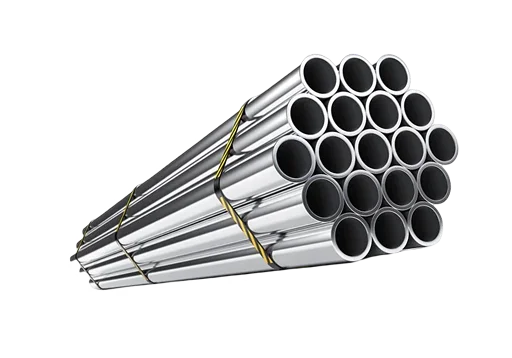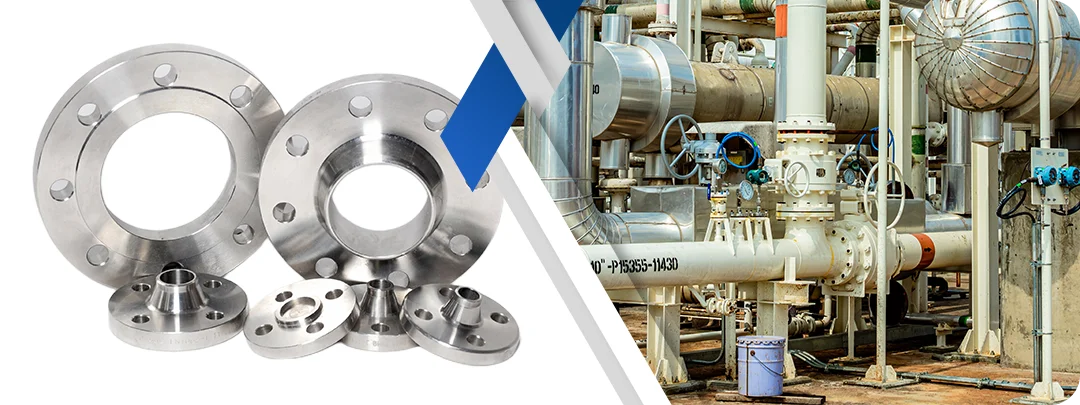
ASTM A350 LF3 Low-Alloy Nickel Steel Flanges Manufacturer & Supplier
Metinox Overseas is the manufacturer of ASTM A350 LF3 Nickel Steel Flanges that are designed with a severe low-temperature service application with high level of notch toughness and impact resistance needed down to -101-C (-150-F). Our ASME SA350 LF3 Class 1 Flanges are manufactured out of high quality 3.5 percent nickel low-alloy steel, controlled chemical composition of low carbon (less than 0.20 percent) and low-nickel (3.18-3.82 percent and low-manganese 0.50-0.80 percent) and with minimum tensile strength of 690 Mpa and yield strength of 515 Mpa. The specific feature of these A350 LF3 Flanges of Low-Alloy is to be used in the cryogenic and extreme low temperature, and can act in a reliable mode at the -101-C -150-F Class 1 and Class 2, and is systematically applied in the LNG liquefaction plant, cryogenic ethylene service, Arctic offshore platforms and deep-freeze storage facilities, and extreme cold climate installations.
This is a carefully incorporated 3.5% nickel in order to produce the ductile to the brittle transition temperature as low as possible with the aim of providing the material with a great toughness at low temperature in comparison with any of the carbon steel grades. Our ASTM A350 LF3 Weld Neck Flange, Slip-On Flange, Blind Flange, Socket Weld Flange are fabricated to ANSI/ASME B16.5 ( 1/2 to 24 NB ) and ASME B16.47 Series A and B ( 26 to 60 NB ) requirements of the dimensional requirements in pressure classes of 150-2500 #. This is followed by a required heat treatment of flanges either as normalizing or normalizing and tempering or as a quencher and tempering followed by rigorous Charpy V-notch impact test in -101-F (-150-C), rigorous quality inspection, PMI verification and ultrasonic inspection per ASTM A961.

Table of Contents
- ASTM A350 LF3 Flanges Technical Specifications
- ASTM A350 LF3 Equivalent Grades
- ASTM A350 LF3 Chemical Composition
- Mechanical Properties of ASTM A350 LF3 Flanges
- ASTM A350 LF3 Flange Dimensions & Pressure Rating Chart
- Types of ASTM A350 LF3 Flanges Available
- Standard Flange Sizes & Weight Chart
- Is ASTM A350 LF3 Good Quality for Cryogenic Applications?
- Heat Treatment & Impact Testing Requirements
- ASTM A350 LF3 Nickel Steel Flanges Price List 2026
- Applications of ASTM A350 LF3 Flanges in Industry
- Why Choose ASTM A350 LF3 Flanges from Metinox Overseas?
- ASTM A350 LF3 Flange Delivery Time & CIF Pricing by Country
- Other Types of Nickel Steel A350 LF3 Flanges
- Popular Locations Where We Supply ASTM A350 LF3 Flanges
- Frequently Asked Questions (FAQ)
ASTM A350 LF3 Flanges Technical Specifications
| Feature | Details |
| Specifications | ASTM A350 / ASME SA350 / MSS SP-44 |
| Dimensional Standards | ANSI/ASME B16.5, B16.47 Series A & B, B16.48, API 605, MSS SP-44 |
| Size Range | 1/2" (15 NB) to 60" (1500 NB) |
| Pressure Class | 150#, 300#, 400#, 600#, 900#, 1500#, 2500# (B16.5); 75#, 150#, 300#, 400#, 600#, 900# (B16.47) |
| Grades | LF3 Class 1, LF3 Class 2 |
| Nickel Content | 3.18 - 3.82% (3.5Ni Steel) |
| UNS Number | K32025 |
| Flange Types | Weld Neck, Slip-On, Blind, Socket Weld, Lap Joint, Threaded, Orifice, Long Weld Neck, Reducing |
| Flange Face | Raised Face (RF), Flat Face (FF), Ring Type Joint (RTJ), Male & Female, Tongue & Groove |
| Manufacturing Type | Forged, Ring Rolled (for large diameter) |
| Heat Treatment | Normalized, Normalized & Tempered, Quenched & Tempered (Mandatory) |
| Impact Testing | Mandatory Charpy V-Notch Testing at -101-C (-150-F) |
| Testing | Impact Test (Charpy V-Notch), Hydrostatic Test, PMI Test, Ultrasonic Test, Hardness Test |
| Inspection | Third Party Inspection by TUV, SGS, Bureau Veritas, Lloyd's, DNV GL, BV, ABS |
| Certifications | EN 10204 3.1B MTC, NACE MR0175, PED 2014/68/EU, CE Marked, API 6A, ASME B31.3 |
ASTM A350 LF3 Equivalent Grades
| Standard | USA | Germany | France | Japan | India | UK | China |
| LF3 (3.5Ni) | ASTM A350 LF3 ASME SA350 LF3 UNS K32025 | 1.5637 10Ni14 | 12 Ni 14 | SL3N255 | - | BS 3603 503A40 | 09Ni3 |
ASTM A350 LF3 Chemical Composition
The detailed composition of this material is given in the following table.
| Element | Composition (%) | Function |
| Carbon (C) | 0.20 max | Low carbon for enhanced low-temperature toughness |
| Manganese (Mn) | 0.50 - 0.80 | Strength and deoxidation |
| Phosphorus (P) | 0.035 max | Controlled for improved ductility |
| Sulfur (S) | 0.040 max | Minimized to prevent cold cracking |
| Silicon (Si) | 0.13 - 0.32 (0.12 max with vacuum deoxidation) | Deoxidizer, improves toughness |
| Nickel (Ni) | 3.18 - 3.82 | Critical element - reduces DBTT, enhances cryogenic toughness |
| Chromium (Cr) | 0.30 max | Controlled for weldability |
| Molybdenum (Mo) | 0.12 max | Strength enhancement |
| Copper (Cu) | 0.40 max | Low-temperature properties |
| Vanadium (V) | 0.08 max | Grain refinement |
| Columbium (Nb) | 0.02 max (0.05 max by agreement) | Grain refinement |
Note: Sum of Cr + Cu + Mo + Ni + V = 1.00%. Sum of Cr + Mo = 0.32%. The 3.5% nickel content is the defining characteristic that provides exceptional low-temperature toughness.
Mechanical Properties of ASTM A350 LF3 Flanges
The mechanical properties decide the shelflife of the material. The table below gives the information about the mechanical properties of ASTM A350 LF3 Flanges.
| Property | Class 1 | Class 2 | Testing Standard |
| Tensile Strength | 690 MPa (100 ksi) minimum | 690 MPa (100 ksi) minimum | ASTM A370 |
| Yield Strength (0.2% offset) | 515 MPa (75 ksi) minimum | 515 MPa (75 ksi) minimum | ASTM A370 |
| Elongation in 2" | 20% minimum | 20% minimum | ASTM A370 |
| Reduction of Area | 35% minimum | 35% minimum | ASTM A370 |
| Charpy V-Notch Impact | 15 ft-lbf (20 J) avg at -150-F (-101-C) | 20 ft-lbf (27 J) avg at -150-F (-101-C) | ASTM A350 |
| Minimum Single Value | 12 ft-lbf (16 J) at -150-F | 15 ft-lbf (20 J) at -150-F | ASTM A350 |
| Hardness (Brinell) | 197-241 HB (typical) | 197-241 HB (typical) | ASTM E10 |
ASTM A350 LF3 Flange Dimensions & Pressure Rating Chart
Pressure-Temperature Ratings for 3.5Ni Steel A350 LF3 Flanges
| Temperature -F (-C) | Class 150 | Class 300 | Class 600 | Class 900 | Class 1500 | Class 2500 |
|---|---|---|---|---|---|---|
| -150 to 100 (-101 to 38) | 285 psi | 740 psi | 1480 psi | 2220 psi | 3705 psi | 6170 psi |
| 200 (93) | 260 psi | 675 psi | 1350 psi | 2025 psi | 3375 psi | 5625 psi |
| 300 (149) | 230 psi | 655 psi | 1315 psi | 1970 psi | 3280 psi | 5470 psi |
| 400 (204) | 200 psi | 635 psi | 1270 psi | 1900 psi | 3170 psi | 5280 psi |
| 500 (260) | 170 psi | 600 psi | 1200 psi | 1795 psi | 3000 psi | 4995 psi |
| 600 (316) | 140 psi | 550 psi | 1095 psi | 1640 psi | 2735 psi | 4560 psi |
| 650 (343) | 125 psi | 535 psi | 1075 psi | 1610 psi | 2685 psi | 4480 psi |
Note: LF3 has the same pressure-temperature ratings as A105 flanges per ASME B16.5, but with superior low-temperature capability.
Types of ASTM A350 LF3 Flanges Available
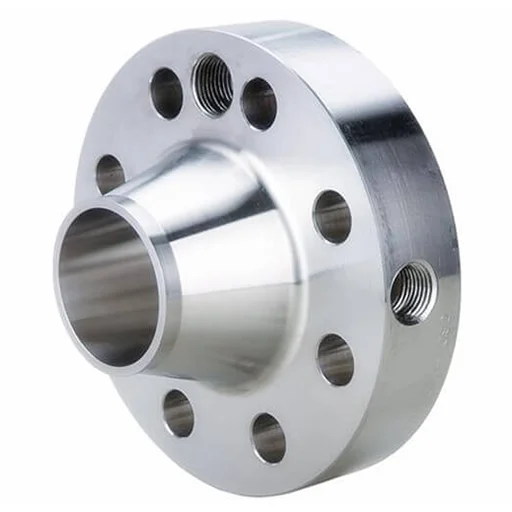
Orifice Flange
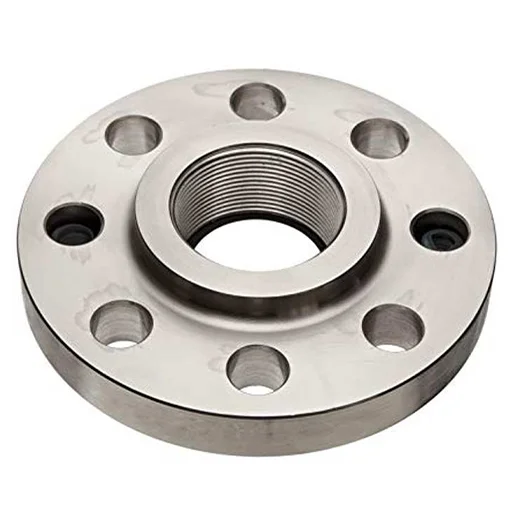
Threaded Flange
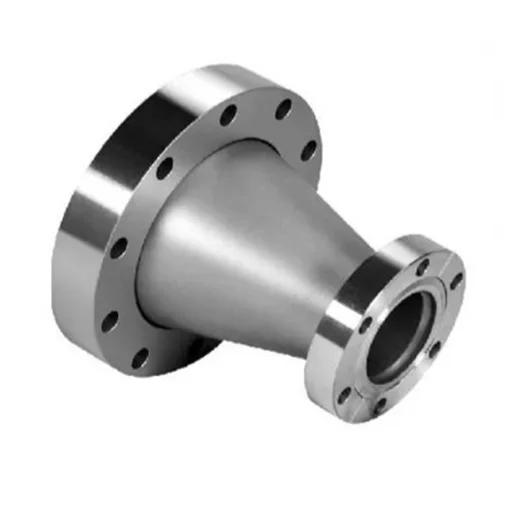
Reducing Flange
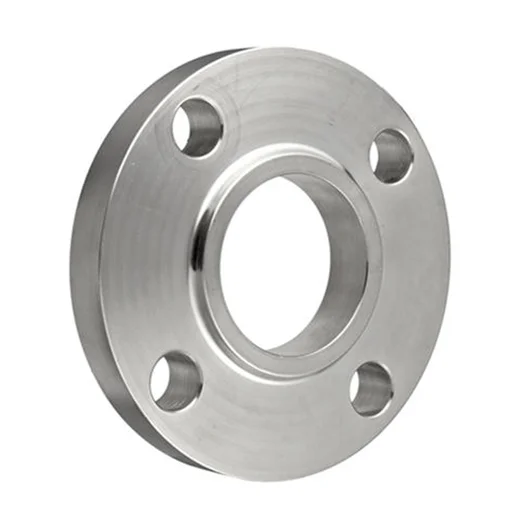
Lap Joint Flange
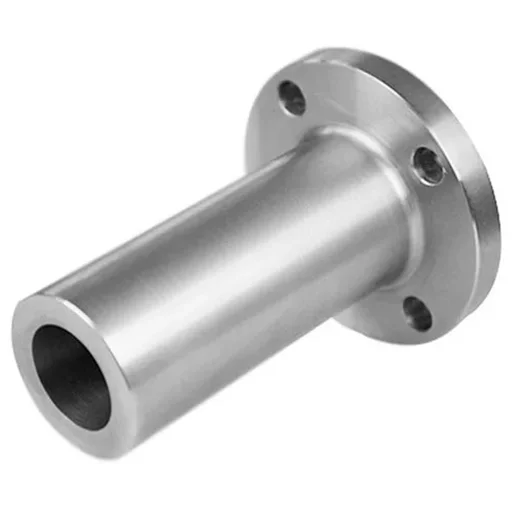
Long Weld Neck Flange
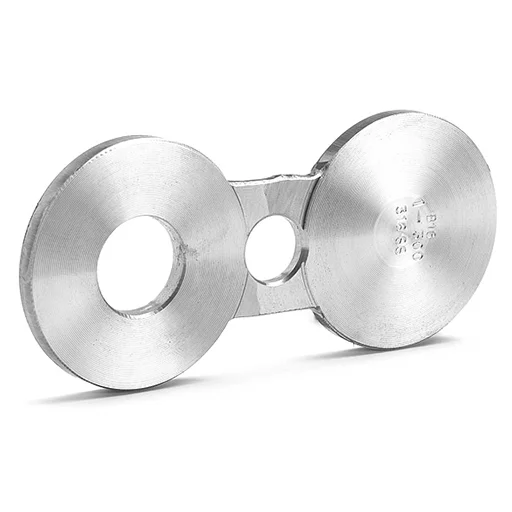
Spectacle Blind Flange
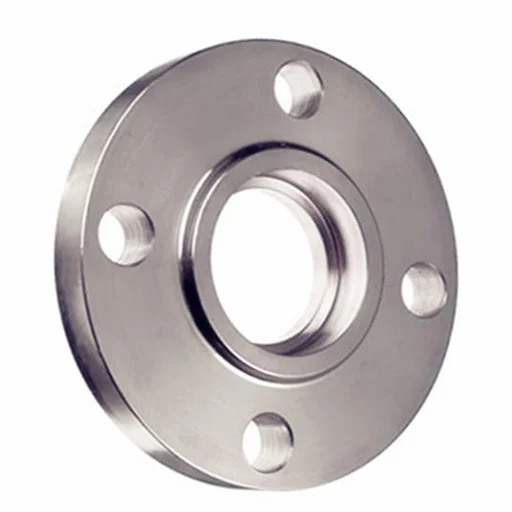
Socket Weld Flange
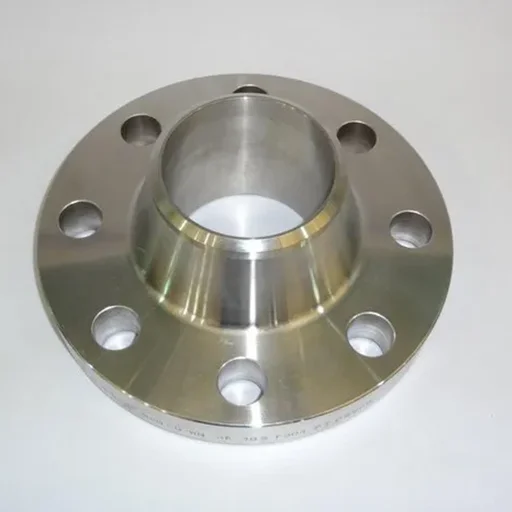
Weld Neck Flange
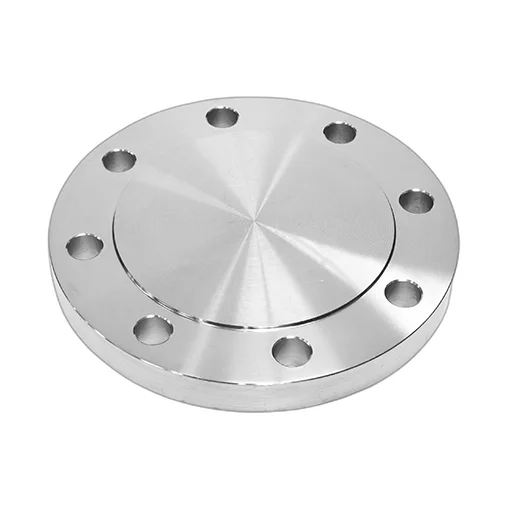
Blind Flange
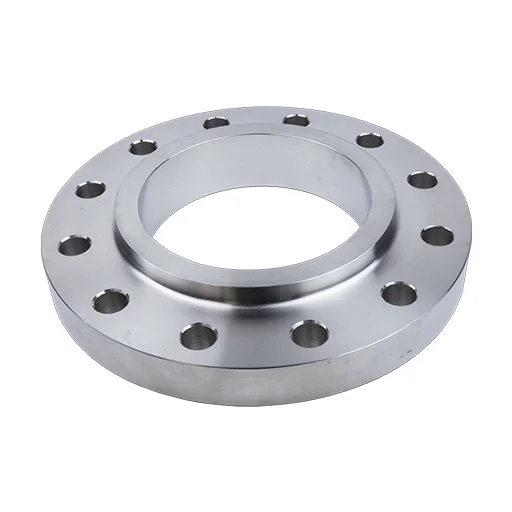
Slip-On Flange
Standard Flange Sizes & Weight Chart
ASTM A350 LF3 Weld Neck Flange Dimensions (ANSI B16.5) - Class 150 Sample
| NPS | Outside Diameter (mm) | Thickness (mm) | Bore (mm) | Hub Dia (mm) | Bolt Circle (mm) | No. of Bolts | Bolt Dia | Approx Weight (kg) |
|---|---|---|---|---|---|---|---|---|
| 1/2" | 90 | 11 | 21 | 35 | 60 | 4 | M12 | 0.46 |
| 1" | 108 | 13 | 33 | 50 | 79 | 4 | M12 | 0.88 |
| 2" | 152 | 16 | 60 | 75 | 121 | 4 | M16 | 1.85 |
| 4" | 229 | 19 | 114 | 127 | 190 | 8 | M16 | 5.50 |
| 6" | 267 | 21 | 168 | 184 | 229 | 8 | M19 | 8.80 |
| 8" | 330 | 24 | 219 | 238 | 286 | 8 | M19 | 14.8 |
| 10" | 406 | 27 | 273 | 305 | 362 | 12 | M22 | 24.5 |
| 12" | 483 | 29 | 324 | 346 | 432 | 12 | M22 | 36.8 |
| 16" | 597 | 32 | 419 | 448 | 546 | 16 | M25 | 65.5 |
| 20" | 699 | 38 | 508 | 559 | 648 | 20 | M25 | 100.0 |
| 24" | 813 | 44 | 610 | 651 | 756 | 20 | M32 | 153.0 |
Is ASTM A350 LF3 Good Quality for Cryogenic Applications?
Yes, ASTM A350 LF3 is the high-quality one when it comes to harsh cryogenic service with the need to have an outstanding impact toughness at temperatures as low as -101-C ( -150-F). The grade is referenced as 3.5Ni steel because it contains nickel in a controlled amount of about 3.5% (3.18-3.82%), which is the fundamental element of altering the low-temperature behavior of the material. The additions of nickel play a great role in decreasing ductile to brittle transition temperature in the material to make them tough and resistant to brittle fracture even in cold temperatures so severely.
LF3 has better mechanical properties than the grades of carbon steel used, having tensile strength of a minimum of 690 MPa (100 ksi) and a yield strength of 515 MPa (75 ksi), significantly greater than the tensile strength of 485 Mpa of A350 LF2. The required Charpy V-notch impact test at -101-C -150-F is a minimum of 20J (Class 1) and 27J (Class 2) average energy absorption, which is the ultimate demonstration of outstanding notch toughness, which will not fail catastrophically in the presence of thermal shock and dynamic loading in the cryogenic service.
Although it costs more than carbon steel A350 LF2, LF3 is necessary in those applications that require temperatures that are lower than -46-C such as in LNG liquefaction, cryogenic ethylene processing, and offshore operations in the Arctic. The material is a good compromise between cost and performance more affordable than austenitic stainless steel (304L/316L) or 9% nickel steel, but with sufficient toughness to work at temperatures as low as -101-C. Even lower temperatures down to -196-C (liquid nitrogen) would need austenitic stainless or 9Ni steel.
Heat Treatment & Impact Testing Requirements
Heat Treatment Process:
- Normalizing: Heat to 900-950-C (austenitizing temperature), cool uniformly in still air
- Normalizing + Tempering: After normalizing, reheat to minimum 590-C (1100-F), hold for minimum 30 min/25mm thickness (min 30 min total), cool in still air
- Quenching + Tempering: Full austenitizing followed by quenching in suitable liquid medium, then tempering at 590-C-lower transformation temperature
- Forging Temperature: 1175-1205-C maximum, not below 925-C minimum
Impact Testing Requirements:
- Charpy V-Notch Testing: Mandatory per ASTM A350
- Test Temperature: -101-C (-150-F) for both Class 1 and Class 2
- Minimum Average Energy: 20 J (15 ft-lbf) for Class 1, 27 J (20 ft-lbf) for Class 2 (three specimens)
- Minimum Single Value: 16 J (12 ft-lbf) for Class 1, 20 J (15 ft-lbf) for Class 2 (individual specimen)
- Specimen Size: 10mm x 10mm standard
- Testing Orientation: Transverse to grain flow direction
ASTM A350 LF3 Nickel Steel Flanges Price List 2026
| Flange Type | Size Range | Pressure Class | Indicative Price Range (USD/Piece) |
|---|---|---|---|
| Weld Neck (WN) | 1/2" - 2" | 150# | $15 - $38 |
| Weld Neck (WN) | 4" - 8" | 150# | $55 - $195 |
| Weld Neck (WN) | 10" - 24" | 150# | $280 - $1,050 |
| Weld Neck (WN) | 1/2" - 2" | 300# | $22 - $52 |
| Weld Neck (WN) | 4" - 8" | 300# | $85 - $295 |
| Weld Neck (WN) | 10" - 24" | 300# | $395 - $1,480 |
| Weld Neck (WN) | 1/2" - 2" | 600# | $32 - $78 |
| Weld Neck (WN) | 4" - 8" | 600# | $125 - $425 |
| Slip-On (SO) | 1/2" - 2" | 150# | $12 - $28 |
| Slip-On (SO) | 4" - 8" | 150# | $42 - $145 |
| Slip-On (SO) | 10" - 24" | 150# | $220 - $820 |
| Blind (BL) | 1/2" - 2" | 150# | $10 - $25 |
| Blind (BL) | 4" - 8" | 150# | $48 - $165 |
| Socket Weld (SW) | 1/2" - 2" | 150# - 600# | $18 - $65 |
Note: A350 LF3 flanges are typically 80-120% higher in price than A105 and 35-50% higher than A350 LF2 due to nickel content, mandatory impact testing, and specialized heat treatment. Prices vary based on nickel market rates.
Applications of ASTM A350 LF3 Flanges in Industry
The ASTM A350 LF3 Nickel Steel Flanges are commonly used in many industrial applications, and some of the common industries are given below.
LNG Facilities
LNG liquefaction plants, cryogenic storage tanks, vapor handling systems, BOG compressors.
Cryogenic Processing
Ethylene plants operating below -100-C, propylene separation, cryogenic distillation columns.
Arctic Operations
Offshore oil & gas platforms in Arctic waters, subsea pipelines in cold regions, polar exploration.
Industrial Gas
Liquid nitrogen systems, liquid oxygen production, argon liquefaction, industrial cryogenics.
Petrochemical
Low-temperature ethylene crackers, cold box equipment, demethanizers, NGL recovery.
Chemical Processing
Cryogenic separation units, low-temperature reactors, ultra-cold storage.
Aerospace
Rocket fuel handling (liquid hydrogen/oxygen), space launch facilities, cryogenic test facilities.
Research Facilities
Cryogenic laboratories, superconducting magnet cooling, particle accelerator systems.
Food Processing
Deep-freeze facilities, cryogenic food preservation, liquid nitrogen freezing systems.
Why Choose ASTM A350 LF3 Flanges from Metinox Overseas?
Metinox Overseas delivers certified ASTM A350 LF3 nickel steel flanges that include impact test of -101-C at minimum, full material traceability, and verifies the presence of nickel material in the critical projects of cryogenic applications. We have certified facilities under ISO 9001:2015 to guarantee that all LF3 flanges comply with high toughness at low temperature with recorded Charpy V-notch test results with reported values and averages of each specimen.
Our EN 10204 3.1B Mill Test Certificates are available with known chemical composition (with analysis of nickel content) and tensile tests, impact strength at -150-F, heat treatment documentation and PMI verification certificates. Possibility of third-party inspection with the assistance of TUV, SGS, DNV GL, and Lloyds Register. Our technical department provides professional advice on the material use in cryogenic service, code compliance (ASME B31.3, B31.1) and welding practice suggestions to the use of nickel bearing steels.
We have served LNG projects, cryogenic plants and Arctic operations in more than 60 countries with competitive prices and dependable delivery times with strategic inventory of LF3 Class 1 and Class 2 flanges of 1/2 to 36 inch NB in common pressure classes and capability to produce large diameter B16.47 flanges custom made to meet any specifications.
ASTM A350 LF3 Flange Delivery Time & CIF Pricing by Country
| Destination Region | Major Ports / Cities | Estimated Delivery Time | Typical CIF Terms |
|---|---|---|---|
| Middle East (GCC) | Dubai, Dammam, Doha, Muscat, Kuwait, Bahrain | 7-12 Days | CIF Dubai / CIF Dammam |
| Europe | Rotterdam, Hamburg, Antwerp, Southampton, Felixstowe | 22-28 Days | CIF Rotterdam / CIF Hamburg |
| USA & Canada | Houston, New York, Los Angeles, Vancouver, Montreal | 28-35 Days | CIF Houston / CIF New York |
| Southeast Asia | Singapore, Port Klang, Manila, Jakarta, Bangkok | 12-18 Days | CIF Singapore / CIF Port Klang |
| Africa | Lagos, Durban, Mombasa, Alexandria | 18-25 Days | CIF Lagos / CIF Durban |
| South America | Santos, Buenos Aires, Callao | 32-40 Days | CIF Santos / CIF Buenos Aires |
| Australia | Melbourne, Sydney, Brisbane | 25-32 Days | CIF Melbourne / CIF Sydney |
Other Types of Nickel Steel A350 LF3 Flanges
ASTM A350 LF3 Low Temperature Flanges, 3.5Ni Steel A350 LF3 Class 1 Weld Neck Flanges, Nickel Alloy A350 LF3 Slip-On Flanges, ASME SA350 LF3 Blind Flanges, A350 LF3 Socket Weld Flanges, A350 LF3 Class 2 Threaded Flanges, ANSI B16.5 A350 LF3 Lap Joint Flanges, Cryogenic A350 LF3 Orifice Flanges, A350 LF3 Long Weld Neck Flanges, ASTM A350 LF3 Reducing Flanges, A350 LF3 Class 150 Flanges, A350 LF3 Class 300 Flanges, A350 LF3 RTJ Flanges.
Popular Locations Where We Supply ASTM A350 LF3 Flanges
3.5ni steel a350 lf3 flanges supplier in singapore, astm a350 lf3 flanges suppliers in qatar, a350 lf3 cryogenic flanges suppliers in uae, astm a350 lf3 flanges suppliers in chennai, a350 lf3 class 1 flanges in mumbai, astm a350 lf3 weld neck flanges in delhi, asme sa350 lf3 flanges price list, nickel steel a350 lf3 flanges exporter, a350 lf3 flanges supplier in saudi arabia.
People Also Search For
astm a350 lf3 nickel steel flanges manufacturer, a350 lf3 class 1 flanges supplier, asme sa350 lf3 flanges exporter, 3.5ni steel a350 lf3 weld neck flanges, a350 lf3 slip-on flanges price, astm a350 lf3 blind flanges dimensions, a350 lf3 socket weld flanges specifications, a350 lf3 cryogenic flanges, astm a350 lf3 flanges price list 2026, a350 lf3 vs lf2 difference.
Looking for High-Quality ASTM A350 LF3 Flanges?
Let us support your projects with quality, precision, and performance.
Frequently Asked Questions (FAQ)
LF3 has 3.5-3.82% nickel (3.18-3.82%) giving excellent low-temperature toughness to -101-C (-150-F) and LF2 is carbon steel which is -46-C (-50-F). LF3 is more expensive (35-50 percent) and has greater mechanical (690 Mpa tensile vs 485 Mpa) and test (increased test requirements) requirements because of nickel content and requirements.
The nickel content of about 3.5 per cent (specification range 3.18-3.82) of A350 LF3. This nickel addition significantly decreases the ductile to brittle transition temperature in order to have the material stay tough at cryogenic temperatures to -150-F to -101-C.
Yes, LF3 finds extensive application in LNG plants in vapor handling, BOG systems and in piping to temperatures of -101-C. But in direct LNG contact at -162-C, austenitic stainless steels (304L/316L) or nickel steel 9 is needed. LF3 is suitable in the warmer areas of LNG facilities and ethylene cryogenic.
They are both tested at -101-C (-150-F) though Class 2 must have more impact energy: 27J (20 ft-lbf) average compared to 20J (15 ft-lbf) required by Class 1. There are also higher minimum single values of Class 2: 20J vs 16J. They both possess the same chemical and mechanical strength requirements.
Yes, there is heat treatment which is required. LF3 has to be provided in normalized, normalized and tempered or quenched and tempered form. The nickel content requirement and cryogenic service requirement of A105 requires controlled heat treatment to obtain the desired microstructure and impact toughness unlike A105 which can be as-forged.
Yes, with low-alloy electrodes, E8016-C2 or E8018-C2, of AWS A5. 5. Preheat to 95-150-C for thickness >25mm. It might be necessary as per code to have a post-weld heat treatment. Nickel content of LF3 allows it to be welded than higher alloy steels, however, qualified welding procedures according to ASME Section IX are required.
Minimum design temperature is -101-C -150-F and impact testing is required at this temperature. Top temperature is 427-C (800-F) according to ASME B16.5, and A105. LF3 works well at low temperature service; at temperatures below -101-C, use 9Ni steel or austenitic stainless steel.
Yes, each shipment contains EN 10204 3.1B MTC with full Charpy V-notch impact test results at -101-C (-150-F), with energy values of each of the 3 specimens, average value, confirmation of testing temperature and orientation of the specimen and confirmation of compliance to Class 1 or Class 2.
The nickel (3.5 percent) that is present in the raw material significantly raises the cost of raw materials (nickel is costly). Others are compulsory heat treatment, stricter impact test at low temperature (-101-C -46-C), stricter chemical control, and reduced volumes of production. Usual premium over LF2 is 35-50% and over A105 is 80-120%.
Inventory (common sizes, Class 1, RF): 7-10 days ex-works. Custom flanges: 5-6 weeks to include forging, heat treatment, impact test at -101-C, and documentation. Big flanges B16.47: 6-8 weeks. Lead times of greater than LF2 because of special heat treatment and testing needs.
Enquire Now
Get pricing within 24 hours!