ASTM A182 F911 Advanced Ferritic Steel Flanges Manufacturer & Supplier
Metinox Overseas is one of the biggest manufacturers and traders of ASTM A182 F911 Advanced Ferritic Steel Flanges, which are used to operate in ultra high-temperature conditions in ultra-supercritical power plants and advanced thermal power stations that need extremely high creep strength, oxidation resistance, and outstanding toughness. Our ASME SA182 F911 Forged Flanges consist of high quality modified modified 9Cr-1Mo-V-Nb-N (9% Chromium -1% Molybdenum -Vanadium -Nitrogen) ferritic steel with controlled chemical make up of chromium (8.50-9.50%), molybdenum (0.90-1.10%), Vanadium (0.18-0.25%), nitrogen (0.040-0.09 These are 9Cr A182 F911 Flanges, designed with unique adaptable service in extremely high-temperature creep applications between -29degC (- 20degF) and 620-650degC (1148-1202degF), with an optimum behavior at high-temperature main steam and hot reheat piping in power plants, in advanced USC boiler superheater/reheater headers, in future combined cycle power plants, in extreme high-temperature refinery hydroprocessing, and in applications with the highest
The precise addition of tungsten (0.90 -1.10%), improved nitrogen (0.040 -0.090%), vanadium, and niobium provide small-size precipitates (VN, NbC, M23C6) which substantially raise the creep strength enabling F911 to operate at higher temperatures and stresses than F91 and conventional chromium-molybdenum steels. ASTM A182 Weld Neck Flanges F911 1/2 to 24 inch and Socket Weld Flanges, are manufactured in full ANSI/ASME B16.5 (1/2 to 24 inch NB) and ASME B16.47 Series A and B (26 to 60 inch NB) sizes, in pressure classes of 150 to 2500 pounds. All flanges are heat treated in accordance with the required heat treatment as required including normalizing and tempering or austenitizing and tempering with strict temperature control with the necessary tests such as dimensional inspection, PMI verification, tensile testing, Charpy impact testing, hardness testing, metallographic examination, ultrasonic examination as required presented in ASTM A961.

Table of Contents
- ASTM A182 F911 Flanges Technical Specifications
- ASTM A182 F911 Equivalent Grades
- ASTM A182 F911 Chemical Composition
- Mechanical Properties of ASTM A182 F911 Flanges
- ASTM A182 F911 Flange Dimensions & Pressure Rating Chart
- Types of ASTM A182 F911 Flanges Available
- Standard Flange Sizes & Weight Chart
- Is ASTM A182 F911 Good Quality for Ultra-Supercritical Power Plants?
- Heat Treatment & Testing Requirements
- ASTM A182 F911 Advanced Ferritic Steel Flanges Price List 2026
- Applications of ASTM A182 F911 Flanges in Industry
- Why Choose ASTM A182 F911 Flanges from Metinox Overseas?
- ASTM A182 F911 Flange Delivery Time & CIF Pricing by Country
- Other Types of Advanced Ferritic A182 F911 Flanges
- Popular Locations Where We Supply ASTM A182 F911 Flanges
- Frequently Asked Questions (FAQ)
ASTM A182 F911 Flanges Technical Specifications
| Feature | Details |
| Specifications | ASTM A182 / ASME SA182 / MSS SP-44 |
| Grade | F911 (Creep Strength Enhanced Ferritic - CSEF) |
| Material Designation | Modified 9Cr-1Mo-V-Nb-N-W (9% Chromium - 1% Molybdenum - Vanadium - Niobium - Nitrogen - Tungsten) |
| UNS Number | K91061 |
| Dimensional Standards | ANSI/ASME B16.5, B16.47 Series A & B, B16.48, MSS SP-44 |
| Size Range | 1/2" (15 NB) to 60" (1500 NB) |
| Pressure Class | B16.5: 150#, 300#, 400#, 600#, 900#, 1500#, 2500# B16.47: 75#, 150#, 300#, 400#, 600#, 900# |
| Flange Types | Weld Neck, Slip-On, Blind, Socket Weld, Lap Joint, Threaded, Orifice, Long Weld Neck, Reducing |
| Flange Face | Raised Face (RF), Flat Face (FF), Ring Type Joint (RTJ), Male & Female, Tongue & Groove |
| Manufacturing Type | Hot Forged |
| Microstructure | Tempered martensite with fine precipitates (VN, NbC, M23C6) |
| Heat Treatment | Normalized & Tempered or Austenitized & Tempered (Mandatory - Strict Control) |
| Testing | Tensile, Hardness, Impact, PMI, Metallography, Grain Size, Ultrasonic |
| Inspection | Third-party inspection by TUV, SGS, Bureau Veritas, Lloyd's, DNV GL, BV, ABS |
| Certifications | EN 10204 3.1B MTC, NACE MR0175, PED 2014/68/EU, CE Marked, ASME B31.1, B31.3 |
ASTM A182 F911 Equivalent Grades
| Standard | USA | Germany | Europe | Japan | India | UK | China |
| ASTM / ASME | ASTM A182 F911 ASME SA182 F911 UNS K91061 |
1.4905 | X11CrMoWVNb9-1-1 EN 10222-2 |
- | - | - | 10Cr9MoW1VNbN |
ASTM A182 F911 Chemical Composition
The detailed composition of this material is given in the following table.
| Element | Composition (%) | Function |
| Carbon (C) | 0.09 - 0.13 | Controlled for strength and toughness balance |
| Manganese (Mn) | 0.30 - 0.60 | Hardenability enhancement |
| Phosphorus (P) | 0.020 max | Strictly controlled for toughness |
| Sulfur (S) | 0.010 max | Minimized for ductility and toughness |
| Silicon (Si) | 0.10 - 0.50 | Oxidation resistance |
| Chromium (Cr) | 8.50 - 9.50 | Oxidation/corrosion resistance, creep strength |
| Molybdenum (Mo) | 0.90 - 1.10 | High-temperature strength, solid solution strengthening |
| Vanadium (V) | 0.18 - 0.25 | Forms VN precipitates for creep strength |
| Niobium (Nb) | 0.06 - 0.10 | Forms NbC precipitates for creep strength |
| Nitrogen (N) | 0.040 - 0.090 | Enhanced precipitation strengthening with vanadium |
| Tungsten (W) | 0.90 - 1.10 | Solid solution strengthening, creep enhancement |
| Nickel (Ni) | 0.40 max | Toughness improvement |
| Aluminum (Al) | 0.040 max | Deoxidizer, grain refinement |
| Boron (B) | 0.001 - 0.006 | Grain boundary strengthening |
| Cobalt (Co) | 0.03 max | Controlled for creep optimization |
Note: ASTM A182 F911 contains tungsten (0.90-1.10%) and higher nitrogen (0.040-0.090%) compared to F91, providing superior creep strength above 593-C for ultra-supercritical applications.
Mechanical Properties of ASTM A182 F911 Flanges
The mechanical properties decide the shelflife of the material. The table below gives the information about the mechanical properties of ASTM A182 F911 Flanges.
| Property | Requirement | Testing Standard |
| Tensile Strength | 585-760 MPa (85-110 ksi) | ASTM A370 |
| Yield Strength (0.2% Offset) | 415 MPa (60 ksi) minimum | ASTM A370 |
| Elongation in 2" | 20% minimum | ASTM A370 |
| Reduction of Area | 45% minimum | ASTM A370 |
| Hardness (Brinell) | 180-250 HB (typical) | ASTM E10 |
| Maximum Hardness | 265 HBW (-250 HB) | For NACE compliance |
| Charpy V-Notch Impact | 41 J minimum at 20-C | ASTM A370 |
Note: ASTM A182 F911 offers approximately 20-30% higher creep rupture strength than F91 at 600-620-C, due to tungsten addition and enhanced precipitation strengthening.
ASTM A182 F911 Flange Dimensions & Pressure Rating Chart
Pressure-Temperature Ratings for A182 F911 Flanges
| Temperature -F (-C) | Class 150 | Class 300 | Class 600 | Class 900 | Class 1500 | Class 2500 |
|---|---|---|---|---|---|---|
| -20 to 100 (-29 to 38) | 285 psi | 740 psi | 1480 psi | 2220 psi | 3705 psi | 6170 psi |
| 200 (93) | 285 psi | 740 psi | 1480 psi | 2220 psi | 3705 psi | 6170 psi |
| 400 (204) | 285 psi | 740 psi | 1480 psi | 2220 psi | 3705 psi | 6170 psi |
| 600 (316) | 285 psi | 740 psi | 1480 psi | 2220 psi | 3705 psi | 6170 psi |
| 650 (343) | 260 psi | 675 psi | 1350 psi | 2025 psi | 3375 psi | 5625 psi |
| 700 (371) | 235 psi | 660 psi | 1320 psi | 1980 psi | 3300 psi | 5500 psi |
| 750 (399) | 210 psi | 640 psi | 1280 psi | 1920 psi | 3200 psi | 5330 psi |
| 800 (427) | 185 psi | 615 psi | 1230 psi | 1845 psi | 3075 psi | 5125 psi |
| 850 (454) | 160 psi | 580 psi | 1160 psi | 1740 psi | 2900 psi | 4835 psi |
| 900 (482) | 140 psi | 560 psi | 1120 psi | 1680 psi | 2800 psi | 4665 psi |
| 950 (510) | 125 psi | 535 psi | 1070 psi | 1605 psi | 2675 psi | 4460 psi |
| 1000 (538) | 110 psi | 510 psi | 1020 psi | 1530 psi | 2550 psi | 4250 psi |
| 1050 (566) | 95 psi | 470 psi | 940 psi | 1410 psi | 2350 psi | 3915 psi |
| 1100 (593) | 85 psi | 405 psi | 810 psi | 1215 psi | 2025 psi | 3375 psi |
| 1150 (621) | 70 psi | 315 psi | 630 psi | 945 psi | 1575 psi | 2625 psi |
Note: ASTM A182 F911 maintains higher pressure capability than F91 above 593-C, making it suitable for ultra-supercritical boilers, turbines, and power plant piping systems.
Types of ASTM A182 F911 Flanges Available
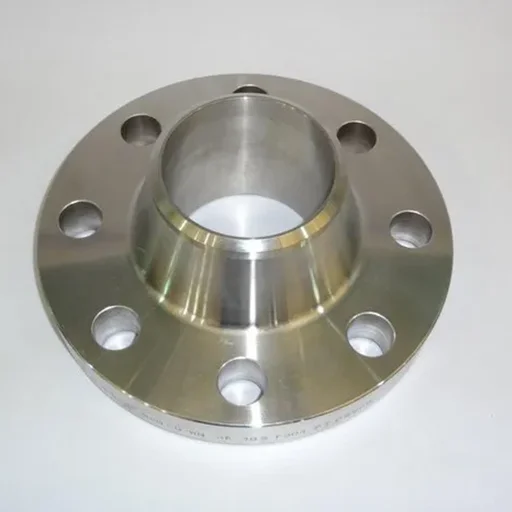
ASTM A182 F911 Weld Neck Flanges (WN)
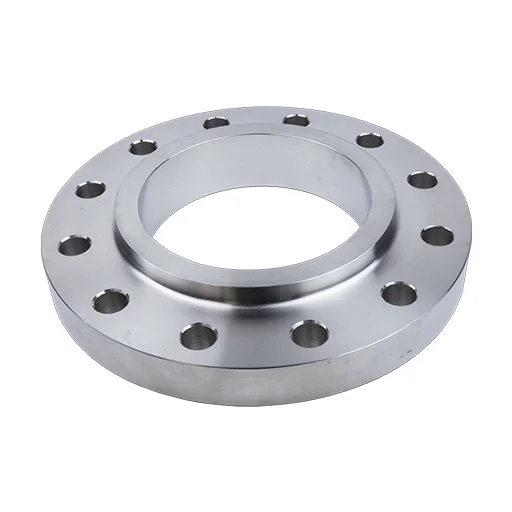
ASTM A182 F911 Slip-On Flanges (SO)
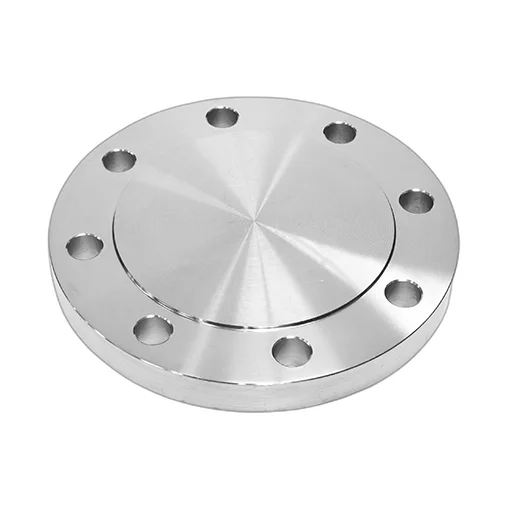
ASTM A182 F911 Blind Flanges (BL)
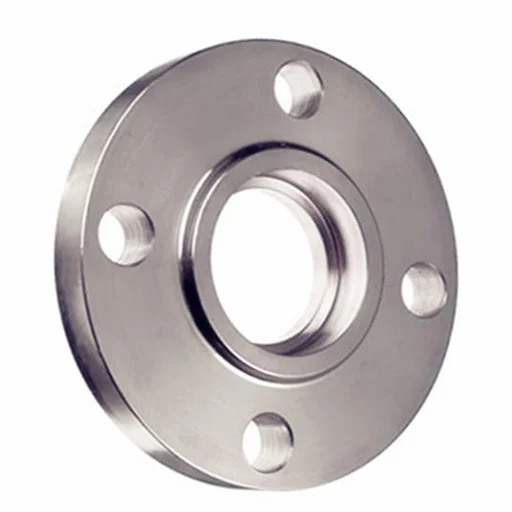
ASTM A182 F911 Socket Weld Flanges (SW)
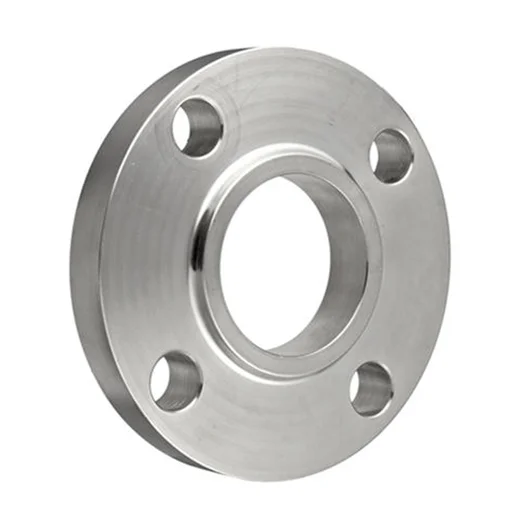
ASTM A182 F911 Lap Joint Flanges (LJ)
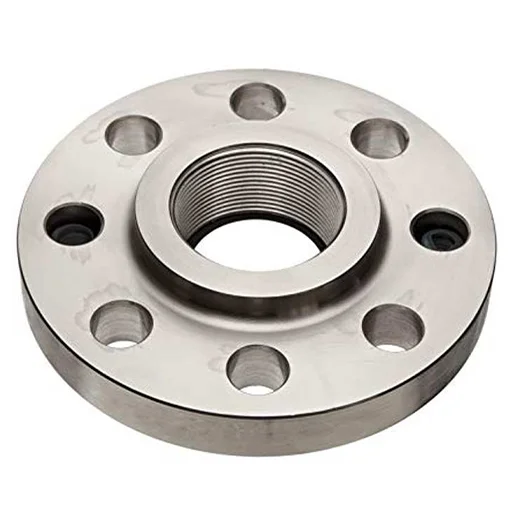
ASTM A182 F911 Threaded Flanges (TH)
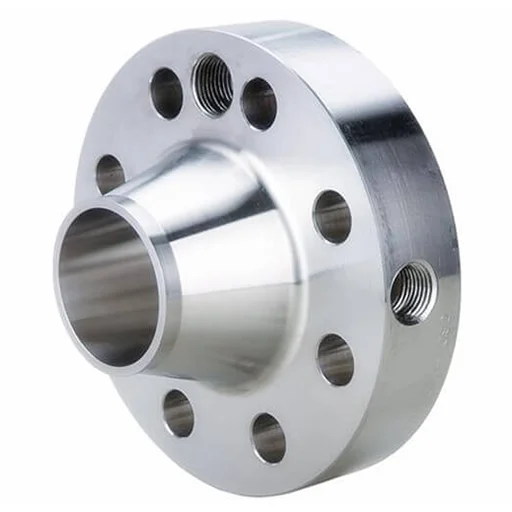
ASTM A182 F911 Orifice Flanges
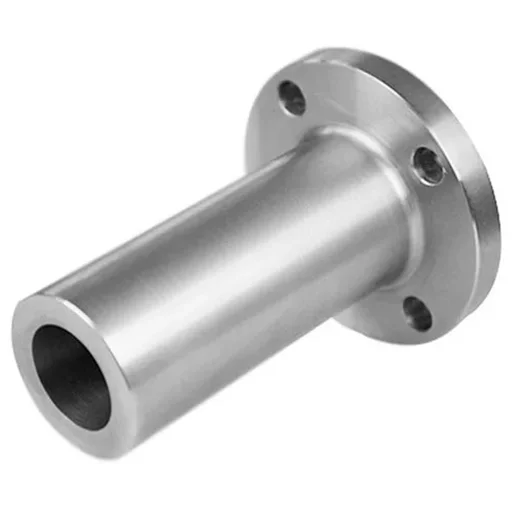
ASTM A182 F911 Long Weld Neck Flanges
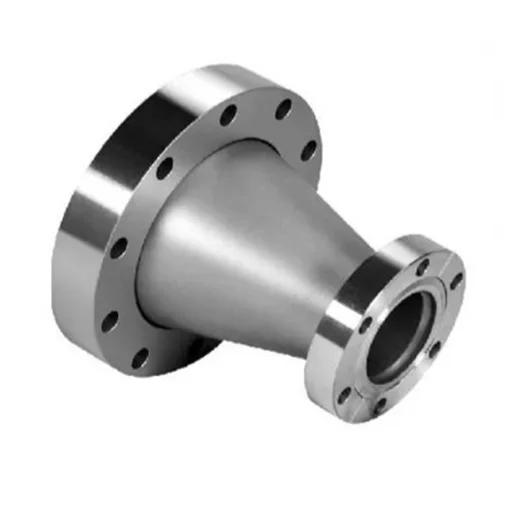
ASTM A182 F911 Reducing Flanges
Standard Flange Sizes & Weight Chart
ASTM A182 F911 Weld Neck Flange Dimensions (ANSI B16.5) - Class 600 Sample
| NPS | Outside Diameter (mm) | Thickness (mm) | Bore (mm) | Hub Diameter (mm) | Bolt Circle (mm) | No. of Bolts | Bolt Size | Approx. Weight (kg) |
|---|---|---|---|---|---|---|---|---|
| 1/2" | 95 | 16 | 21 | 41 | 66 | 4 | M16 | 0.90 |
| 1" | 124 | 21 | 33 | 57 | 89 | 4 | M19 | 1.85 |
| 2" | 165 | 25 | 60 | 84 | 127 | 8 | M19 | 4.00 |
| 4" | 273 | 32 | 114 | 146 | 216 | 8 | M25 | 13.2 |
| 6" | 356 | 38 | 168 | 210 | 270 | 12 | M25 | 28.0 |
| 8" | 419 | 41 | 219 | 270 | 330 | 12 | M28 | 44.5 |
| 10" | 508 | 48 | 273 | 330 | 403 | 16 | M32 | 76.5 |
| 12" | 559 | 52 | 324 | 381 | 476 | 20 | M32 | 104.0 |
| 16" | 711 | 64 | 419 | 495 | 603 | 20 | M38 | 196.0 |
| 20" | 838 | 70 | 508 | 603 | 724 | 24 | M38 | 302.0 |
| 24" | 991 | 78 | 610 | 705 | 838 | 24 | M45 | 450.0 |
Is ASTM A182 F911 Good Quality for Ultra-Supercritical Power Plants?
Yes, ASTM A182 F911 is a high tech next-generation ferritic steel that has specifically been designed to work in ultra-supercritical (USC) and advanced ultra-supercritical (A-USC) power plants and is a great improvement in high-temperature creep behavior compared to standard F91 and even traditional chromium-molybdenum steels. F911 was designed in late 1990s and early 2000s under international collaborative research projects to raise power plant efficiency through allowing operation with even higher steam temperatures and pressures than were possible with F91, and it is now a valuable material in high-efficiency power generation.
The fundamental improvement of 9Cr-1Mo-V-Nb base composition of F91 is the incorporation of tungsten (0.90-1.10%) and high nitrogen levels (0.040-0.090% compared to F91, 0.030-0.070%). These alloys, together with vanadium (0.18-0.25%) and niobium (0.06-0.10%) form highly fine and thermally stable precipitates, mostly vanadium nitride (VN), niobium carbide (NbC) and M23C6 carbides, which successfully lock dislocations and grain boundaries, greatly retarding the creep deformation at extremely high temperatures. This is a strengthening mechanism that has provided F911 with a creep rupture strength of about 20-30% higher than that of F91 at 600-620 o C.
The higher creep strength permits ultra-supercritical power plants to run at higher temperatures (up to 620-650 o C ) and pressures (ultra-supercritical over 25 MPa, advanced ultra-supercritical over 30 MPa) and have thermal efficiencies of 45-48%. This rise in efficiency is directly proportional to a decrease in fuel use and CO2 emissions - an important factor in the contemporary environmental-conscious generation of power and in efforts to mitigate climate change.
F911 is uniquely developed to serve the most challenging boiler to turbine (600-620 C, 25-32 MPa) main steam piping of a boiler-turbine plant, main steam or superheater-reheater header and by-pass piping in the highest-temperature areas, high-creep-strength thick-wall-header, and turbine bypass. It found application in ASME B16.34 Material Group 1.15 and ASME B31.1 Power Piping Code with well-established allowable stresses at high temperature service.
The addition of tungsten gives the high-temperature strengthening of the solid solution and the increased nitrogen provides the stability and distribution of VN precipitates. Proprieties of F911 are, high creep strength, fine oxidation resistance, sufficient toughness, and proper procedure weldability. But it has to be heat treated strictly (normalized at 1040-1080 o C, tempered at 730-800 o C), and qualified welding done because it is martensitic in structure. At higher temperatures (beyond 620-650 C) more sophisticated materials (e.g., F92 (9Cr-2Mo) or nickel-based alloys) will be suggested. F911 is the most recent development in ferritic steels to be used in ultra-supercritical power generation.
Heat Treatment & Testing Requirements
| Process | Step / Parameter | Requirement | Remarks / Critical Notes |
| Normalizing (Austenitizing) + Tempering | Normalizing Temperature | 1040-1080-C (1900-1975-F) | Temperature must be controlled within -10-C |
| Holding Time | Adequate soaking | Based on section thickness | |
| Cooling After Normalizing | Air cool to below 400-C | Prior to tempering | |
| Tempering Temperature | 730-800-C (1350-1470-F) | Mandatory | |
| Tempering Holding Time | Minimum 1 hour | Longer as required by thickness | |
| Cooling After Tempering | Air cool | - | |
| Critical Requirement | - | Strict temperature control | Ensures proper austenite grain size, tungsten distribution, and final precipitate structure |
Testing & Inspection Requirements (Comprehensive & Mandatory):
| Test / Inspection | Standard / Requirement | Acceptance / Remarks |
| Tensile Testing | ASTM A370 | Yield = 60 ksi, Tensile 85-110 ksi, Elongation = 20%, Reduction of Area = 45% |
| Hardness Testing | ASTM E10 | Typical 180-250 HB; = 250 HB (265 HBW max) for NACE compliance |
| Charpy Impact Testing | ASTM A370 | Minimum 41 J at 20-C (mandatory for critical USC applications) |
| PMI Testing | Positive Material Identification | Verification of Cr, Mo, V, Nb, N, W content |
| Metallographic Examination | Optical microscopy | Tempered martensite confirmed, no d-ferrite, proper precipitate distribution |
| Grain Size Determination | ASTM grain size | Typically ASTM #6-8 (fine grain) |
| Ultrasonic Testing | ASTM A388 | Mandatory for critical thick-section applications |
ASTM A182 F911 Advanced Ferritic Steel Flanges Price List 2026
| Flange Type | Size Range | Pressure Class | Indicative Price Range (USD / Piece) |
|---|---|---|---|
| Weld Neck (WN) | 1/2" - 2" | 150# | $45 - $115 |
| Weld Neck (WN) | 4" - 8" | 150# | $185 - $685 |
| Weld Neck (WN) | 10" - 24" | 150# | $1,050 - $3,850 |
| Weld Neck (WN) | 1/2" - 2" | 300# | $65 - $165 |
| Weld Neck (WN) | 4" - 8" | 300# | $280 - $980 |
| Weld Neck (WN) | 10" - 24" | 300# | $1,480 - $5,450 |
| Weld Neck (WN) | 1/2" - 2" | 600# | $95 - $235 |
| Weld Neck (WN) | 4" - 8" | 600# | $420 - $1,450 |
| Slip-On (SO) | 1/2" - 2" | 150# | $36 - $95 |
| Slip-On (SO) | 4" - 8" | 150# | $145 - $545 |
| Blind (BL) | 1/2" - 2" | 150# | $32 - $82 |
| Blind (BL) | 4" - 8" | 150# | $155 - $605 |
| Socket Weld (SW) | 1/2" - 2" | 150# - 600# | $48 - $195 |
Note: ASTM A182 F911 flanges are typically 200-260% higher than A105 and 15-25% higher than F91 due to tungsten addition, enhanced nitrogen control, stricter heat treatment requirements, and mandatory comprehensive testing.
Applications of ASTM A182 F911 Flanges in Industry
The ASTM A182 F911 Advanced Ferritic Steel Flanges are commonly used in many industrial applications, and some of the common industries are given below.
Ultra-Supercritical Power Plants
Main steam piping (600-620-C, >25 MPa), hot reheat piping, high-pressure turbine inlet
Advanced USC Power
Next-generation USC boilers (620-650-C, >30 MPa), superheater/reheater headers and tubes
Combined Cycle
Advanced HRSG superheater sections, high-temperature steam piping in state-of-the-art combined cycle plants
High-Efficiency Coal-Fired
Thick-wall headers and piping requiring maximum creep strength in modern coal plants
Refinery
High-temperature hydrocracking reactor effluent, delayed coking furnace outlet systems
Petrochemical
Steam reforming furnace tubes and headers, ethylene cracker high-temperature sections
Hydrogen Production
High-temperature reformer outlet piping, shift reactor systems
Waste-to-Energy
Advanced high-efficiency waste incineration plants, biomass power generation
Why Choose ASTM A182 F911 Flanges from Metinox Overseas?
In order to meet the ultra-supercritical conditions of power plant design, Metinox Overseas offers certified ASTM A182 F911 advanced ferritic steel flanges that are precisely heat treated, fully tested in terms of impact and metallography, and have excellent creep strengths. Our manufacturing plants are certified to produce ISO 9001:2015, ASME U-Stamp and PED with all F911 flanges being controlled normalized at 1040-1080degC and tempered at 730-800degC in full furnace instrumentation and time-temperature record.
All flanges are furnished with EN 10204 3.1B Mill Test Certificates with full chemical analysis of including W (0.90-1.10%), V (0.18-0.25%), Nb (0.06-0.10%), N (0.040-0.090%), complete tensile properties, Charpy impact testing ([?]41J at 20degC), hardness testing ([?]250 HB), heat treatment records, determination of grain size
We also offer expert advice regarding the F911 material selection in the USC applications, welding (modified 9Cr-1Mo-V-Nb-N-W, a preheat of 200-350degC, interpass [?]350degC, compulsory PWHT 730-800degC) and creep rupture data as per ASME Section II Part D, and ASME B31.1 Power Piping Code. We cater to the niche requirements of ultra-supercritical power plants, EPCs, boiler manufacturers and sophisticated energy plants across the world.
ASTM A182 F911 Flange Delivery Time & CIF Pricing by Country
| Destination Region | Major Ports / Cities | Estimated Delivery Time | Typical CIF Terms |
|---|---|---|---|
| Middle East (GCC) | Dubai, Dammam, Doha | 14-18 Days | CIF Dubai / CIF Dammam |
| Europe | Rotterdam, Hamburg | 28-35 Days | CIF Rotterdam / CIF Hamburg |
| USA & Canada | Houston, New York | 35-45 Days | CIF Houston / CIF New York |
| Southeast Asia | Singapore, Port Klang | 18-25 Days | CIF Singapore / CIF Port Klang |
| Africa | Lagos, Durban | 25-35 Days | CIF Lagos / CIF Durban |
Other Types of Advanced Ferritic A182 F911 Flanges
ASTM A182 F911 Modified 9Cr-1Mo-V-Nb-N-W Weld Neck Flanges, ASME SA182 F911 Blind Flanges, F911 Ultra-Supercritical Power Plant Flanges, F911 CSEF Flanges, F911 Advanced Ferritic Steel Flanges.
Popular Locations Where We Supply ASTM A182 F911 Flanges
astm a182 f911 advanced ferritic flanges manufacturer, a182 f911 ultra-supercritical flanges supplier, modified 9cr-1mo-v-nb-n-w flanges, astm a182 f911 usc power plant flanges, f911 vs f91 difference, f911 flanges price list 2026.
People Also Search For
astm a182 f911 advanced ferritic flanges manufacturer, a182 f911 ultra-supercritical flanges supplier, modified 9cr-1mo-v-nb-n-w flanges, astm a182 f911 usc power plant flanges, f911 vs f91 difference, f911 flanges price list 2026.
Looking for High-Quality ASTM A182 F911 Flanges?
Let us support your projects with quality, precision, and performance.
Frequently Asked Questions (FAQ)
F911 has additions of tungsten (0.90-1.10%) and more nitrogen (0.040-0.090) to the F91 base composition which give it about 20-30% higher creep rupture strength at 600 -620degC. F911 allows increased temperatures and pressures in ultra-supercritical power plants than F91. F91 can be used in supercritical applications to a maximum of 593degC with F911 being used to a maximum of 620-650degC.
Tungsten reinforces solid solutions in high temperatures and increases the stability of the precipitates (VN, NbC, M23C6). W addition is so much better in the creep rupture strength at temperatures higher than 593degC, which means that F911 is better than F91 in ultra-supercritical applications. Tungsten is also a high temperature oxidation resistant material.
F911 relies on finer VN, NbC and M23C6 precipitates formed in the tempering process to achieve higher creep strength. A normalization temperature of 1040-1080degC +-10degC should be used to obtain appropriate austenite grain size and tungsten distribution, and then tempered at 730-800degC in order to obtain ideal precipitate distribution. Deviations have a drastic effect on the creep strength and toughness.
F911 must have qualified welding processes according to ASME Section IX with similar consumables like AWS A5.5 E9018-B9, or others. The martensitic microstructure and precipitation hardening require minimum preheat temperature of 200-350degC, interpass temperature [?]350degC and compulsory post-weld heat treatment (PWHT) at 730-800degC of at least 1 hour per 25mm thickness.
Yes, to achieve a minimum of 41J of impact testing at 20 deg C, it is generally necessary to have ultra-supercritical power plant applications where good toughness of the tempered martensitic microstructure is required, particularly in thick sections and critical parts.
F92 has more molybdenum (1.30-1.70%), tungsten (1.50-2.00%), giving it better creep strength at temperatures over 620degC than does F911. F911 is less expensive and is generally qualified over a wider temperature range over the USC applications to 620degC; F92 is favored in advanced USC applications that demand the highest creep strength, which exceed 620-650degC.
ASME B16.5 specifies a minimum design temperature of F911 -29degC (-20degF). Impact testing is also needed to check sufficient toughness of the martensitic microstructure at lower temperatures. At temperatures (t) below -29degC further impact testing at the design temperature is required.
F911 flanges can be used continuously to 620-650degC (1148-1202degF) in ultra-supercritical power plants. At temperatures above this range, one should consider using more advanced materials like F92 or nickel based alloys that perform best in the long term creep.
Enquire Now
Get pricing within 24 hours!