ASTM A182 F91 Advanced Ferritic Steel Flanges Manufacturer & Supplier
Metinox Overseas is among the largest manufacturers and distributors of ASTM A182 F91 Advanced Ferritic Steel Flanges, which are designed to work in the ultra-high-temperature conditions, in the supercritical and ultra-supercritical power plants, which demand exceptionally high creep strength, and oxidation resistance. Our ASME SA182 F91 Forged Flanges are made of high quality modified 9Cr-1Mo-V-Nb (9% Chromium -1% Molybdenum - Vanadium - Niobium) advanced ferritic steel with controlled chemical composition of chromium (8.00-9.50%), molybdenum (0.85-1.05%), vanadium (0.18-0.25%), niobium (0.06-0.10%), and nit These are modified 9Cr A182 F91 Flanges, which are uniquely set at extreme services of extreme high temperatures creep service (-29degC -20degF) to 593-649degC (1100-1200degF), offering ideal services in supercritical power plant main steam and hot reheat piping, ultra-supercritical boiler superheater/reheater headers, advanced combined cycle power plants, high-temperature refinery hydroprocessing and demanding services demanding extremely high creep rupture strength beyond standard F9
Vanadium, nitrogen and controlled addition of niobium introduce fine precipitates ( VN, NbC ) that increases significantly creep strength, allowing F91 to work at higher temperatures and stresses than traditional chromium-molybdenum steels. ASTM A182 Weld Neck Flanges F91 1/2 to 24 inch (3.5 to 4 cm) and Socket Weld Flanges Socket Weld Neck Flanges are produced in full ANSI/ASME B16.5 (1/2 to 24 inch NB) and ASME B16.47 Series A and B (26 to 60 inch NB) sizes, in pressure classes of 150 to 2500 pounds. All flanges are subjected to required heat treatment low level either normalizing and tempering or quenching and tempering under strict temperature control and followed by demanding quality tests such as dimensional inspection, PMI verification, tensile testing, Charpy impact testing, hardness testing, metallographic examination and ultrasonic examination as required by ASTM A961.

Table of Contents
- ASTM A182 F91 Flanges Technical Specifications
- ASTM A182 F91 Equivalent Grades
- ASTM A182 F91 Chemical Composition
- Mechanical Properties of ASTM A182 F91 Flanges
- ASTM A182 F91 Flange Dimensions & Pressure Rating Chart
- Types of ASTM A182 F91 Flanges Available
- Standard Flange Sizes & Weight Chart
- Is ASTM A182 F91 Good Quality for Supercritical Power Plants?
- Heat Treatment & Testing Requirements
- ASTM A182 F91 Advanced Ferritic Steel Flanges Price List 2026
- Applications of ASTM A182 F91 Flanges in Industry
- Why Choose ASTM A182 F91 Flanges from Metinox Overseas?
- ASTM A182 F91 Flange Delivery Time & CIF Pricing by Country
- Other Types of Advanced Ferritic A182 F91 Flanges
- Popular Locations Where We Supply ASTM A182 F91 Flanges
- Frequently Asked Questions (FAQ)
ASTM A182 F91 Flanges Technical Specifications
| Feature | Details |
| Specifications | ASTM A182 / ASME SA182 / MSS SP-44 |
| Grade | F91 Type 1, F91 Type 2 (Creep Strength Enhanced Ferritic - CSEF) |
| Material Designation | Modified 9Cr-1Mo-V-Nb (9Cr-1Mo-Vanadium-Niobium) |
| UNS Number | K90901 (Type 1), K91560 (Type 2) |
| Dimensional Standards | ANSI/ASME B16.5, B16.47 Series A & B, B16.48, MSS SP-44 |
| Size Range | 1/2" (15 NB) to 60" (1500 NB) |
| Pressure Class | 150#, 300#, 400#, 600#, 900#, 1500#, 2500# (B16.5); 75#, 150#, 300#, 400#, 600#, 900# (B16.47) |
| Flange Types | Weld Neck, Slip-On, Blind, Socket Weld, Lap Joint, Threaded, Orifice, Long Weld Neck, Reducing |
| Flange Face | Raised Face (RF), Flat Face (FF), Ring Type Joint (RTJ), Male & Female, Tongue & Groove |
| Manufacturing Type | Hot Forged |
| Microstructure | Tempered Martensite with Fine Precipitates (VN, NbC) |
| Heat Treatment | Normalized & Tempered, or Austenitized & Tempered (Mandatory, Strict Control) |
| Testing | Tensile, Hardness, Impact, PMI, Metallography, Grain Size, Ultrasonic |
| Inspection | Third Party Inspection by TUV, SGS, Bureau Veritas, Lloyd's, DNV GL, BV, ABS |
| Certifications | EN 10204 3.1B MTC, NACE MR0175, PED 2014/68/EU, CE Marked, ASME B31.1, B31.3 |
ASTM A182 F91 Equivalent Grades
| STANDARD | USA | GERMANY | EUROPE | JAPAN | INDIA | UK | CHINA |
| A182 F91 | ASTM A182 F91 ASME SA182 F91 UNS K90901 |
1.4903 | X10CrMoVNb9-1 X10CrMoVNb9-1 EN 10222-2 |
- | - | - | 10Cr9Mo1VNbN |
ASTM A182 F91 Chemical Composition
The detailed composition of this material is given in the following table.
| Element | Type 1 (%) | Type 2 (%) | Function |
| Carbon (C) | 0.08 - 0.12 | 0.07 - 0.13 | Controlled for strength and toughness |
| Manganese (Mn) | 0.30 - 0.60 | 0.30 - 0.60 | Hardenability |
| Phosphorus (P) | 0.020 max | 0.020 max | Strictly controlled for toughness |
| Sulfur (S) | 0.010 max | 0.010 max | Minimized for ductility and toughness |
| Silicon (Si) | 0.20 - 0.50 | 0.20 - 0.50 | Oxidation resistance |
| Chromium (Cr) | 8.00 - 9.50 | 8.00 - 9.50 | Oxidation/corrosion resistance, creep strength |
| Molybdenum (Mo) | 0.85 - 1.05 | 0.85 - 1.05 | High-temp strength, creep resistance |
| Vanadium (V) | 0.18 - 0.25 | 0.18 - 0.25 | Forms VN precipitates for creep strength |
| Niobium (Nb) | 0.06 - 0.10 | 0.06 - 0.10 | Forms NbC precipitates for creep strength |
| Nitrogen (N) | 0.03 - 0.07 | 0.030 - 0.070 | Forms VN with vanadium for precipitation strengthening |
| Nickel (Ni) | 0.40 max | 0.10 - 0.40 | Toughness (Type 2 controlled) |
| Aluminum (Al) | 0.04 max | 0.020 max (soluble) | Deoxidizer, grain refinement |
| Tungsten (W) | - | 0.02 max | Type 2: Controlled for creep optimization |
| Cobalt (Co) | - | 0.03 max | Type 2: Controlled for creep optimization |
| Boron (B) | - | 0.001 - 0.006 | Type 2: Grain boundary strengthening |
Note: Type 2 has additional restrictions on W, Co, B to optimize both creep resistance and toughness. Type 1 most common; Type 2 for critical supercritical applications.
Mechanical Properties of ASTM A182 F91 Flanges
The mechanical properties decide the shelflife of the material. The table below gives the information about the mechanical properties of ASTM A182 F91 Flanges.
| Property | Type 1 | Type 2 | Testing Standard |
| Tensile Strength | 585 - 760 MPa (85-110 ksi) | 585 - 760 MPa (85-110 ksi) | ASTM A370 |
| Yield Strength (0.2% offset) | 415 MPa (60 ksi) min | 415 MPa (60 ksi) min | ASTM A370 |
| Elongation in 2" | 20% minimum | 20% minimum | ASTM A370 |
| Reduction of Area | 45% minimum | 45% minimum | ASTM A370 |
| Hardness (Brinell) | 180-250 HB (typical) | 180-250 HB (typical) | ASTM E10 |
| Hardness (max) | 265 HBW (250 HB) | 265 HBW (250 HB) | For NACE |
| Charpy V-Notch Impact | 41 J min at 20-C | 41 J min at 20-C | ASTM A370 |
Note: F91 provides 2-3 times better creep rupture strength than F9 at 538-593-C due to precipitation strengthening.
ASTM A182 F91 Flange Dimensions & Pressure Rating Chart
Pressure-Temperature Ratings for A182 F91 Flanges
| Temperature -F (-C) | Class 150 | Class 300 | Class 600 | Class 900 | Class 1500 | Class 2500 |
|---|---|---|---|---|---|---|
| -20 to 100 (-29 to 38) | 285 psi | 740 psi | 1480 psi | 2220 psi | 3705 psi | 6170 psi |
| 200 (93) | 285 psi | 740 psi | 1480 psi | 2220 psi | 3705 psi | 6170 psi |
| 400 (204) | 285 psi | 740 psi | 1480 psi | 2220 psi | 3705 psi | 6170 psi |
| 600 (316) | 285 psi | 740 psi | 1480 psi | 2220 psi | 3705 psi | 6170 psi |
| 650 (343) | 260 psi | 675 psi | 1350 psi | 2025 psi | 3375 psi | 5625 psi |
| 700 (371) | 230 psi | 655 psi | 1315 psi | 1970 psi | 3280 psi | 5470 psi |
| 750 (399) | 200 psi | 635 psi | 1270 psi | 1900 psi | 3170 psi | 5280 psi |
| 800 (427) | 170 psi | 600 psi | 1200 psi | 1795 psi | 3000 psi | 4995 psi |
| 850 (454) | 140 psi | 550 psi | 1095 psi | 1640 psi | 2735 psi | 4560 psi |
| 900 (482) | 125 psi | 535 psi | 1075 psi | 1610 psi | 2685 psi | 4480 psi |
| 950 (510) | 110 psi | 505 psi | 1010 psi | 1515 psi | 2530 psi | 4215 psi |
| 1000 (538) | 95 psi | 485 psi | 970 psi | 1460 psi | 2430 psi | 4045 psi |
| 1050 (566) | 80 psi | 410 psi | 825 psi | 1230 psi | 2055 psi | 3430 psi |
| 1100 (593) | 65 psi | 270 psi | 540 psi | 805 psi | 1345 psi | 2240 psi |
Note: F91 maintains significantly better pressure ratings than F9/F22 at high temperatures due to superior creep rupture strength.
Types of ASTM A182 F91 Flanges Available
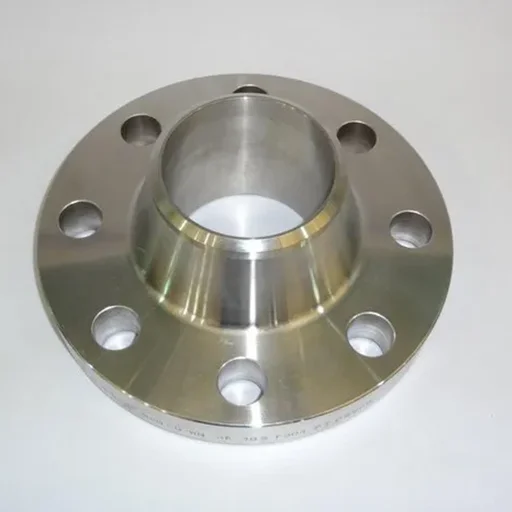
ASTM A182 F91 Weld Neck Flanges (WN)
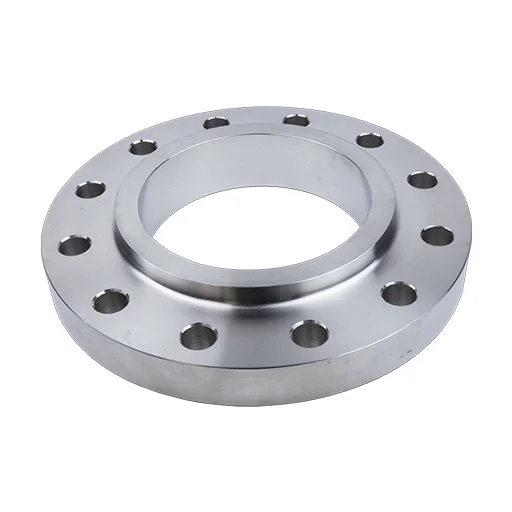
ASTM A182 F91 Slip-On Flanges (SO)
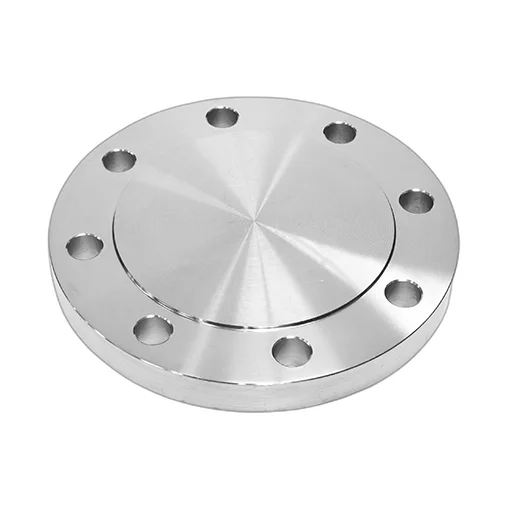
ASTM A182 F91 Blind Flanges (BL)
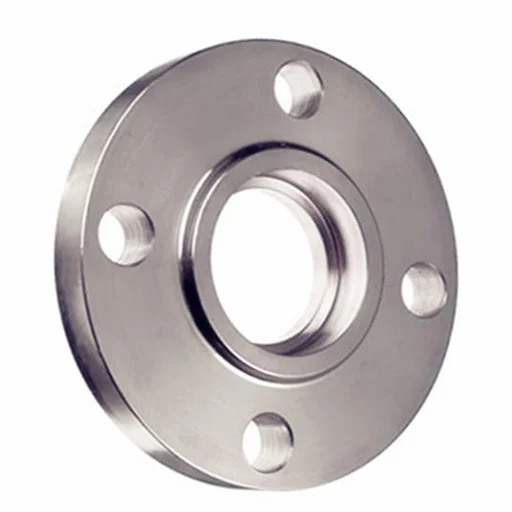
ASTM A182 F91 Socket Weld Flanges (SW)
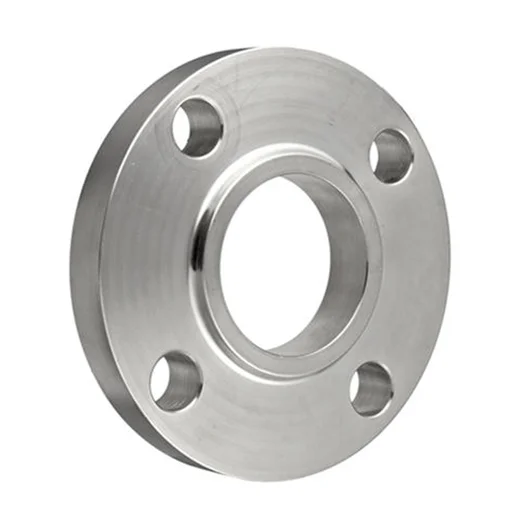
ASTM A182 F91 Lap Joint Flanges (LJ)
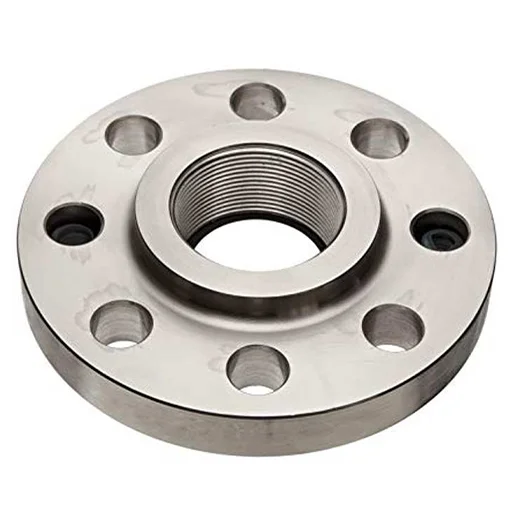
ASTM A182 F91 Threaded Flanges (TH)
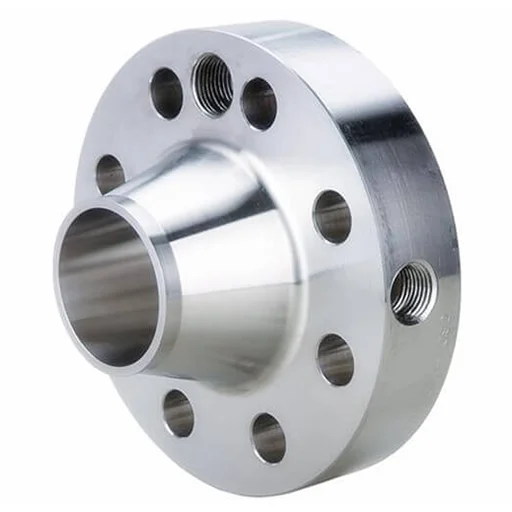
ASTM A182 F91 Orifice Flanges
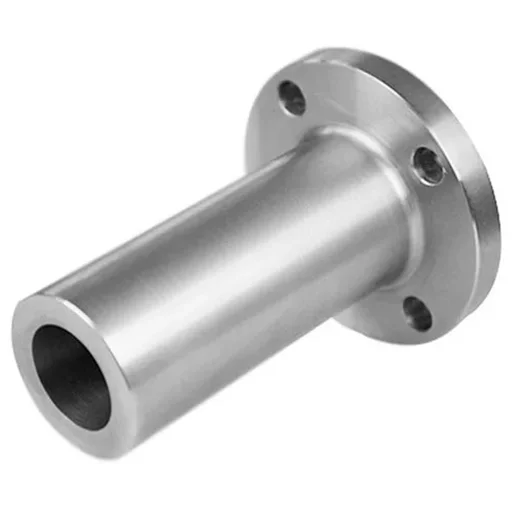
ASTM A182 F91 Long Weld Neck Flanges
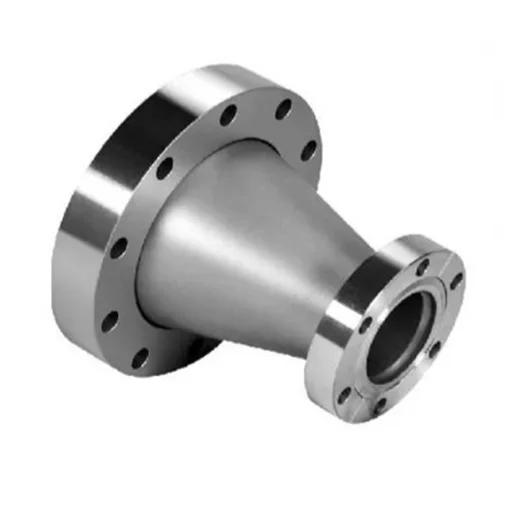
ASTM A182 F91 Reducing Flanges
Standard Flange Sizes & Weight Chart
ASTM A182 F91 Weld Neck Flange Dimensions (ANSI B16.5) - Class 600 Sample
| NPS | Outside Diameter (mm) | Thickness (mm) | Bore (mm) | Hub Dia (mm) | Bolt Circle (mm) | No. of Bolts | Bolt Dia | Approx Weight (kg) |
|---|---|---|---|---|---|---|---|---|
| 1/2" | 95 | 16 | 21 | 41 | 66 | 4 | M16 | 0.88 |
| 1" | 124 | 21 | 33 | 57 | 89 | 4 | M19 | 1.82 |
| 2" | 165 | 25 | 60 | 84 | 127 | 8 | M19 | 3.95 |
| 4" | 273 | 32 | 114 | 146 | 216 | 8 | M25 | 13.0 |
| 6" | 356 | 38 | 168 | 210 | 270 | 12 | M25 | 27.5 |
| 8" | 419 | 41 | 219 | 270 | 330 | 12 | M28 | 43.7 |
| 10" | 508 | 48 | 273 | 330 | 403 | 16 | M32 | 75.0 |
| 12" | 559 | 52 | 324 | 381 | 476 | 20 | M32 | 102.0 |
| 16" | 711 | 64 | 419 | 495 | 603 | 20 | M38 | 193.0 |
| 20" | 838 | 70 | 508 | 603 | 724 | 24 | M38 | 297.0 |
| 24" | 991 | 78 | 610 | 705 | 838 | 24 | M45 | 442.0 |
Is ASTM A182 F91 Good Quality for Supercritical Power Plants?
Yes, that is the industry-standard next-generation ferritic steel of supercritical and ultra-supercritical power stations, ASTM A182 F91 which is a quantum leap in high temperature creep behavior over standard chromium-molybdenum steels. F91 was created specifically in the 1970s-1980s as a part of the international research on increasing the efficiency of power plants by increasing steam temperature and pressure; it has become the standard material of the modern high-efficiency power generation.
The most important addition to the 9Cr-1Mo base composition is the addition of vanadium (0.18-0.25%), niobium (0.06-0.10%), and controlled nitrogen (0.03-0.07%). These are highly fine, thermally stable precipitates, predominantly vanadium nitride (VN) and niobium carbide (NbC) that pin dislocations and grain boundaries and significantly slow the creep deformation at high temperatures. This strengthening process has given F91 about 2-3 times greater creep rupture strength than standard F9 at 538-593 o C.
The high creep strength enables power plants to run at higher temperatures (up to 593-620 o C) and pressures (supercritical >22 MPa, ultra-supercritical >25 MPa) and much better thermal efficiency (42-45 percent versus 38-40 percent) than standard subcritical power plants. Such an increase in efficiency is directly translated to decrease in fuel consumption and CO 2 emissions- which is of critical measure in the modern day power generation.
F91 is designed to be used in the most severe components of supercritical power plants: boiler to turbine main steam piping (operates at 540-600, 22-30 MPa), hot reheat, and superheater and reheater headers and tubing in highest temperature areas, and bypass systems of turbines. It is contained in ASME B16.34 Material Group 1.15 and ASME B31.1 Power Piping Code that have well-established allowable stresses.
Most widely specified is Type 1 F91 that provides great balance of properties. Tighter control over the Mo, V, Nb, W, Co, B and Ni, was added to Type 2 to maximize the creep resistance and toughness- especially in thick-section components. F91 has excellent performance, but it must be strictly heat treated (normalizing at 1040-1080 C, tempering at 730-800 C) and be welded with approved welding methods because it has a martensitic structure. Even at even greater temperatures over 620C, F92 (modified 9Cr-2Mo) or F93 (generation CSEF) are better-performing.
Heat Treatment Requirements (Mandatory - Strict Control Required)
| Process | Step / Parameter | Requirement | Remarks / Critical Notes |
| Normalizing (Austenitizing) + Tempering | Normalizing Temperature | 1040-1080-C (1900-1975-F) | Temperature must be controlled within -10-C |
| Holding Time | Adequate soaking | Based on section thickness | |
| Cooling After Normalizing | Air cool to below 400-C | Prior to tempering | |
| Tempering Temperature | 730-800-C (1350-1470-F) | Mandatory | |
| Tempering Holding Time | Minimum 1 hour | Longer as required by thickness | |
| Cooling After Tempering | Air cool | - | |
| Critical Requirement | - | Strict temperature control | Ensures proper austenite grain size and final properties |
Testing & Inspection Requirements (Comprehensive):
| Test / Inspection | Standard / Requirement | Acceptance / Remarks |
| Tensile Testing | As specified | Yield = 60 ksi, Tensile 85-110 ksi, Elongation = 20%, Reduction of Area = 45% |
| Hardness Testing | Brinell hardness | Typical 180-250 HB; = 250 HB (265 HBW max) for NACE |
| Charpy Impact Testing | As specified | Minimum 41 J at 20-C (mandatory for critical applications) |
| PMI Testing | Positive Material Identification | Verification of Cr, Mo, V, Nb, N |
| Metallographic Examination | Optical microscopy | Tempered martensite confirmed, no d-ferrite, proper precipitate distribution |
| Grain Size Determination | ASTM grain size | Typically ASTM #6-8 (fine grain) |
| Ultrasonic Testing | ASTM A388 | Mandatory for critical applications |
ASTM A182 F91 Advanced Ferritic Steel Flanges Price List 2026
| Flange Type | Size Range | Pressure Class | Indicative Price Range (USD/Piece) |
|---|---|---|---|
| Weld Neck (WN) | 1/2" - 2" | 150# | $35 - $95 |
| Weld Neck (WN) | 4" - 8" | 150# | $145 - $585 |
| Weld Neck (WN) | 10" - 24" | 150# | $880 - $3,280 |
| Weld Neck (WN) | 1/2" - 2" | 300# | $52 - $135 |
| Weld Neck (WN) | 4" - 8" | 300# | $220 - $850 |
| Weld Neck (WN) | 10" - 24" | 300# | $1,280 - $4,650 |
| Weld Neck (WN) | 1/2" - 2" | 600# | $75 - $195 |
| Weld Neck (WN) | 4" - 8" | 600# | $350 - $1,250 |
| Slip-On (SO) | 1/2" - 2" | 150# | $28 - $78 |
| Slip-On (SO) | 4" - 8" | 150# | $115 - $465 |
| Blind (BL) | 1/2" - 2" | 150# | $25 - $68 |
| Blind (BL) | 4" - 8" | 150# | $125 - $520 |
| Socket Weld (SW) | 1/2" - 2" | 150# - 600# | $38 - $165 |
Note: A182 F91 flanges are typically 180-240% higher than A105 and 45-60% higher than F22 due to complex composition (V, Nb, N), strict heat treatment requirements, and mandatory testing.
Applications of ASTM A182 F91 Flanges in Industry
The ASTM A182 F91 Advanced Ferritic Steel Flanges are commonly used in many industrial applications, and some of the common industries are given below.
Supercritical Power Plants
Main steam piping (540-600-C, >22 MPa), hot reheat piping, high-pressure turbine inlet
Ultra-Supercritical Power
Advanced USC boilers (600-620-C, >25 MPa), superheater/reheater headers and tubes
Combined Cycle
HRSG superheater sections, high-temperature steam piping in advanced combined cycle plants
Refinery
High-temperature hydrocracking reactor effluent, delayed coking high-temp sections
Petrochemical
Steam reforming furnace tubes and headers, ethylene cracker high-temperature piping
Hydrogen Production
Reformer outlet piping, high-temperature shift reactors
Waste-to-Energy
Advanced waste incineration superheater sections, high-efficiency steam systems
Why Choose ASTM A182 F91 Flanges from Metinox Overseas?
Metinox Overseas provides certified ASTM A182 F91 advanced ferritic steel flanges with tight heat treatment control, extensive testing that includes impact and metallography and ensures creep strength to use in supercritical power plants. We have ISO 9001:2015, ASME U-Stamp and PED certified locations, whereby all F91 flanges are subjected to controlled normalizing at 1040-1080degC and tempering at 730-800degC with the furnace instrumentation and time-temperature records.
All flanges are supplied with EN 10204 3.1B Mill Test Certificates with full chemical analysis of V (0.18-0.25%), Nb (0.06-0.10%), N (0.03-0.07%), tensile properties, Charpy impact ( [?]41J at 20degC), hardness ( [?]250 HB), heat treatment history, determination of grain size and metallographic analysis reports indicating tempered martensite microstructure and d-ferrite free.
Our technical department provides knowledge professionals in Type 1 vs Type 2 choices, welding (modified 9Cr-1Mo-V-Nb) preheat 200-300degC, interpass [?]300degC etc. required PWHT at 730-800degC), creep rupture information according to ASME Section II Part D, and ASME B31.1 Power Piping. EPV contractors and boiler manufacturers serves the needs of supercritical power plants, EPC contractors and boilers in the entire world.
ASTM A182 F91 Flange Delivery Time & CIF Pricing by Country
| Destination Region | Major Ports / Cities | Estimated Delivery Time | Typical CIF Terms |
|---|---|---|---|
| Middle East (GCC) | Dubai, Dammam, Doha | 14-18 Days | CIF Dubai / CIF Dammam |
| Europe | Rotterdam, Hamburg | 28-35 Days | CIF Rotterdam / CIF Hamburg |
| USA & Canada | Houston, New York | 35-45 Days | CIF Houston / CIF New York |
| Southeast Asia | Singapore, Port Klang | 18-25 Days | CIF Singapore / CIF Port Klang |
| Africa | Lagos, Durban | 25-35 Days | CIF Lagos / CIF Durban |
Other Types of Advanced Ferritic A182 F91 Flanges
ASTM A182 F91 Type 1 Flanges, A182 F91 Type 2 Flanges, Modified 9Cr-1Mo-V-Nb Weld Neck Flanges, ASME SA182 F91 Blind Flanges, F91 Supercritical Power Plant Flanges, F91 CSEF Flanges.
Popular Locations Where We Supply ASTM A182 F91 Flanges
astm a182 f91 advanced ferritic flanges manufacturer, a182 f91 type 1 type 2 flanges supplier, modified 9cr-1mo-v-nb flanges, astm a182 f91 supercritical power plant flanges, f91 vs f92 difference, f91 flanges price list 2026.
People Also Search For
astm a182 f91 advanced ferritic flanges manufacturer, a182 f91 type 1 type 2 flanges supplier, modified 9cr-1mo-v-nb flanges, astm a182 f91 supercritical power plant flanges, f91 vs f92 difference, f91 flanges price list 2026.
Looking for High-Quality ASTM A182 F91 Flanges?
Let us support your projects with quality, precision, and performance.
Frequently Asked Questions (FAQ)
F91 contains vanadium (0.18-0.25%), niobium (0.06-0.10%), and nitrogen (0.03-0.07) additions to F9 which have been discovered to provide 2-3 times the creep rupture strength at 538-593 o C. F91 enables higher temperatures/pressures in supercritical power plants. F9 is less challenging composition, easy to weld, but has lower creep behavior.
Type 2 has more restrictive content levels of Mo, V, Nb, W, Co, B and Ni to have the highest possible creep resistance and toughness. The most common type that is commonly needed is type 1. The type 2 was developed under a thick section mode and put emphasis on significant parts that required improvement of the characteristics. Their minimum mechanical properties are similar.
F91 depends on fine VN and NbC precipitates created during the tempering to have a better creep strength. Normalization temperature of 1040-1080 C + or -10 C should then be done to achieve a good austenite grain size followed by tempering of the mixture of 730-800 C to achieve the ideal distribution of precipitate. Deviations significantly reduce creep strength and toughness.
AWS A5.5 E9018-B9/ENiCrMo-3 (Alloy 625 dissimilar). Interpass requirements of 300C, minimum preheat temperature of 200-300C 1hour minimum per 25mm of required PWHT. Welding requires qualified procedure as per the ASME Section IX due to martensitic microstructure and of precipitation hardening.
Yes, 20 o C, min 41J, Charpy V-notch impact test is normally required in supercritical power plant as a measure to ensure the toughness of the tempered martensitic microstructure is good enough, especially in thick sections.
F92 has a higher amount of molybdenum (1.30-1.70 vs 0.85-1.05) and tungsten (1.50- 2.00) in the higher creep strength at higher temperatures than F91 (593degC vs 593degC). F91 less expensive and more developed; F92 ultra-supercritical over 600 o C.
F91 must not be less than -29 deg C (-20 deg F) minimum required by ASME B16.5. Impact testing is required to test reasonable toughness of martensitic microstructure in lower temperature.
Enquire Now
Get pricing within 24 hours!