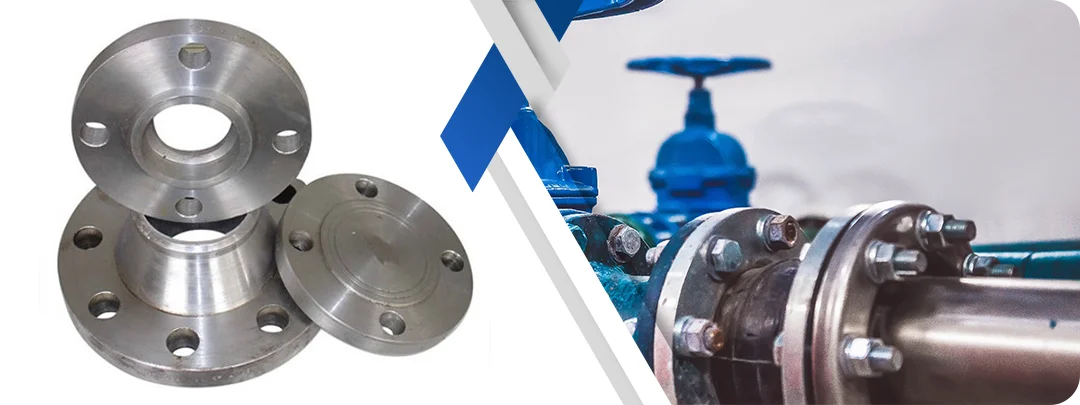
ASTM A182 F22 Chromium Molybdenum Alloy Steel Flanges Manufacturer & Supplier
Metinox Overseas A major producer and distributor of ASTM A182 F22 Alloy Steel Flanges, the high grade of severe high-temperature and high-pressure service in power generation, petrochemical, and refinery service which needs excellent creep strength. We have ASME SA182 F22 Forged Flanges that are made out of the high quality 2.25% chromium -1% molybdenum low alloy steel with controlled chemical composition with chromium (1.90-2.60%), molybdenum (0.87-1.13%), and carbon (0.05-0.15% in Class 1, 0.10-0.20% in Class 3) and provide reduced tensile strength of 515 Mpa and yield The design of these Cr-Mo Alloy A182 F22 Flanges has high strength in extreme high temperature service -29degC (-20degF) to 649degC (1200degF), so they are used in power plant superheater and reheater headers, high-temperature hydroprocessing of refinery products, petrochemical thermal cracking units, high-temperature hydrogen service and extreme high temperature applications where F11 cannot be used.
The increased level of chromium (2.25 v.s. 1.25) and molybdenum (1% v.s. 0.5%) relative to F11 gives the F22 much higher creep strength leading to the ability to withstand mechanical strength up to 649degC (1200degF). ASTM A182 F22 Weld Neck Flanges, Slip-On Flanges, Blind Flanges, and Socket Weld Flanges are manufactured fully in accordance with ANSI/ASME B16.5 (1/2" to 24" NB) and ASME B16.47 Series A and B (26" to 60" NB) dimensional standards, and in pressure classes of 150# to 2500#. Heat treatment of each flange is mandatory either normalizing and tempering or quenching and tempering and then strict quality testing which includes dimensional inspection, PMI testing, tensile testing, hardness testing and ultrasonic inspection as per ASTM A961 requirements.

Table of Contents
- ASTM A182 F22 Flanges Technical Specifications
- ASTM A182 F22 Equivalent Grades
- ASTM A182 F22 Chemical Composition
- Mechanical Properties of ASTM A182 F22 Flanges
- ASTM A182 F22 Flange Dimensions & Pressure Rating Chart
- Types of ASTM A182 F22 Flanges Available
- Standard Flange Sizes & Weight Chart
- Is ASTM A182 F22 Good Quality for Severe High-Temperature Service?
- Heat Treatment & Testing Requirements
- ASTM A182 F22 Alloy Steel Flanges Price List 2026
- Applications of ASTM A182 F22 Flanges in Industry
- Why Choose ASTM A182 F22 Flanges from Metinox Overseas?
- ASTM A182 F22 Flange Delivery Time & CIF Pricing by Country
- Other Types of Alloy Steel A182 F22 Flanges
- Popular Locations Where We Supply ASTM A182 F22 Flanges
- Frequently Asked Questions (FAQ)
ASTM A182 F22 Flanges Technical Specifications
| Feature | Details |
| Specifications | ASTM A182 / ASME SA182 / MSS SP-44 |
| Grade | F22 Class 1, F22 Class 3 |
| Material Designation | 2.25Cr-1Mo (2-Cr-1Mo) Low Alloy Steel |
| UNS Number | K21590 (Class 1), K31545 (Class 3) |
| Dimensional Standards | ANSI/ASME B16.5, B16.47 Series A & B, B16.48, MSS SP-44 |
| Size Range | 1/2" (15 NB) to 60" (1500 NB) |
| Pressure Class | 150#, 300#, 400#, 600#, 900#, 1500#, 2500# (B16.5); 75#, 150#, 300#, 400#, 600#, 900# (B16.47) |
| Flange Types | Weld Neck, Slip-On, Blind, Socket Weld, Lap Joint, Threaded, Orifice, Long Weld Neck, Reducing |
| Flange Face | Raised Face (RF), Flat Face (FF), Ring Type Joint (RTJ), Male & Female, Tongue & Groove |
| Manufacturing Type | Hot Forged |
| Heat Treatment | Normalized & Tempered, or Quenched & Tempered (Mandatory) |
| Testing | Tensile Test, Hardness Test, PMI Test, Ultrasonic Test, Hydrostatic Test |
| Inspection | Third Party Inspection by TUV, SGS, Bureau Veritas, Lloyd's, DNV GL, BV, ABS |
| Certifications | EN 10204 3.1B MTC, NACE MR0175, PED 2014/68/EU, CE Marked, ASME B31.1, B31.3 |
ASTM A182 F22 Equivalent Grades
| STANDARD | USA | GERMANY | EUROPE | JAPAN | INDIA | UK | CHINA |
| A182 F22 | ASTM A182 F22 ASME SA182 F22 UNS K21590 |
1.7380 10CrMo9-10 |
10CrMo9-10 EN 10222-2 |
SCPH21 JIS G5151 |
- | BS 1503-660 Gr 660 | 10CrMo910 |
ASTM A182 F22 Chemical Composition
The detailed composition of this material is given in the following table.
| Element | Class 1 (%) | Class 3 (%) | Function |
| Carbon (C) | 0.05 - 0.15 | 0.10 - 0.20 | Strength, controlled for weldability and toughness |
| Manganese (Mn) | 0.30 - 0.60 | 0.30 - 0.60 | Deoxidizer, hardenability |
| Phosphorus (P) | 0.025 max | 0.025 max | Controlled for toughness |
| Sulfur (S) | 0.025 max | 0.025 max | Minimized for ductility |
| Silicon (Si) | 0.50 max | 0.50 max | Deoxidizer, oxidation resistance |
| Chromium (Cr) | 1.90 - 2.60 | 2.00 - 2.50 | High-temp creep strength, oxidation resistance |
| Molybdenum (Mo) | 0.87 - 1.13 | 0.90 - 1.10 | Superior creep strength, hydrogen resistance |
Note: Class 1 has lower carbon (0.05-0.15%) for better weldability and toughness. Class 3 has higher carbon (0.10-0.20%) and vanadium (0.15-0.30%) for maximum creep strength.
Mechanical Properties of ASTM A182 F22 Flanges
The mechanical properties decide the shelflife of the material. The table below gives the information about the mechanical properties of ASTM A182 F22 Flanges.
| Property | Class 1 | Class 3 | Testing Standard |
| Tensile Strength | 515 MPa (75 ksi) min | 620 MPa (90 ksi) min | ASTM A370 |
| Yield Strength (0.2% offset) | 205 MPa (30 ksi) min | 450 MPa (65 ksi) min | ASTM A370 |
| Elongation in 2" | 20% minimum | 17% minimum | ASTM A370 |
| Reduction of Area | 35% minimum | 35% minimum | ASTM A370 |
| Hardness (Brinell) | 163-235 HB | 197-266 HB | ASTM E10 |
ASTM A182 F22 Flange Dimensions & Pressure Rating Chart
Pressure-Temperature Ratings for A182 F22 Class 1 Flanges
| Temperature -F (-C) | Class 150 | Class 300 | Class 600 | Class 900 | Class 1500 | Class 2500 |
|---|---|---|---|---|---|---|
| -20 to 100 (-29 to 38) | 285 psi | 740 psi | 1480 psi | 2220 psi | 3705 psi | 6170 psi |
| 200 (93) | 285 psi | 740 psi | 1480 psi | 2220 psi | 3705 psi | 6170 psi |
| 400 (204) | 260 psi | 675 psi | 1350 psi | 2025 psi | 3375 psi | 5625 psi |
| 600 (316) | 230 psi | 655 psi | 1315 psi | 1970 psi | 3280 psi | 5470 psi |
| 650 (343) | 200 psi | 635 psi | 1270 psi | 1900 psi | 3170 psi | 5280 psi |
| 700 (371) | 170 psi | 600 psi | 1200 psi | 1795 psi | 3000 psi | 4995 psi |
| 750 (399) | 140 psi | 550 psi | 1095 psi | 1640 psi | 2735 psi | 4560 psi |
| 800 (427) | 125 psi | 535 psi | 1075 psi | 1610 psi | 2685 psi | 4480 psi |
| 850 (454) | 110 psi | 505 psi | 1010 psi | 1515 psi | 2530 psi | 4215 psi |
| 900 (482) | 95 psi | 485 psi | 970 psi | 1460 psi | 2430 psi | 4045 psi |
| 950 (510) | 80 psi | 410 psi | 825 psi | 1230 psi | 2055 psi | 3430 psi |
| 1000 (538) | 65 psi | 270 psi | 540 psi | 805 psi | 1345 psi | 2240 psi |
| 1050 (566) | 50 psi | 170 psi | 340 psi | 510 psi | 845 psi | 1410 psi |
| 1100 (593) | 40 psi | 135 psi | 270 psi | 405 psi | 675 psi | 1125 psi |
| 1150 (621) | 30 psi | 105 psi | 210 psi | 315 psi | 530 psi | 880 psi |
| 1200 (649) | 20 psi | 80 psi | 160 psi | 240 psi | 400 psi | 670 psi |
Note: F22 maintains significantly better pressure ratings than F11 at temperatures above 900-F, especially between 1000-1200-F.
Types of ASTM A182 F22 Flanges Available
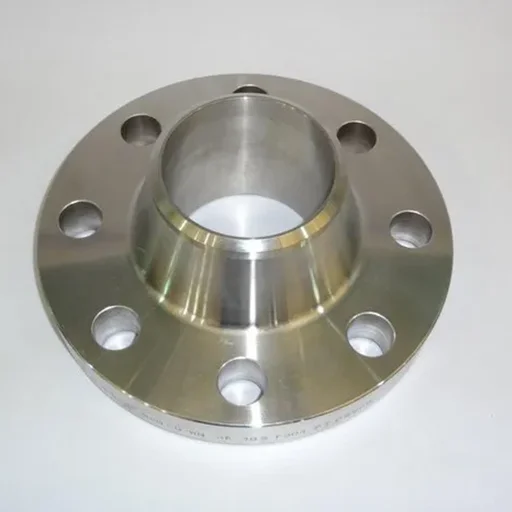
ASTM A182 F22 Weld Neck Flanges (WN)
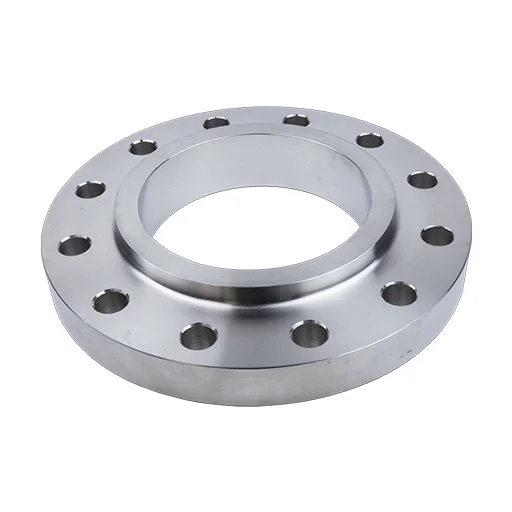
ASTM A182 F22 Slip-On Flanges (SO)
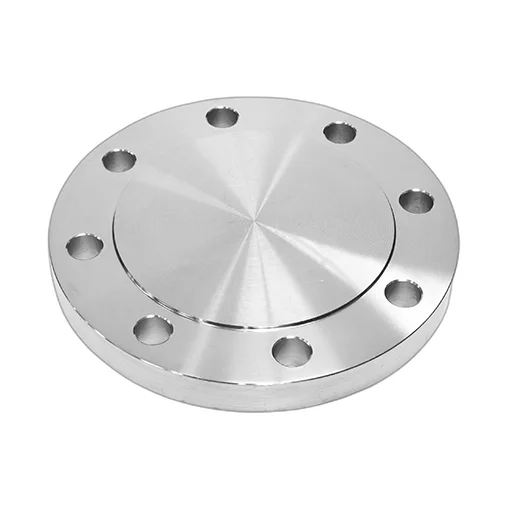
ASTM A182 F22 Blind Flanges (BL)
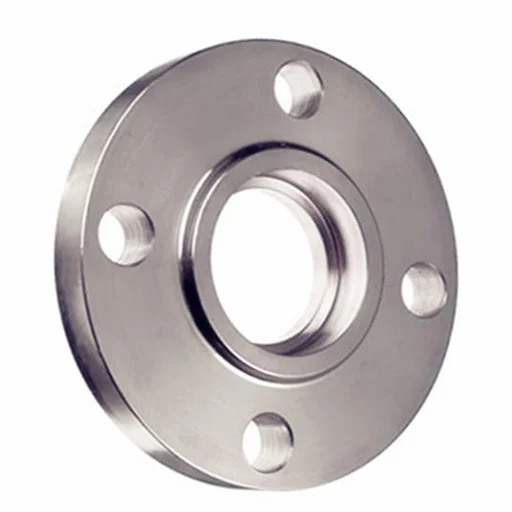
ASTM A182 F22 Socket Weld Flanges (SW)
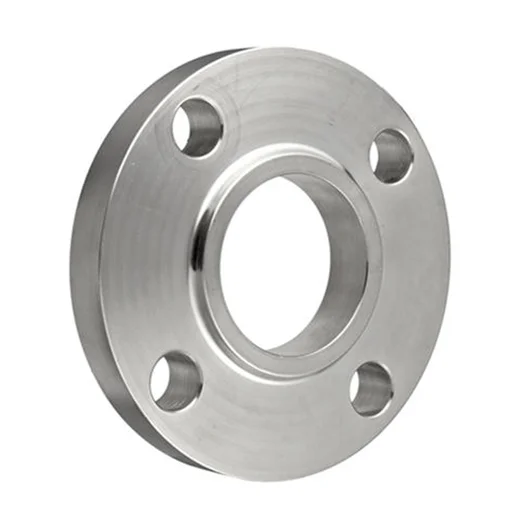
ASTM A182 F22 Lap Joint Flanges (LJ)
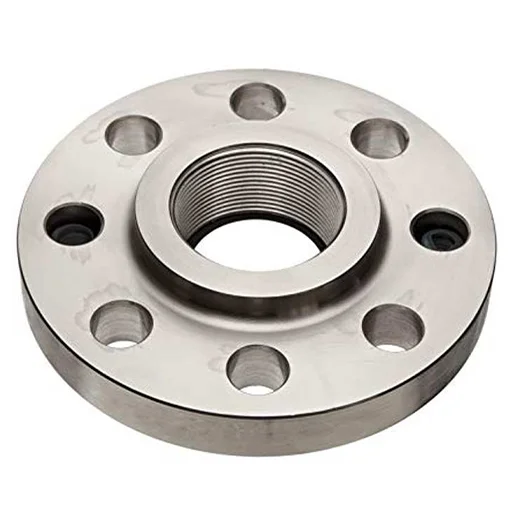
ASTM A182 F22 Threaded Flanges (TH)
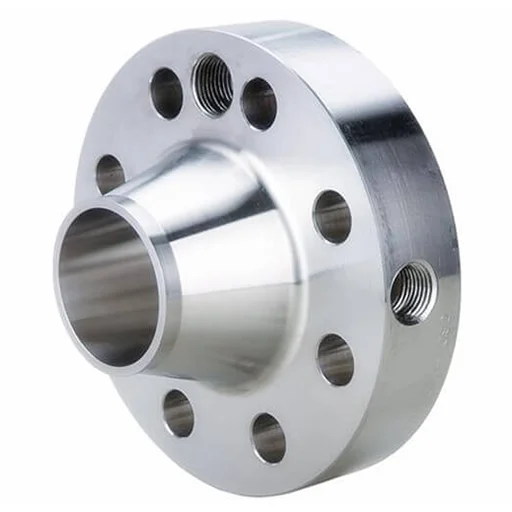
ASTM A182 F22 Orifice Flanges
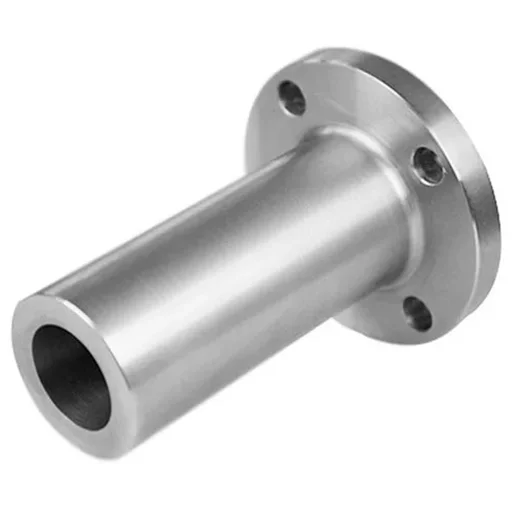
ASTM A182 F22 Long Weld Neck Flanges
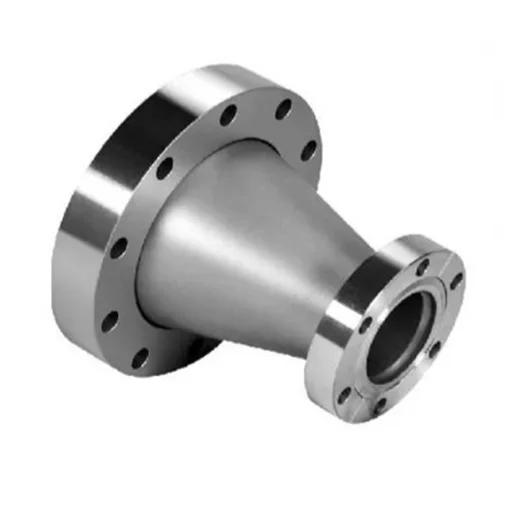
ASTM A182 F22 Reducing Flanges
Standard Flange Sizes & Weight Chart
ASTM A182 F22 Weld Neck Flange Dimensions (ANSI B16.5) - Class 600 Sample
| NPS | Outside Diameter (mm) | Thickness (mm) | Bore (mm) | Hub Dia (mm) | Bolt Circle (mm) | No. of Bolts | Bolt Dia | Approx Weight (kg) |
|---|---|---|---|---|---|---|---|---|
| 1/2" | 95 | 16 | 21 | 41 | 66 | 4 | M16 | 0.90 |
| 1" | 124 | 21 | 33 | 57 | 89 | 4 | M19 | 1.85 |
| 2" | 165 | 25 | 60 | 84 | 127 | 8 | M19 | 4.00 |
| 4" | 273 | 32 | 114 | 146 | 216 | 8 | M25 | 13.2 |
| 6" | 356 | 38 | 168 | 210 | 270 | 12 | M25 | 27.9 |
| 8" | 419 | 41 | 219 | 270 | 330 | 12 | M28 | 44.2 |
| 10" | 508 | 48 | 273 | 330 | 403 | 16 | M32 | 75.8 |
| 12" | 559 | 52 | 324 | 381 | 476 | 20 | M32 | 103.0 |
| 16" | 711 | 64 | 419 | 495 | 603 | 20 | M38 | 195.0 |
| 20" | 838 | 70 | 508 | 603 | 724 | 24 | M38 | 300.0 |
| 24" | 991 | 78 | 610 | 705 | 838 | 24 | M45 | 447.0 |
Is ASTM A182 F22 Good Quality for Severe High-Temperature Service?
Yes, ASTM A182 F22 is the superior chromium-molybdenum alloy steel grade of harsh high-temperature service needs the highest creep strength at temperatures to 649degC (1200degF). Its 2.25% Chromium and 1% Molybdenum content- twice the alloy content of F11 (1.25Cr-0.5Mo) gives much higher heat-rise mechanical properties, and F22 is the material of choice in the most challenging high-temperature tasks in power generation and petrochemical industries.
Increased chromium level (2.25% vs 1.25) is used to increase the oxidation and scaling resistance creating a layer of chromium oxide at the extreme temperature, which is more protective. The higher molybdenum (1% vs 0.5%)-level gives the creep strength- resisting permanent deformation in sustained stress at elevated temperature- an impressive performance and high hydrogen attack, sulfidation and high temperature corrosion. This high creep strength enables F22 to stay in structural integrity and maintain pressure-containing functionality even at temperatures that F11 and carbon steels cannot stand.
F22 is given in the most demanding high temperature parts; power plant superheater and reheater headers, high-temperature steam piping in supercritical and ultra-supercritical boilers, in refinery hydrocracker reactor effluent systems, delayed coking units, catalytic reforming units, and petrochemical thermal cracking. The material has sufficient allowable stress values of 649degC (1200degF) in accordance with ASME Section II Part D Part D but F11 is restricted to 593degC (1100degF).
The Class 1 (lower carbon 0.05-0.15) is most generally given as a specification due to its great weldability and toughness without losing significant strength at high temperatures. Class 3 has more carbon (0.10-0.20) and vanadium (0.15-0.30) to achieve the highest levels of creep strength in the most extreme conditions. F22 is the production alloy steel of severe service with high temperatures - above 649degC, increase to F91 (9Cr-1Mo) or F92 (9Cr-2Mo) advanced ferritic steels.
Heat Treatment & Testing Requirements
Heat Treatment Process
| Step | Temperature Range | Cooling / Notes |
| Normalizing + Tempering (Standard / Mandatory) | ||
| Normalizing | 900-980-C (1650-1800-F) | Cool uniformly in still air |
| Tempering | 680-760-C (1250-1400-F) | Adequate holding time, air cool |
| Quenching + Tempering | ||
| Austenitizing | 900-980-C | - |
| Quenching | - | Oil or water quench |
| Tempering | 680-760-C (minimum) | Air cool |
| Stress Relieving | ||
| Stress Relief | 650-700-C | When specified for fabricated components |
Testing & Inspection Requirements
| Test / Inspection | Standard / Requirement | Remarks |
| Tensile Testing | ASTM A370 | Yield strength, tensile strength, elongation, reduction of area |
| Hardness Testing | Brinell hardness | Typical range 163-235 HB (Class 1) |
| PMI Testing | Positive Material Identification | Verification of Cr-Mo content (critical for ASTM A182 F22) |
| Chemical Analysis | Product analysis | Mandatory verification of chromium and molybdenum levels |
| Ultrasonic Testing | ASTM A388 | Commonly specified for critical / pressure applications |
| Hydrostatic Testing | ASTM A961 or MSS SP-44 | As applicable |
| Grain Size Determination | ASTM grain size | When specified for severe service applications |
ASTM A182 F22 Alloy Steel Flanges Price List 2026
| Flange Type | Size Range | Pressure Class | Indicative Price Range (USD/Piece) |
|---|---|---|---|
| Weld Neck (WN) | 1/2" - 2" | 150# | $15 - $42 |
| Weld Neck (WN) | 4" - 8" | 150# | $65 - $275 |
| Weld Neck (WN) | 10" - 24" | 150# | $425 - $1,580 |
| Weld Neck (WN) | 1/2" - 2" | 300# | $22 - $62 |
| Weld Neck (WN) | 4" - 8" | 300# | $105 - $425 |
| Weld Neck (WN) | 10" - 24" | 300# | $620 - $2,250 |
| Weld Neck (WN) | 1/2" - 2" | 600# | $35 - $95 |
| Weld Neck (WN) | 4" - 8" | 600# | $175 - $620 |
| Slip-On (SO) | 1/2" - 2" | 150# | $12 - $35 |
| Slip-On (SO) | 4" - 8" | 150# | $52 - $220 |
| Blind (BL) | 1/2" - 2" | 150# | $11 - $32 |
| Blind (BL) | 4" - 8" | 150# | $58 - $245 |
| Socket Weld (SW) | 1/2" - 2" | 150# - 600# | $18 - $78 |
Note: A182 F22 flanges are typically 100-140% higher than A105 and 15-25% higher than F11 due to higher alloy content and severe service requirements.
Applications of ASTM A182 F22 Flanges in Industry
- Power Generation: supercritical and ultra-supercritical boiler superheater/reheater header, main steam piping over 538 o C, hot reheat system.
- Refinery: Hydrocracker reactor effluent, delayed coking units, catalytic reforming high-temperature units, visbreaking units.
- Petrochemical: Ethylene cracker furnace outlets, thermal cracking unit, high temperature distillation, steam super heating.
- Hydrogen Service: Hydrogen production, high-temperature; reformer tubes, high-temperature hydrogen distribution above 400 o C.
- Steam Systems: High-pressure superheated steam >538 o C, supercritical steam systems, steam turbine inlet piping.
- Chemical Processing: High temperature reactors, ammonia synthesis converters, high temp methanol productions.
- Oil and Gas: high-temperature wellhead equipment, steam injection, Thermal enhanced oil recovery steam generation.
Why Choose ASTM A182 F22 Flanges from Metinox Overseas?
Metinox Overseas is offers certified high-quality chromium-molybdenum alloy steel flanges, which are mandatory heat-treated, alloy content verified, and severe high-temperature operating, to meet the needs of the most critical power plant and refinery applications. Our ISO 9001:2015 and ASME certified locations will have all of the F22 flange subjected to appropriate normalizing and tempering heat treatment with recorded temperature regulation, soaking periods, and metallurgical inspection.
Each flange has EN 10204 3.1B Mill Test Certificates (with complete chemical analysis and Cr (1.90-2.60%) and Mo (0.87-1.13) contents accurately verified by optical emission spectroscopy), tensile test data (yield 30 ksi or higher (Class 1) or 65 ksi or higher (Class 3)) and tensile (75 ksi or higher) and elongation (20% or greater) data, reduction of area (35) data, hard
Our NABL-certified metallurgical laboratory offers full testing such as PMI verification (important to F22 to ensure Cr-Mo content), tensile testing as per ASTM A370, ultrasonic testing as per ASTM A388 (critical applications require), macro-etch testing, and microstructural testing to ensure that proper heat treatment is performed.
Our technical team has considerable experience in providing F22 flanges to supercritical power plants, refinery high-temperature units, and petrochemical thermal crackers around the globe and is well-positioned to provide expert advice regarding the choice of materials in the F22 vs F11 vs F91 dilemma, welding of 2.25Cr-1Mo steels, including preheat (200-260 C min) and required PWHT (680-760 C), creep-rupture data and allowable stress values per AS
Distributing quality assurance and ensuring reliability in delivery of high-temperature applications of mission-critical priority to power generation companies, large refineries, EPC contractors, and petrochemical facilities in more than 60 countries.
ASTM A182 F22 Flange Delivery Time & CIF Pricing by Country
| Destination Region | Major Ports / Cities | Estimated Delivery Time | Typical CIF Terms |
|---|---|---|---|
| Middle East (GCC) | Dubai, Dammam, Doha, Muscat, Kuwait | 10-14 Days | CIF Dubai / CIF Dammam |
| Europe | Rotterdam, Hamburg, Antwerp | 24-30 Days | CIF Rotterdam / CIF Hamburg |
| USA & Canada | Houston, New York, Los Angeles | 30-38 Days | CIF Houston / CIF New York |
| Southeast Asia | Singapore, Port Klang, Manila | 14-20 Days | CIF Singapore / CIF Port Klang |
| Africa | Lagos, Durban, Mombasa | 20-28 Days | CIF Lagos / CIF Durban |
Other Types of Alloy Steel A182 F22 Flanges
ASTM A182 F22 Class 1 Flanges, A182 F22 Class 3 Flanges, Cr-Mo F22 Weld Neck Flanges, 2.25Cr-1Mo Slip-On Flanges, ASME SA182 F22 Blind Flanges, A182 F22 Socket Weld Flanges, F22 Threaded Flanges, High-Temperature F22 Flanges, F22 Power Plant Flanges, F22 Superheater Flanges.
Popular Locations Where We Supply ASTM A182 F22 Flanges
astm a182 f22 flanges supplier in singapore, a182 f22 alloy steel flanges suppliers in qatar, f22 cr-mo flanges suppliers in uae, astm a182 f22 flanges suppliers in chennai, a182 f22 weld neck flanges in mumbai, asme sa182 f22 flanges price list, 2.25cr-1mo flanges exporter.
People Also Search For
astm a182 f22 alloy steel flanges manufacturer, a182 f22 class 1 flanges supplier, 2.25cr-1mo flanges exporter, astm a182 f22 weld neck flanges, f22 high-temperature flanges, a182 f22 vs f11 difference, astm a182 f22 flanges price list 2026, f22 superheater flanges, f22 power plant flanges.
Frequently Asked Questions (FAQ)
F22 has 2.25% Chromium and 1% Molybdenum compared to 1.25Cr-0.5Mo in F11, which gives it higher creep strength at elevated temperatures. F22 is rated up to 649-C (1200-F) versus 593-C (1100-F) for F11. F22 performs significantly better above 538-C, making it suitable for supercritical power plants and extreme refinery services.
As per ASME B16.5, the maximum continuous operating temperature of F22 is 649-C (1200-F). Permissible stress values at this temperature comply with ASME Section II Part D. For temperatures beyond this, advanced grades like F91 (9Cr-1Mo-V-Nb) are recommended due to superior creep resistance.
F22 should be selected when operating temperatures exceed 538-C (1000-F), particularly in supercritical or ultra-supercritical power plants, creep-critical applications, or where mandated by ASME B31.1 or project specifications. F22 typically costs 15-25% more than F11 but is essential for severe high-temperature service.
Yes, post-weld heat treatment is mandatory between 680-760-C (1250-1400-F) as per ASME B31.1 and B31.3. Minimum preheat of 200-260-C is required. PWHT improves microstructure, relieves residual stresses, and enhances creep resistance at high temperatures.
Recommended fillers include SMAW: E9018-B3 or E10018-D2, GMAW: ER90S-B3, GTAW: ER90S-B3, SAW: F9A2-EM12K or F10A2-EM12K. Minimum preheat of 200-260-C, interpass =315-C, and mandatory PWHT at 680-760-C are required. Filler metals must match Cr-Mo chemistry of base metal.
Yes, F22 offers excellent resistance to high-temperature hydrogen attack (HTHA) as per API 941 Nelson Curves. It is widely used in refinery hydroprocessing units operating under high hydrogen pressure and temperature, outperforming F11 above 400-C.
Class 1 has reduced carbon (0.05-0.15) for improved weldability and yield strength of 205 MPa (30 ksi). Class 3 contains higher carbon (0.10-0.20) and vanadium (0.15-0.30), achieving maximum creep strength with yield up to 450 MPa (65 ksi). Class 1 is most common; Class 3 is used for severe creep-critical service.
F91 (9Cr-1Mo-V-Nb) contains higher chromium, providing superior creep strength, oxidation resistance, and thermal fatigue resistance. F91 supports higher long-term strength in ultra-supercritical power plants but requires stricter heat treatment and welding. F22 is more economical and simpler to fabricate.
Impact testing is not mandatory under ASTM A182 but is often specified for low-temperature service or critical applications. When required, Charpy testing is conducted at ambient or design minimum temperature to verify adequate toughness after heat treatment.