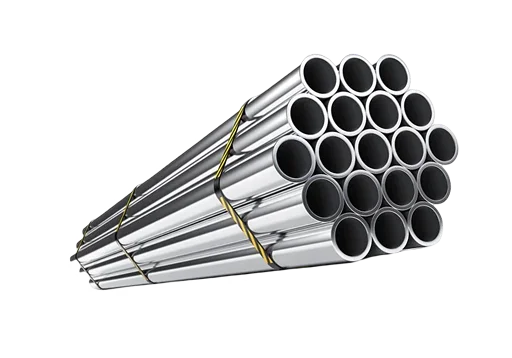
NICKEL-CHROMIUM-MOLYBDENUM-NIOBIUM ALLOY FLANGES MANUFACTURER & SUPPLIER.webp)
Alloy 625 (Inconel 625) Nickel-Chromium-Molybdenum-Niobium Alloy Flanges Manufacturer & Supplier
Metinox Overseas is one of the largest manufacturers and distributors of Alloy 625 (Inconel 625) Nickel-Chromium-Molybdenum-Niobium Alloy Flanges that are also used in the most challenging corrosive and high-temperature conditions, providing superior resistance to pitting, crevice corrosion, oxidation, and exceptional high-temperature strength. Our ASTM B564 UNS N06625 Forged Flanges are manufactured using high quality nickel based superalloy with balanced chemical composition of nickel (minimum 58 percent), chromium (20.0-23.0 percent), molybdenum (8.0-10.0 percent), and niobium (3.15-4.15 percent) which offers a combination of unique mix of aqueous corrosion resistance, high temperature strength, and oxidation resistance. They are Alloy 625 Flanges (Inconel 625) designed to suit optimally in extreme service environments of -196-C (-320-F) down to 1095-C (2000-F), and so provide the best performance in offshore oil and gas platforms (seawater service), chemical processing plants with oxidizing and reducing environments, aerospace components, marine engineering equipment, nuclear reactor components, pollution control equipment, gas turbine components, and high-stress and chloride-induced corrosion environments.
The presence of high nickel (minimum 58%), chromium (20-23%), molybdenum (8-10%), and niobium (3.15-4.15%) also gives Alloy 625 an excellent resolution to oxidizing and reducing conditions, remarkably high resistance to pitting and crevice corrosion (PREN = 51-54), elimination of the chloride stress corrosion cracking and high strength at high temperatures due to solid solution strengthening without additional heat treatment of precipitation hardening. The niobium addition gives age hardening ability in case of special use and helps in creep resistance in high temperatures. Weld Neck Flanges of the A564 series A and B are manufactured in full ANSI/ASME B16.5 (1/2 to 24 inch NB) and ASME B16.47 Series A and B (26 to 60 inch NB), in pressure classes of 150 to 2500 pounds per square inch (517 to 17000 kg/cm-) in accordance with the ANSI/ASME dimensional standards. Every flange will be subjected to stringent quality test, such as dimensional inspection, PMI verification, tensile checks, Charpy impact testing, hardness tests, ferrite tests (must be ferrite free) and ultrasonic examination is required as stipulated by ASTM B564.

Table of Contents
- Alloy 625 Flanges Technical Specifications
- Alloy 625 Equivalent Grades
- Alloy 625 Chemical Composition
- Mechanical Properties of Alloy 625 Flanges
- Alloy 625 Flange Dimensions & Pressure Rating Chart
- Types of Alloy 625 Flanges Available
- Standard Flange Sizes & Weight Chart
- Is Alloy 625 Good Quality for Offshore and High-Temperature Service?
- Heat Treatment & Testing Requirements
- Alloy 625 Nickel-Chromium-Molybdenum-Niobium Alloy Flanges Price List 2026
- Applications of Alloy 625 Flanges in Industry
- Why Choose Alloy 625 Flanges from Metinox Overseas?
- Alloy 625 Flange Delivery Time & CIF Pricing by Country
- Other Types of Alloy 625 Flanges
- Popular Locations Where We Supply Alloy 625 Flanges
- Frequently Asked Questions (FAQ)
Alloy 625 Flanges Technical Specifications
| Feature | Details |
| Specifications | ASTM B564 / ASME SB564 / AMS 5666 |
| Grade | UNS N06625 (Inconel 625, Alloy 625) |
| Material Designation | Nickel-Chromium-Molybdenum-Niobium Alloy (Ni-Cr-Mo-Nb) |
| UNS Number | N06625 |
| Dimensional Standards | ANSI/ASME B16.5, B16.47 Series A & B, B16.48, MSS SP-44 |
| Size Range | 1/2" (15 NB) to 60" (1500 NB) |
| Pressure Class | 150#, 300#, 400#, 600#, 900#, 1500#, 2500# (B16.5); 75#, 150#, 300#, 400#, 600#, 900# (B16.47) |
| Flange Types | Weld Neck, Slip-On, Blind, Socket Weld, Lap Joint, Threaded, Orifice, Long Weld Neck, Reducing |
| Flange Face | Raised Face (RF), Flat Face (FF), Ring Type Joint (RTJ), Male & Female, Tongue & Groove |
| Manufacturing Type | Hot Forged |
| Microstructure | Austenitic (FCC) Solid Solution (Solution Annealed) |
| Heat Treatment | Solution Annealed at 1040-1120-C + Rapid Water Quench (Mandatory) |
| Testing | Tensile, Hardness, Impact, PMI, Ferrite Detection, Ultrasonic |
| Inspection | Third Party Inspection by TUV, SGS, Bureau Veritas, Lloyd's, DNV GL, BV, ABS |
| Certifications | EN 10204 3.1B MTC, NACE MR0175/ISO 15156, PED 2014/68/EU, CE Marked, ASME B31.3 |
Alloy 625 Equivalent Grades
| Standard | USA | Germany | Europe | Japan | India | UK | China |
| Inconel 625 | ASTM B564 N06625 | 2.4856 | 2.4856 | NCF 625 | - | NA 21 | GH625 |
| UNS N06625 | NiCr22Mo9Nb | NiCr22Mo9Nb | GH3625 | ||||
| Inconel 625 | Inconel 625 | Inconel 625 |
Note: Inconel 625 is a registered trademark of Special Metals Corporation. Equivalent designations include Alloy 625, Nickelvac 625, and Nicrofer 6020 hMo.
Alloy 625 Chemical Composition
The detailed composition of this material is given in the following table.
| Element | Composition (%) | Function |
| Nickel (Ni) | 58.0 minimum | Base element, provides corrosion resistance and structural stability |
| Chromium (Cr) | 20.0 - 23.0 | Oxidation and aqueous corrosion resistance, forms protective oxide |
| Molybdenum (Mo) | 8.0 - 10.0 | Outstanding pitting and crevice corrosion resistance |
| Niobium (Nb) + Ta | 3.15 - 4.15 | Solid solution strengthening, age-hardening capability, creep resistance |
| Iron (Fe) | 5.0 max | Controlled addition, contributes to solid solution strengthening |
| Manganese (Mn) | 0.5 max | Improves hot workability |
| Silicon (Si) | 0.5 max | Deoxidizer, controlled to prevent precipitation |
| Carbon (C) | 0.10 max | Minimized to prevent carbide precipitation and maintain weldability |
| Aluminum (Al) | 0.40 max | Age-hardening element (for age-hardened condition only) |
| Titanium (Ti) | 0.40 max | Age-hardening element (for age-hardened condition only) |
| Sulfur (S) | 0.015 max | Minimized for corrosion resistance and hot workability |
| Phosphorus (P) | 0.015 max | Minimized for corrosion resistance |
| Cobalt (Co) | 1.0 max | Controlled as residual element |
Note: Alloy 625 achieves its properties through solid solution strengthening from Mo and Nb, not precipitation hardening (unlike Alloy 718). Solution annealed condition is standard; age-hardening is optional for specialized high-temperature applications.
Mechanical Properties of Alloy 625 Flanges
The mechanical properties decide the shelflife of the material. The table below gives the information about the mechanical properties of Alloy 625 Flanges.
| Property | Requirement (Solution Annealed) | Testing Standard |
| Tensile Strength | 830 MPa (120 ksi) minimum | ASTM E8 |
| Yield Strength (0.2% offset) | 415 MPa (60 ksi) minimum | ASTM E8 |
| Elongation in 2" | 30% minimum | ASTM E8 |
| Hardness (Brinell) | 150-250 HB (typical) | ASTM E10 |
| Hardness (Rockwell C) | =22 HRC (typical) | ASTM E18 |
| Charpy V-Notch Impact | No minimum specified (typically >100 J at RT) | ASTM E23 |
Note: Alloy 625 provides an exceptional combination of high strength (significantly higher than Alloy 600/400) with excellent ductility and toughness from cryogenic to elevated temperatures. Age-hardened condition can achieve yield strength >690 MPa (100 ksi).
Alloy 625 Flange Dimensions & Pressure Rating Chart
Pressure-Temperature Ratings for Alloy 625 Flanges (ASTM B564 N06625)
| Temperature -F (-C) | Class 150 | Class 300 | Class 600 | Class 900 | Class 1500 | Class 2500 |
|---|---|---|---|---|---|---|
| -20 to 100 (-29 to 38) | 290 psi | 750 psi | 1500 psi | 2250 psi | 3750 psi | 6250 psi |
| 200 (93) | 290 psi | 750 psi | 1500 psi | 2250 psi | 3750 psi | 6250 psi |
| 400 (204) | 275 psi | 713 psi | 1425 psi | 2138 psi | 3250 psi | 5938 psi |
| 600 (316) | 260 psi | 675 psi | 1350 psi | 2025 psi | 3375 psi | 5625 psi |
| 800 (427) | 240 psi | 623 psi | 1245 psi | 1868 psi | 3113 psi | 5188 psi |
| 1000 (538) | 220 psi | 570 psi | 1140 psi | 1710 psi | 2850 psi | 4750 psi |
| 1200 (649) | 200 psi | 518 psi | 1035 psi | 1553 psi | 2588 psi | 4313 psi |
| 1400 (760) | 170 psi | 440 psi | 880 psi | 1320 psi | 2200 psi | 3665 psi |
| 1600 (871) | 130 psi | 338 psi | 675 psi | 1013 psi | 1688 psi | 2813 psi |
| 1800 (982) | 95 psi | 246 psi | 493 psi | 740 psi | 1233 psi | 2055 psi |
| 2000 (1093) | 70 psi | 182 psi | 363 psi | 545 psi | 908 psi | 1513 psi |
Note: Alloy 625 maintains excellent strength retention at elevated temperatures due to solid solution strengthening, making it superior to Alloy 600 for high-temperature structural applications above 650-C.
Types of Alloy 625 Flanges Available
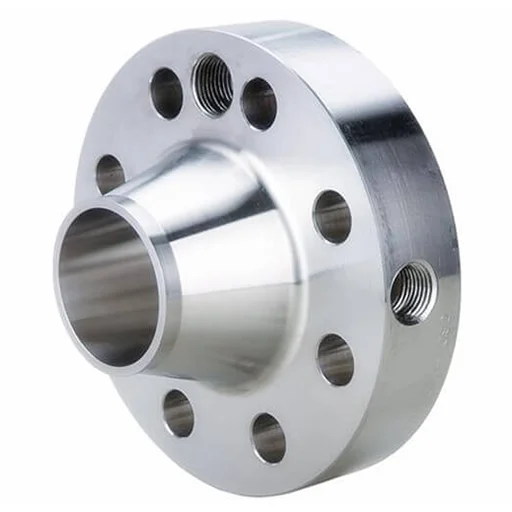
Alloy 625 Orifice Flange
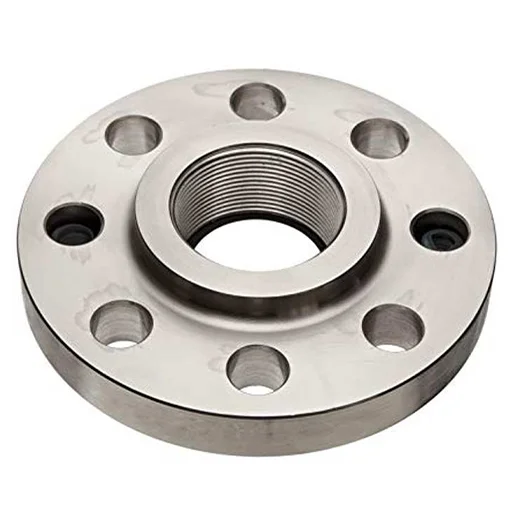
Alloy 625 Threaded Flange
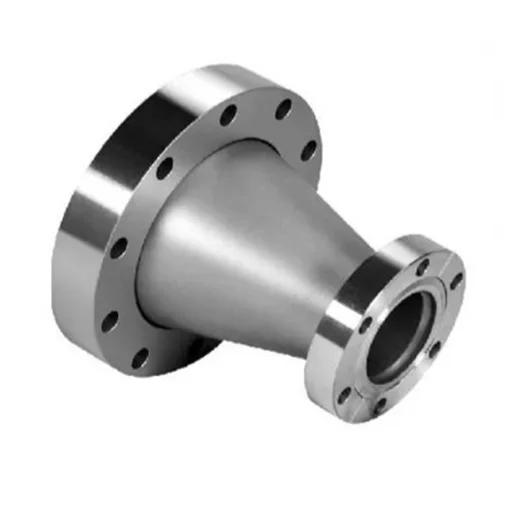
Alloy 625 Reducing Flange
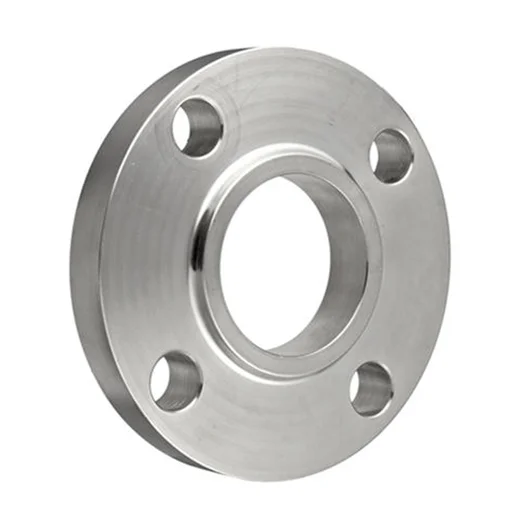
Alloy 625 Lap Joint Flange
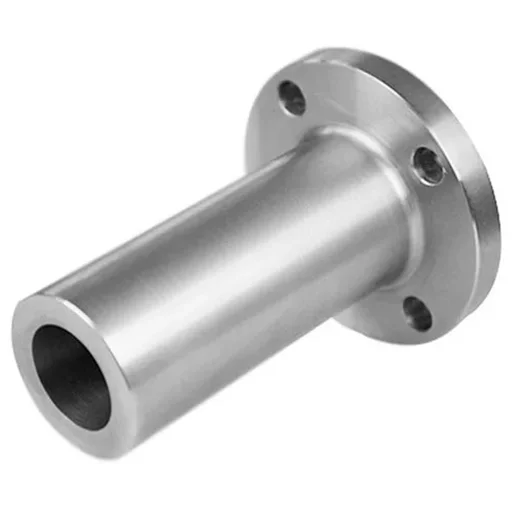
Alloy 625 Long Weld Neck Flange
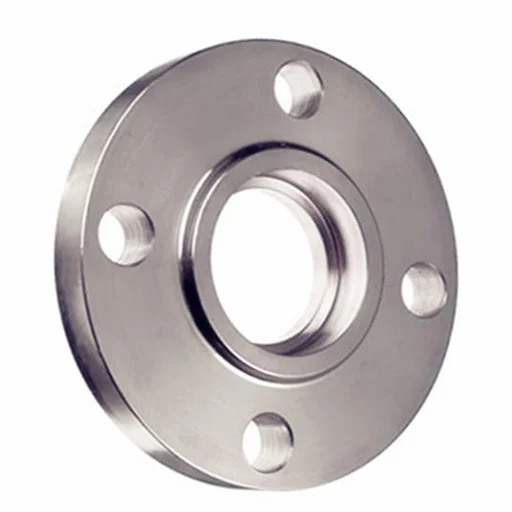
Alloy 625 Socket Weld Flange
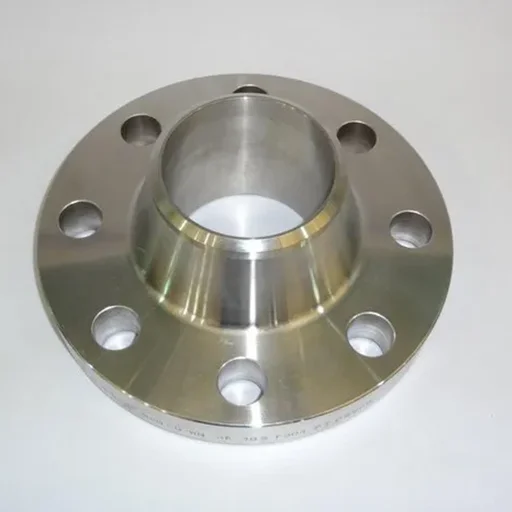
Alloy 625 Weld Neck Flange
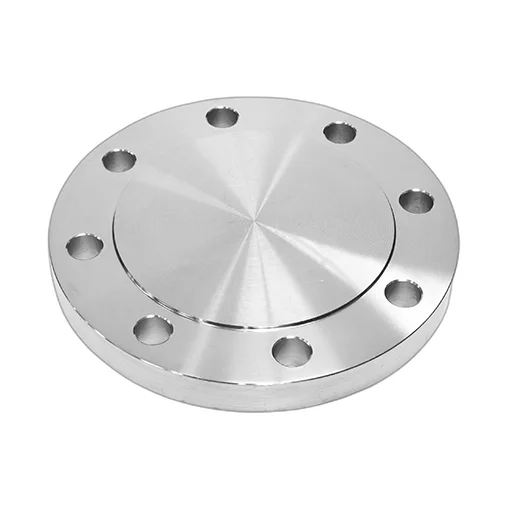
Alloy 625 Blind Flange
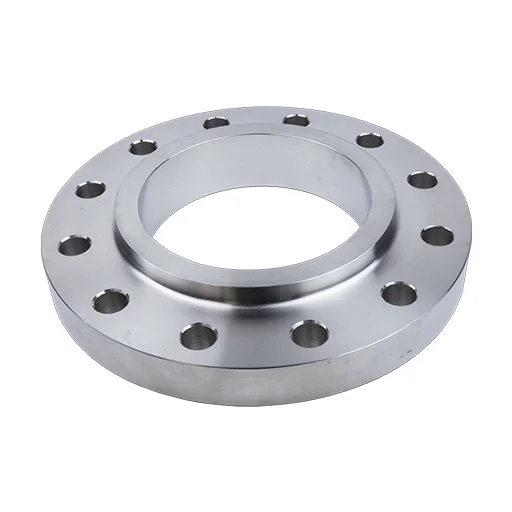
Alloy 625 Slip-On Flange
Standard Flange Sizes & Weight Chart
Alloy 625 Weld Neck Flange Dimensions (ANSI B16.5) - Class 600 Sample
| NPS | Outside Diameter (mm) | Thickness (mm) | Bore (mm) | Hub Dia (mm) | Bolt Circle (mm) | No. of Bolts | Bolt Dia | Approx Weight (kg) |
|---|---|---|---|---|---|---|---|---|
| 1/2" | 95 | 16 | 21 | 41 | 66 | 4 | M16 | 0.93 |
| 1" | 124 | 21 | 33 | 57 | 89 | 4 | M19 | 1.91 |
| 2" | 165 | 25 | 60 | 84 | 127 | 8 | M19 | 4.20 |
| 4" | 273 | 32 | 114 | 146 | 216 | 8 | M25 | 13.7 |
| 6" | 356 | 38 | 168 | 210 | 270 | 12 | M25 | 29.2 |
| 8" | 419 | 41 | 219 | 270 | 330 | 12 | M28 | 46.3 |
| 10" | 508 | 48 | 273 | 330 | 403 | 16 | M32 | 79.6 |
| 12" | 559 | 52 | 324 | 381 | 476 | 20 | M32 | 108.0 |
| 16" | 711 | 64 | 419 | 495 | 603 | 20 | M38 | 204.0 |
| 20" | 838 | 70 | 508 | 603 | 724 | 24 | M38 | 314.8 |
| 24" | 991 | 78 | 610 | 705 | 838 | 24 | M45 | 467.8 |
Note: Alloy 625 density is approximately 8.44 g/cm-, similar to other nickel-based alloys.
Is Alloy 625 Good Quality for Offshore and High-Temperature Service?
Yes, Alloy 625 (Inconel 625) is commonly considered the best nickel based superalloy in the toughest offshore oil and gas, chemical processing, and high-temperature tools where the combination of aqueous corrosion and high-temperature strength with oxidation resistance exceeds that of virtually all other easily available materials. The International Nickel Company (now Special Metals Corporation) initially developed Inconel 625 in the 1960s to meet the need of a material capable of accommodating extreme corrosive conditions as well as high temperatures, and has since become the material of choice in critical components of industries in the offshore, aerospace, and chemical processing sectors as well as power generation.
The high chromium content (20-23%) combined with high molybdenum (8-10%) and niobium (3.15-4.15%) makes the Alloy 625 have the exceptional corrosion resistance. This composition gives a Pitting Resistance Equivalent Number (PREN) of about 51-54, PREN = (%Cr + 3.3-%Mo + 16-%N). This is a much higher PREN than that of super austenitic stainless steel, such as 254 SMO (PREN ~43) and super duplex grades such as 2507 (PREN ~42-43), thus Alloy 625 is one of the most pit and crevice corrosion-resistant commercially available alloys. The extreme nickel concentration (minimum 58%) gives complete resistance to chloride stress corrosion cracking, one of the fatal failure modes of austenitic stainless steels in the maritime water and chloride process settings.
Alloy 625 has been demonstrated to work in the harshest offshore oil and gas conditions. The alloy shows a high resistance to seawater corrosion in all depths, in deep water (>1500m) and ultra-deep water (>3000m) where high hydrostatic pressures, low temperatures and complex chemistry are demanding of other alloys. Alloy 625 has virtually no resistance to hydrogen sulfide (H2S) stress cracking and it is thus suitable to sour service conditions. The alloy is resistant to pitting and crevice corrosion in sea water even stagnant water and has corrosion resistance in the presence of CO2 and the presence of organic acids and other wastes that are likely to be present in produced fluids. Alloy 625 is frequently employed in subsea in wellhead components, subsea manifolds, control systems, umbilicals, fasteners and in valve internals.
This is because the molybdenum and niobium solid solution strengthening of Alloy 625 is achieved through solid solution hardening, as opposed to precipitation hardening (as in Alloy 718, which needs annealing to become hardened). This implies that Alloy 625 in the solution annealed form has a great strength at the high temperatures and can still possess a high level of ductility and weldability. Alloy 625 has much higher creep-rupture strength at temperatures above 650-C, than Alloy 600, and thus can be used in structural applications in gas turbines, heat exchangers and industrial furnaces. The alloy has a useful strength up to 1095 degrees Celsius and it has a good oxidation resistance in air and combustion gases.
In chemical processing, Alloy 625 has a wide corrosion resistance in both oxidizing and reducing environments - a combination hard to find. The alloy is resistant to oxidizing chloride solutions (ferric chloride, cupric chloride), wet chlorine gas, hypochlorites, and chlorine dioxide, and is also a good resister against reducing environments, such as hydrochloric acid at moderately high concentration and temperature, and sulfuric acid under some conditions. It is this versatility that allows Alloy 625 to be used in multipurpose chemical processing equipment. The alloy is also quite impervious to organic acids, basic solutions and acid mixtures.
Alloy 625 is used in offshore oil and gas (subsea wellheads, manifolds, control systems, umbilicals, fasteners), seawater service piping and heat exchangers, chemical processing equipment (oxidizing chloride environment), pollution control equipment (flue gas desulfurization, wet scrubbers), nuclear reactor components (control rod drive mechanisms), aerospace components (exhaust systems, thrust reversers), marine engineering (propulsion systems, seawater piping), power generation (gas turbine transition ducts, ducting) and petrochemical plants (ethylene crackers, quench systems). The alloy is certified as NACE MR0175/ISO 15156 to sour service, and is commonly used as specifications in ASME B31.3 Process Piping Code.
The first disadvantage of Alloy 625 is that it is very expensive because of its price in comparison with stainless steels and other nickel alloys. Where not required, less expensive substitutes can be appropriate in their applications where the extreme corrosion resistance or high temperature strength of Alloy 625 is not needed. Even more extreme environments (huge chloride with oxidising conditions) may be solved with special alloys, such as C-22 or C-276, however with incremental improvements but at even higher costs. To achieve the maximum strength needed at high temperatures (above 650-C) in structural workload, age hardened Alloy 718 is used in higher strength, but it has a decrease in corrosion resistance and weldability. Nevertheless, in the case of a combination of aqueous corrosion resistance, high-temperature strength, and weldability Alloy 625 is the best compromise of properties and the most commonly specified premium nickel alloy.
Heat Treatment & Testing Requirements
Heat Treatment Requirements (Mandatory - Strict Control Required):
| Process | Step / Parameter | Requirement | Remarks / Critical Notes |
| Solution Annealing + Rapid Quenching | Solution Annealing Temperature | 1040-1120-C (1900-2050-F) | Optimal: 1040-1095-C for complete carbide dissolution and grain size control. |
| Holding Time | Adequate soaking | Based on section thickness, typically 30 min minimum. | |
| Cooling After Annealing | Rapid water quench | Essential to maintain single-phase austenitic structure. | |
| Critical Cooling Rate | Fast cooling through 980-650-C | Slow cooling causes grain boundary carbide precipitation. | |
| Critical Requirement | - | Ferrite-free structure | Must be fully austenitic; no ferrite allowed (verify with ferrite detector). |
| Optional Age Hardening | Age Hardening Temperature | 760-C for 8-24 hours | Optional for specialized high-temperature strength applications (not standard). |
Testing & Inspection Requirements (Comprehensive):
| Test / Inspection | Standard / Requirement | Acceptance / Remarks |
| Tensile Testing | ASTM E8 | Yield =60 ksi (415 MPa), Tensile =120 ksi (830 MPa), Elongation =30% |
| Hardness Testing | ASTM E10 / E18 | Typical 150-250 HB (=22 HRC) |
| Charpy Impact Testing | ASTM E23 | Excellent toughness from cryogenic to elevated temperatures |
| PMI Testing | Positive Material Identification | Verification of Ni (=58%), Cr (20-23%), Mo (8-10%), Nb (3.15-4.15%) |
| Ferrite Detection | Ferritescope / Magnetic test | Must be ferrite-free (0% ferrite); fully austenitic structure required |
| Ultrasonic Testing | ASTM A388 | Mandatory for critical offshore and high-temperature applications |
| Pitting Corrosion Testing | ASTM G48 Method A (optional) | Verification of PREN and chloride resistance |
Alloy 625 Nickel-Chromium-Molybdenum-Niobium Alloy Flanges Price List 2026
| Flange Type | Size Range | Pressure Class | Indicative Price Range (USD/Piece) |
|---|---|---|---|
| Weld Neck (WN) | 1/2" - 2" | 150# | $125 - $315 |
| Weld Neck (WN) | 4" - 8" | 150# | $535 - $2,015 |
| Weld Neck (WN) | 10" - 24" | 150# | $3,180 - $11,450 |
| Weld Neck (WN) | 1/2" - 2" | 300# | $185 - $465 |
| Weld Neck (WN) | 4" - 8" | 300# | $805 - $2,895 |
| Weld Neck (WN) | 10" - 24" | 300# | $4,580 - $16,450 |
| Weld Neck (WN) | 1/2" - 2" | 600# | $275 - $685 |
| Weld Neck (WN) | 4" - 8" | 600# | $1,255 - $4,325 |
| Slip-On (SO) | 1/2" - 2" | 150# | $102 - $255 |
| Slip-On (SO) | 4" - 8" | 150# | $435 - $1,615 |
| Blind (BL) | 1/2" - 2" | 150# | $88 - $225 |
| Blind (BL) | 4" - 8" | 150# | $455 - $1,805 |
| Socket Weld (SW) | 1/2" - 2" | 150# - 600# | $138 - $585 |
Applications of Alloy 625 Flanges in Industry
The Alloy 625 Nickel-Chromium-Molybdenum-Niobium Alloy Flanges are commonly used in many industrial applications, and some of the common industries are given below.
Offshore Oil & Gas
Subsea wellheads, manifolds, control systems, umbilicals, flowlines, risers
Marine Engineering
Seawater piping, propulsion systems, heat exchangers, fasteners
Chemical Processing
Oxidizing chloride service, wet chlorine handling, multipurpose reactors
Pollution Control
Flue gas desulfurization (FGD) systems, wet scrubbers, stack liners
Nuclear Power
Reactor control rod drive mechanisms, core components
Aerospace
Exhaust systems, thrust reversers, ducting, afterburner components
Power Generation
Gas turbine transition ducts, combustor components, heat recovery systems
Petrochemical
Ethylene cracking furnace tubes, quench systems, high-temperature piping
Why Choose Alloy 625 Flanges from Metinox Overseas?
Metinox Overseas provides certified Alloy 625 (Inconel 625) nickel-chromium-molybdenum-niobium alloy flanges with precise solution annealing and rapid water quenching, comprehensive testing including ferrite detection ensuring fully austenitic structure, for offshore oil and gas, chemical processing, and high-temperature applications demanding the ultimate combination of corrosion resistance and strength. We maintain ISO 9001:2015, NACE MR0175/ISO 15156, and PED certified manufacturing facilities, where all Alloy 625 flanges undergo controlled solution annealing at 1040-1095-C followed by rapid water quenching with complete time-temperature documentation.
All flanges are supplied with EN 10204 3.1B Mill Test Certificates featuring full chemical analysis including Ni (=58%), Cr (20-23%), Mo (8-10%), Nb (3.15-4.15%), complete tensile properties (tensile =120 ksi, yield =60 ksi, elongation =30%), hardness verification (150-250 HB), ferrite detection confirming 0% ferrite (fully austenitic), PREN calculation (=51), and PMI verification ensuring correct alloy composition.
Our technical department provides expert guidance on Alloy 625 material selection for offshore subsea equipment, seawater service piping, chemical processing environments, and high-temperature applications, corrosion data for chloride environments and mixed acids, high-temperature strength data up to 1095-C, welding procedures (matching filler metal AWS A5.14 ERNiCrMo-3, no preheat required), NACE MR0175/ISO 15156 compliance for sour service, and ASME B31.3 Process Piping Code requirements. We serve the specialized needs of offshore platforms, subsea equipment manufacturers, chemical processing plants, aerospace manufacturers, power generation facilities, and marine engineering companies worldwide.
Alloy 625 Flange Delivery Time & CIF Pricing by Country
| Destination Region | Major Ports / Cities | Estimated Delivery Time | Typical CIF Terms |
|---|---|---|---|
| Middle East (GCC) | Dubai, Dammam, Doha | 14-18 Days | CIF Dubai / CIF Dammam |
| Europe | Rotterdam, Hamburg | 28-35 Days | CIF Rotterdam / CIF Hamburg |
| USA & Canada | Houston, New York | 35-45 Days | CIF Houston / CIF New York |
| Southeast Asia | Singapore, Port Klang | 18-25 Days | CIF Singapore / CIF Port Klang |
| Africa | Lagos, Durban | 25-35 Days | CIF Lagos / CIF Durban |
Other Types of Alloy 625 Flanges
ASTM B564 N06625 Flanges, UNS N06625 Weld Neck Flanges, Inconel 625 Blind Flanges, Alloy 625 Subsea Flanges, Inconel 625 High-Temperature Flanges, Alloy 625 Sour Service Flanges.
Popular Locations Where We Supply Alloy 625 Flanges
alloy 625 flanges manufacturer, inconel 625 flanges supplier, uns n06625 flanges, inconel 625 subsea flanges price, alloy 625 offshore flanges, inconel 625 vs c276 comparison.
People Also Search For
alloy 625 flanges manufacturer, inconel 625 flanges supplier, uns n06625 flanges, inconel 625 subsea flanges price, alloy 625 offshore flanges, inconel 625 vs c276 comparison.
Looking for High-Quality Alloy 625 Flanges?
Let us support your projects with quality, precision, and performance.
Frequently Asked Questions (FAQ)
We are ISO 9001:2015, NACE MR0175/ISO 15156 and PED certified. Alloy 625 flanges are provided with EN 10204 3.1B Mill Test Certificates to meet the offshore, nuclear, and chemical markets in their entirety.
Solution annealing of flanges is done at 1040-1095-C with rapid quenching by water. We do 100 percent PMI, tensile (=120 ksi) tensile, yield (=60 ksi), hardness (150-250 HB), and Ferritescope tests to ensure 100 percent austenitic ferrite-free structure.
Our Alloy 625 flanges find their application in the offshore subsea machines, seawater piping and chemical plants. They are the best in aerospace, generation and marine engineering, and offer durability at cryogenic temperatures to 1095-C.
Our recommendation is on Welding with AWS A5.14 ERNiCrMo-3 filler metal preheat not required. Material is chloride pitting and mixed acid resistant that beats NACE MR0175/ISO 15156 and ASME B31.3 sour service and process piping standards.
Enquire Now
Get pricing within 24 hours!