NICKEL-CHROMIUM ALLOY FLANGES MANUFACTURER & SUPPLIER.webp)
Alloy 600 (Inconel 600) Nickel-Chromium Alloy Flanges Manufacturer & Supplier
Metinox Overseas is one of the biggest manufacturers and distributers of Alloy 600 (Inconel 600) Nickel-Chromium Alloy Flanges, which is designed to be employed in the environment with high temperature and where its oxidation properties are highly required, high-temperature strength and chloride stress corrosion cracking. Our Forged Flanges made of nickel-chromium-iron alloy are balanced in chemical composition (nickel, minimum 72), chromium (14.0-17.0), and iron (6.0-10.0) with an excellent oxidation, carburization, and chloride SCC resistance. These are Alloy 600 Flanges (Inconel 600) which is specifically designed to serve both high temperature services such as -196 -C (-320 -F), -1095 C (2000 F), and has optimal performance in nuclear power plant steam generator tubing, chemical processing equipment, thermal processing furnace component, heat treating equipment, electronic component manufacturing, gas turbine components, and highly demanding applications that require exceptional high temperature oxidation resistance and stress corrosion cracking resistance even higher than standard stainless steels.
Nickel and chromium (14-17) make Alloy 600 have excellent resistance to oxidizing atmospheres up to 1095 C, excellent resistance to chloride stress corrosion fracture and resistance to intergranular corrosion when well heat treated. The alloy retains good mechanical properties both at cryogenic temperature and elevated temperature with superior creep-rupture strength of up to 650oC. Alloy 600 is specifically strong in high-purity water environment in nuclear utilisation and presents a great resistance to numerous organic and inorganic substances. ASTM B564 Weld Neck Flanges N06600 1/2 to 24 inch and Socket Weld Flanges are manufactured in full ANSI/ASME B16.5 (1/2 to 24 inch NB) and ASME B16.47 Series A and B (26 to 60 inch NB) sizes, in 150 to 2500 pounds pressure classes. All flanges are heat treated through solution annealing in 870-1095 o C heat and then cooled rapidly and undergoed extensive quality tests including dimensional, PMI, tensile, Charpy impact, hardness, stress corrosion cracking, and ultrasonic tests as mandated by ASTM B564.

Table of Contents
- Alloy 600 Flanges Technical Specifications
- Alloy 600 Equivalent Grades
- Alloy 600 Chemical Composition
- Mechanical Properties of Alloy 600 Flanges
- Alloy 600 Flange Dimensions & Pressure Rating Chart
- Types of Alloy 600 Flanges Available
- Standard Flange Sizes & Weight Chart
- Is Alloy 600 Good Quality for High-Temperature and Nuclear Applications?
- Heat Treatment & Testing Requirements
- Alloy 600 Nickel-Chromium Alloy Flanges Price List 2026
- Applications of Alloy 600 Flanges in Industry
- Why Choose Alloy 600 Flanges from Metinox Overseas?
- Alloy 600 Flange Delivery Time & CIF Pricing by Country
- Other Types of Alloy 600 Flanges
- Popular Locations Where We Supply Alloy 600 Flanges
- Frequently Asked Questions (FAQ)
Alloy 600 Flanges Technical Specifications
| Feature | Details |
| Specifications | ASTM B564 / ASME SB564 / AMS 5540 |
| Grade | UNS N06600 (Inconel 600, Alloy 600) |
| Material Designation | Nickel-Chromium-Iron Alloy (Ni-Cr-Fe) |
| UNS Number | N06600 |
| Dimensional Standards | ANSI/ASME B16.5, B16.47 Series A & B, B16.48, MSS SP-44 |
| Size Range | 1/2" (15 NB) to 60" (1500 NB) |
| Pressure Class | 150#, 300#, 400#, 600#, 900#, 1500#, 2500# (B16.5); 75#, 150#, 300#, 400#, 600#, 900# (B16.47) |
| Flange Types | Weld Neck, Slip-On, Blind, Socket Weld, Lap Joint, Threaded, Orifice, Long Weld Neck, Reducing |
| Flange Face | Raised Face (RF), Flat Face (FF), Ring Type Joint (RTJ), Male & Female, Tongue & Groove |
| Manufacturing Type | Hot Forged |
| Microstructure | Austenitic (FCC) Solid Solution |
| Heat Treatment | Solution Annealed at 870-1095-C + Rapid Air or Water Cool (Mandatory) |
| Testing | Tensile, Hardness, Impact, PMI, SCC Testing, Ultrasonic |
| Inspection | Third Party Inspection by TUV, SGS, Bureau Veritas, Lloyd's, DNV GL, BV, ABS |
| Certifications | EN 10204 3.1B MTC, ASME Section III (Nuclear), PED 2014/68/EU, CE Marked, ASME B31.1, B31.3 |
Alloy 600 Equivalent Grades
| Standard | USA | Germany | Europe | Japan | UK | China |
| Inconel 600 | ASTM B564 N06600 UNS N06600 Inconel 600 |
2.4816 NiCr15Fe Inconel 600 |
2.4816 NiCr15Fe Inconel 600 |
NCF 600 GH600 GH3600 |
NA 14 | GH600 |
Note: Inconel 600 is a registered trademark of Special Metals Corporation. Equivalent designations include Alloy 600, Nickelvac 600, and Nicrofer 7216.
Alloy 600 Chemical Composition
The detailed composition of this material is given in the following table.
| Element | Composition (%) | Function |
| Nickel (Ni) | 72.0 minimum | Base element, provides high-temperature strength and corrosion resistance |
| Chromium (Cr) | 14.0 - 17.0 | Oxidation and corrosion resistance, forms protective Cr2O3 scale |
| Iron (Fe) | 6.0 - 10.0 | Cost reduction, contributes to solid solution strengthening |
| Manganese (Mn) | 1.0 max | Improves hot workability, deoxidizes |
| Silicon (Si) | 0.5 max | Deoxidizer, improves oxidation resistance |
| Carbon (C) | 0.15 max | Controlled for carbide precipitation and strength |
| Sulfur (S) | 0.015 max | Minimized for hot workability and corrosion resistance |
| Copper (Cu) | 0.5 max | Controlled as impurity |
Mechanical Properties of Alloy 600 Flanges
The mechanical properties decide the shelflife of the material. The table below gives the information about the mechanical properties of Alloy 600 Flanges.
| Property | Requirement | Testing Standard |
| Tensile Strength | 550 MPa (80 ksi) minimum | ASTM E8 |
| Yield Strength (0.2% offset) | 240 MPa (35 ksi) minimum | ASTM E8 |
| Elongation in 2" | 30% minimum | ASTM E8 |
| Hardness (Brinell) | 120-200 HB (typical) | ASTM E10 |
| Hardness (Rockwell B) | =90 HRB (typical) | ASTM E18 |
| Charpy V-Notch Impact | No minimum specified | ASTM E23 |
Alloy 600 Flange Dimensions & Pressure Rating Chart
Pressure-Temperature Ratings (PSI) for Alloy 600 Flanges (ASTM B564 N06600)
| Temperature -F (-C) | Class 150 | Class 300 | Class 600 | Class 900 | Class 1500 | Class 2500 |
|---|---|---|---|---|---|---|
| -20 to 100 (-29 to 38) | 290 psi | 750 psi | 1500 psi | 2250 psi | 3750 psi | 6250 psi |
| 200 (93) | 275 psi | 713 psi | 1425 psi | 2138 psi | 3563 psi | 5938 psi |
| 400 (204) | 250 psi | 650 psi | 1300 psi | 1950 psi | 3250 psi | 5415 psi |
| 600 (316) | 230 psi | 598 psi | 1195 psi | 1793 psi | 2988 psi | 4980 psi |
| 800 (427) | 210 psi | 545 psi | 1090 psi | 1635 psi | 2725 psi | 4543 psi |
| 1000 (538) | 190 psi | 493 psi | 985 psi | 1478 psi | 2463 psi | 4105 psi |
| 1200 (649) | 170 psi | 440 psi | 880 psi | 1320 psi | 2200 psi | 3665 psi |
| 1400 (760) | 140 psi | 363 psi | 725 psi | 1088 psi | 1813 psi | 3020 psi |
| 1600 (871) | 110 psi | 285 psi | 570 psi | 855 psi | 1425 psi | 2375 psi |
| 1800 (982) | 80 psi | 208 psi | 415 psi | 623 psi | 1038 psi | 1730 psi |
| 2000 (1093) | 60 psi | 155 psi | 310 psi | 465 psi | 775 psi | 1290 psi |
Types of Alloy 600 Flanges Available
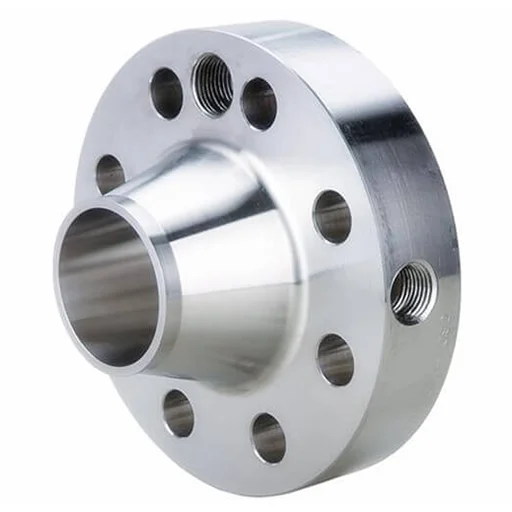
Alloy 600 Orifice Flange
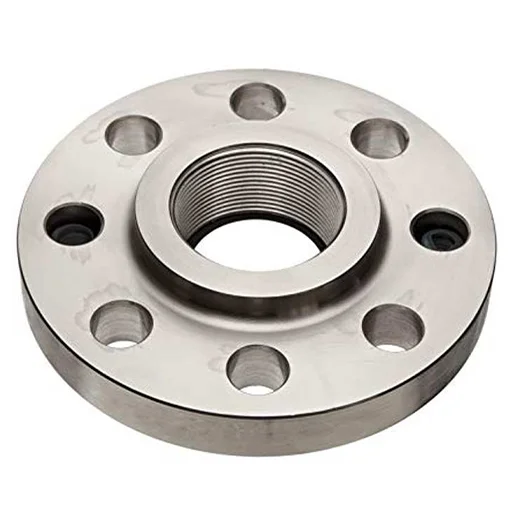
Alloy 600 Threaded Flange
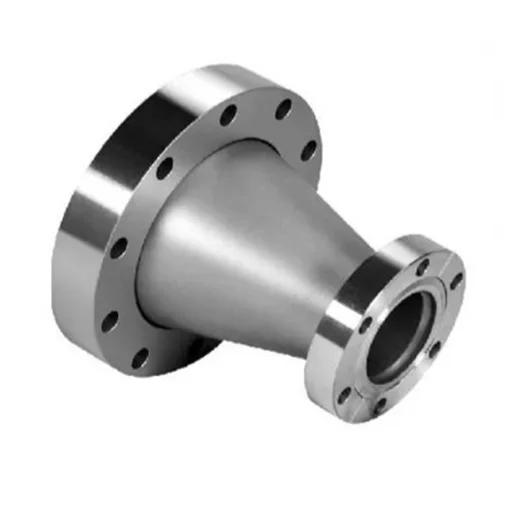
Alloy 600 Reducing Flange
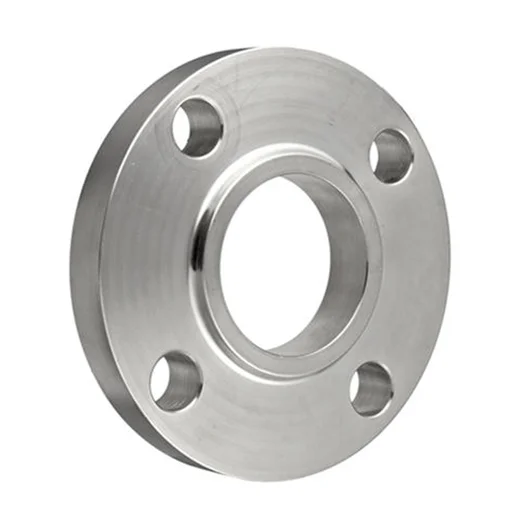
Alloy 600 Lap Joint Flange
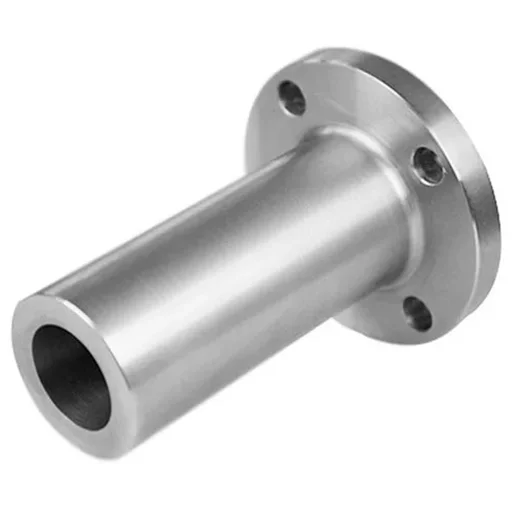
Alloy 600 Long Weld Neck Flange
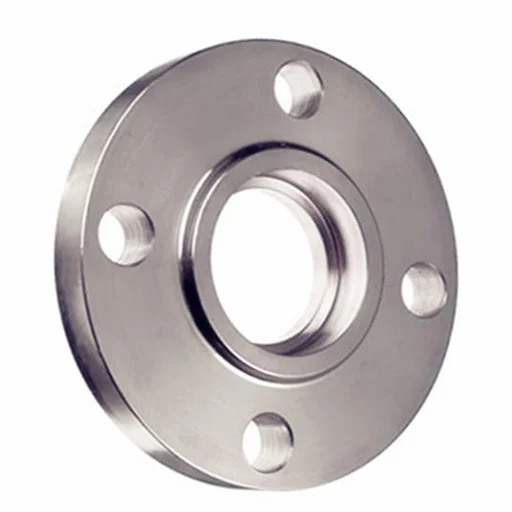
Alloy 600 Socket Weld Flange
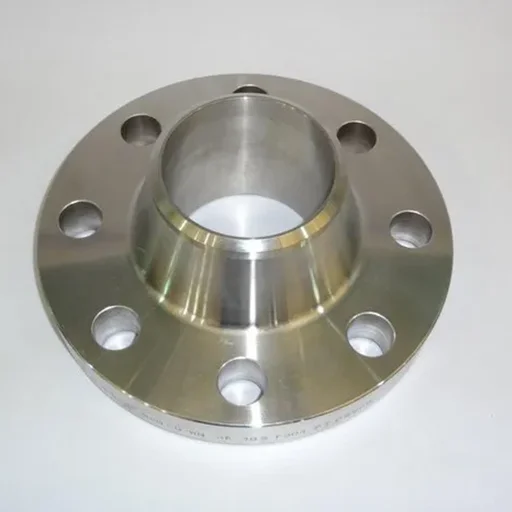
Alloy 600 Weld Neck Flange
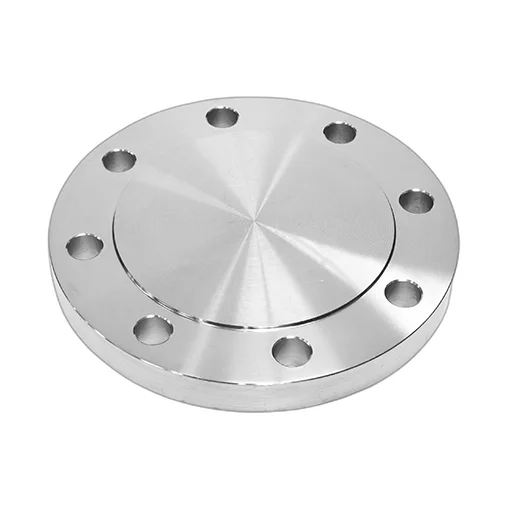
Alloy 600 Blind Flange
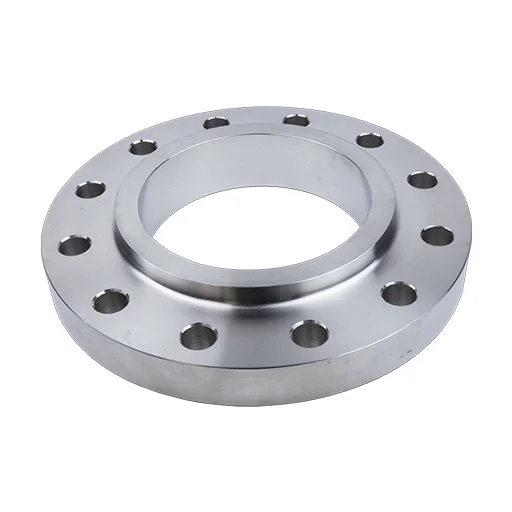
Alloy 600 Slip-On Flange
Standard Flange Sizes & Weight Chart
Alloy 600 Weld Neck Flange Dimensions (ANSI B16.5) - Class 600 Sample
| NPS | Outside Diameter (mm) | Thickness (mm) | Bore (mm) | Hub Dia (mm) | Bolt Circle (mm) | No. of Bolts | Bolt Dia | Approx Weight (kg) |
|---|---|---|---|---|---|---|---|---|
| 1/2" | 95 | 16 | 21 | 41 | 66 | 4 | M16 | 0.91 |
| 1" | 124 | 21 | 33 | 57 | 89 | 4 | M19 | 1.87 |
| 2" | 165 | 25 | 60 | 84 | 127 | 8 | M19 | 4.12 |
| 4" | 273 | 32 | 114 | 146 | 216 | 8 | M25 | 13.4 |
| 6" | 356 | 38 | 168 | 210 | 270 | 12 | M25 | 28.6 |
| 8" | 419 | 41 | 219 | 270 | 330 | 12 | M28 | 45.4 |
| 10" | 508 | 48 | 273 | 330 | 403 | 16 | M32 | 78.0 |
| 12" | 559 | 52 | 324 | 381 | 476 | 20 | M32 | 105.8 |
| 16" | 711 | 64 | 419 | 495 | 603 | 20 | M38 | 200.0 |
| 20" | 838 | 70 | 508 | 603 | 724 | 24 | M38 | 308.5 |
| 24" | 991 | 78 | 610 | 705 | 838 | 24 | M45 | 458.5 |
Note: Alloy 600 density is approximately 8.47 g/cm-, slightly higher than austenitic stainless steels due to high nickel content.
Is Alloy 600 Good Quality for High-Temperature and Nuclear Applications?
Yes, the standard nickel-chromium high-temperature oxidation resistant alloy in the industry is Alloy 600 (Inconel 600) which was traditionally the major material used in the construction of nuclear power plant steam generator tubing, and is an outstanding material in oxidizing atmospheres, high-purity water systems, and other applications with the requirement of resistance to chloride stress corrosion cracking at high temperatures. Inconel 600 was invented by the International Nickel Company (now Special Metals Corporation) in the 1950s and has been in extensive application in nuclear, chemical processing and thermal processing processes more than 60 years.
This property is due to the extraordinary ability of Alloy 600 to maintain high-temperature oxidation resistance that is attributed to its high chromium content (14-17%), which produces tenacious, adherent chromium oxide (Cr2O3) protective scale at high temperatures. The scale gives great resistance to both oxidation in the air and combustion gases up to 1095 C (2000 F) temperature. Alloy 600, unlike the stainless steel, whose maximum temperature is normally 650-900 C depending on the grade, has an upper temperature limit of over 1000 C, and is used in components of furnaces, heat treating equipment, and gas turbine parts that work at oxidizing temperatures.
The abundance of nickel (at least 72 percent) gives Alloy 600 complete resistance to chloride stress corrosion cracking (SCC) in most environments, which is of vital importance in comparison with austenitic stainless steels, which are very prone to chloride SCC. This property has seen Alloy 600 become the material of choice in steam generator tubing in pressurized water reactor (PWR) nuclear power plants, where it has been used in high purity in water at 290-325C and 15 Mpa pressure. Resistance of the alloy to the SCC in high temperature water conditions was deemed to be superior to the stainless steel in this high demand application.
It should be pointed out though that during the 1980s-1990s, stress corrosion cracking of Alloy 600 in primary water of PWR steam generators became a major industry issue, especially in older plants that used mill-annealed tubing. This type of SCC was termed as Primary Water Stress Corrosion Cracking (PWSCC) and gave rise to better alloys like Alloy 690 (increased chromium level 27-31% Cr) and thermal treatments (thermal treatment with a temperature of 700-725 C). In new nuclear construction, Alloy 690 in thermally treated form has much substituted Alloy 600 used as steam generator tubing. Nevertheless, Alloy 600 still finds widespread application in high-temperature non-nuclear applications.
Alloy 600 is highly carburization resistant, is reasonable ductile and fabricable. The alloy has resistance to most corrosive environments such as organic acids, neutral salts, and alkaline solutions. It offers excellent resistance to sulfidation at a high temperature and mechanical properties during cyclic heat conditions. Oxidation resistance, strength at high temperature and corrosion resistance make Alloy 600 versatile in many industrial applications.
The alloy 600 is purposefully meant to be used in the parts of nuclear power plants (steam generator tubing in older PWRs, instrumentation tubing, structural parts), thermal processing equipment (furnace muffles, radiant tubes, retorts), heat treating fixtures and baskets, chemical processing equipment (reactors, vessels, piping handling corrosive chemicals at high temperatures), gas turbine combustor parts, electronic component manufacturing (lead wires, cathode supports in vacuum tube production), food processing equipment that needs a high temperature strength, incinerator The alloy meets ASME Section III to nuclear and B31.1/B31.3 to power and process piping.
The main weaknesses of Alloy 600 are that it has a susceptibility to PWSCC in primary water of PWR nuclear reactors (this has been overcome by the use Alloy 690 or heat treatment) and that it has limited resistance to reducing environments (poorly performs in highly reducing acids or sulfidizing environments) and is relatively expensive in comparison with the stainless steels. In the new construction of nuclear steam generator tubing, Alloy 690 in the thermally treated form has become the norm. Other nickel alloys can be used in high reducing or strongly sulfidizing environments. Nevertheless, in high-temperature oxidation resistance overall and most chemical processing uses, Alloy 600 offers an excellent compromise in properties and is extensively specified.
Heat Treatment & Testing Requirements
Heat Treatment Process (Mandatory - Strict Control Required):
| Process | Step / Parameter | Requirement | Remarks / Critical Notes |
| Solution Annealing + Rapid Cooling | Solution Annealing Temperature | 870-1095-C (1600-2000-F) | Optimal: 980-1010-C for general applications; 1095-C for maximum SCC resistance |
| Holding Time | Adequate soaking | Based on section thickness, typically 15-30 min minimum | |
| Cooling After Annealing | Rapid air cool or water quench | Both acceptable; rapid cooling maintains single-phase structure | |
| Optional Thermal Treatment | 700-725-C for 10-15 hours | Improves PWSCC resistance for nuclear applications (creates chromium carbide precipitation) | |
| Critical Requirement | Stress relief and grain size | Solution annealing ensures optimal corrosion resistance; thermal treatment optional for nuclear service |
Testing & Inspection Requirements (Comprehensive):
| Test / Inspection | Standard / Requirement | Acceptance / Remarks |
| Tensile Testing | ASTM E8 | Yield = 35 ksi (240 MPa), Tensile = 80 ksi (550 MPa), Elongation = 30% |
| Hardness Testing | ASTM E10 / E18 | Typical 120-200 HB (= 90 HRB) |
| Charpy Impact Testing | ASTM E23 | Excellent toughness from cryogenic to elevated temperatures |
| PMI Testing | Positive Material Identification | Verification of Ni (= 72%), Cr (14-17%), Fe (6-10%) content |
| SCC Testing | ASTM G36 (optional) | Verification of stress corrosion cracking resistance |
| Ultrasonic Testing | ASTM A388 | Mandatory for critical nuclear and high-temperature applications |
| High-Temperature Oxidation | ASTM G54 (optional) | Verification of oxidation resistance at elevated temperatures |
Alloy 600 Nickel-Chromium Alloy Flanges Price List 2026
| Flange Type | Size Range | Pressure Class | Indicative Price Range (USD/Piece) |
|---|---|---|---|
| Weld Neck (WN) | 1/2" - 2" | 150# | $105 - $265 |
| Weld Neck (WN) | 4" - 8" | 150# | $445 - $1,685 |
| Weld Neck (WN) | 10" - 24" | 150# | $2,650 - $9,550 |
| Weld Neck (WN) | 1/2" - 2" | 300# | $155 - $385 |
| Weld Neck (WN) | 4" - 8" | 300# | $665 - $2,415 |
| Weld Neck (WN) | 10" - 24" | 300# | $3,820 - $13,750 |
| Weld Neck (WN) | 1/2" - 2" | 600# | $230 - $575 |
| Weld Neck (WN) | 4" - 8" | 600# | $1,045 - $3,615 |
| Slip-On (SO) | 1/2" - 2" | 150# | $85 - $215 |
| Slip-On (SO) | 4" - 8" | 150# | $360 - $1,345 |
| Blind (BL) | 1/2" - 2" | 150# | $75 - $188 |
| Blind (BL) | 4" - 8" | 150# | $380 - $1,505 |
| Socket Weld (SW) | 1/2" - 2" | 150# - 600# | $118 - $485 |
Applications of Alloy 600 Flanges in Industry
The Alloy 600 (Inconel 600) Nickel-Chromium Alloy Flanges are commonly used in many industrial applications, and some of the common industries are given below.
Nuclear Power
Steam generator tubing (older PWRs), instrumentation tubing, structural supports
Thermal Processing
Furnace muffles, retorts, radiant tubes, heat treating baskets and fixtures
Chemical Processing
Reactors and vessels for corrosive chemicals at elevated temperatures, distillation equipment
Gas Turbines
Combustor components, transition ducts, exhaust systems
Electronics Manufacturing
Cathode supports, lead wires in vacuum tube production
Petrochemical
Cracking furnace components, catalyst regeneration equipment, high-temperature piping
Food Processing
High-temperature ovens, baking equipment, food sterilization systems
Pollution Control
Incinerator components, flue gas treatment systems
Why Choose Alloy 600 Flanges from Metinox Overseas?
The Metinox Overseas offers certified Alloy 600 (inconel 600) nickel-chromium alloy flanges with controlled solution annealing and optional thermal treatment, extensive testing to assure maximum high-temperature oxidation resistance and stress corrosion cracking immunity to nuclear, thermal processing and chemical service. We have certified manufacturing plant of ISO 9001:2015, ASME Section III (nuclear quality), and PED which all Alloy 600 flanges are subjected to controlled solution annealing at 980-1010degC or 1095degC and then rapid cooling with full time-temperature record.
EN 10204 3.1B Mill Test Certificates - Supply is made of all flanges with complete chemical analysis including Ni ([?]72%), Cr (14-17%), Fe (6-10%), full tensile properties (tensile [?]80 ksi, yield [?]35 ksi, elongation [?]30%), hardness verification and PMI verification to verify correct alloy composition. In the case of nuclear applications, further SCC testing according to ASTM G36 and thermal treatment documentation can be offered.
Technical advice and assistance Our technical department gives expert advice on the selection of the Alloy 600 material to be used in high-temperature and nuclear applications, data on high-temperature oxidation up to 1095degC, data on stress corrosion cracking resistance, settings for welding (matching filler metal AWS A5.14 ERNiCr-3, does not require any preheat), ASME Section III nuclear code compliance, and ASME B31.1/B31.3 piping code compliance. Our customers are nuclear plants, manufacturers of thermal processing equipment, chemical processing plants, manufacturers of gas turbine and high temperature industries around the globe.
Alloy 600 Flange Delivery Time & CIF Pricing by Country
| Destination Region | Major Ports / Cities | Estimated Delivery Time | Typical CIF Terms |
|---|---|---|---|
| Middle East (GCC) | Dubai, Dammam, Doha | 14-18 Days | CIF Dubai / CIF Dammam |
| Europe | Rotterdam, Hamburg | 28-35 Days | CIF Rotterdam / CIF Hamburg |
| USA & Canada | Houston, New York | 35-45 Days | CIF Houston / CIF New York |
| Southeast Asia | Singapore, Port Klang | 18-25 Days | CIF Singapore / CIF Port Klang |
| Africa | Lagos, Durban | 25-35 Days | CIF Lagos / CIF Durban |
Other Types of Alloy 600 Flanges
ASTM B564 N06600 Flanges, UNS N06600 Weld Neck Flanges, Inconel 600 Blind Flanges, Alloy 600 High-Temperature Flanges, Inconel 600 Nuclear Grade Flanges.
Popular Locations Where We Supply Alloy 600 Flanges
alloy 600 flanges supplier in singapore, inconel 600 flanges suppliers in qatar, uns n06600 flanges suppliers in uae, alloy 600 flanges suppliers in chennai, inconel 600 high temperature flanges in mumbai, alloy 600 nuclear grade flanges in delhi, astm b564 n06600 flanges price list, alloy 600 thermal processing flanges exporter, inconel 600 flanges supplier in saudi arabia, alloy 600 to match uns n06600 supplier, inconel 600 gas turbine flanges.
People Also Search For
alloy 600 flanges manufacturer, inconel 600 flanges supplier, uns n06600 flanges, inconel 600 high temperature flanges price, alloy 600 nuclear grade flanges, inconel 600 vs 625 comparison.
Looking for High-Quality Alloy 600 (Inconel 600) Flanges?
Let us support your projects with quality, precision, and performance.
Frequently Asked Questions (FAQ)
Alloy 600 has at least 72-14-17 percent nickel and chromium with a host better high temperature oxidation resistance (up to 1095 C vs 650 C with 316L) and total immunity to chloride stress corrosion cracking. Inconel 600 has strength and corrosion resistance in higher temperatures where 316L cannot perform, but 316L is cheaper and can be used in moderate temperatures up to 650 C, but cannot compete with Alloy 600 in higher temperature oxidizing environments or in applications that need SCC performance at higher temperatures.
Alloy 600 suffered Primary Water Stress Corrosion Cracking (PWSCC) in the main water of PWR steam generators, especially when in the mill-annealed condition under temperatures of approximately 320 0 C. UNS N06690 (Alloy 690) has more chromium (27-31% vs 14-17%), which has a great benefit of resistance to PWSCC. Alloy 690 has been combined with thermal treatment (TT) 700-725 C to offer the best SCC value and is currently used in the new nuclear steam generator tubing. Alloy 600 still finds numerous other applications at high temperatures.
The Thermal treatment: Solution- annealed Alloy 600 is heated to 725-700C/10-15 hours and this makes the chromium carbides to precipitate at grain boundaries in a controlled manner. This therapy is important in increasing resistance to Primary Water Stress Corrosion Cracking (PWSCC) in nuclear applications. The formed carbides alter the grain boundary chemistry and structure to be more resistant to the initiation of SCC. Thermal treatment is not mandatory and is normally only required when dealing with critical nuclear applications; most other applications do not require extra thermal treatment when dealing with solutions.
Alloy 600 is not very resistant to highly reducing acids like hydrochloric acid or sulfuric acid in reducing conditions. Nickel-molybdenum alloys such as Alloy B-2 or B-3 are preferred in the case of HCl service. In case of the reduction of sulfuric acid, Alloy 20 (containing copper) performs better. Alloy 600 is suitable in oxidizing environments, high temperature oxidizing atmospheres, as well as, neutral and slightly corrosive conditions. It must not be operated in strongly reducing or sulfidizing conditions.
Alloy 600 can be continuously used at temperatures to manufacture oxidizing atmospheres up to 1095 o C (2000 o F). In structural load-bearing cases, maximum temperature limit is based on stress and the necessary life, or in the long run, creep resistance of structural material is up to 650-815 C. In case of reducing or sulfidizing atmospheres the maximum temperature is restricted to about 540 o C. In the case of nuclear steam generators, a working temperature of 290-325C is normally used. Alloy 600 has fine toughness even at cryogenic temperatures (-196C).
Alloy 600 should have a corresponding filler metal e.g. AWS A5.14 ERNiCr-3 (when using GTAW/GMAW) or ENiCr-3 (when using SMAW). Most applications do not need preheat. Keep interpass temperature at less than 200o C. Low/moderate heat input. Post-weld heat treatment (solution annealing) is unnecessary, but can be ordered in high-temperature or nuclear applications. In applications that need thermal treatment of their products like in the nuclear applications, post-weld thermal treatment that could be at 700-725C 10-15 hours could be specified. There must be proper shielding and sanitation.
Enquire Now
Get pricing within 24 hours!