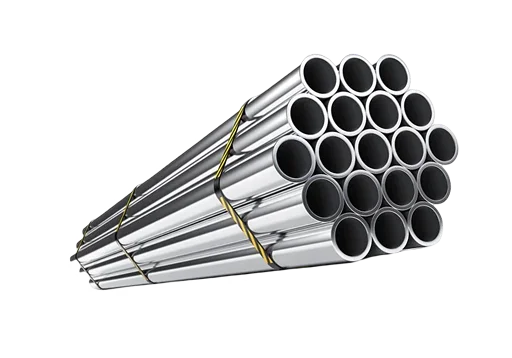
NICKEL-COPPER ALLOY FLANGES MANUFACTURER & SUPPLIER.webp)
Alloy 400 (Monel 400) Nickel-Copper Alloy Flanges Manufacturer & Supplier
Metinox Overseas is among the largest manufacturers and distributors of Alloy 400 (Monel 400) Nickel-Copper Alloy Flanges, which are designed to work in highly corrosive marine environments and chemical processing applications demanding exceptional resistance to seawater, hydrofluoric acid, reducing acids, and alkaline conditions. Our ASTM B564 UNS N04400 Forged Flanges are made of high quality nickel-copper alloy with balanced chemical composition of nickel (minimum 63%) and copper (28.0-34.0%), providing a unique combination of corrosion resistance and mechanical properties. These are Alloy 400 Flanges (Monel 400), which are uniquely suited for extreme corrosive services from -196-C (-320-F) to 540-C (1000-F), offering ideal performance in seawater handling systems, marine engineering equipment, chemical processing plants handling hydrofluoric acid, crude petroleum distillation, valve trim and pump components, heat exchangers in marine service, and demanding applications requiring exceptional resistance to seawater corrosion, stress corrosion cracking, and reducing acids beyond standard stainless steels and bronze alloys.
The high nickel content (minimum 63%) combined with copper (28-34%) provides Alloy 400 with outstanding resistance to seawater corrosion, brackish water, and brine solutions under both aerated and deaerated conditions. The alloy exhibits virtually no stress corrosion cracking in chloride environments and maintains excellent mechanical properties from cryogenic temperatures to elevated temperatures. Alloy 400 is particularly resistant to hydrofluoric acid in all concentrations up to boiling point, making it the material of choice for HF alkylation units in refineries. ASTM B564 Weld Neck Flanges N04400 1/2 to 24 inch and Socket Weld Flanges are produced in full ANSI/ASME B16.5 (1/2 to 24 inch NB) and ASME B16.47 Series A and B (26 to 60 inch NB) sizes, in pressure classes of 150 to 2500 pounds. All flanges are subjected to solution annealing heat treatment at 870-1090-C followed by rapid cooling and comprehensive quality tests such as dimensional inspection, PMI verification, tensile testing, Charpy impact testing, hardness testing, and ultrasonic examination as required by ASTM B564.

Table of Contents

- Alloy 400 Flanges Technical Specifications
- Alloy 400 Equivalent Grades
- Alloy 400 Chemical Composition
- Mechanical Properties of Alloy 400 Flanges
- Alloy 400 Flange Dimensions & Pressure Rating Chart
- Types of Alloy 400 Flanges Available
- Standard Flange Sizes & Weight Chart
- Is Alloy 400 Good Quality for Seawater and HF Acid Service?
- Heat Treatment & Testing Requirements
- Alloy 400 Nickel-Copper Alloy Flanges Price List 2026
- Applications of Alloy 400 Flanges in Industry
- Why Choose Alloy 400 Flanges from Metinox Overseas?
- Alloy 400 Flange Delivery Time & CIF Pricing by Country
- Other Types of Alloy 400 Flanges
- Popular Locations Where We Supply Alloy 400 Flanges
- Frequently Asked Questions (FAQ)
Alloy 400 Flanges Technical Specifications
| Feature | Details |
| Specifications | ASTM B564 / ASME SB564 / QQ-N-281 |
| Grade | UNS N04400 (Monel 400 / Alloy 400) |
| Material Designation | Nickel-Copper Alloy (Ni-Cu) |
| UNS Number | N04400 |
| Dimensional Standards | ANSI/ASME B16.5, B16.47 Series A & B, B16.48, MSS SP-44 |
| Size Range | 1/2" (15 NB) to 60" (1500 NB) |
| Pressure Class | 150#, 300#, 400#, 600#, 900#, 1500#, 2500# (B16.5); 75#, 150#, 300#, 400#, 600#, 900# (B16.47) |
| Flange Types | Weld Neck, Slip-On, Blind, Socket Weld, Lap Joint, Threaded, Orifice, Long Weld Neck, Reducing |
| Flange Face | RF, FF, RTJ, Male & Female, Tongue & Groove |
| Manufacturing Type | Hot Forged |
| Microstructure | Single-Phase Austenitic (FCC) Solid Solution |
| Heat Treatment | Solution Annealed at 870-1090-C + Rapid Air or Water Cooling |
| Testing | Tensile, Hardness, Impact, PMI, Ultrasonic |
| Inspection | TUV, SGS, Bureau Veritas, Lloyd's, DNV-GL, BV, ABS |
| Certifications | EN 10204 3.1B MTC, NACE MR0175 / ISO 15156, PED 2014/68/EU, CE Marked, ASME B31.3 |
Alloy 400 Equivalent Grades
| Standard | USA | Germany | Europe | Japan | UK | China |
| Monel 400 | ASTM B564 N04400 UNS N04400 |
2.4360 NiCu30Fe |
2.4360 NiCu30Fe1Mn |
NW 4400 Monel 400 |
NA 13 Monel 400 |
NiCu30Fe |
Note: Monel- 400 is a registered trademark of Special Metals Corporation. Alloy 400 and Nickelvac 400 are commonly used equivalents.
Alloy 400 Chemical Composition
| Element | Composition (%) | Function |
| Nickel (Ni) | 63.0 min | Primary corrosion resistance and structural stability |
| Copper (Cu) | 28.0 - 34.0 | Resistance to seawater, HF acid, reducing media |
| Iron (Fe) | 2.5 max | Controlled impurity to maintain single-phase structure |
| Manganese (Mn) | 2.0 max | Improves hot workability |
| Silicon (Si) | 0.5 max | Deoxidizer |
| Carbon (C) | 0.30 max | Strength-ductility balance |
| Sulfur (S) | 0.024 max | Controlled for corrosion resistance |
| Nickel + Copper | = 94% | Ensures proper alloy chemistry |
Mechanical Properties of Alloy 400 Flanges
| Property | Requirement | Testing Standard |
| Tensile Strength | = 550 MPa (80 ksi) | ASTM E8 |
| Yield Strength (0.2% offset) | = 240 MPa (35 ksi) | ASTM E8 |
| Elongation (2") | = 35% | ASTM E8 |
| Hardness (Brinell) | 110 - 200 HB (typical) | ASTM E10 |
| Hardness (Rockwell B) | = 85 HRB (typical) | ASTM E18 |
| Charpy V-Notch Impact | No minimum specified (typically >100 J at RT) | ASTM E23 |
Alloy 400 Flange Pressure-temperature Ratings
| Temperature -F (-C) | Class 150 | Class 300 | Class 600 | Class 900 | Class 1500 | Class 2500 |
|---|---|---|---|---|---|---|
| -20 to 100 (-29 to 38) | 290 psi | 750 psi | 1500 psi | 2250 psi | 3750 psi | 6250 psi |
| 200 (93) | 260 psi | 675 psi | 1350 psi | 2025 psi | 3375 psi | 5625 psi |
| 300 (149) | 240 psi | 625 psi | 1250 psi | 1875 psi | 3125 psi | 5210 psi |
| 400 (204) | 215 psi | 560 psi | 1120 psi | 1680 psi | 2800 psi | 4665 psi |
| 500 (260) | 190 psi | 495 psi | 990 psi | 1485 psi | 2475 psi | 4125 psi |
| 600 (316) | 165 psi | 430 psi | 860 psi | 1290 psi | 2150 psi | 3580 psi |
| 700 (371) | 145 psi | 380 psi | 760 psi | 1140 psi | 1900 psi | 3165 psi |
| 800 (427) | 125 psi | 330 psi | 660 psi | 990 psi | 1650 psi | 2750 psi |
| 900 (482) | 110 psi | 290 psi | 580 psi | 870 psi | 1450 psi | 2415 psi |
| 1000 (538) | 95 psi | 250 psi | 500 psi | 750 psi | 1250 psi | 2085 psi |
Types of Alloy 400 Flanges Available
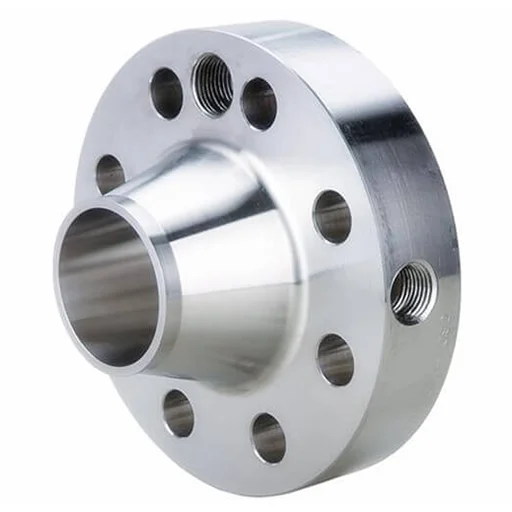
Alloy 400 Orifice Flange
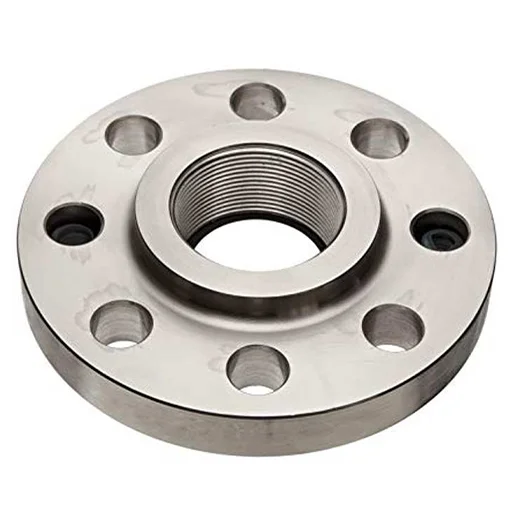
Alloy 400 Threaded Flange
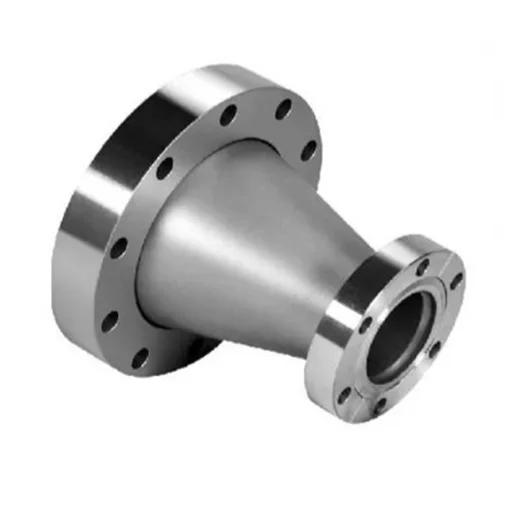
Alloy 400 Reducing Flange
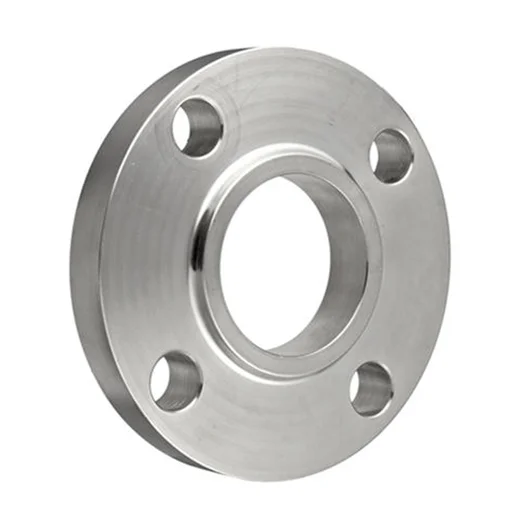
Alloy 400 Lap Joint Flange
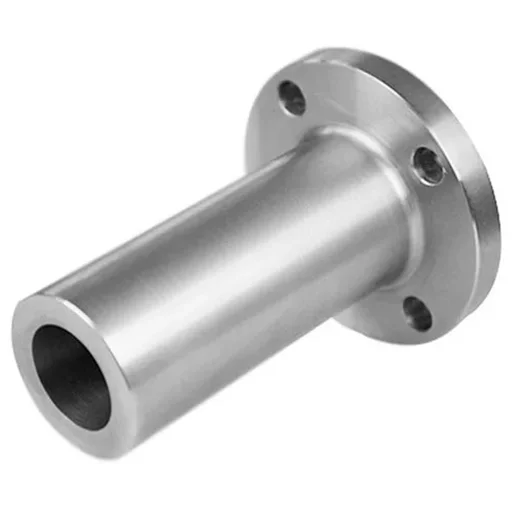
Alloy 400 Long Weld Neck Flange
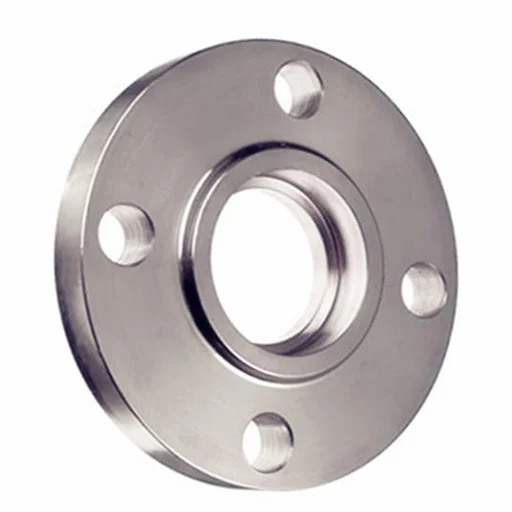
Alloy 400 Socket Weld Flange
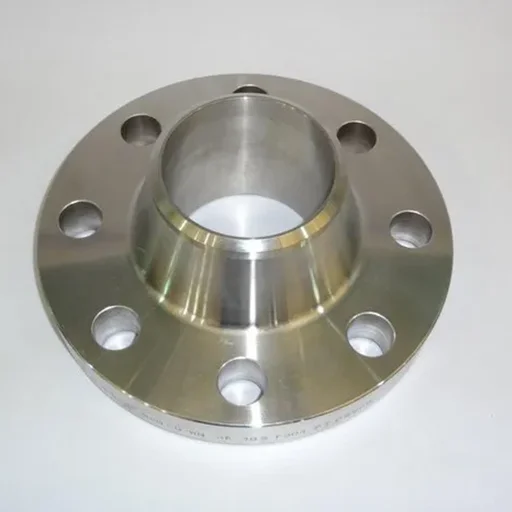
Alloy 400 Weld Neck Flange
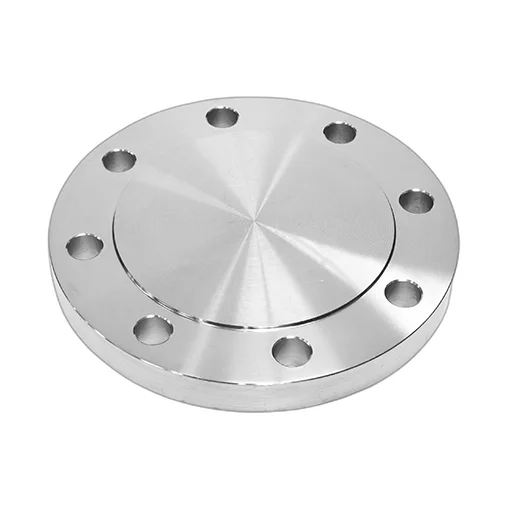
Alloy 400 Blind Flange
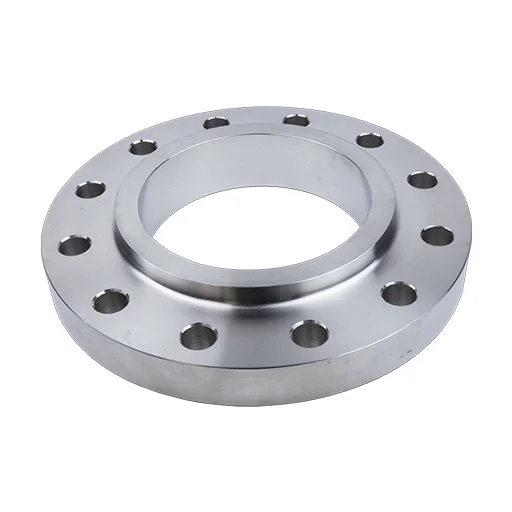
Alloy 400 Slip-On Flange
Standard Flange Sizes & Weight Chart
| NPS | Outside Diameter (mm) | Thickness (mm) | Bore (mm) | Hub Dia (mm) | Bolt Circle (mm) | No. of Bolts | Bolt Dia | Approx Weight (kg) |
|---|---|---|---|---|---|---|---|---|
| 1/2" | 95 | 16 | 21 | 41 | 66 | 4 | M16 | 0.95 |
| 1" | 124 | 21 | 33 | 57 | 89 | 4 | M19 | 1.95 |
| 2" | 165 | 25 | 60 | 84 | 127 | 8 | M19 | 4.30 |
| 4" | 273 | 32 | 114 | 146 | 216 | 8 | M25 | 14.0 |
| 6" | 356 | 38 | 168 | 210 | 270 | 12 | M25 | 29.8 |
| 8" | 419 | 41 | 219 | 270 | 330 | 12 | M28 | 47.3 |
| 10" | 508 | 48 | 273 | 330 | 403 | 16 | M32 | 81.3 |
| 12" | 559 | 52 | 324 | 381 | 476 | 20 | M32 | 110.3 |
| 16" | 711 | 64 | 419 | 495 | 603 | 20 | M38 | 208.5 |
| 20" | 838 | 70 | 508 | 603 | 724 | 24 | M38 | 321.5 |
| 24" | 991 | 78 | 610 | 705 | 838 | 24 | M45 | 477.8 |
Note: Alloy 400 density is approximately 8.80 g/cm-, higher than stainless steels due to high nickel and copper content.
Is Alloy 400 Good Quality for Seawater and HF Acid Service?
Yes, Alloy 400 (Monel 400) is the industry-standard nickel-copper alloy specifically developed for seawater corrosion resistance and hydrofluoric acid service, offering exceptional performance in marine environments and chemical processing applications where stainless steels and other common alloys fail. Monel 400 was developed by the International Nickel Company (now Special Metals Corporation) in the early 1900s and has been the material of choice for marine applications for over a century, with a proven track record in the most demanding seawater service conditions.
The exceptional seawater corrosion resistance of Alloy 400 derives from its unique nickel-copper composition, with minimum 63% nickel and 28-34% copper forming a single-phase austenitic solid solution. This composition creates a highly stable passive film that resists attack by chlorides, and unlike austenitic stainless steels, Alloy 400 is virtually immune to chloride stress corrosion cracking (SCC) even in hot, aerated seawater. The alloy maintains excellent corrosion resistance in seawater under all conditions including flowing, stagnant, aerated, and deaerated, and in brackish water, brine solutions, and salt spray atmospheres.
In marine applications, Alloy 400 exhibits corrosion rates typically less than 0.025 mm/year (1 mil/year) in seawater at ambient temperatures, with even lower rates in deaerated conditions. The alloy is particularly resistant to pitting and crevice corrosion, common failure modes for stainless steels in seawater service. Alloy 400 also resists biofouling better than many other materials, reducing maintenance requirements in marine heat exchangers and piping systems. The combination of excellent corrosion resistance and good mechanical properties makes Monel 400 ideal for marine fasteners, valve stems, pump shafts, propeller shafts, and other components requiring both strength and seawater resistance.
For hydrofluoric acid (HF) service, Alloy 400 is the preferred material across all concentrations from dilute to anhydrous HF and at temperatures up to boiling point. The copper content provides specific resistance to HF attack, while the nickel prevents hydrogen embrittlement that can occur in other alloys. This makes Monel 400 the standard material for HF alkylation units in petroleum refineries, which use HF as a catalyst to produce high-octane gasoline components. Components include reactor vessels, distillation columns, reboilers, heat exchangers, piping systems, and valve trim operating in HF service at concentrations of 60-90% and temperatures from ambient to 120-C.
Alloy 400 also exhibits excellent resistance to reducing acids and alkaline environments. It is highly resistant to all concentrations of hydrochloric acid, sulfuric acid under reducing conditions, phosphoric acid, and various organic acids. The alloy performs well in alkaline solutions including sodium hydroxide and potassium hydroxide at various concentrations and temperatures. This broad corrosion resistance makes Monel 400 suitable for multipurpose chemical processing equipment.
Alloy 400 is specifically designed for use in seawater intake systems, marine heat exchangers and condensers, desalination plants (multi-stage flash and reverse osmosis), offshore oil and gas platforms, ship propeller shafts and fasteners, valve bodies and trim for marine service, HF alkylation units in refineries, HF acid production and storage, crude petroleum distillation (overhead systems), chemical processing equipment handling reducing acids, pump and valve components in corrosive service, and food processing equipment (particularly handling salt solutions). The alloy is qualified to NACE MR0175/ISO 15156 for sour service in certain conditions and is widely specified in ASME B31.3 Process Piping Code.
The primary limitations of Alloy 400 are that it should not be used in strongly oxidizing environments such as nitric acid, ferric chloride, or sulfuric acid under oxidizing conditions, where more highly alloyed materials like Alloy C-276 are required. Alloy 400 is also susceptible to sulfur-bearing gases at elevated temperatures above 315-C, where sulfidation can occur. For highly oxidizing chloride environments, duplex stainless steels or super austenitic grades may be more cost-effective alternatives. However, for seawater, HF acid, reducing acids, and alkaline environments, Monel 400 provides an excellent balance of corrosion resistance, mechanical properties, and cost-effectiveness.
Heat Treatment & Testing Requirements
| Process | Step / Parameter | Requirement | Remarks / Critical Notes |
| Solution Annealing + Rapid Cooling | Solution Annealing Temperature | 870-1090-C (1600-2000-F) | Optimal: 980-1010-C for stress relief and grain size control |
| Holding Time | Adequate soaking | Based on section thickness; typically 15-30 minutes minimum | |
| Cooling After Annealing | Rapid air cooling or water quenching | Both acceptable; rapid cooling prevents precipitation | |
| Critical Temperature Range | Below 870-C | Avoid slow cooling through 480-650-C to prevent embrittlement | |
| Critical Requirement | Stress relief achieved | Ensures optimal ductility and corrosion resistance |
Testing & Inspection Requirements (Comprehensive):
| Test / Inspection | Standard / Requirement | Acceptance / Remarks |
| Tensile Testing | ASTM E8 | Yield = 35 ksi (240 MPa), Tensile = 80 ksi (550 MPa), Elongation = 35% |
| Hardness Testing | ASTM E10 / ASTM E18 | Typical 110-200 HB (= 85 HRB) |
| Charpy Impact Testing | ASTM E23 | No minimum specified; excellent toughness at cryogenic temperatures |
| PMI Testing | Positive Material Identification | Verification of Ni (=63%) and Cu (28-34%) content |
| Ultrasonic Testing | ASTM A388 | Mandatory for critical applications |
| Corrosion Testing | ASTM G28 / ASTM G48 (Optional) | Verification of seawater and acid resistance |
Alloy 400 Nickel-Copper Alloy Flanges Price List 2026
| Flange Type | Size Range | Pressure Class | Indicative Price Range (USD/Piece) |
|---|---|---|---|
| Weld Neck (WN) | 1/2" - 2" | 150# | $95 - $245 |
| Weld Neck (WN) | 4" - 8" | 150# | $415 - $1,585 |
| Weld Neck (WN) | 10" - 24" | 150# | $2,480 - $8,950 |
| Weld Neck (WN) | 1/2" - 2" | 300# | $145 - $365 |
| Weld Neck (WN) | 4" - 8" | 300# | $625 - $2,265 |
| Weld Neck (WN) | 10" - 24" | 300# | $3,580 - $12,850 |
| Weld Neck (WN) | 1/2" - 2" | 600# | $215 - $535 |
| Weld Neck (WN) | 4" - 8" | 600# | $975 - $3,385 |
| Slip-On (SO) | 1/2" - 2" | 150# | $78 - $198 |
| Slip-On (SO) | 4" - 8" | 150# | $335 - $1,265 |
| Blind (BL) | 1/2" - 2" | 150# | $68 - $175 |
| Blind (BL) | 4" - 8" | 150# | $355 - $1,415 |
| Socket Weld (SW) | 1/2" - 2" | 150# - 600# | $108 - $455 |
Price Note: Alloy 400 flanges are typically 500-600% higher than A105 carbon steel and 200-250% higher than 316/316L stainless steel due to high nickel (=63%) and copper (28-34%) content, specialized forging, and stringent quality controls.
Applications of Alloy 400 Flanges in Industry
The Alloy 400 (Monel 400) Nickel-Copper Alloy Flanges are commonly used in many industrial applications, and some of the common industries are given below.
Marine Engineering
Seawater intake systems, marine heat exchangers, condenser tubes, ship propeller shafts
Offshore Oil & Gas
Subsea equipment, seawater service piping, wellhead components in marine environments
Desalination
Multi-stage flash (MSF) distillers, reverse osmosis (RO) systems, brine handling
HF Alkylation
Reactor vessels, distillation columns, reboilers, piping in HF service
Petroleum Refining
Crude distillation overhead systems, sour water strippers, amine regenerators
Chemical Processing
Equipment handling HCl, HF, reducing acids, alkaline solutions
Power Generation
Seawater-cooled condensers, feedwater heaters in coastal plants
Food Processing
Brine handling systems, salt solution processing equipment
Why Choose Alloy 400 Flanges from Metinox Overseas?
Metinox Overseas provides certified Alloy 400 (Monel 400) nickel-copper alloy flanges with precise solution annealing and rapid cooling, comprehensive testing ensuring optimal seawater and HF acid resistance for marine and chemical processing applications. We maintain ISO 9001:2015, NACE MR0175/ISO 15156, and PED certified manufacturing facilities, where all Alloy 400 flanges undergo controlled solution annealing at 980-1010-C followed by rapid cooling with complete time-temperature documentation.
All flanges are supplied with EN 10204 3.1B Mill Test Certificates featuring full chemical analysis including Ni (=63%), Cu (28-34%), complete tensile properties (tensile =80 ksi, yield =35 ksi, elongation =35%), hardness verification, and PMI verification confirming correct nickel-copper ratio and alloy composition.
Our technical department provides expert guidance on Alloy 400 material selection for seawater and HF acid service, corrosion data for various marine and chemical environments, welding procedures (matching filler metal AWS A5.14 ERNiCu-7, no preheat required for most applications), NACE MR0175/ISO 15156 compliance for sour service, and ASME B31.3 Process Piping Code requirements. We serve the specialized needs of marine facilities, offshore platforms, desalination plants, HF alkylation units, chemical processing plants, and petroleum refineries worldwide.
Alloy 400 Flange Delivery Time & CIF Pricing by Country
| Destination Region | Major Ports / Cities | Estimated Delivery Time | Typical CIF Terms | Estimated CIF Pricing (USD/kg)* |
|---|---|---|---|---|
| Middle East (GCC) | Dubai, Dammam, Doha | 14-18 Days | CIF Dubai / Dammam | $38.00 - $45.00 |
| Europe | Rotterdam, Hamburg | 28-35 Days | CIF Rotterdam / Hamburg | $42.00 - $50.00 |
| USA & Canada | Houston, New York | 35-45 Days | CIF Houston / New York | $45.00 - $55.00 |
| Southeast Asia | Singapore, Port Klang | 18-25 Days | CIF Singapore / Port Klang | $35.00 - $42.00 |
| Africa | Lagos, Durban | 25-35 Days | CIF Lagos / Durban | $40.00 - $48.00 |
Other Types of Alloy 400 Flanges
ASTM B564 N04400 Flanges, UNS N04400 Weld Neck Flanges, Monel 400 Blind Flanges, Alloy 400 Seawater Resistant Flanges, Monel 400 HF Service Flanges.
Popular Locations Where We Supply Alloy 400 Flanges
alloy 400 flanges supplier in singapore, monel 400 flanges suppliers in qatar, alloy 400 nickel-copper flanges suppliers in uae, monel 400 flanges suppliers in chennai, alloy 400 seawater flanges in mumbai, monel 400 hf acid flanges in delhi, astm b564 n04400 flanges price list, alloy 400 marine flanges exporter, monel 400 flanges supplier in saudi arabia, alloy 400 to match uns n04400 supplier, monel 400 offshore flanges.
People Also Search For
alloy 400 flanges manufacturer, monel 400 flanges supplier, uns n04400 flanges, monel 400 seawater resistant flanges price, alloy 400 hf acid flanges, monel 400 vs 316l comparison.
Looking for High-Quality Alloy 400 (Monel 400) Flanges?
Let us support your projects with quality, precision, and performance.
Frequently Asked Questions (FAQ)
Alloy 400 includes over 63% nickel and 28-34% copper which offers much greater resistance to seawater corrosion as well as absolute immunity to chloride stress corrosion cracking than 316L. Monel 400 is superior in seawater (corrosion rates of less than 0.025 mm/year vs. rapid pitting of 316L), HF acid service (all concentrations), and reducing acid service. 316L is cheaper but not as good as Alloy 400 in marine service or HF acid service. In the case of oxidizing acids such as nitric acid 316L is the choice.
Copper (28-34%) is a main alloying element used that is mixed with nickel in a one-phase solid solution to produce a solid solution having an exceptional level of corrosion resistance to seawater, acid reducer (especially HF and HCl), and alkaline solution. The nickel-copper alloy offers resistance against chloride SCC and the copper itself offers resistance against hydrogen acid of fluorides and lessens the absorption of hydrogen leading to embrittlement. This Ni-Cu structure is radically different as stainless steel.
No Alloy 400 cannot be used in strongly oxidizing acids like nitric acid or oxidizing salts like ferric chloride or cupric chloride. Alloy 400 is prone to being corroded in such environments. To be used as oxidizing acid service, austenitic stainless steels (304L /316L) or high-nickel alloys such as C-276 or C-22 are suggested. Alloy 400 is superior in reducing and neutral atmosphere, rather than oxidizing.
The lowest limit of continuous service temperature of Alloy 400 is about 540 Degree Celsius (1000 Degree Fahrenheit). Alloy 400 cannot withstand sulfidation in sulfur bearing atmospheres and must not be used in these environments above 315C (600F). Operating temperatures are generally ambient to 90 o C in the case of seawater service. In the case of HF alkylation, ambient to 120 o C temperatures are used. Alloy 400 has a high toughness, even to cryogenic temperatures (-196C).
Alloy 400 needs the same filler metal like AWS A5.14 ERNiCu-7 (when using GTAW/GMAW) or ENiCu-7 (when using SMAW). Most applications do not require any preheat. Keep the temperature of the interpass less than 150 C. Low heat input should be used to reduce the growth of grains. Heat treatment after welding is not normally necessary. Wipe down and clean all surfaces prior to welding and apply appropriate shielding gas (argon or argon-helium). Do not get contaminated with sulfur, lead and other low-melting-point elements.
Alloy 400 is better to seawater use than all copper-nickel alloys, bronzes and stainless steels. Common corrosion is less than 0.025 mm/year in ambient sea water (compared to 0.025-0.050 mm/year 90-10 Cu-Ni, and fast pitting 316L). Monel 400 does not contain SCC in the seawater (compared to high susceptibility of 316L). In case of increased temperatures or high speed sea water, 70-30 Cu-Ni or titanium can be less expensive. In the case of ambient seawater Monel 400 gives the most effective result.
Yes, Alloy 400 can be used in sour service in accordance with the NACE MR0175/ISO 15156 requirement of proper hardness control (usually no more than 35 HRC). The nickel-copper alloy offers high levels of sulfide stress cracking resistance in sulfide environment. But, above 315 0 C, Alloy 400 is prone to sulfidation and is not to be employed. Alloy 400 is very popular when sour crude distillation overhead systems are required in moderate temperatures.
Yes, Alloy 400 is very resistant to solutions of sodium hydroxide (caustic soda) and potassium hydroxide at several levels of concentration and temperatures. It is widely employed in caustic evaporators, storage tanks and in piping systems. Monel 400 can withstand stress corrosion cracking in hot caustic solutions, which cannot succeed in the case of carbon steel. Even more extreme concentrations and temperatures can be effectively resisted with nickel 200/201, but Monel 400 can be used in most caustic applications.
Enquire Now
Get pricing within 24 hours!