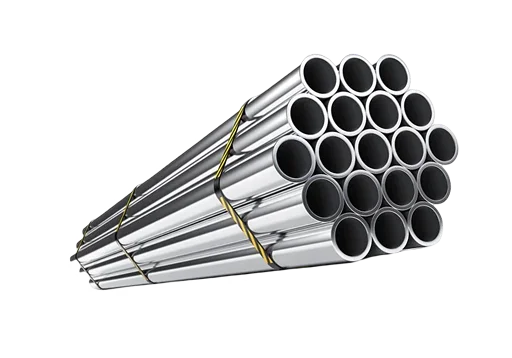
Alloy 20 Nickel Alloy Flanges Manufacturer & Supplier
Metinox Overseas is one of the biggest producers and distributors of Alloy 20 Nickel Alloy Flanges that are created to operate under some of the most severe setups of chemical processing in the environment that requires superior resistance to sulfuric acid, chloride stress corrosion cracking, pitting, and crevice corrosion. The forged flanges of our ASTM B564 UNS N08020 are produced of high quality nickel-chromium-molybdenum-copper alloy with balanced chemical composition of 32.0-38.0 per cent nickel, 19.0-21.0 per cent chromium, 2.0-3.0 per cent molybdenum, 3.0-4.0 per cent copper and 8 x per cent niobium to stabilize against intergranular corrosion. These are Alloy 20 Flanges (Carpenter 20Cb-3), uniquely individualized to use extreme high temperatures of corrosive chemical services -196 C -320 C, -196 C -540 C, and have ideal application in processing plants of sulfuric acid, chemical reactors, pharmaceutical production, food processing equipment, synthesis of synthetic fibers, plastics and polymers production and other demanding conditions requiring superior performance in hot, contaminated sulfuric acid and chloride environments than other stainless steels such
The copper addition (3.0-4.0%) gives Alloy 20 an excellent sulfuric acid resistance in every concentration to boiling temperature, and the high nickel content (minimum 32) is excellent sulfuric acid stress corrosion cracking. The niobium stabilization (minimum 8 x carbon content) helps to avoid sensitization during welding and high temperature service, and eliminates intergranular corrosion in heat-affected areas. ASTM B564 Weld Neck Flange N08020 1/2 to 24 inch and Socket Weld Flanges are manufactured in full ANSI/ASME B16.5 (1/2 to 24 inch NB) and ASME B16.47 Series A and B (26 to 60 inch NB) sizes, in pressure classes of 150 to 2500 pounds. Solution annealing heat treatment of all flanges is performed at 1095-1150 -1 and then rapidly quenched in water and all quality tests performed, i.e., dimensional inspection, PMI verification, tensile testing, Charpy impact testing, hardness testing, intergranular corrosion testing, according to ASTM A262 Practice E, and ultrasonic examination as required by ASTM B564.

Table of Contents
- Alloy 20 Flanges Technical Specifications
- Alloy 20 Equivalent Grades
- Alloy 20 Chemical Composition
- Mechanical Properties of Alloy 20 Flanges
- Alloy 20 Flanges - Pressure-Temperature Ratings
- Types of Alloy 20 Flanges Available
- Standard Flange Sizes & Weight Chart
- Is Alloy 20 Good Quality for Sulfuric Acid Service?
- Heat Treatment & Testing Requirements
- Alloy 20 Nickel Alloy Flanges Price List 2026
- Applications of Alloy 20 Flanges in Industry
- Why Choose Alloy 20 Flanges from Metinox Overseas?
- Alloy 20 Flange Delivery Time & CIF Pricing by Country
- Other Types of Alloy 20 Flanges
- Popular Locations Where We Supply Alloy 20 Flanges
- Frequently Asked Questions (FAQ)
Alloy 20 Flanges Technical Specifications
| Feature | Details |
| Specifications | ASTM B564 / ASME SB564 / DIN 2.4660 |
| Grade | UNS N08020 (Alloy 20, Carpenter 20Cb-3) |
| Material Designation | Nickel-Chromium-Molybdenum-Copper Alloy (Ni-Cr-Mo-Cu) |
| UNS Number | N08020 |
| Dimensional Standards | ASME B16.5, B16.47 Series A & B, B16.48, MSS SP-44 |
| Size Range | 1/2" (15 NB) to 60" (1500 NB) |
| Pressure Class | 150#, 300#, 400#, 600#, 900#, 1500#, 2500# (B16.5); 75#, 150#, 300#, 400#, 600#, 900# (B16.47) |
| Flange Types | Weld Neck, Slip-On, Blind, Socket Weld, Lap Joint, Threaded, Orifice, Long Weld Neck, Reducing |
| Flange Face | RF, FF, RTJ, Male & Female, Tongue & Groove |
| Manufacturing Type | Hot Forged |
| Microstructure | Austenitic (FCC) with Niobium Carbide Precipitates |
| Heat Treatment | Solution Annealed at 1095-1150 -C + Rapid Water Quench (Mandatory) |
| Testing | Tensile, Hardness, Impact, PMI, IGC (ASTM A262 Practice E), Ultrasonic |
| Inspection | TUV, SGS, BV, Lloyd's, DNV-GL, ABS |
| Certifications | EN 10204 3.1, NACE MR0175 / ISO 15156, PED 2014/68/EU, CE, ASME B31.3 |
Alloy 20 Equivalent Grades
| Standard | Designation |
| USA | ASTM B564 UNS N08020 / Carpenter 20Cb-3 |
| Germany | DIN 2.4660 |
| Europe | EN 2.4660 / NiCr21Mo |
| Japan | NW 4400 |
| India | - |
| UK | NA 20 |
| China | NS333 |
Note: Also known as Incoloy 20 and Nicrofer 3620 Nb.
Alloy 20 Chemical Composition
| Element | Composition (%) | Function |
| Nickel (Ni) | 32.0 - 38.0 | Base element, corrosion resistance |
| Chromium (Cr) | 19.0 - 21.0 | Oxidation & passivation |
| Iron (Fe) | Balance (~35-40%) | Structural matrix |
| Molybdenum (Mo) | 2.0 - 3.0 | Pitting & crevice corrosion resistance |
| Copper (Cu) | 3.0 - 4.0 | Superior sulfuric acid resistance |
| Niobium (Nb) | 8 - %C min (-0.6-1.0) | IGC stabilization |
| Carbon (C) | 0.07 max | Prevents carbide precipitation |
| Manganese (Mn) | 2.0 max | Austenite stabilizer |
| Silicon (Si) | 1.0 max | Deoxidizer |
| Phosphorus (P) | 0.045 max | Controlled impurity |
| Sulfur (S) | 0.035 max | Corrosion control |
Mechanical Properties of Alloy 20 Flanges
| Property | Requirement | Standard |
| Tensile Strength | = 550 MPa (80 ksi) | ASTM E8 |
| Yield Strength (0.2%) | = 240 MPa (35 ksi) | ASTM E8 |
| Elongation | = 30% | ASTM E8 |
| Hardness (Brinell) | 160 - 220 HB | ASTM E10 |
| Hardness (Rockwell B) | = 95 HRB | ASTM E18 |
| Charpy Impact | Typically >100 J @ RT | ASTM E23 |
Alloy 20 Flanges - Pressure-Temperature Ratings
| Temp -F (-C) | Class 150 | Class 300 | Class 600 | Class 900 | Class 1500 | Class 2500 |
|---|---|---|---|---|---|---|
| -20 to 100 (-29 to 38) | 275 psi | 720 psi | 1440 psi | 2160 psi | 3600 psi | 6000 psi |
| 200 (93) | 260 | 675 | 1350 | 2025 | 3375 | 5625 |
| 300 (149) | 240 | 625 | 1250 | 1875 | 3125 | 5210 |
| 400 (204) | 215 | 560 | 1120 | 1680 | 2800 | 4665 |
| 500 (260) | 190 | 495 | 990 | 1485 | 2475 | 4125 |
| 600 (316) | 165 | 430 | 860 | 1290 | 2150 | 3580 |
| 650 (343) | 155 | 405 | 810 | 1215 | 2025 | 3375 |
| 700 (371) | 145 | 380 | 760 | 1140 | 1900 | 3165 |
| 750 (399) | 135 | 355 | 710 | 1065 | 1775 | 2960 |
| 800 (427) | 125 | 330 | 660 | 990 | 1650 | 2750 |
Types of Alloy 20 Flanges Available
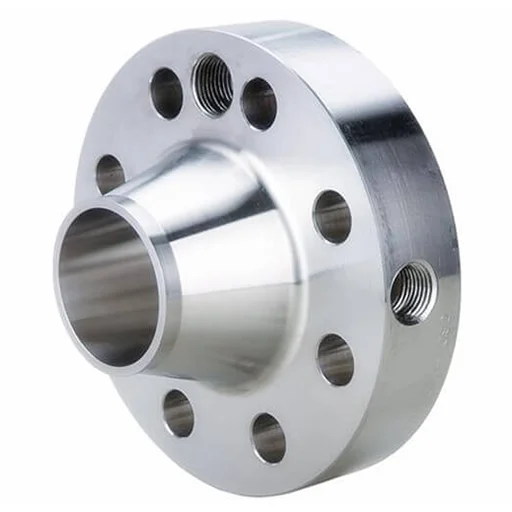
Alloy 20 Orifice Flange
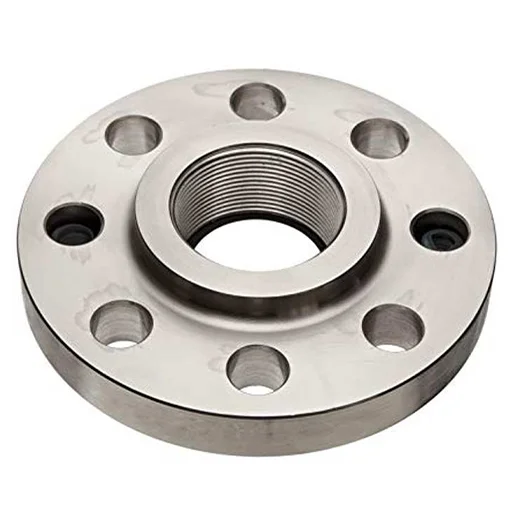
Alloy 20 Threaded Flange
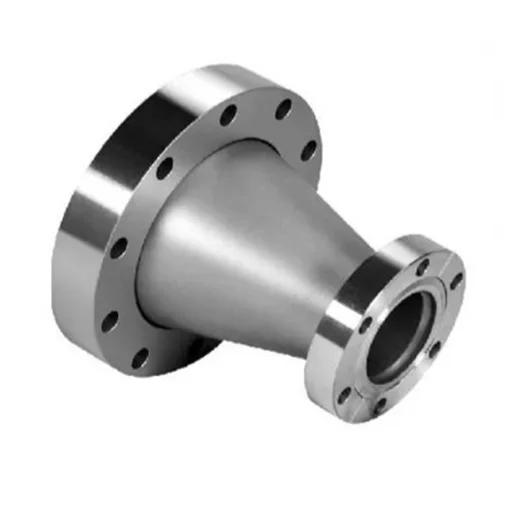
Alloy 20 Reducing Flange
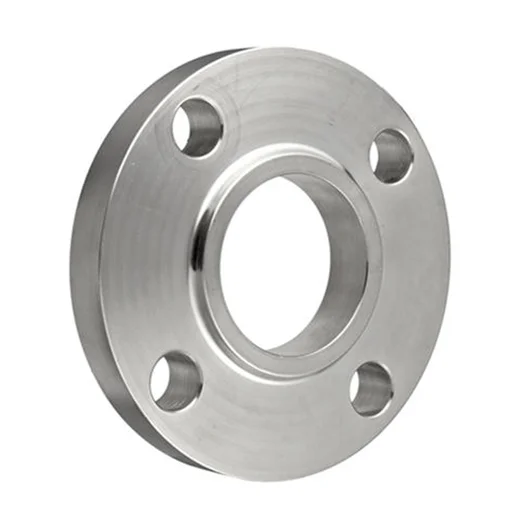
Alloy 20 Lap Joint Flange
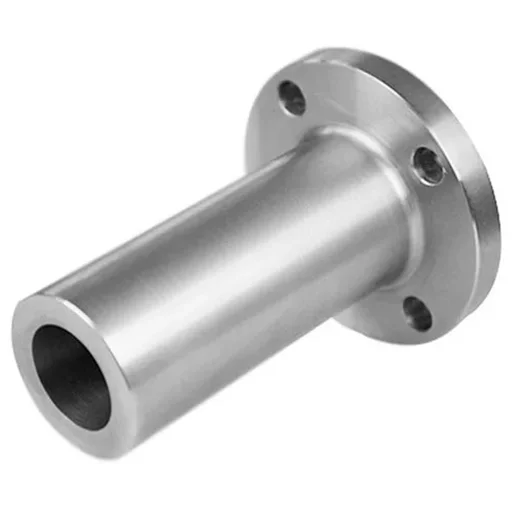
Alloy 20 Long Weld Neck Flange
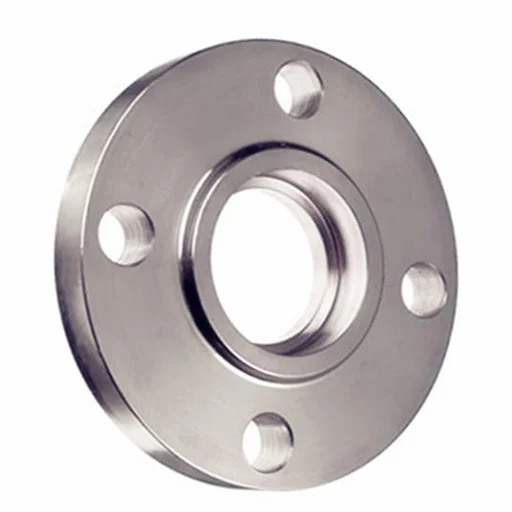
Alloy 20 Socket Weld Flange
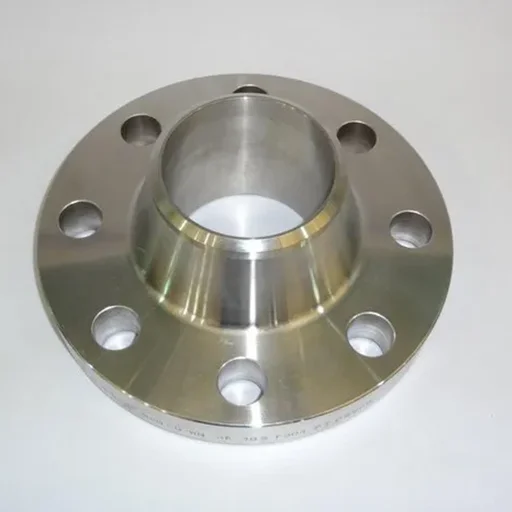
Alloy 20 Weld Neck Flange
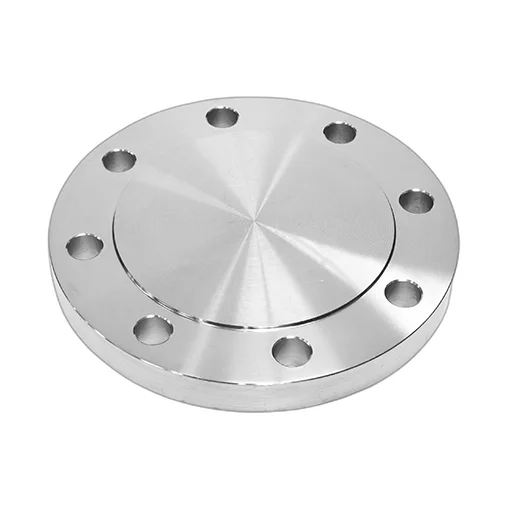
Alloy 20 Blind Flange
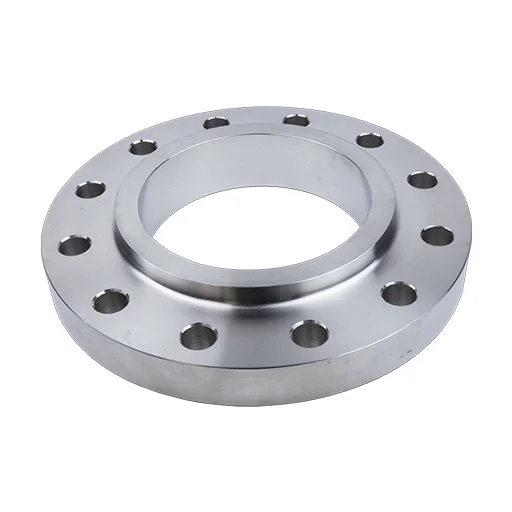
Alloy 20 Slip-On Flange
Standard Flange Sizes & Weight Chart
Alloy 20 Weld Neck Flange Dimensions (ANSI B16.5) - Class 600 Sample
| NPS | OD (mm) | Thickness (mm) | Bore (mm) | Hub Dia (mm) | Bolt Circle (mm) | Bolts | Bolt Size | Weight (kg) |
|---|---|---|---|---|---|---|---|---|
| 1/2" | 95 | 16 | 21 | 41 | 66 | 4 | M16 | 0.92 |
| 1" | 124 | 21 | 33 | 57 | 89 | 4 | M19 | 1.88 |
| 2" | 165 | 25 | 60 | 84 | 127 | 8 | M19 | 4.15 |
| 4" | 273 | 32 | 114 | 146 | 216 | 8 | M25 | 13.5 |
| 6" | 356 | 38 | 168 | 210 | 270 | 12 | M25 | 28.8 |
| 8" | 419 | 41 | 219 | 270 | 330 | 12 | M28 | 45.7 |
| 10" | 508 | 48 | 273 | 330 | 403 | 16 | M32 | 78.5 |
| 12" | 559 | 52 | 324 | 381 | 476 | 20 | M32 | 106.5 |
| 16" | 711 | 64 | 419 | 495 | 603 | 20 | M38 | 201.5 |
| 20" | 838 | 70 | 508 | 603 | 724 | 24 | M38 | 310.5 |
| 24" | 991 | 78 | 610 | 705 | 838 | 24 | M45 | 461.5 |
Is Alloy 20 Good Quality for Sulfuric Acid Service?
Yes, the industry-standard nickel-based alloy, the one that is specifically designed to work in the sulfuric acid service, is Alloy 20, and it is the popular material of choice in the chemical processing equipment that processes sulfuric acid, especially under contaminated conditions where stainless steels show failure. Alloy 20 was first invented in the 1950s as a specific alloy (named Durimet 20) by DuPont to solve corrosion issues in sulfuric acid manufacturing factories, and has since been the best material in the world in the use of sulfuric acid.
Alloy 20 has a high level of sulfuric acid resistance that is due mainly to the inclusion of copper (3.0-4.0%), which is not common in standard stainless steels or other nickel alloys. This copper amount offers excellent sulfuric acid resistance at all concentrations of dilute-to-concentrated (up to 98%), as well as at the boiling point. The 32-38 percent nickel, 19-21 percent chromium, 2-3 percent molybdenum and 3-4 percent copper result in a very stable passive, which is resistant to attack in the presence of contaminating ions like chlorides, fluorides and sulfates, which would otherwise increase corrosion rate.
The use of high nickel content (minimum 32%), gives the Alloy 20 a high degree of resistance to chloride stress corrosion cracking (SCC), a failure mode that usually occurs in chloride-containing environments in austenitic stainless steels such as 304 and 316. This renders Alloy 20 especially useful in plants that produce sulfuric acid and have chloride contamination or in mixed acid environments. The molybdenum-content (2-3%) leads to pitting/crevice corrosion resistance, especially in stagnant conditions, or low-velocity conditions where localized attack may take place.
The niobium stabilization is a critical attribute of Alloy 20 with niobium having at least 8 times the amount of carbon (usually 0.6-1.0% Nb) in it. This niobium also has the disadvantage of combining with carbon to form niobium carbides instead of chromium carbides and avoiding the sensitization and intergranular corrosion which may take place in the heat-affected areas of welds or when exposed to temperatures within the 425-815 C range. The result of this stabilization is that Alloy 20 is almost completely weldable without post-weld heat treatment in most applications, a major benefit over the non-stabilized alloys.
Alloy 20 is formulated especially to be used in the most severe applications of sulfuric acid such as in sulfuric acid manufacturing plants (contact process, wet process), sulfuric acid concentrators and sulfuric acid evaporators, sulfuric acid storage tanks and piping, chemical reactors utilizing sulfuric acid, pharmaceutical manufacturing equipment, synthetic fiber manufacturing (rayon, viscose), pickling in steel mills, metal finishing and electroplating, in acid production (for example phosphoric acid) out of rock phosphate, and in wastewater treatment facilities with It is approved to NACE MR0175/ ISO 15156 to some sour service conditions and is commonly specified in ASME B31.3 Process Piping Code to construct chemical plants.
The major drawback of Alloy 20 is that it cannot be employed in strongly oxidizing environments e.g. in nitric acid or the presence of oxidizing salts e.g. ferric or cupric chlorides, in this case more highly alloyed materials like Alloy C-276 or Alloy C-22 are employed. Also, Alloy 20 should not be used at concentrations and temperatures of acids such as hydrochloric acid about some limits, and Alloy B-2 or B-3 would make the right choice. Alloy 20 is an excellent combination of corrosion resistance, mechanical properties, weldability, and cost-effectiveness, which is why it is the material of choice over the stainless steels as well as the costlier nickel alloys in the majority of cases where sulfuric acid is used between ambient and 175C.
Heat Treatment Requirements (Mandatory - Strict Control Required)
| Process | Step / Parameter | Requirement | Remarks / Critical Notes |
|---|---|---|---|
| Solution Annealing + Rapid Quenching | Solution Annealing Temperature | 1095-1150-C (2000-2100-F) | Optimal: 1120-1140-C for complete carbide dissolution |
| Holding Time | Adequate soaking | Based on section thickness; typically minimum 30 minutes | |
| Cooling After Annealing | Rapid water quench | Essential to prevent carbide precipitation | |
| Critical Cooling Rate | Fast cooling through 1095-650-C | Slow cooling causes sensitization and intergranular corrosion | |
| Critical Requirement | Complete carbide dissolution | Ensures niobium remains in solid solution; verify by ASTM A262 Practice E |
Testing & Inspection Requirements (Comprehensive)
| Test / Inspection | Standard / Requirement | Acceptance / Remarks |
|---|---|---|
| Tensile Testing | ASTM E8 | Yield = 35 ksi (240 MPa), Tensile = 80 ksi (550 MPa), Elongation = 30% |
| Hardness Testing | ASTM E10 / ASTM E18 | = 95 HRB (= 220 HB typical) |
| Charpy Impact Testing | ASTM E23 | No minimum specified; typically >100 J at room temperature |
| PMI Testing | Positive Material Identification | Verification of Ni, Cr, Mo, Cu, Nb content |
| Intergranular Corrosion (IGC) | ASTM A262 Practice E (Cu-CuSO4) | No intergranular attack after solution annealing; mandatory |
| Ultrasonic Testing | ASTM A388 | Mandatory for critical applications |
| Corrosion Testing | ASTM G28 Method A (Optional) | Verification of sulfuric acid resistance |
Alloy 20 Nickel Alloy Flanges Price List 2026
| Flange Type | Size Range | Pressure Class | Indicative Price Range (USD / Piece) |
|---|---|---|---|
| Weld Neck (WN) | 1/2" - 2" | 150# | $85 - $215 |
| Weld Neck (WN) | 4" - 8" | 150# | $365 - $1,385 |
| Weld Neck (WN) | 10" - 24" | 150# | $2,180 - $7,850 |
| Weld Neck (WN) | 1/2" - 2" | 300# | $125 - $315 |
| Weld Neck (WN) | 4" - 8" | 300# | $545 - $1,985 |
| Weld Neck (WN) | 10" - 24" | 300# | $3,150 - $11,250 |
| Weld Neck (WN) | 1/2" - 2" | 600# | $185 - $465 |
| Weld Neck (WN) | 4" - 8" | 600# | $850 - $2,950 |
| Slip-On (SO) | 1/2" - 2" | 150# | $68 - $175 |
| Slip-On (SO) | 4" - 8" | 150# | $295 - $1,105 |
| Blind (BL) | 1/2" - 2" | 150# | $62 - $155 |
| Blind (BL) | 4" - 8" | 150# | $315 - $1,235 |
| Socket Weld (SW) | 1/2" - 2" | 150# - 600# | $95 - $395 |
Note: Alloy 20 flanges are typically 450-550% higher than ASTM A105 and 180-220% higher than 316/316L stainless steel due to high nickel (32-38%), copper (3-4%), niobium stabilization, controlled solution annealing, and extensive testing.
Applications of Alloy 20 Flanges in Industry
The Alloy 20 Nickel Alloy Flanges are commonly used in many industrial applications, and some of the common industries are given below.
Sulfuric Acid Production
Contact process plants, wet process plants, acid concentrators, oleum production
Chemical Processing
Chemical reactors, distillation columns, heat exchangers in sulfuric acid service
Pharmaceutical Manufacturing
API (Active Pharmaceutical Ingredient) reactors, crystallizers, centrifuges
Synthetic Fiber Production
Rayon and viscose production equipment, dissolving tanks, spin baths
Food Processing
Phosphoric acid production from rock phosphate, acidulation equipment
Metal Finishing
Pickling lines, electroplating baths, acid recovery systems
Fertilizer Manufacturing
Phosphate fertilizer production, sulfuric acid handling systems
Wastewater Treatment
Acidic effluent neutralization, pH control systems
Why Choose Alloy 20 Flanges from Metinox Overseas?
Metinox Overseas offers certified Alloy 20 nickel alloy flanges, which have been precisely solution annealed and quenched, and which have been thoroughly tested, including required intergranular corrosion testing, done in accordance with ASTM A262 Practice E, and guarantee complete sulfuric acid resistance in chemical processing. We have certified ISO 9001:2015, NACE MR0175/ISO 15156 and PED certified manufacturing facilities where Alloy 20 flanges are subject to controlled solution annealing at 1120-1140 o C and rapid water quenching with full time-temperature records.
EN 10204 3.1B Mill Test Certificates are provided to all flanges and include full chemical analysis requirement including Ni (32-38%), Cu (3-4%), Cr (19-21%), Mo (2-3%), Nb (8 x 0C minimum), complete tensile properties and hardness check ( =95 HRB ), intergranular corrosion test results per ASTM A262 Practice E (indicating that it has no sensitization), and PMI verification verifying proper alloy composition.
Our technical department offers professional advice on the selection of Alloy 20 material to serve sulfuric acid, corrosion data at the different concentrations and temperatures of the acid, welding instructions (to match filler metal AWS A5.14 ERNiCrMo-3, no preheat here, solution annealed material is preferred), NACE MR0175/ISO 15156 compliance, and Section ASME B31.3 Process Piping Code requirements. We satisfy the special requirements of sulfuric acid plants, chemical processing plants, pharmaceutical plants, synthetic fiber manufacturers and metal finishing plants throughout the world.
Alloy 20 Flange Delivery Time & CIF Pricing by Country
| Destination Region | Major Ports / Cities | Estimated Delivery Time | Typical CIF Terms |
|---|---|---|---|
| Middle East (GCC) | Dubai, Dammam, Doha | 14-18 Days | CIF Dubai / CIF Dammam |
| Europe | Rotterdam, Hamburg | 28-35 Days | CIF Rotterdam / CIF Hamburg |
| USA & Canada | Houston, New York | 35-45 Days | CIF Houston / CIF New York |
| Southeast Asia | Singapore, Port Klang | 18-25 Days | CIF Singapore / CIF Port Klang |
| Africa | Lagos, Durban | 25-35 Days | CIF Lagos / CIF Durban |
Other Types of Alloy 20 Flanges
ASTM B564 N08020 Flanges, UNS N08020 Weld Neck Flanges, Carpenter 20Cb-3 Blind Flanges, Alloy 20 Sulfuric Acid Flanges, Incoloy 20 Flanges, Nicrofer 3620 Nb Flanges.
Popular Locations Where We Supply Alloy 20 Flanges
alloy 20 flanges supplier in singapore, nickel alloy 20 flanges suppliers in qatar, uns n08020 flanges suppliers in uae, alloy 20 flanges suppliers in chennai, carpenter 20cb-3 flanges in mumbai, alloy 20 sulfuric acid resistant flanges in delhi.
People Also Search For
alloy 20 flanges manufacturer, nickel alloy 20 flanges supplier, uns n08020 flanges, carpenter 20cb-3 flanges price, alloy 20 sulfuric acid resistant flanges, alloy 20 vs 316l comparison.
Looking for High-Quality Alloy 20 Flanges?
Let us support your projects with quality, precision, and performance.
Frequently Asked Questions (FAQ)
Alloy 20 has 32-38% nickel and 3-4% copper which offers significantly better resistance to sulfuric acid and chloride stress corrosion cracking than 316L. The high copper content contributes to the high performance of Alloy 20 in Sulphuric acid at any concentration to boiling point, which 316L would quickly fail. Alloy 20 is also stabilized with niobium and is resistant against inter-granular corrosion and 316L is less costly but cannot perform as well as Alloy 20 in sulfuric acid and mixed acid environments.
Copper (3-4%): The critical component which gives Alloy 20 exceptional resistance to sulfuric acid at all levels of diluting up to 98% and up to boiling point. The copper increases the stability of the passive film in sulfuric acid and gives resistance to the reducing acids. It is this copper addition that makes Alloy 20 stand out of the pack of other nickel-chromium alloys and it is the material of choice when using in sulfuric acid service.
Niobium (added to the carbon content at least 8 times, usually 0.6-1.0%), when mixed with carbon is an element that forms stable carbides with carbon instead of the chromium carbides. This helps to avoid sensitization - the formation of chromium carbides at the grain boundaries which results in intergranular corrosion in heat-affected areas of welds or with exposure to 425-815degC. Stabilization of Niobium renders Alloy 20 extremely welded and not needing any post-processing heat treatment and inhibiting intergranular assault in application.
No, Alloy 20 should not be used in highly oxidizing conditions such as nitric acid or oxidizing salts (ferric chloride, cupric chloride). In the case of nitric acid service, austenitic stainless steels such as 304L or 316L are used or in the case of mixed oxidizing service, more highly alloyed materials such as Alloy C-276, C-22, or 625 are used. Alloy 20 is superior at sulphuric acid and a weakly reducing environment.
Alloy 20 must be filleder metaled with AWS A5.14 ERNiCrMo-3 (GTAW/GMAW) or ENiCrMo-3 (SMAW). No preheat is required. Keep interpass temperature at less than 150degC. Apply clean, low heat input welding to reduce distortion. Most chemical service applications do not need post-weld heat treatment (solution annealing) since most have been stabilized with niobium, although it could be a requirement in critical applications. It is necessary to have proper shielding gas and cleanliness.
Alloy 20 is not resistant to HCl acid and should not in general be used in HCl service above low concentration and at ambient temperatures. Nickel-molybdenum Alloy such as Alloy B-2 (UNS N10665) or B-3 (UNS N10675) should be used in the case of hydrochloric acid usage since they are specifically made to survive in acidic conditions. The alloy 20 is an alloy to use with sulfuric acid rather than hydrochloric acid.
Alloy 20 maximum continuous service temperature is about 540degC (1000degF). Metallurgical changes are also possible above this temperature, and these changes might have an impact on corrosion resistance and mechanical properties. In the majority of uses of sulfuric acid, ambient temperatures are adequate as far as 175degC. Alloy 20 exhibits high toughness at the cryogenic temperature down to -196degC (temperature of liquid nitrogen).
Alloy C-276 (UNS N10276) has more molybdenum (15-17% vs 2-3%) and tungsten (3-4.5%), which offers better resistance to oxidizing chloride environment, wet chlorine gas and mixed acid conditions. Alloy C-276 is much more costly, however. In the case of sulfuric acid service, which is a specialized example, Alloy 20 tends to offer superior service at low cost because of the copper content. Where the environment is highly oxidizing or mixed acid, C-276 might be necessary. The choice of material must be done depending upon certain corrosion information of the precise conditions of service.
Enquire Now
Get pricing within 24 hours!